


Victorian Barograph Case
These Victorian barograph case examples protect delicate weather-recording mechanisms behind bevelled glass panels while doubling as handsome library furniture.
Victorian Barograph Case
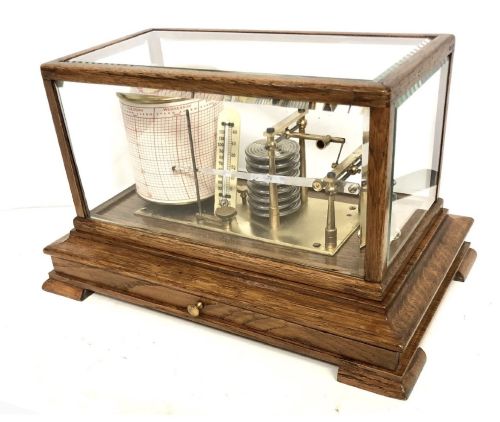
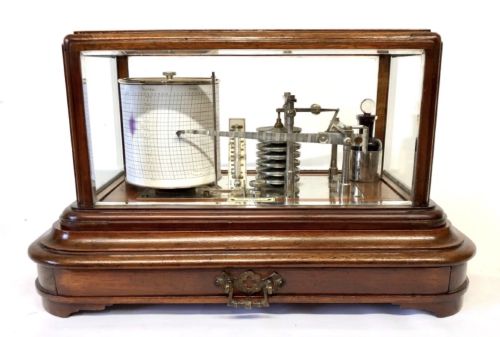
A victorian barograph case houses a mechanical weather-recording instrument designed to chart atmospheric pressure continuously onto paper charts. The form combines woodwork and glazing to display the brass drums and levers while shielding them from dust and air currents.
Most pieces encountered on this page date from the Victorian and Edwardian periods, stretching into the early twentieth century. They take the form of wooden boxes fitted with five glass panels, frequently incorporating a chart drawer in the base and occasionally an attached thermometer or barometer dial.
Materials and construction
Cabinetmakers built these enclosures using dense hardwoods such as mahogany, oak, and walnut, often selecting timber with pronounced grain figures. The wood is joined to form a protective housing that supports internal brass movements and steel components.
Heavy bevelled glass panels are set into the wooden frames to allow clear observation of the recording drums from multiple angles. Many versions include a lower drawer lined for storing spare recording paper and ink supplies.
Listings feature woods including mahogany, oak, and walnut, paired with brass, steel, and paper components across the Victorian and Edwardian periods.
Distinctions in quality
Quality reveals itself in the choice of cabinet timber, the precision of the mitre joints, and the thickness of the bevelled glass panes. Finer examples display carefully matched wood veneers and substantial brass fittings rather than plated base metals.
The integration of ancillary instruments like thermometers or barometer dials alters the complexity of the piece. Makers who inscribed their signatures onto the instrument beds or charts tended to produce higher-grade work.
GAUPP & CO HONGKONG & SINGAPORE·SHORT & MASON, LONDON·BAINES HARROGATE·Negretti & Zambra·Robson of Newcastle·RICHARD FRERES
The Victorian Barograph Case Glossary
- Barograph
- A recording barometer that traces atmospheric pressure onto a revolving paper drum. It relies on an aneroid capsule stack to drive the inked recording arm.
- Bevelled glass
- Glass panes featuring angled edges ground and polished to a slope. This treatment catches the light and adds depth to the viewing panels.
- Chart drawer
- A shallow compartment built into the base of the wooden housing. It provides convenient storage for unused recording charts.
- Aneroid
- Operating without liquid. The term describes barometers and barographs that measure air pressure using sealed metal chambers.
Victorian Barograph Case: Frequently Asked Questions
What is a victorian barograph case?
A victorian barograph case is a timber and glass enclosure built to house and display a mechanical recording barometer. These boxes protected the sensitive brass levers and paper drums from dust.
Most examples feature five glass panels that allow the working mechanism to be observed from all sides. They often include a drawer underneath for spare paper charts.
How do I use recording charts?
Recording charts are placed around the rotating brass drum of the instrument. The ink pen attached to the barometer arm traces a continuous line across the paper as pressure changes.
Spare charts were historically stored in the wooden drawer built into the base of the enclosure. Changing the paper typically required winding the clockwork mechanism inside the drum.
Where were they placed?
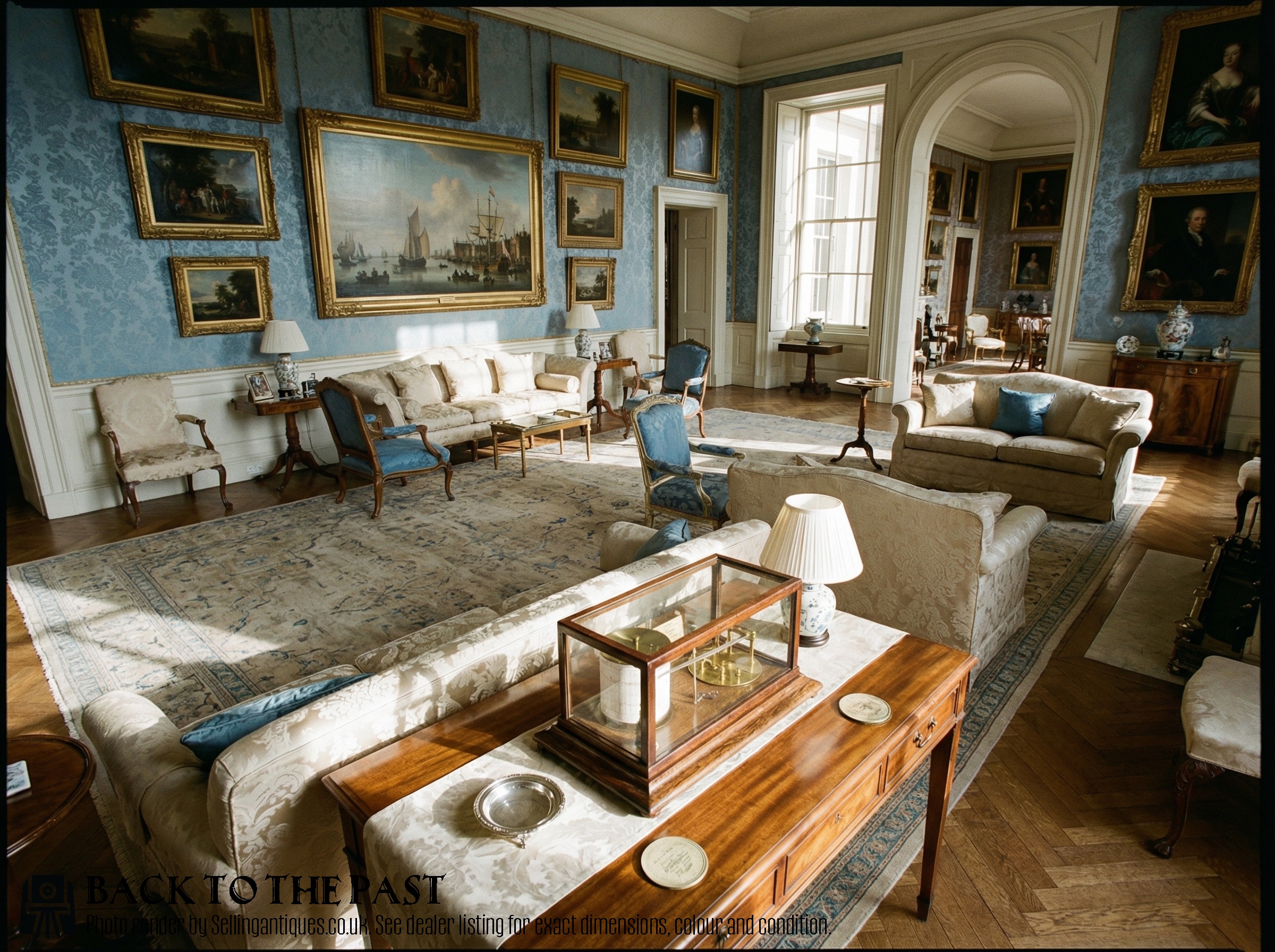
These instruments sat in prominent positions within country houses, libraries, and offices where gentlemen could monitor impending weather shifts. Their handsome wood construction ensured they functioned as decorative furnishings.
They required stable locations away from direct heat sources and drafts to maintain accurate atmospheric readings.
How do I distinguish periods?
Victorian models generally feature rich mahogany or walnut timbers with traditional dovetail joinery and heavy mouldings. Edwardian versions often display lighter oak finishes and simpler, cleaner lines.
Maker signatures etched onto the instrument bed or paper plate also help date the piece accurately.