
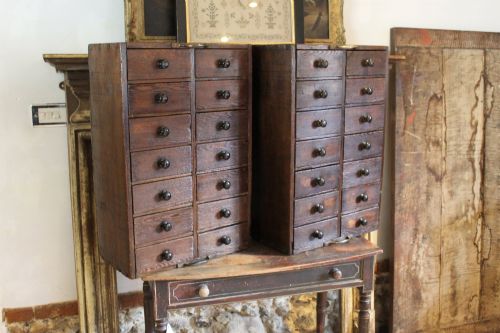


Victorian Bank of Drawers
A Victorian bank of drawers offers dense, multi-compartment storage built for commercial or domestic utility.
Victorian Bank of Drawers
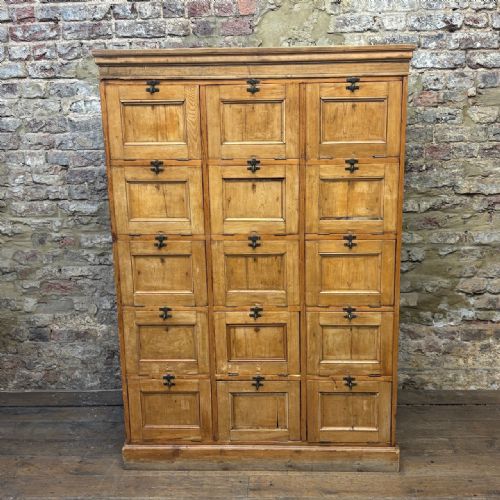
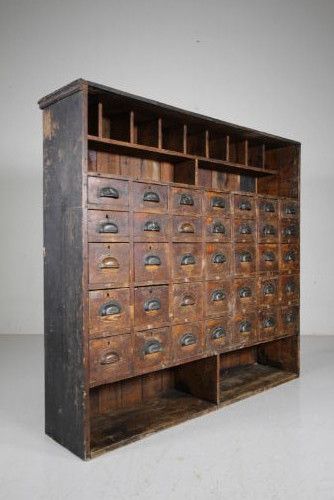
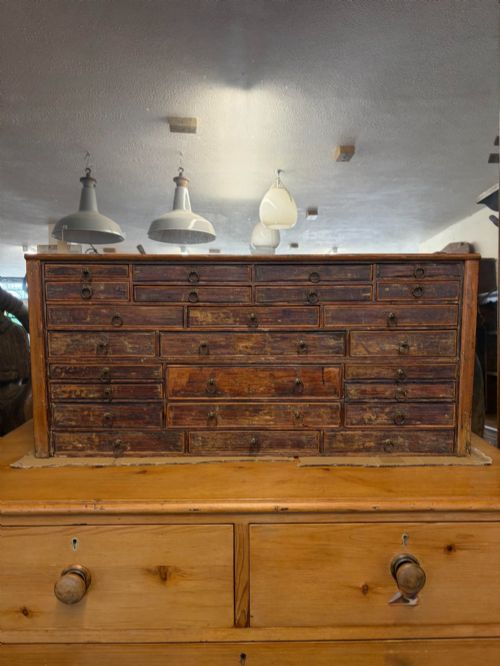
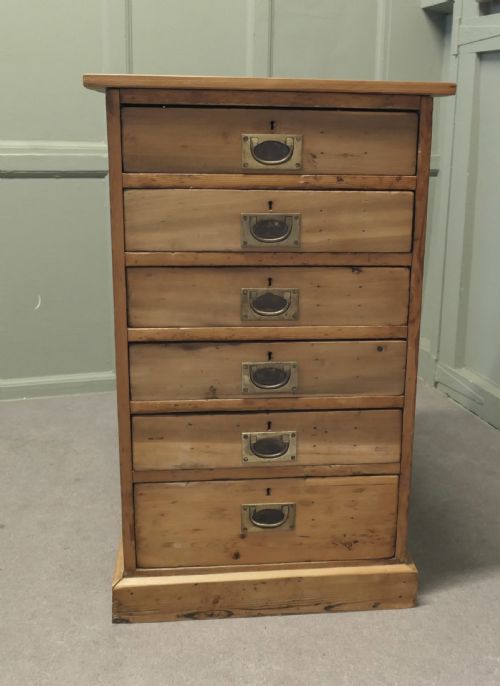
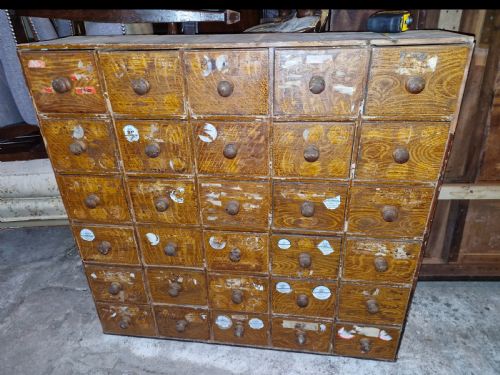
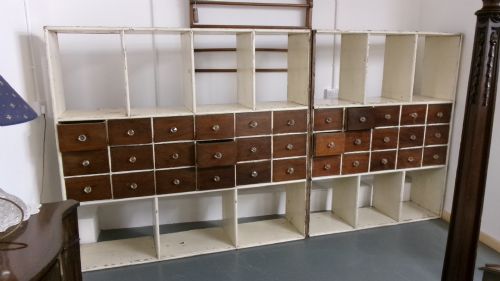
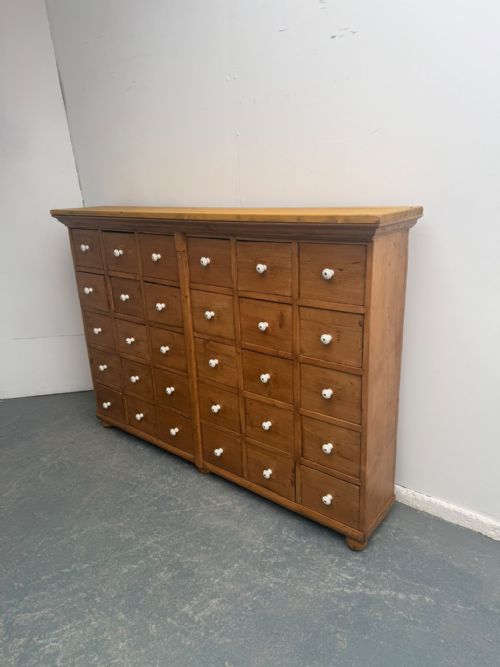
A Victorian bank of drawers provides multi-compartment storage designed originally for commercial, apothecary, or institutional use. You will most frequently encounter pine and mahogany examples featuring numerous small drawers, often originating from chemists, shops, or offices.
The form spans tall vertical units and shallow filing configurations, reflecting period demands for organised record-keeping and stock management. Pieces range from modest five-drawer chests to substantial multi-drawer shop fittings housing dozens of compartments.
Materials and construction
Makers relied primarily on pine, mahogany, and walnut, frequently pairing denser hardwoods for facades with robust secondary softwoods for internal carcases. Metal hardware including brass handles, iron fittings, and glass elements reinforced heavy-use commercial environments.
Joinery and structural integrity served utility first, employing robust drawer construction and patent filing mechanisms where rapid document retrieval was required. Surfaces often received painted finishes or clear polishing to withstand daily handling in pharmacy and retail settings.
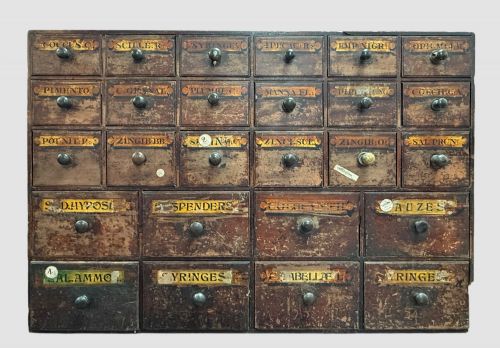
Some multi-drawer units retain original apothecary labels to remind you which drawer held your sulphur.
Variations in quality
Quality rests upon the scale of the piece, the integrity of the original timber, and the retention of authentic hardware such as brass handles and ebonised knobs. Dense banks featuring high numbers of uniform drawers demand greater joinery skill than standard chests.
Provenance and original commercial context elevate certain pieces, particularly marked chemist shop fittings or patent filing cabinets. Surviving original paint finishes or untouched secondary woods distinguish superior survivals from later adaptations.
Luxmore's of Ilfracombe·D Napier and Sons
The Victorian Bank of Drawers Glossary
- Bank of drawers
- A multi-compartment storage unit containing numerous small drawers arranged in rows and columns, built for commercial or domestic organisation.
- Haberdashery cabinet
- A large storage fixture utilised in drapery and retail shops, typically fitted with many shallow drawers for textiles and small goods.
- Chemist shop fitting
- Commercial cabinetry and shelving designed specifically for apothecary and pharmacy use, featuring labelled drawers for medicinal ingredients.
- Collectors cabinet
- A specialist storage unit housing shallow drawers intended for specimens, coins, or documents.
- Flame grain
- A decorative wood veneer pattern resembling flickering flames, seen on select mahogany pieces.
Victorian Bank of Drawers: Frequently Asked Questions
What were banks of drawers used for?
These multi-drawer units served commercial, administrative, and domestic functions where extensive sorting was required. Pharmacies, drapers, and watchmakers relied on them to keep small stock organised and accessible.
In offices and institutions, similar configurations stored correspondence, records, and specimens. Their dense compartmentalisation made them indispensable for busy trade environments.
How do I fit one into a modern room?
A tall bank of drawers provides high-capacity vertical storage that suits hallways, kitchens, or studies. Their narrow footprints allow them to sit against walls without dominating floor space.
Many buyers utilise them in living areas as statement storage for collections, tableware, or media equipment. The varied drawer counts help categorise everyday household items effectively.
How can I tell the period from the style?
Nineteenth-century examples generally display solid construction in pine, mahogany, or walnut, often featuring hand-cut dovetails and original brass or ebonised hardware. Later iterations from the early twentieth century introduce patent filing mechanisms and metal components.
Shop fittings and chemist cabinets typically exhibit specific functional layouts, such as numerous shallow compartments or bank arrangements tailored to trade catalogues. Regional variations also appear through painted finishes and local timber choices.
What is the difference between a chest and a bank?
A standard chest of drawers usually provides three to five wide drawers stacked vertically for clothing or domestic linens. A bank of drawers contains a much higher density of smaller compartments arranged across multiple columns.
Banks originate primarily from commercial, workshop, or office settings rather than domestic bedrooms. This functional background dictates their heavier construction and specialised drawer proportions.