



Vintage Herb Chest
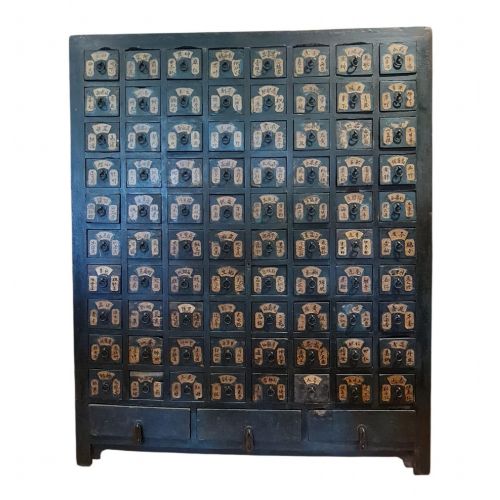
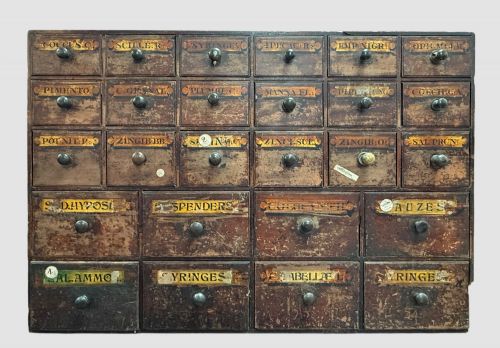
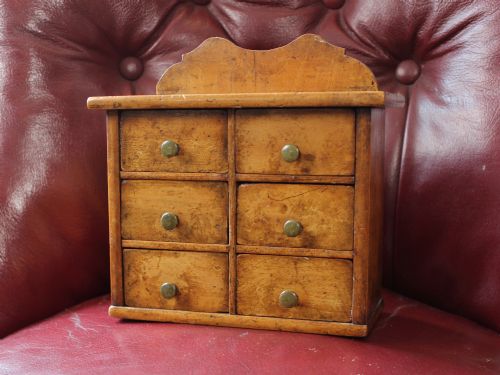
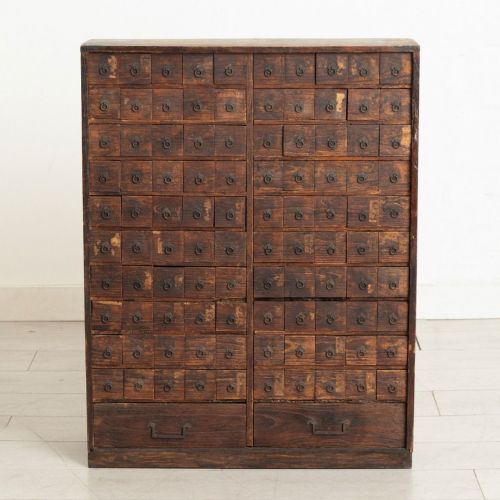
These vintage herb chest examples offer small drawers and sectional compartments built for organising dried plants, powders and home remedies.
Vintage Herb Chest
A vintage herb chest brings compact drawer storage into domestic and apothecary settings, often taking the form of multi-drawer banks or wall-hanging spice boxes. When you search for a vintage herb chest, you encounter pieces designed to hold roots, powders and remedies in numerous small compartments.
The selections on this page span from nineteenth-century English country spice drawers to substantial Chinese elm apothecary cabinets featuring dozens of small pulls. European examples typically utilise oak, pine, fruitwood or mahogany, while Asian cabinets arrive in elm and lacquer with characteristic hardware.
Forms range from intimate wall-hanging spice boxes with brass fixtures to large banks of drawers originating from traditional pharmacies and homeopaths. Buyers find both simple utilitarian boxes and elaborate multi-drawer medicine cabinets.
How they were made
Construction relies heavily on hardwoods and softwoods such as oak, elm, pine, fruitwood and mahogany, joined to withstand frequent opening of multiple small drawers. Many pieces incorporate iron hinges and brass pulls or label frames to identify the contents of each compartment.
Surface finishes vary from polished mahogany and fruitwood to painted indigo surfaces and traditional Chinese lacquer work. Cabinetmakers built these items for daily utility, employing sturdy dovetail joints on the drawers and solid timber backs.
Vintage Herb Chest Retail Price Guide 2026
Typical asking prices for vintage herb chest among the pieces listed under this phrase on Sellingantiques today, from the lower quarter to the upper quarter. They describe what is for sale here now, not the wider market.
Listings feature items built from mahogany, wood, pine, brass, lacquer, iron, oak and elm.
What varies in quality
Quality rests in the timber selection, the complexity of the drawer configuration and the preservation of original brass or iron hardware. Dense hardwoods like elm and mahogany indicate superior cabinetmaking compared to simpler pine constructions.
The scale of the piece and the number of drawers influence desirability, particularly in large apothecary banks with eighty or more compartments. Original surface patination and intact handles separate utilitarian workshop pieces from finer domestic examples.
The Vintage Herb Chest Glossary
- Apothecary cabinet
- A multi-drawer piece originally utilised by practitioners to store medicinal herbs, roots and powders. These cabinets often feature dozens of small, uniform drawers.
- Bank of drawers
- A chest composed of numerous small drawers stacked vertically or horizontally. This configuration allowed pharmacies and merchants to sort large quantities of distinct dry goods.
- Spice box
- A small wooden container designed to hold culinary seasonings in a domestic kitchen. They frequently feature a wall-hanging format with a secure latch door.
- Dovetail joint
- A traditional woodworking technique where interlocking wedge-shaped fingers join two pieces of timber at a right angle. It provides exceptional tensile strength for frequent drawer usage.
Vintage Herb Chest: Frequently Asked Questions
What were herb chests originally used for?
These chests served pharmacists, herbalists and domestic cooks for sorting dried plants, seeds, powders and medicinal remedies. Each small drawer kept distinct ingredients separated and protected from moisture.
In larger apothecary settings, banks of dozens of drawers allowed practitioners to maintain an extensive inventory of traditional materia medica within easy reach.
How do I identify the wood used?
European examples commonly utilise oak, pine, fruitwood or mahogany, displaying distinct grain patterns and weights. Heavier timber such as mahogany and oak indicates formal furniture, while pine and fruitwood appear frequently in country pieces.
Asian pieces often employ Chinese elm or lacquered surfaces, which present a different grain structure and tactile finish compared to Western cabinet timbers.
Are these cabinets suitable for modern kitchens?
The numerous small drawers make these chests exceptionally practical for organising modern spices, tea bags, jewellery or craft supplies. Their compact footprints allow them to sit neatly on countertops, sideboards or desks.
Wall-hanging versions can be mounted in kitchens to save surface space while keeping everyday seasonings close at hand.
How do I tell nineteenth-century pieces apart?
Nineteenth-century pieces vary significantly between English country workshops and Asian apothecary traditions. English items often feature fruitwood, oak or mahogany with simple brass pulls, whereas Chinese examples frequently showcase elm with numerous small drawers and traditional metal backplates.
Examining the construction methods, such as hand-cut dovetails and timber shrinkage, helps distinguish regional manufacturing traditions.