





Haberdashery Bank of Drawers
A haberdashery bank of drawers offers utilitarian storage built for trade, bringing multi-drawer symmetry and industrial utility into modern rooms.
Haberdashery Bank of Drawers
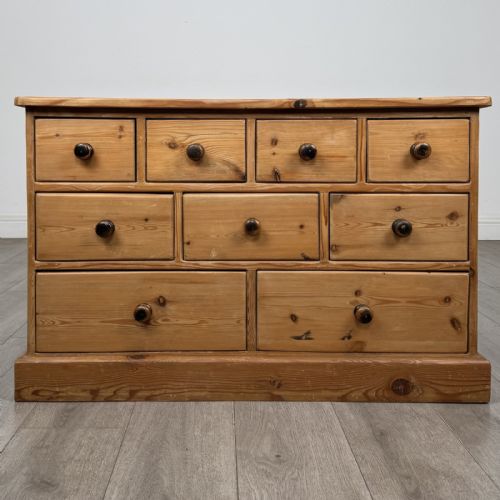
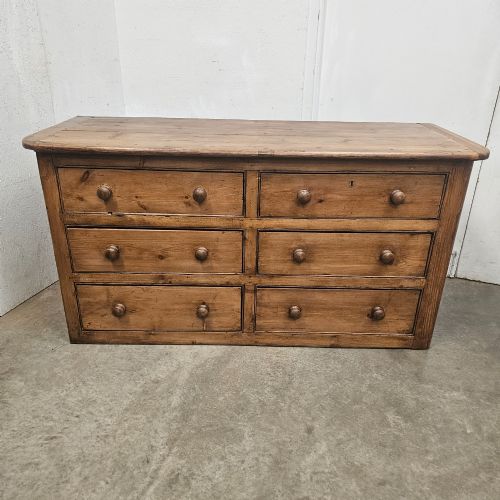
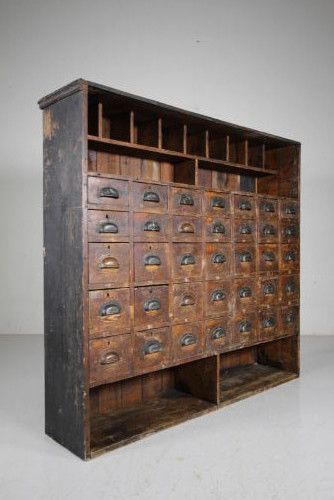
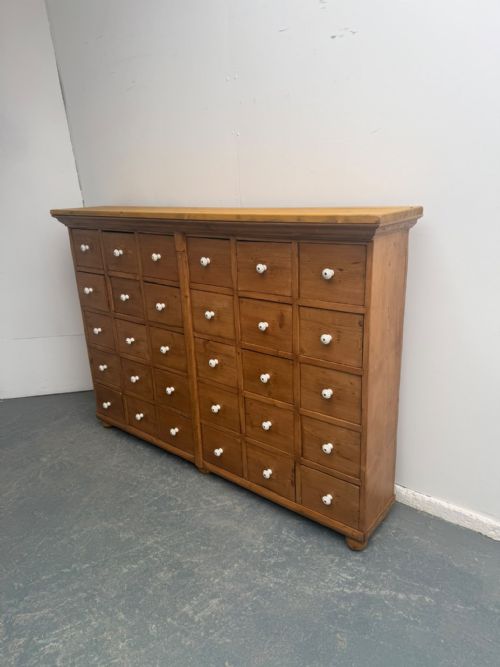
When searching for a haberdashery bank of drawers, a buyer encounters multi-compartment storage units originally built for commercial, apothecary, or shop use. These pieces range from substantial multi-drawer shop fittings to smaller workshop chests designed to hold small goods, ribbons, and hardware.
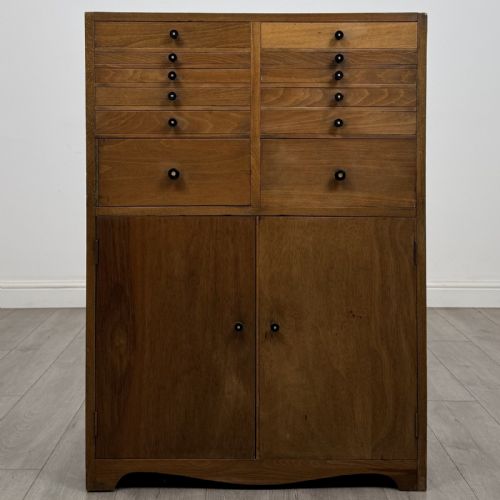
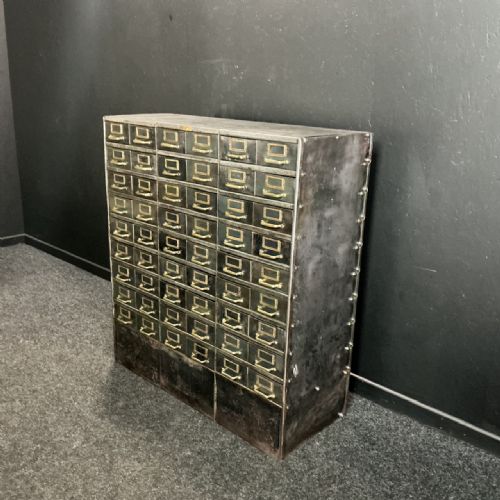
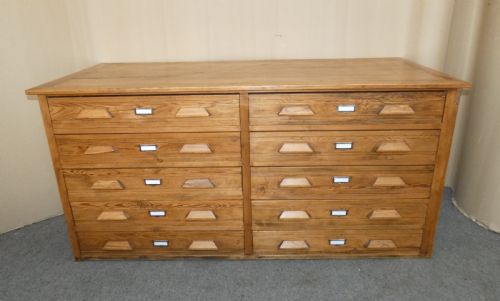
The versions met most frequently on this page originate from the nineteenth century through the nineteen-thirties, spanning Victorian, Edwardian, and industrial periods. Common forms include banks of twelve to fifty drawers, shop counters, and tall drapers cabinets constructed to serve busy commercial environments.
Originating from English, French, and Hungarian contexts, these cabinets reflect practical trades. They serve buyers seeking dense, compartmentalised storage with genuine commercial provenance rather than domestic furniture built for simple bedrooms.
Materials and Construction
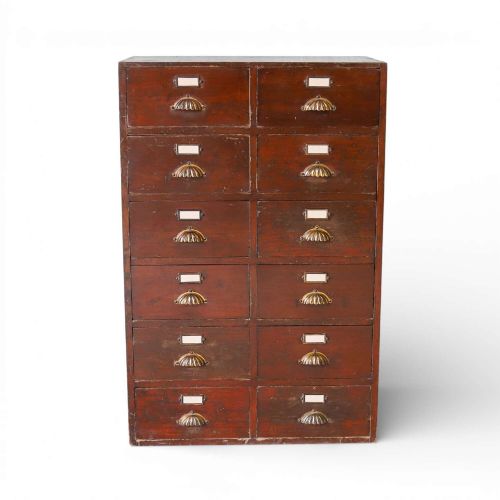
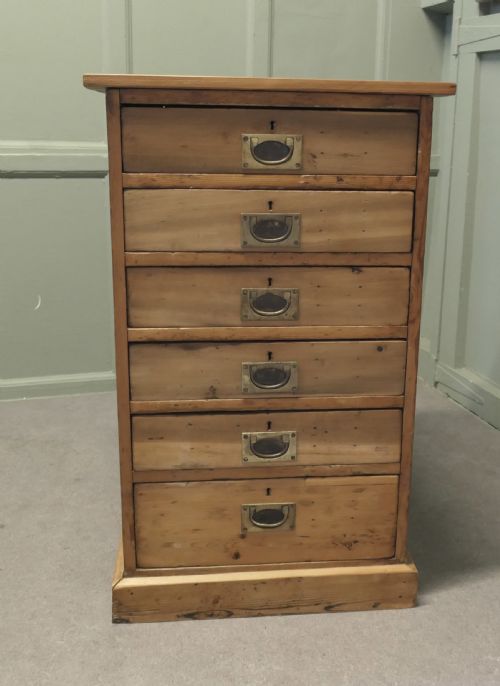
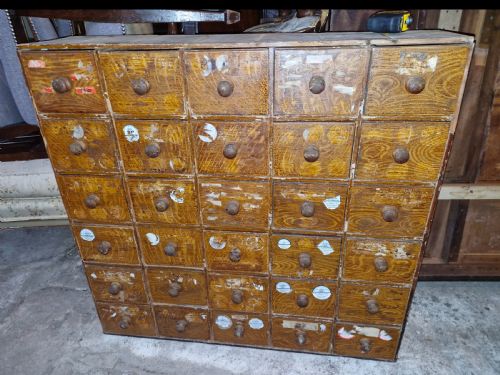
Constructed predominantly from timber such as pine, mahogany, walnut, oak, and fruitwood, these pieces utilise sturdy woods capable of enduring heavy daily trade use. Pine examples frequently display painted surfaces in white, cream, or green, whilst hardwood variants like mahogany and walnut show polished grain.
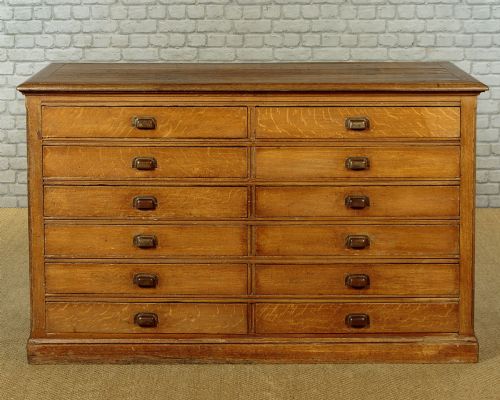
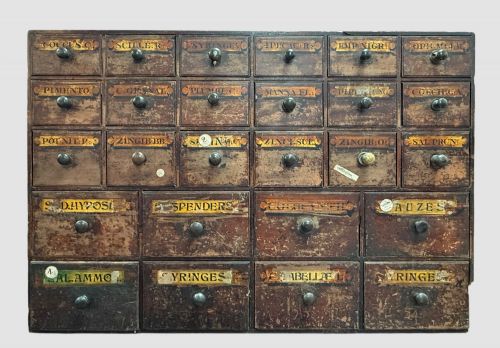
Metal and brass components play a functional role in construction, appearing as original shell pulls, label holders, and scalloped brass handles attached to the drawer fronts. Ironmongery and basic metal elements further reinforce the industrial utility of workshop and shop fittings.
Haberdashery Bank of Drawers Retail Price Guide 2026
Typical asking prices for haberdashery bank of drawers among the pieces listed under this phrase on Sellingantiques today, from the lower quarter to the upper quarter. They describe what is for sale here now, not the wider market.
One exceptional workshop cabinet provides sixty-six separate office drawers for the truly obsessive organiser.
Distinctions in Quality
Quality in a haberdashery bank of drawers rests upon the preservation of original commercial fittings, such as brass label holders and shell pulls, which indicate untouched trade provenance. Retained original paint finishes on pine shop fittings also separate utilitarian pieces that have survived intact from those heavily altered over time.
The scale and drawer count influence the character of the piece, with larger multi-drawer assemblies requiring sound structural integrity across dozens of moving compartments. Timbers selected for the build, ranging from basic pine to polished walnut and mahogany, dictate the formal weight and finish of the cabinet.
Luxmore's of Ilfracombe
The Haberdashery Bank of Drawers Glossary
- Bank of drawers
- A multi-drawer storage unit containing numerous stacked or tiered compartments designed for efficient sorting. These pieces originated primarily in commercial, workshop, and institutional settings.
- Haberdashery cabinet
- A specialised storage unit originally used in drapery shops to display and organise small textiles, ribbons, and sewing accessories. They typically feature banks of shallow drawers.
- Shell pull
- A semi-circular metal handle shaped like a scallop shell, frequently fitted with an integrated label holder. These hardware elements are common on nineteenth and early twentieth-century trade furniture.
- Shop fitting
- Fixtures and large furniture built specifically for commercial retail spaces rather than domestic interiors. These items were designed to withstand heavy public use.
- Shop counter
- A long working surface incorporating storage cabinets or banks of drawers facing the merchant side. They combined customer service surfaces with immediate stock storage.
Haberdashery Bank of Drawers: Frequently Asked Questions
What is a haberdashery bank of drawers?
A haberdashery bank of drawers is a multi-compartment commercial storage unit originally built for retail shops to organise small goods, ribbons, and accessories. These pieces feature numerous shallow drawers designed for dense inventory sorting.
Today, they function as practical storage furniture in homes and workspaces, offering distinctive compartmentalisation and commercial character.
How were these drawers used originally?
Merchants and shopkeepers utilised these cabinets behind counters to store trade inventory where quick access and sorting mattered. Drapers, chemists, and ironmongers relied on the multi-drawer format to keep small items separated and visible.
The inclusion of label holders allowed staff to identify contents quickly without opening every compartment.
How do I live with one?
Living with a trade cabinet involves integrating large, multi-drawer furniture into domestic spaces like kitchens, studies, or living rooms. Their numerous compartments provide natural organisation for modern collections, stationery, or tableware.
Placing a substantial shop fitting requires adequate wall space and floor clearance to accommodate its commercial scale.
How can I tell the periods apart?
Periods are identified through timber choices, hardware styles, and construction methods characteristic of nineteenth-century, Victorian, Edwardian, or nineteen-thirties manufacture. Earlier nineteenth-century examples often use solid pine with hand-painted finishes, whilst Edwardian and later pieces frequently employ polished walnut and mahogany.
Hardware details like brass shell pulls and label holders also shift in design across the decades.