
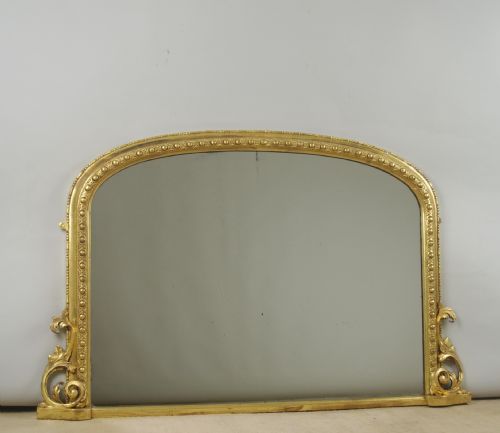
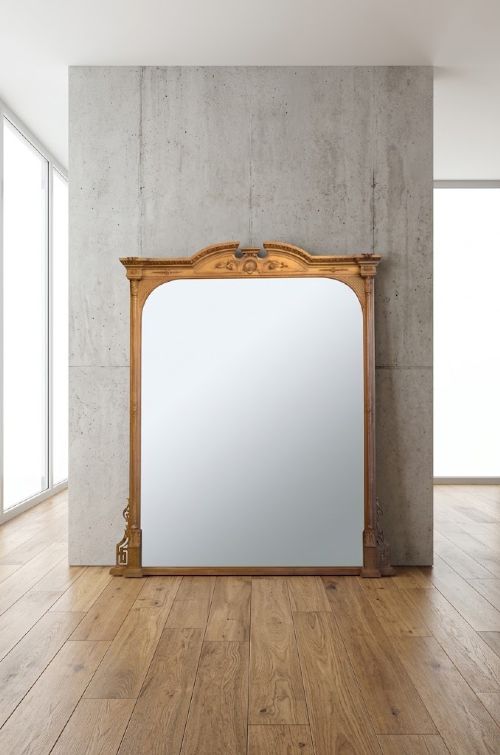
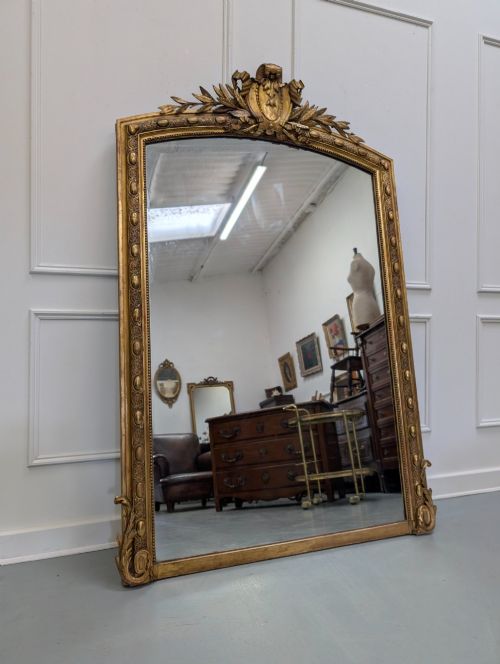
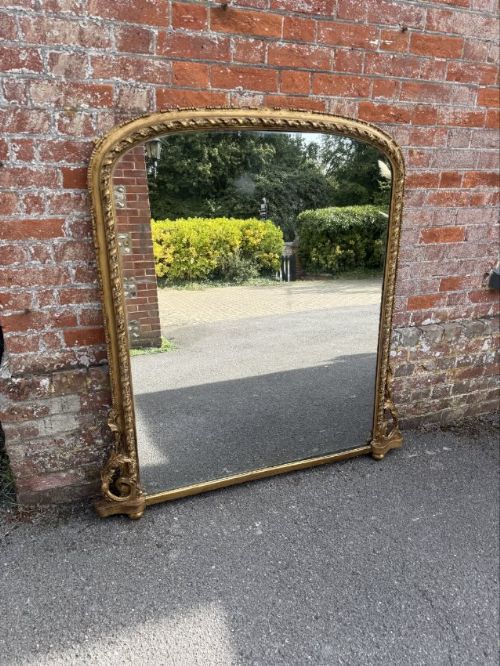
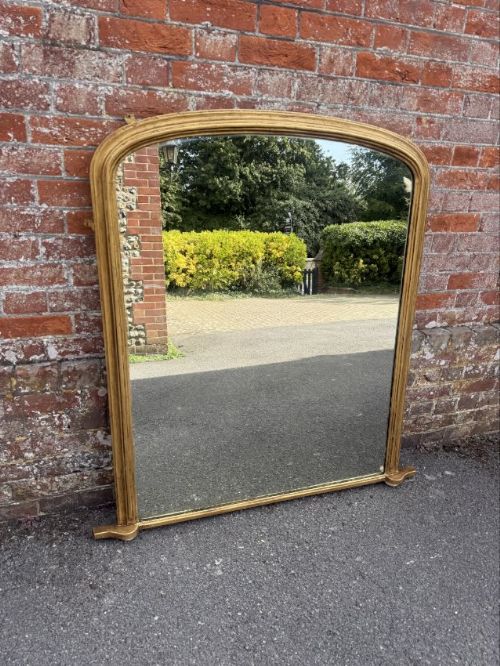
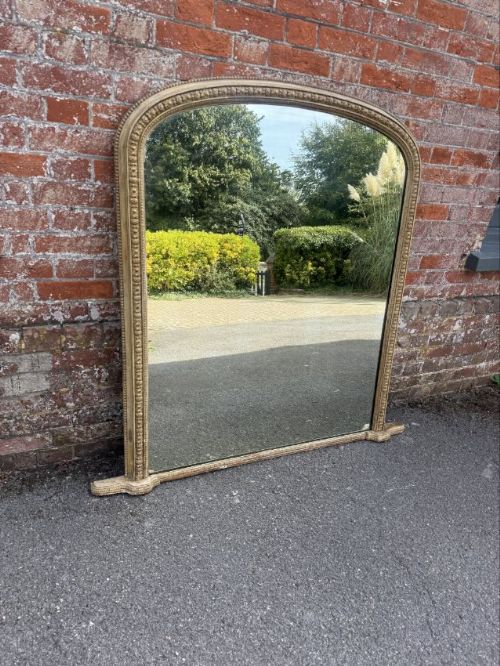
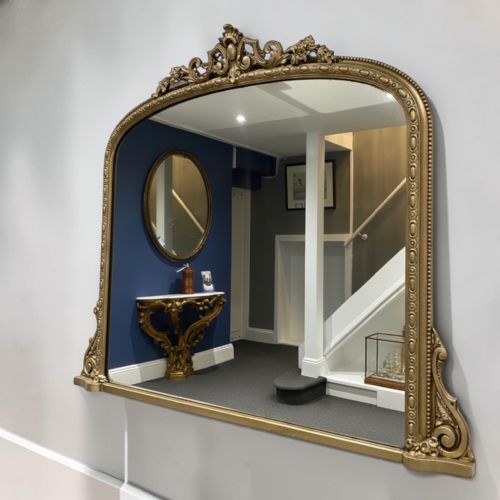
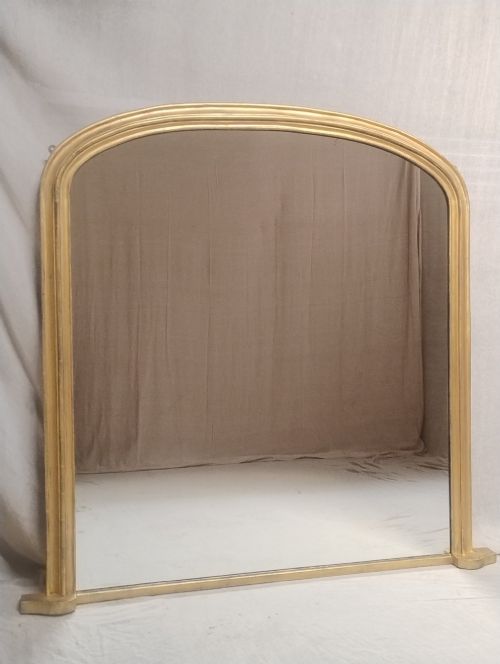
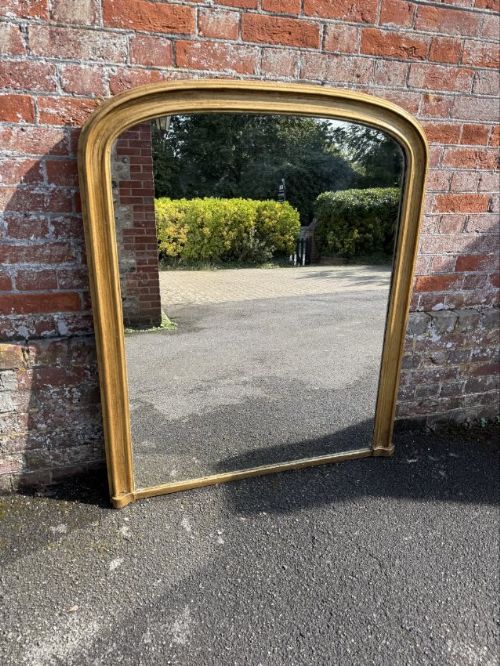


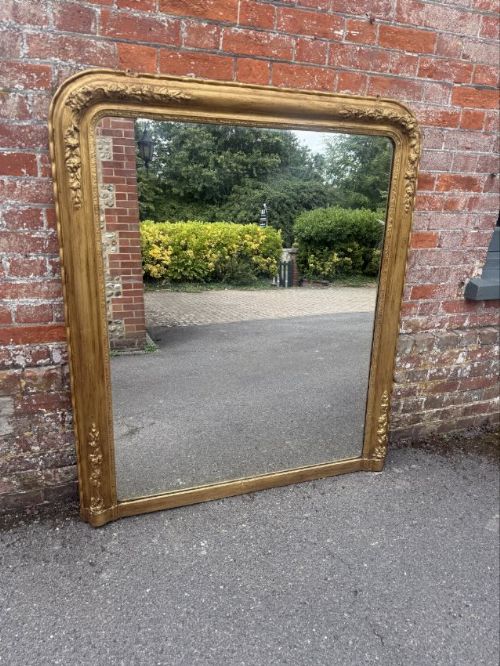
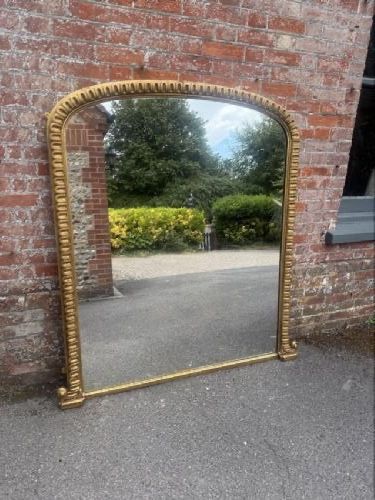
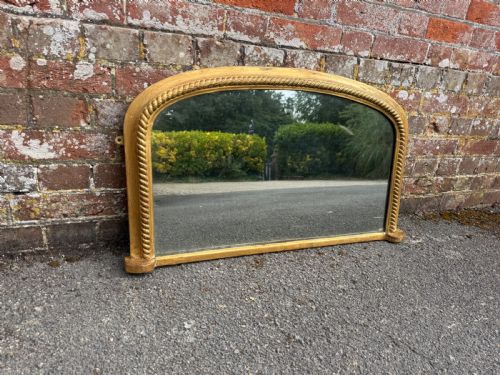
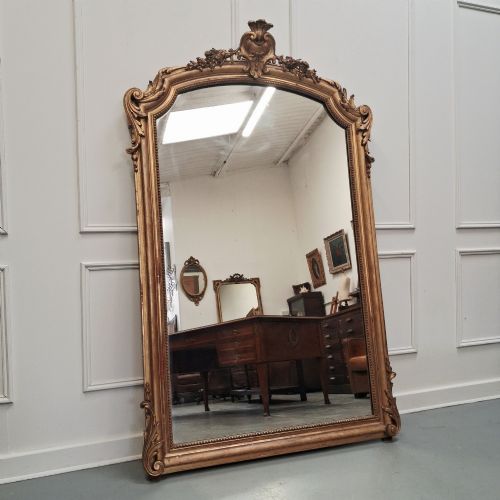
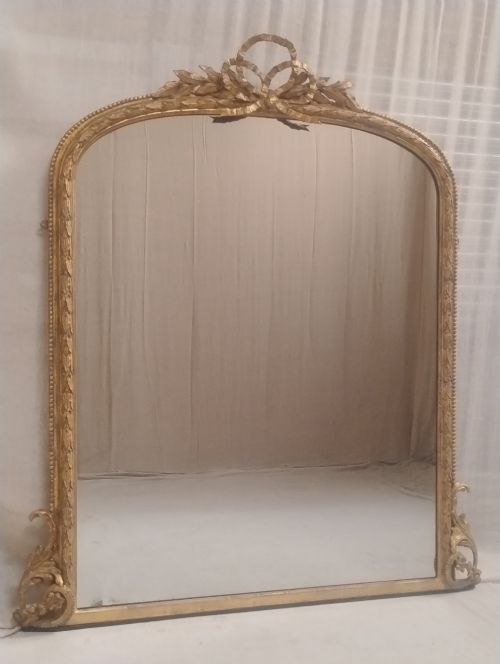
Victorian Arched Overmantel Mirror
When you search for a victorian arched overmantel mirror, you are looking for substantial fireplace glass designed to sit low on the breast and lift the room.
How they were made
Makers constructed the primary framework from timber, typically carving the wood directly or applying moulded gesso to build up high-relief ornamentation. This composite structure provided a stable base capable of supporting heavy sheets of mirror glass.
Surfaces received layers of gold leaf or applied gilt to achieve a bright, reflective finish across the frames. Detail work frequently incorporated rope twists, tulip motifs, or fern leaf decoration pressed into the gesso prior to gilding.
What varies in quality
Quality rests upon the crispness of the carved woodwork and the depth of the gesso mouldings applied to the frame. Pieces that retain their original gilt surfaces show superior craftsmanship compared to those heavily restored or overpainted later.
Proportion and scale dictate the visual impact of the glass, with monumental examples commanding attention through balanced architectural framing. The presence of original mirror glass with natural foxing adds character and confirms period authenticity.
Materials recorded across the inventory include glass, gesso, giltwood, wood, gold leaf, and plaster.
The Victorian Arched Overmantel Mirror Glossary
- Overmantel mirror
- A large wall mirror specifically proportioned to hang on the wall directly above a fireplace mantelpiece.
- Gesso
- A plaster-like mixture applied to wooden frames and carved or moulded into intricate decorative reliefs before gilding.
- Giltwood
- Timber that has been coated with gold leaf or gold paint to give a bright metallic surface.
- Rococo Revival
- A nineteenth-century design style drawing on eighteenth-century French motifs, featuring asymmetrical curves, scrolls, and naturalistic leaf carving.
- Foxing
- The natural age-related spots and discoloration that develop within antique mirror glass over many decades.
Victorian Arched Overmantel Mirror: Frequently Asked Questions
Where should an overmantel mirror be hung?
These mirrors were historically designed to sit low on the chimney breast directly above the fireplace surround. This placement allowed the glass to reflect the room and draw light downwards from the windows.
Today, they function equally well mounted above low sideboards or placed on the floor as leaner mirrors in a hallway.
Are these mirrors original to the nineteenth century?
The pieces recorded here date from the nineteenth century, spanning periods from the eighteen-fifties through to eighteen-ninety and the early twentieth century. Materials such as gesso, carved wood, and original gilt surfaces correspond directly to Victorian manufacturing techniques.
Examining the backboards, fixings, and the nature of the glass helps confirm the period origin of each specific item.
How do French styles differ from English ones?
French overmantel mirrors often incorporate Rococo Revival or Louis Philippe styling, characterised by flowing organic curves and shell or scroll crests. English versions from the same decades frequently display architectural symmetry with rope twist or tulip framing.
Both national traditions utilise carved wood and gesso finished in bright gold leaf.
Can these large mirrors support themselves on the floor?
While many nineteenth-century pieces were built as overmantels to be fixed securely to wall brackets, larger formats often double as leaner mirrors. When placed on the floor against a wall, their substantial height provides a strong visual anchor for high-ceilinged rooms.
Wall anchoring remains essential for safety regardless of whether the mirror rests on a mantel or a floor.