



Victorian Anglo Indian Sideboard
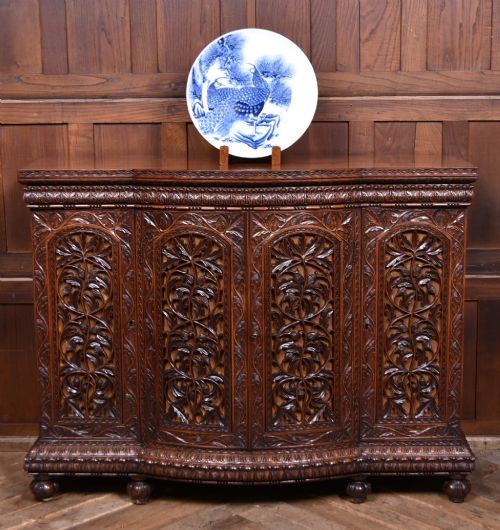
A Victorian Anglo Indian sideboard brings dense, intricate carving and rich exotic timbers into the dining room.
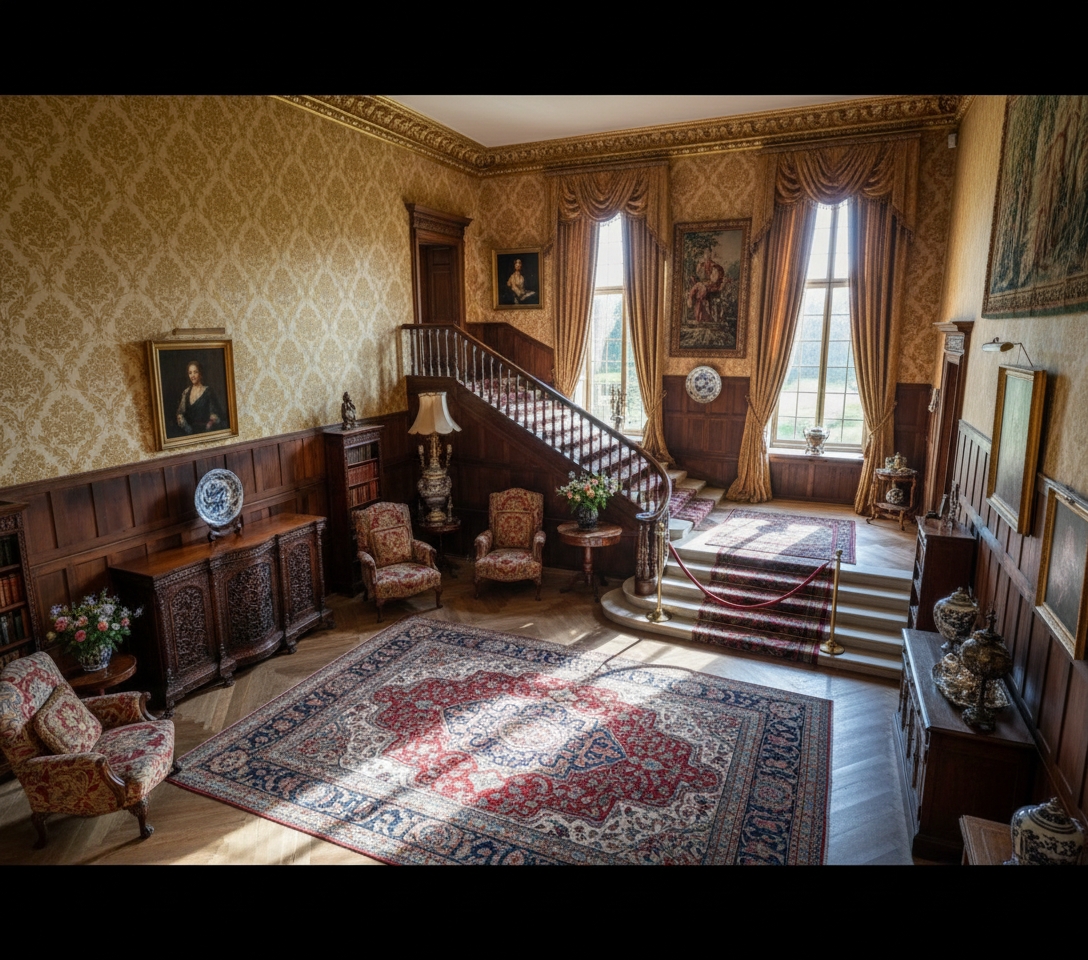
Victorian Anglo Indian Sideboard
A Victorian Anglo Indian sideboard is a substantial dining room furnishing created during the nineteenth century under British colonial influence. These pieces combine traditional British forms with the deep, dense relief carving typical of Indian and Burmese workshops.
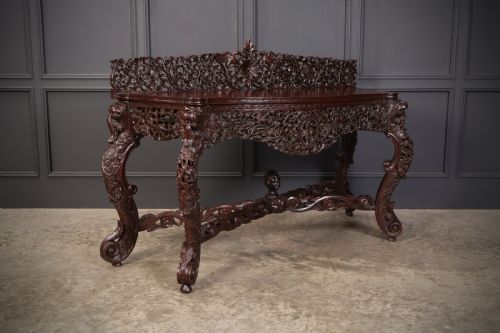
The versions most commonly met on this page include nineteenth-century sideboards, side cabinets, and console tables fashioned from dark tropical timbers. Makers often employed heavy architectural proportions alongside scrolling foliage and figural motifs.
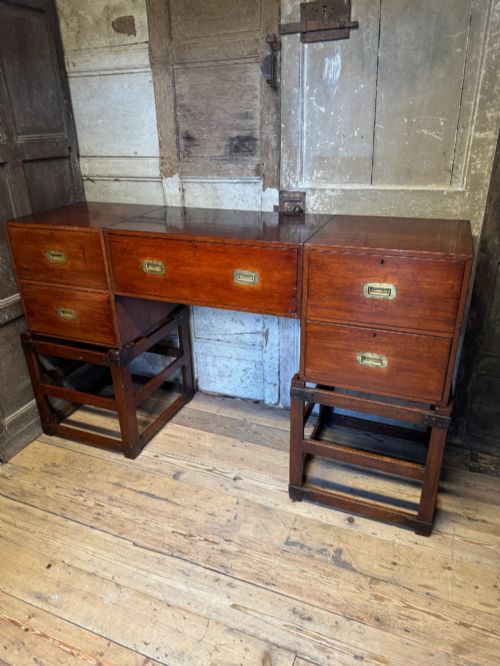
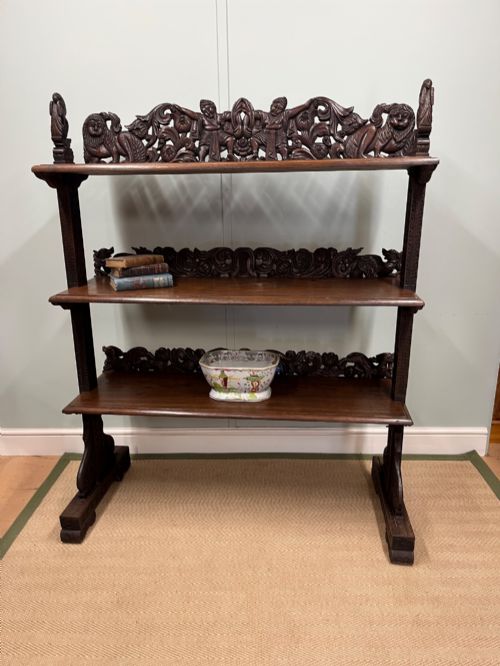
Beyond standard sideboards, the selection encompasses related forms such as three-tier buffets and campaign tables sharing the same distinctive colonial aesthetic. Each object reflects a distinct fusion of European utility and Eastern craftsmanship from the era spanning the regency to eighteen eighty.
Materials and construction methods
These items are constructed from dense exotic hardwoods including padouk, teak, satinwood, and rosewood, chosen for their durability and rich natural grain. Workshops utilised solid planks rather than thin veneers, ensuring heavy structural integrity for large sideboards and cabinets.
Ornamentation relies entirely upon hand carving executed directly into the dense timber substrate, creating deep undercuts and high relief. Metal components such as brass hardware are integrated to secure joints and drawers on campaign pieces and cabinets.
Every carved elephant on these consoles spent its entire working life hiding plates.
Judging the quality of carving and timber
The separation between ordinary and exceptional pieces lies in the crispness and depth of the hand carving across panels and cornices. Superior examples display sharp undercutting and lively detail in foliage and figures, whereas lesser pieces feature shallow, mechanical execution.
Material selection further distinguishes the work, with richly figured padouk and solid satinwood commanding greater appreciation than plainer secondary hardwoods. The integration of structural joinery without distortion in tropical climates marks the hand of a master workshop.
The Victorian Anglo Indian Sideboard Glossary
- Padouk wood
- A heavy, dense tropical hardwood displaying a deep reddish-brown tone that darkens with age. It provides a stable base for intricate carving.
- Satinwood
- A luminous timber with a characteristic golden sheen and fine grain. It is utilised for high-status side cabinets and decorative surfaces.
- Campaign table
- A portable or collapsible furnishing designed for military officers on colonial service. These items fold or dismantle easily for transport.
- Buffet
- A low sideboard or serving table featuring tiered shelving for display. Three-tier variations appear frequently in nineteenth-century colonial dining rooms.
Victorian Anglo Indian Sideboard: Frequently Asked Questions
How do I clean a padouk sideboard?
Dust the deep relief carving regularly using a soft natural bristle brush to prevent dirt accumulation in the recesses. Apply a traditional beeswax sparingly to nourish the tropical hardwood without dulling its grain.
Avoid liquid polishes containing silicone, which can penetrate deep into hand-carved joints and attract further dust over time. Maintain a stable room temperature to protect the solid timber from splitting.
Will a large cabinet fit my dining room?
Nineteenth-century sideboards and cabinets were built with substantial proportions to anchor formal dining spaces. Measure both ceiling height and floor area carefully before placement.
Consider the door clearance required for moving heavy hardwood furniture into position. Placing the piece away from direct heat sources prevents the tropical timber from warping.
How do I date a nineteenth-century piece?
Examine the construction methods, secondary timbers, and fastener types used within the internal framework. Nineteenth-century items often show hand-cut joinery combined with early machine-sawn components.
Compare the decorative vocabulary, such as gothic revival elements or Burmese carving styles, against documented periods. Patina developed on padouk and teak surfaces also indicates genuine age.
What is the difference between Burmese and Indian pieces?
Burmese colonial furniture frequently showcases deep, naturalistic carving featuring dense foliage and animal motifs in padouk wood. Indian workshops often incorporate more architectural geometry and varied regional hardwood species.
Both traditions merge British functional forms with local carving expertise under nineteenth-century colonial rule. Examining the specific relief depth helps identify the regional origin.