
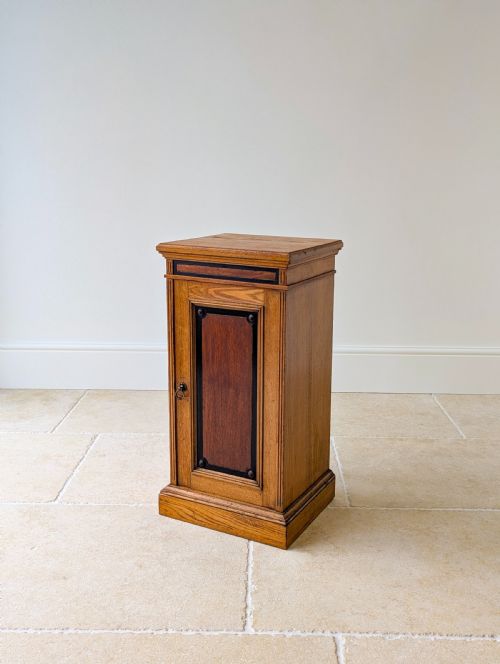


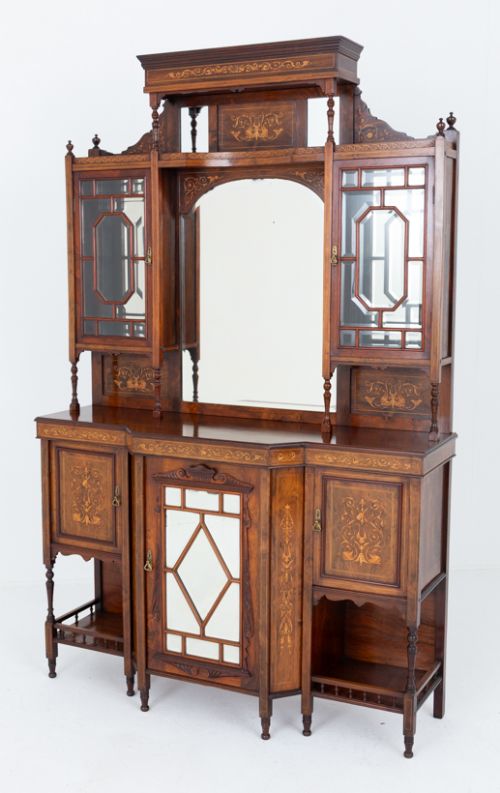
Victorian Aesthetic Cabinet
When you search for a victorian aesthetic cabinet, you meet furnishings shaped by nineteenth-century design reform, marrying dark woods, bamboo, and Japanese motifs for domestic display.
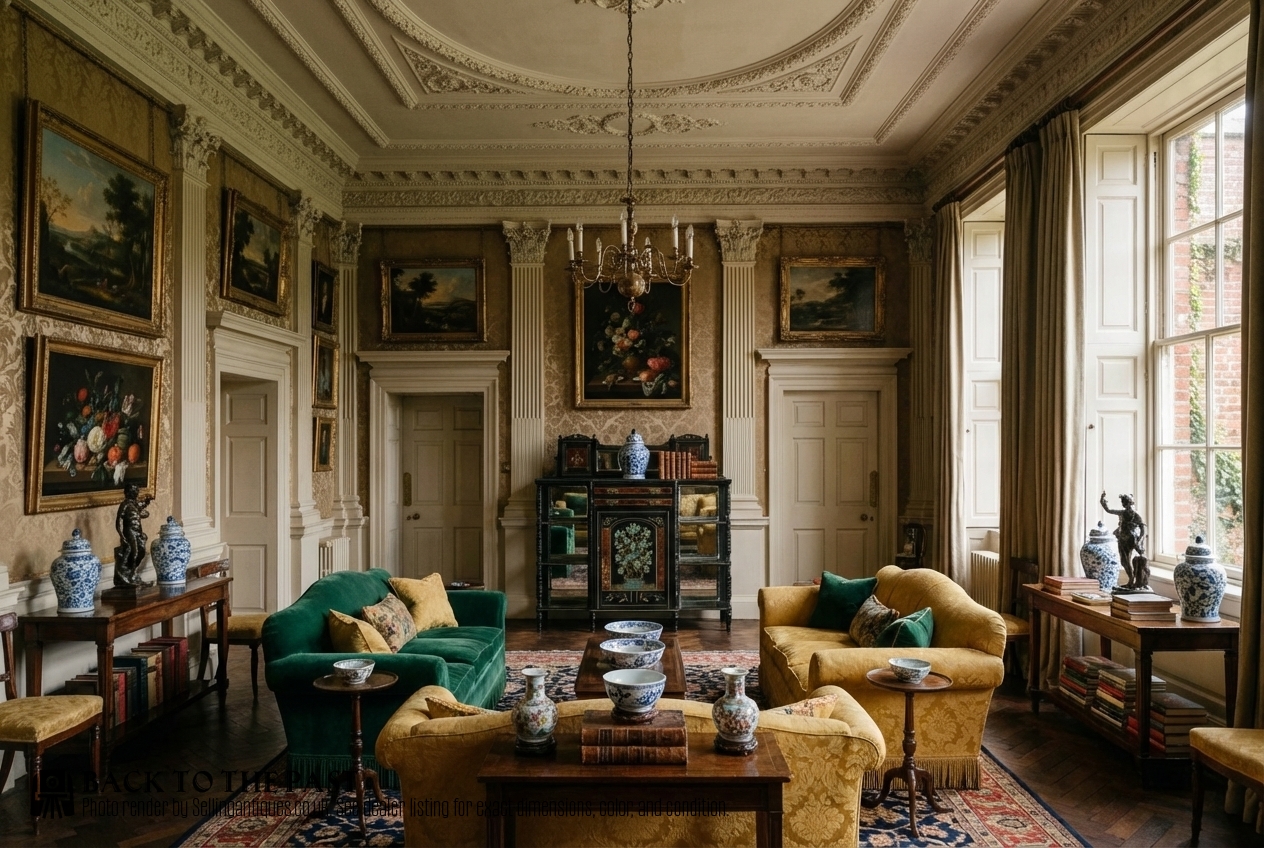
Victorian Aesthetic Cabinet
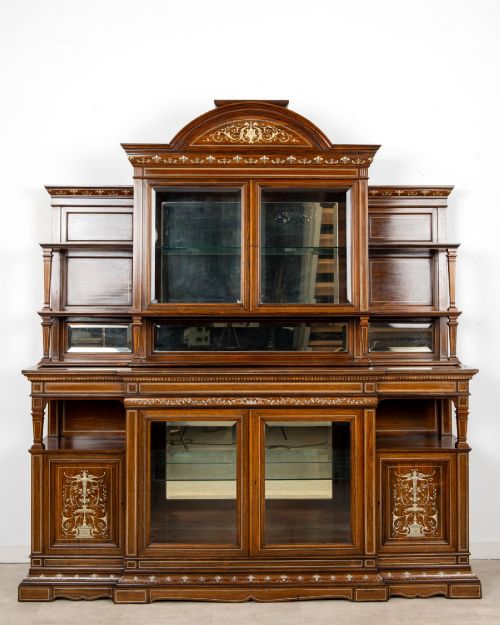
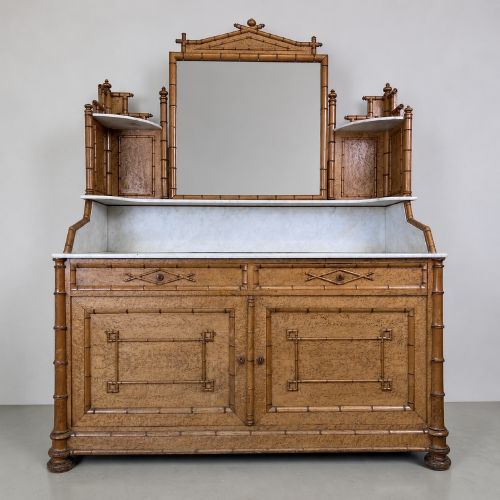
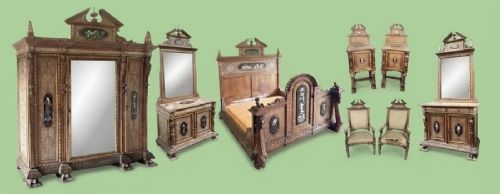
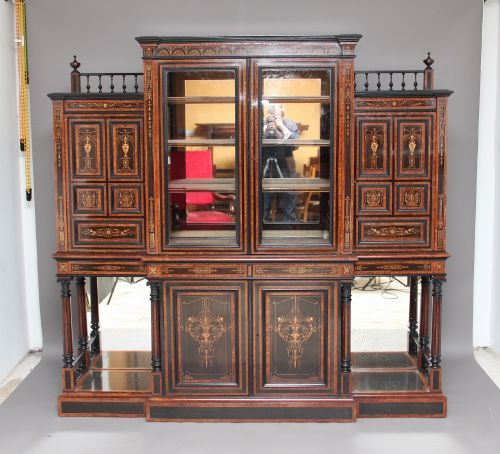
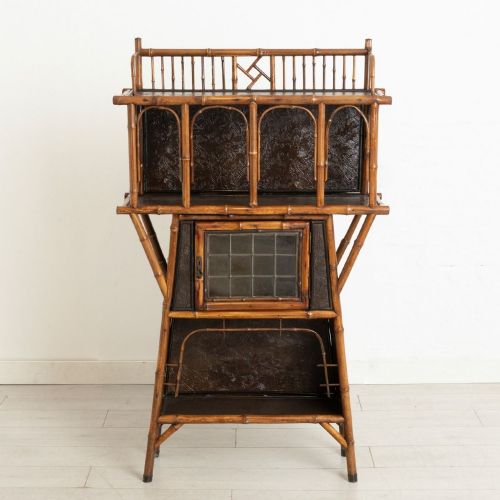
A victorian aesthetic cabinet encompasses a diverse group of nineteenth-century furniture forms designed during the height of the movement, ranging from large glazed display bookcases and credenzas to compact bedside tables, washstands, and wall-hanging cupboards.
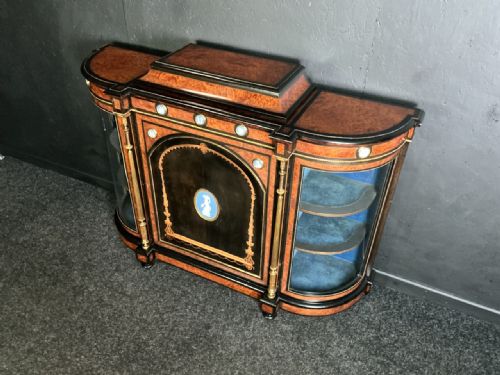
The objects frequently display geometric lines, ebonised surfaces, and gilt highlights that reflect a departure from heavy mid-century revivalism towards lighter, more artistic domestic interiors.
Buyers browsing this selection encounter pieces originating from the 1870s through the end of the century, capturing both English cabinet-making traditions and French interpretations of the style.
Materials and construction
Cabinet-makers relied on dense timbers such as rosewood, walnut, coromandel, and mahogany, alongside wood treated with ebonised finishes to mimic Japanese lacquer or ebony.
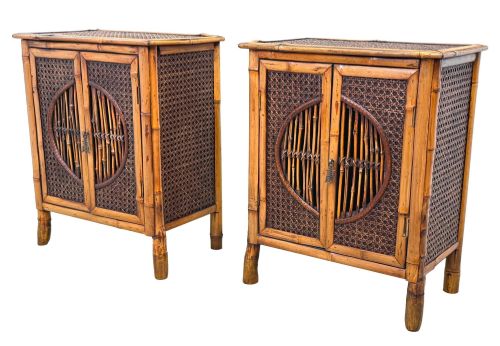
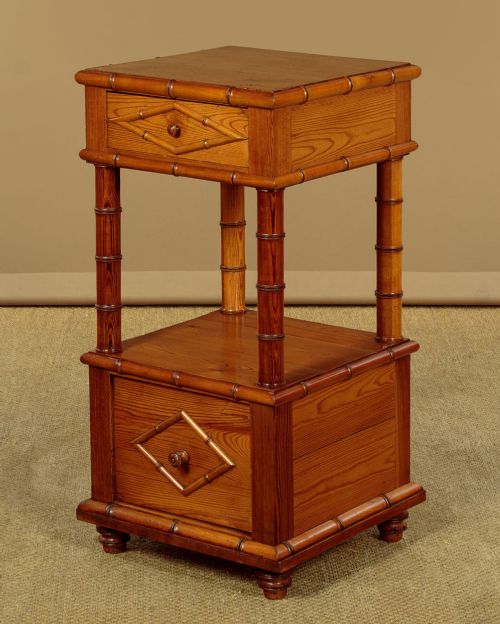
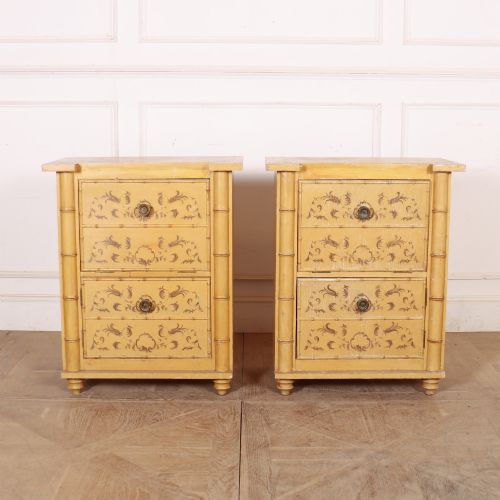
Bamboo and faux bamboo appeared frequently in lighter pieces, while marquetry inlay, brass mounts, mirrored backs, and glazed doors provided visual contrast to the dark surfaces.
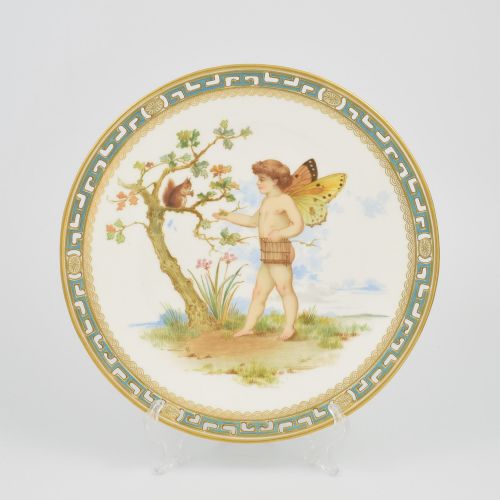
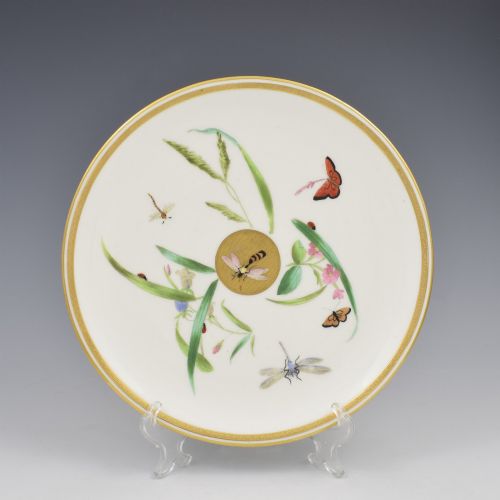
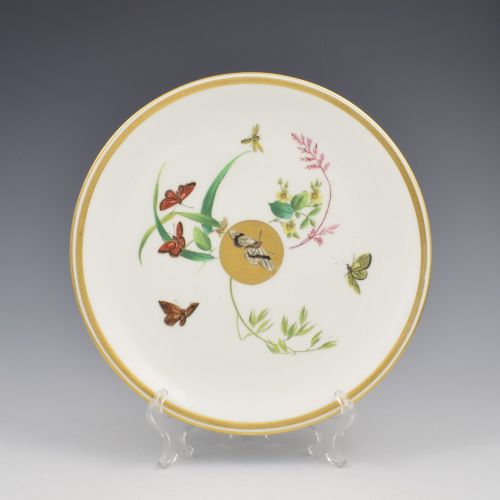
Musicians stored their sheets inside dedicated ebonised cabinets whilst fairies and squirrels chased gilt insects across porcelain plates.
Distinctions in quality
Quality rests upon the refinement of the timber selection and the precision of the marquetry, turning, and gilt highlights applied to the structure.
Works bearing attribution to documented firms or specific designers demonstrate superior joinery and cabinet-making execution compared to standard commercial workshop production.
Collinson and Lock·Waring and Gillows·Lamb of Manchester·Liberty and Co·Henry Ogden and Son·Garnett and Sons·John Moyr Smith·Gregory and Co
The Victorian Aesthetic Cabinet Glossary
- Ebonised Wood
- Timber treated with a dark stain or finish to imitate ebony. This technique was popular in nineteenth-century furniture to create stark contrasts with gilt highlights and inlay.
- Aesthetic Movement
- A late nineteenth-century design ethos prioritising visual and material beauty over narrative or moral purpose in art and home furnishings. It drew heavily on Japanese decorative arts.
- Credenza
- A low dining-room sideboard or cabinet used for serving food or displaying decorative objects. In this period, they often featured glazed doors and intricate marquetry.
- Pier Cabinet
- A narrow display cabinet designed specifically to stand against the wall space between windows. These typically incorporated glass doors to protect porcelain and collectibles.
- Marquetry
- The art of applying small pieces of veneer to a structure to form decorative patterns. Makers utilised varied wood tones to create floral or geometric motifs on cabinet doors.
Victorian Aesthetic Cabinet: Frequently Asked Questions
What is a aesthetic cabinet?
A victorian aesthetic cabinet is a piece of nineteenth-century furniture created under the influence of the Aesthetic Movement, focusing on artistic design rather than strict historical revivals.
These pieces typically showcase ebonised wood, bamboo structures, or rich veneers like walnut and rosewood, often accented with Japanese-inspired motifs.
How were these cabinets used?
Owners utilised these furnishings to store and display precious ceramics, books, sheet music, or personal items within drawing rooms, bedrooms, and reception halls.
Smaller variants functioned as bedside tables or washstands, while larger credenzas and pier cabinets served as central decorative anchors in domestic interiors.
How do I identify the period?
The period is identified through characteristic stylistic markers such as ebonised surfaces, gilt highlights, bamboo framing, and flat geometric panels dating from the 1870s to the 1900s.
Many examples also bear maker stamps, registry marks, or documented construction methods typical of late nineteenth-century British and French cabinet-making.
Where were they made?
These cabinets were primarily manufactured in workshops and factories across England, with notable production centres in London and Manchester.
Certain items also reflect continental influence, encompassing French interpretations of bamboo and maple furniture design from the same era.