
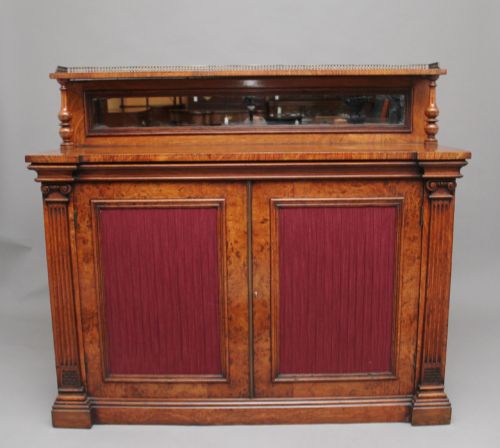
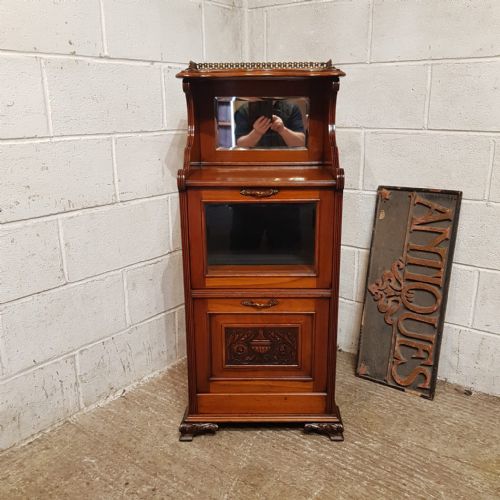

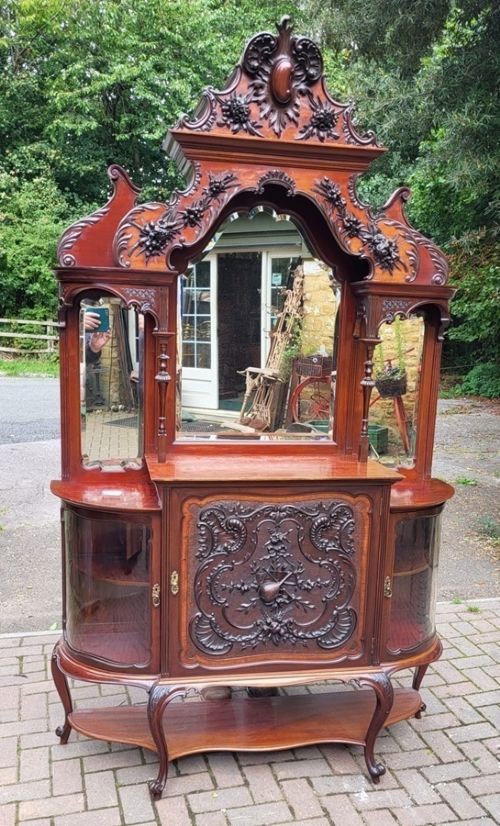
Antique Side Cabinet Mirror
When you search for an antique side cabinet mirror, you encounter pieces that combine functional timber storage with reflective glass plates, largely originating from Victorian and Edwardian workshops.
Antique Side Cabinet Mirror
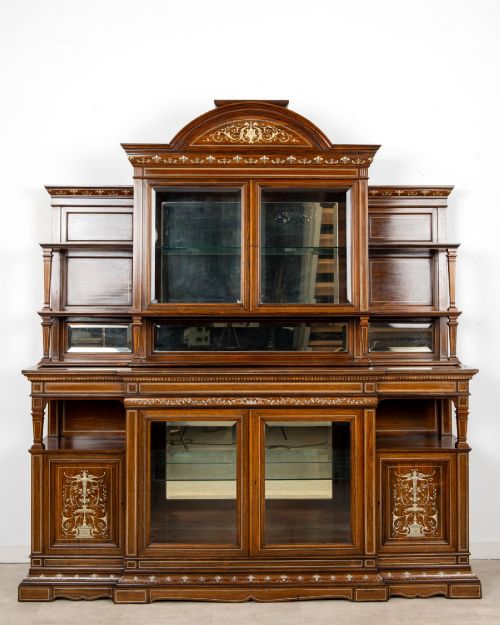
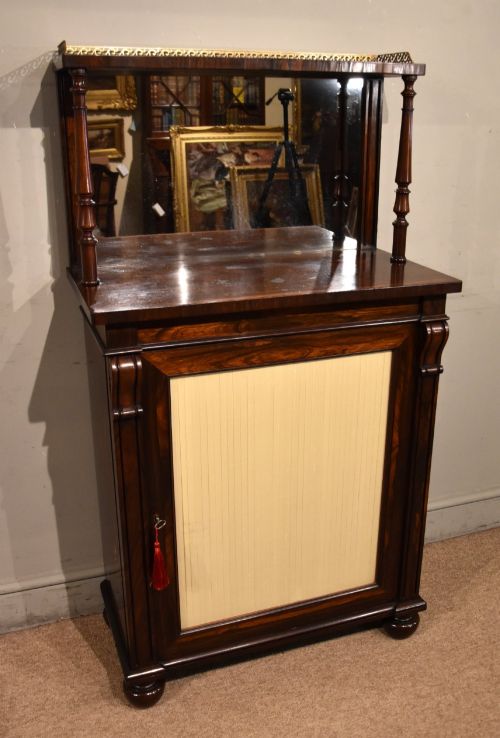
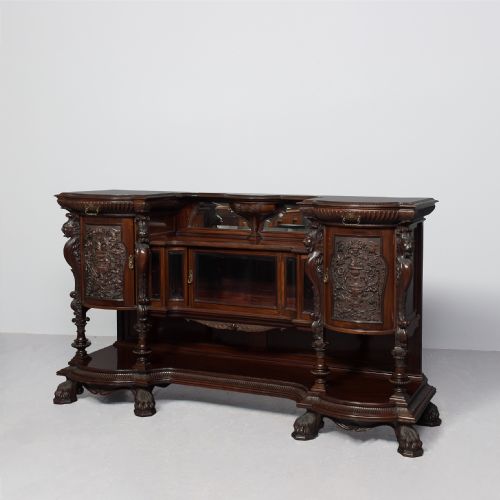
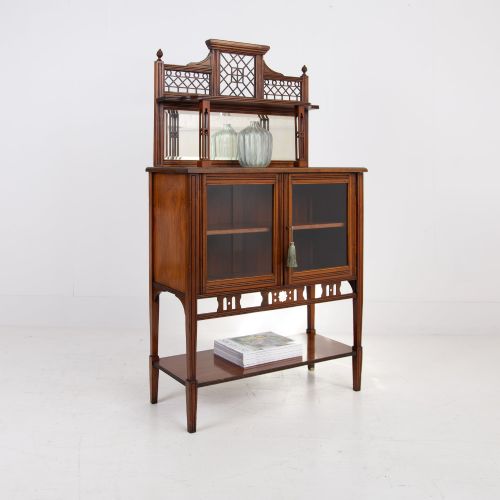
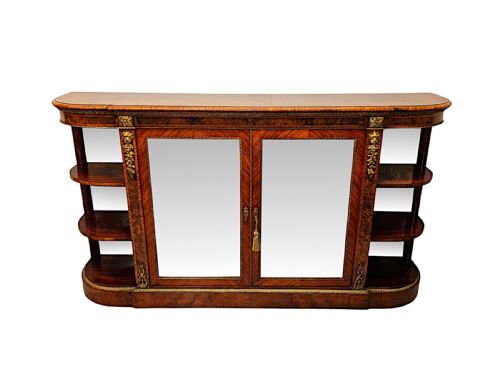
The term antique side cabinet mirror points to a varied group of nineteenth and early twentieth century case furniture that integrates a reflective glass surface with a low storage unit. These objects include mirrored chiffoniers, credenzas, and display cabinets designed to sit against a wall in principal rooms.
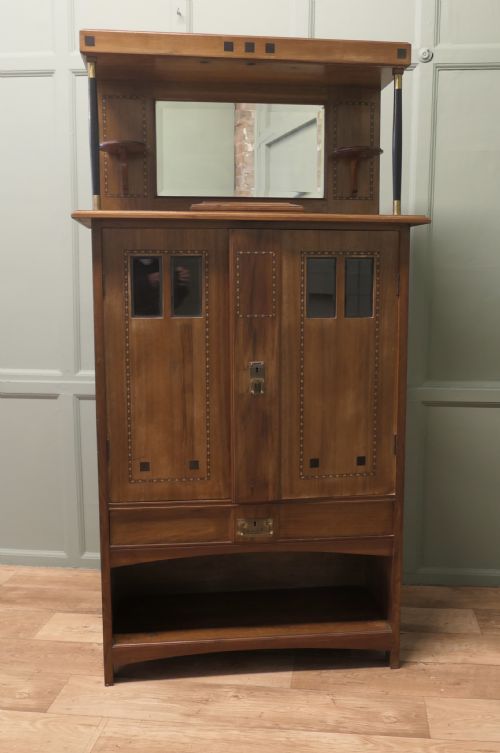
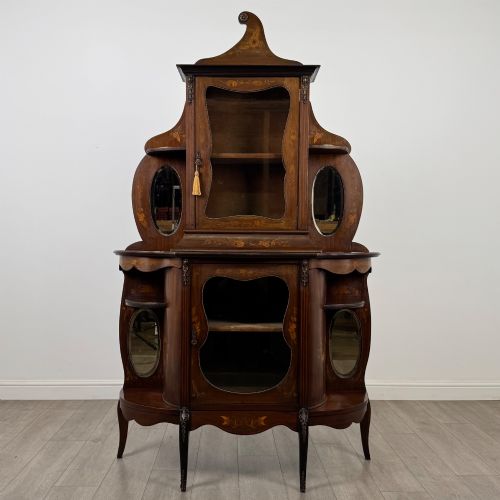
Most examples found in this inventory date from the Victorian period through to the Edwardian era, employing timbers such as rosewood, mahogany, and walnut. They typically combine enclosed cupboards or open display shelves with an attached or integrated mirror back.
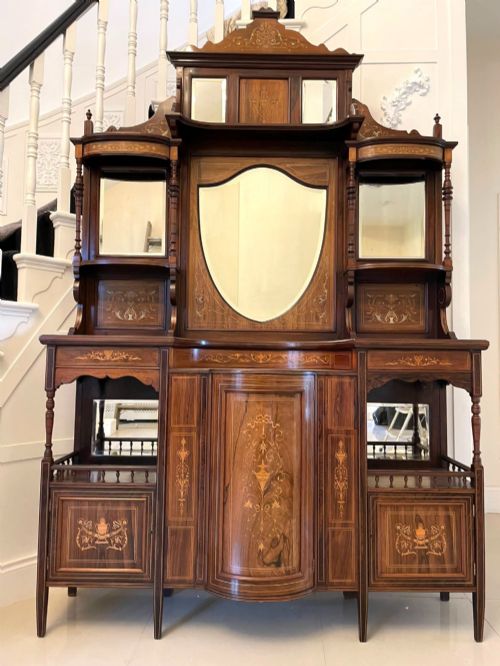
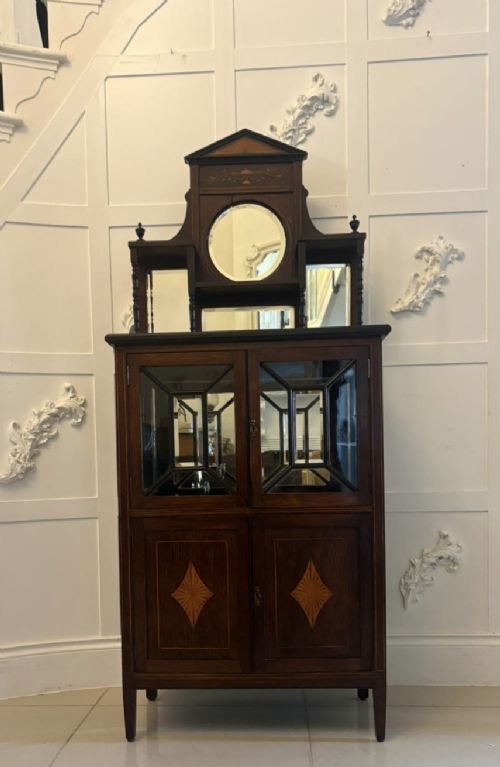
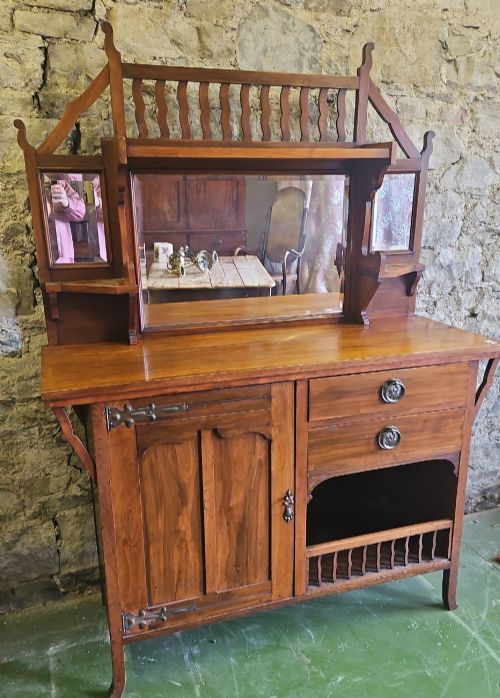
Makers utilised these forms to bounce light around a Victorian interior while providing a surface for decorative objects or serving. The mirror glass is frequently bevelled and set into a carved or inlaid wooden frame rising directly from the cabinet top.
How they were made
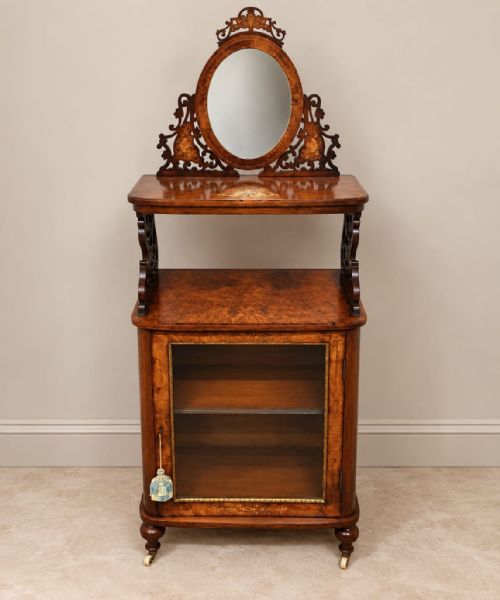
Cabinet makers constructed the carcases of these pieces using dense hardwoods like mahogany and rosewood, often applying veneers of burr walnut, satinwood, or pollard oak to the primary visual surfaces. Marquetry inlay in lighter woods and brass stringing frequently decorate the doors and friezes.
The glass elements rely on silvered mirror plates, sometimes mounted with brass or ormolu mounts, and framed by carved crestings or integrated wooden galleries. Carved mahogany and walnut components show hand-chiselled details, particularly on Victorian mirror-backs and cupboard doors.
Materials recorded in current and archived stock include rosewood, mahogany, burr walnut, pollard oak, satinwood, kingwood, and brass.
What varies in quality
Quality in these mirrored cabinets rests on the selection of timber veneers and the intricacy of the marquetry work. Finer specimens display symmetrical burr walnut or figured rosewood grains matched across panels, alongside precise brass inlay rather than simple painted decoration.
The structural integration of the mirror back dictates the tier of the piece, with superior examples featuring heavy bevelled mirror glass securely housed in robustly carved wooden frames. Maker attribution, such as work stamped by established firms, elevates a piece through superior joinery and refined proportions.
Collinson and Lock·Gillows·Holland and Sons·Lamb of Manchester·Pauly et Cie
The Antique Side Cabinet Mirror Glossary
- Chiffonier
- A low timber cabinet equipped with drawers and cupboards, frequently topped by a mirrored superstructure used for display in nineteenth-century interiors.
- Credenza
- A grand sideboard or cabinet, often mounted with ormolu and fine inlays, originating as a serving table before evolving into a principal display piece.
- Marquetry
- The art of forming decorative patterns on timber surfaces using thin veneers of various coloured woods, bone, or ivory.
- Ormolu
- Gilded bronze mountings applied to furniture pieces, providing decorative brass highlights popular during the nineteenth century.
- Secessionist
- An early twentieth-century design movement focusing on simplified geometric forms and rejection of traditional historic revival styles.
Antique Side Cabinet Mirror: Frequently Asked Questions
How do I date a mirror back cabinet?
Dating relies on timber choice, hardware, and stylistic markers recorded across the nineteenth century. Victorian pieces often employ rosewood or walnut with heavy carved crestings, while Edwardian versions lean towards satinwood and lighter inlaid mahogany.
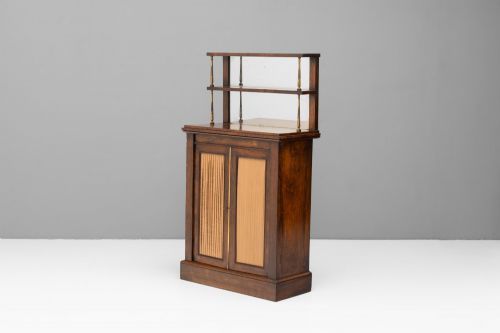
The integration of the mirror provides further clues. Earlier Regency and William IV chiffoniers feature simpler gallery rails or separate glass plates, whereas late Victorian and Aesthetic Movement examples incorporate expansive bevelled mirror-backs as an integral architectural element.
What rooms suit an antique mirrored cabinet?
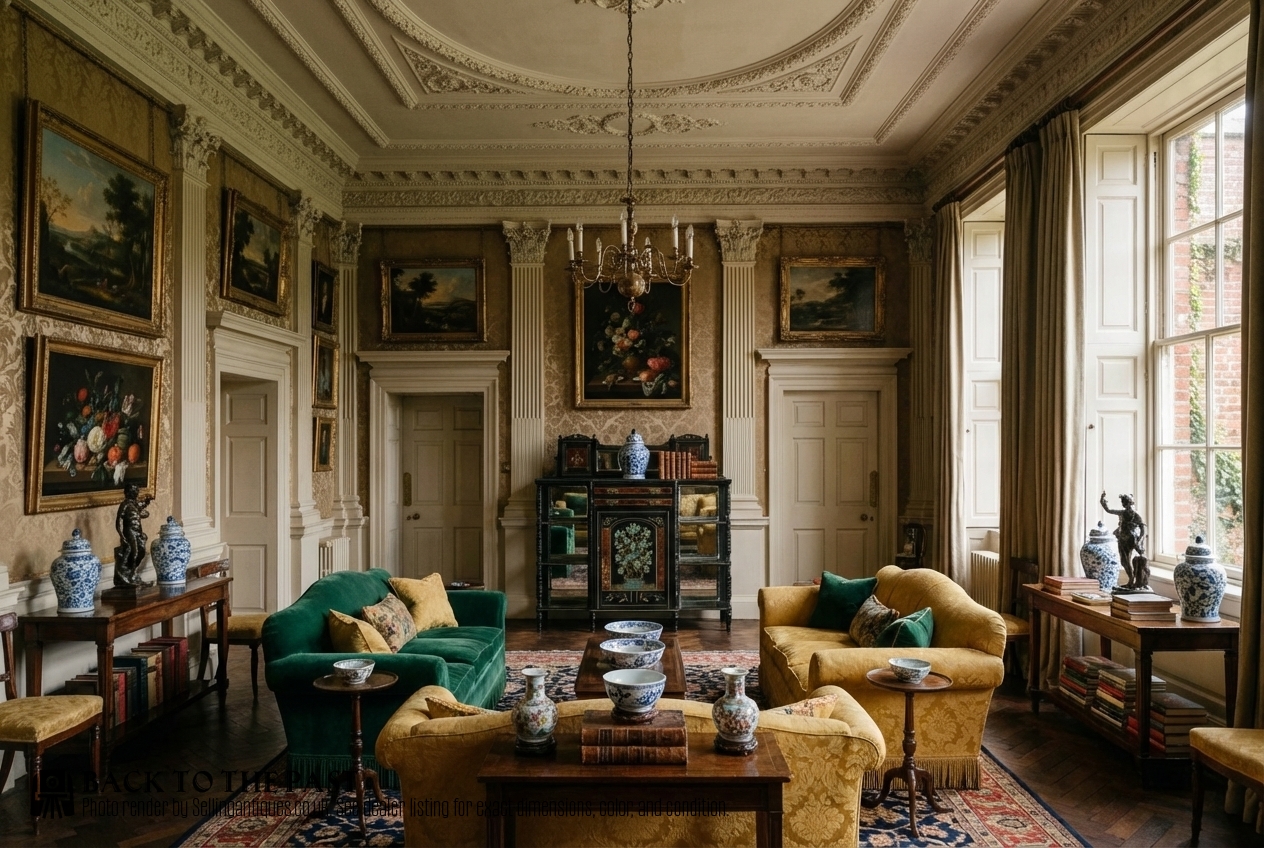
These cabinets work effectively in dining rooms, living spaces, and hallways where their storage and reflective qualities serve a practical purpose. Historically placed against drawing room walls, they bounce natural light around the space.
The shallow depth of many chiffoniers and side cabinets allows them to sit comfortably in narrower circulation areas without obstructing movement. The reflective glass plate visually expands smaller rooms.
How do I care for antique mirror glass?
Maintenance requires gentle cleaning methods that protect both the silvered backing of the glass and the surrounding timber frame. Avoid harsh chemical sprays that can seep behind the mirror plate and degrade the historic foil.
Apply a mild, alcohol-free cleaner to a soft cloth rather than directly onto the glass surface. Ensure the wooden frame remains conditioned with appropriate wax to prevent the timber from drying out around the mirror rebate.
What is the difference between a chiffonier and a credenza?
A chiffonier is typically a compact, low nineteenth-century cabinet featuring a small shelved superstructure or mirror back above a pair of panelled doors. They were standard fixtures in Victorian dining rooms for storing tableware.
A credenza is generally a larger, more symmetrical piece derived from continental forms, often featuring curved ends, extensive marquetry, and ormolu mounts. They functioned primarily for formal display rather than practical dining storage.