
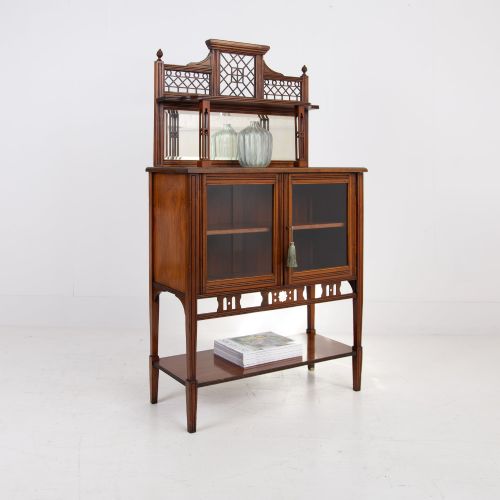
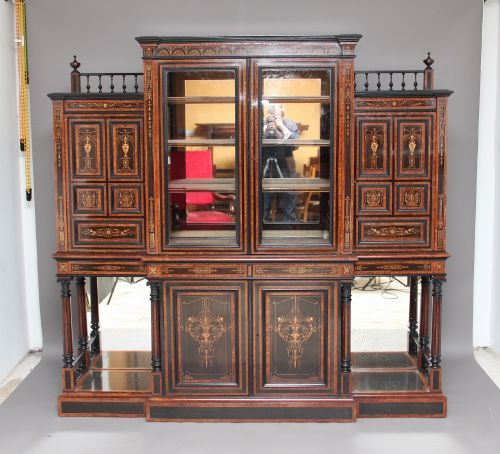
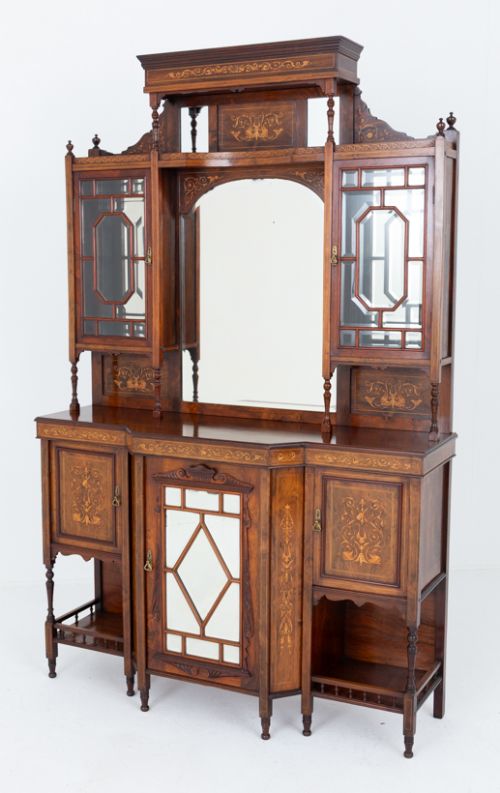


Antique Aesthetic Side Cabinet
An antique aesthetic side cabinet brings refined nineteenth-century craftsmanship into a modern interior through rich woods and distinctive decorative details.
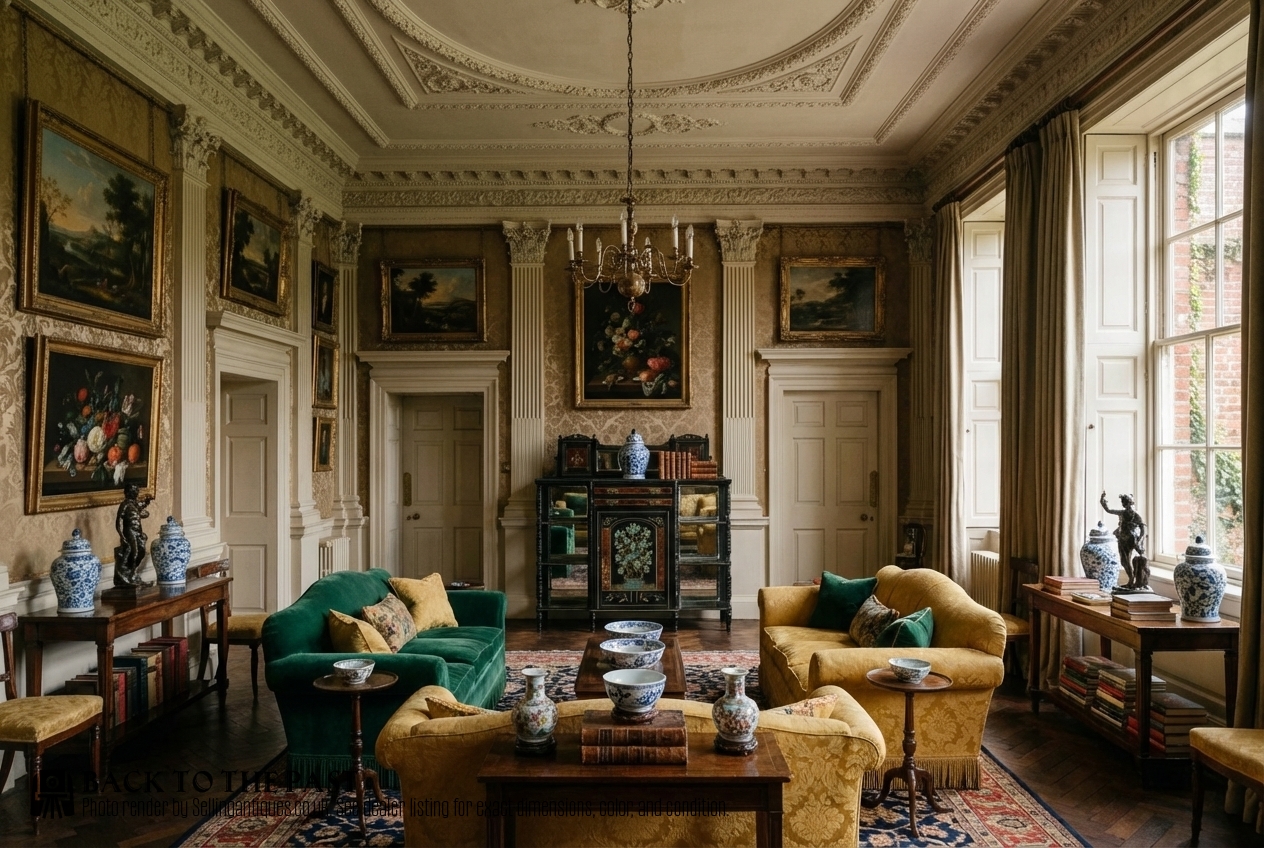
Antique Aesthetic Side Cabinet
When you search for an antique aesthetic side cabinet, you encounter compact storage pieces shaped by late nineteenth-century design reforms. These items combine utility with the artistic ideals of the Victorian period, serving as focal points in reception rooms and halls.
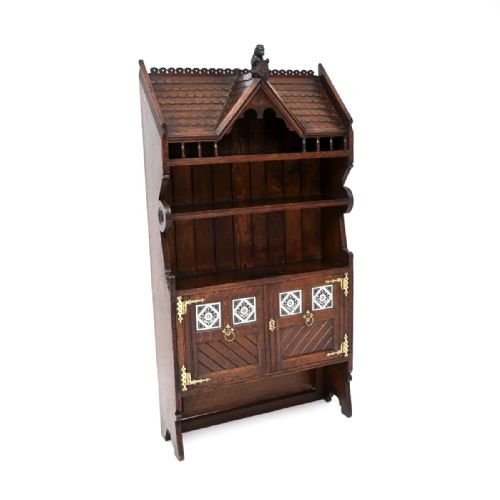
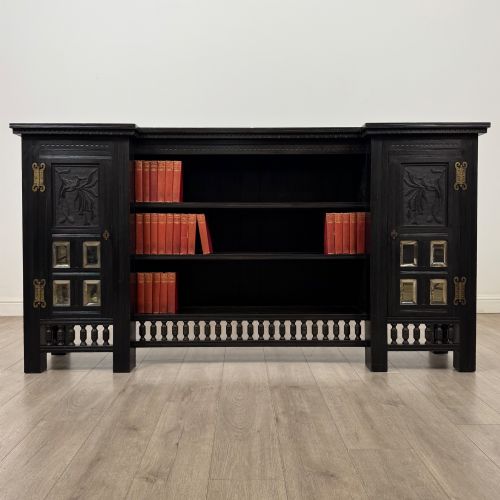
The pieces on this page span the nineteenth and early twentieth centuries, covering the height of the Victorian era through Edwardian revivals. They include side cabinets, display cabinets, and credenzas rooted in the Aesthetic Movement and Anglo-Japanese styles.
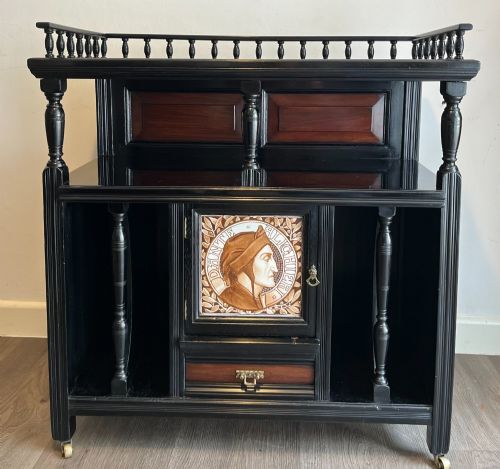
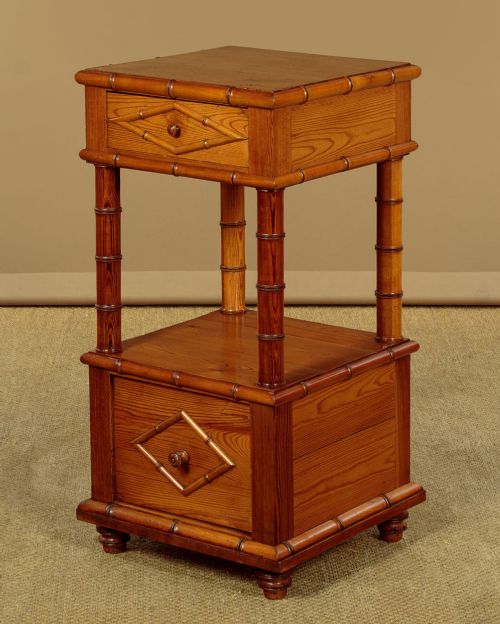
Rosewood, mahogany, and ebonised wood dominate the forms, frequently enriched with marquetry, brass mounts, and glazed doors. You also find specialised variations such as bedside cabinets and occasional tables sharing the same visual vocabulary.
Materials and construction methods
Cabinetmakers utilised dense timbers like rosewood, walnut, and mahogany, often applying ebonisation to mimic expensive exotic hardwoods. Surfaces frequently receive profuse inlaid marquetry or contrasting gilt highlights to catch the light.
Structural elements incorporate brass hardware, mirrored panels, and glazed sections for display. Specialised designs integrate painted details or majolica ceramic panels to introduce colour and texture into the wooden framework.
Several cabinets manage to incorporate faux bamboo, majolica panels, and pagoda tops all at once.
Assessing quality in cabinet work
Quality rests in the precision of the joinery and the complexity of the surface decoration. Pieces featuring intricate marquetry, hand-painted panels, or fine gilt work occupy the upper tier of the range.
Attribution to notable workshops elevates a piece, as does the selection of superior timbers such as burr yew or coromandel. The integration of specialised components like original brass mounts and undamaged bevelled glass marks superior output.
Collinson and Lock·Lamb of Manchester·Liberty and Co·James Plunckett·Bruce Talbert·Gillows·Stephen Webb·E W Godwin
The Antique Aesthetic Side Cabinet Glossary
- Aesthetic Movement
- A late nineteenth-century design reform movement emphasising art for art's sake and breaking away from heavy Victorian industrial styles. It drew heavy inspiration from Japanese art and decorative traditions.
- Ebonised Wood
- Timber treated with a dark stain or finish to imitate ebony. This technique was widely utilised by nineteenth-century cabinetmakers to create dramatic contrast with gilt highlights or inlay.
- Marquetry
- The art of applying decorative pieces of veneer to a structure to form intricate patterns and pictures. Makers used various contrasting woods to achieve pictorial depth.
- Anglo-Japanese
- A design style combining traditional British cabinet forms with Japanese decorative motifs and structural simplicity. This approach appeared frequently in furniture associated with the Aesthetic Movement.
- Majolica
- Opaque tin-glazed earthenware decorated with colourful metallic oxide glazes. These panels occasionally appear inset into nineteenth-century cabinet doors for decorative effect.
Antique Aesthetic Side Cabinet: Frequently Asked Questions
Where did people place these cabinets?
These cabinets sat primarily in principal reception rooms, drawing rooms, and hallways to display decorative objects or store small items.
Smaller variations functioned as bedside tables or companion pieces beside seating areas within the home.
How do I date an aesthetic cabinet?
Dating relies on stylistic markers such as ebonised finishes, Anglo-Japanese motifs, and specific inlay patterns prevalent during the late nineteenth century.
Construction traits, secondary woods, and hardware styles also help distinguish pieces spanning the Victorian to Edwardian periods.
What woods were used most often?
Rosewood and mahogany serve as the primary structural and decorative timbers across most surviving examples.
Cabinetmakers also utilised walnut, oak, pitch pine, and ebonised mahogany to achieve contrasting dark surfaces.
Are these cabinets suitable for daily use?
Sturdy timber construction and functional shelving make these cabinets practical for storing books, tableware, or everyday items.
Careful placement away from direct sunlight protects delicate veneers, marquetry, and painted panel surfaces over time.