


Ebonised and Gilt Cabinet
An ebonised and gilt cabinet brings a sharp, dark silhouette and reflective metallic enrichment into a room, favoured by collectors of Victorian and continental design.
Ebonised and Gilt Cabinet
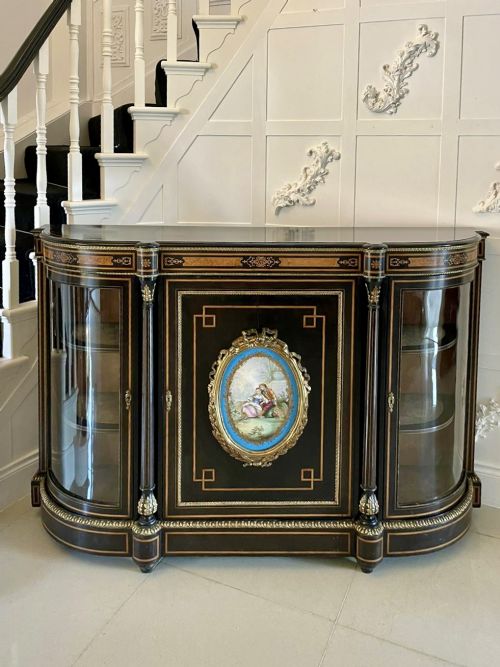
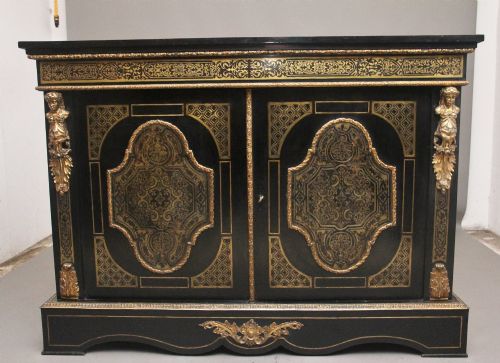
An ebonised and gilt cabinet is a storage or display piece defined by its darkened, simulated ebony surface paired with gilded highlights, metal mounts, or inlay. These pieces serve as focal points in a drawing room or study, historically used to display ceramics, books, or precious objects behind glass doors.
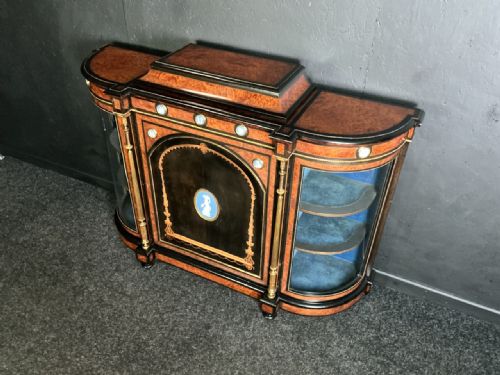
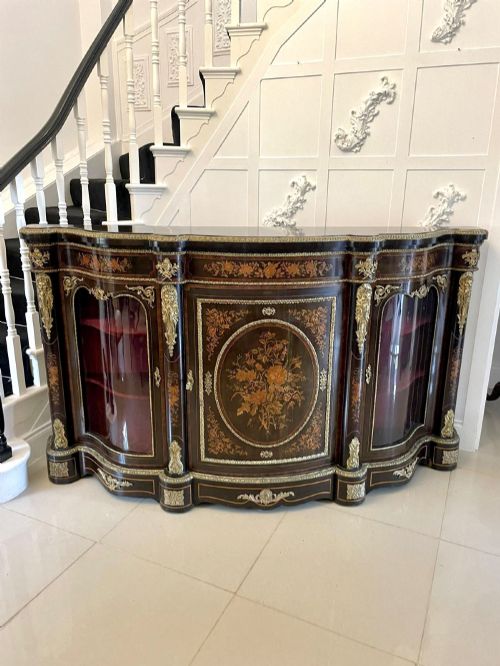
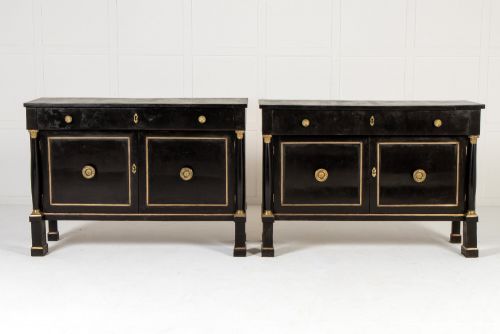
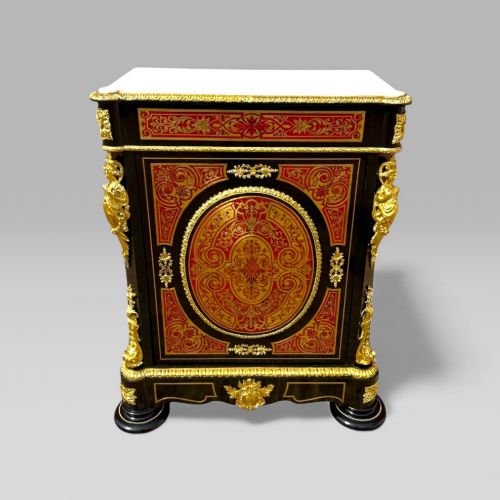
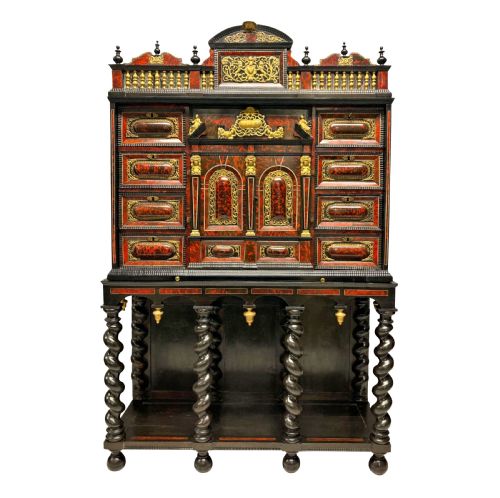
The selections available here range widely in form and origin, spanning French credenzas, English Victorian pier cabinets, and continental architectural cabinets on stands. The Victorian versions and French nineteenth-century models appear most frequently, often incorporating glazed panels, marble tops, and marquetry.
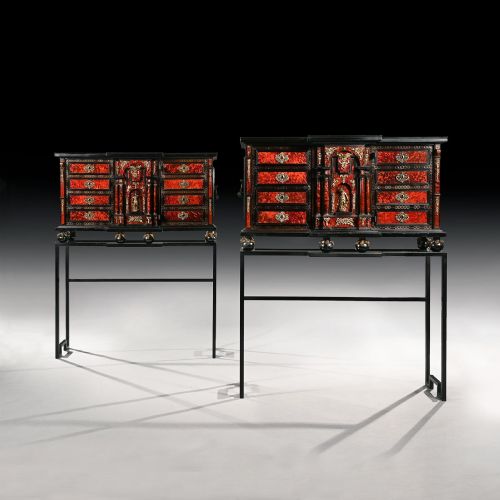
Earlier examples also surface, reaching back to seventeenth-century Spanish, Italian, and Flemish workshops where tortoiseshell and boullework meet ebonised framing. Whether selecting a compact pier cabinet or a substantial breakfront credenza, the form relies on the contrast between matte black wood and gleaming metal.
How they were made
Cabinet makers achieved the characteristic dark finish by staining fruitwood, mahogany, or walnut to imitate ebony, a technique that created a uniform, light-absorbing surface. This dark ground was then embellished with parcel-gilt, brass stringing, or cast bronze mounts fixed to the corners and panels.
Surface decoration frequently involved boullework, combining tortoiseshell and brass inlay, alongside floral marquetry utilising amboyna, mahogany, and other contrasting timbers. Mounts of ormolu or gilt metal were cast and chased separately before being screwed to the carcase.
Architectural elements on seventeenth-century pieces relied on layered mouldings, ebony veneers, and inset panels of stone or porcelain. Glazed doors utilised timber frames rebated to hold glass plates securely behind delicate brass or gilt woodwork.
Listings feature periods spanning from the seventeenth century through to the late Victorian era, alongside continental styles including French Napoleon III and Spanish Baroque.
What varies in quality
The standard of a piece rests heavily on the crispness of the gilt mounts and the precision of the surface inlay. Finely chased ormolu with sharp definition separates superior workshops from standard commercial production.
The integrity of the ebonised finish and the stability of underlying timbers dictate durability. Pieces retaining their original tortoiseshell panels, porcelain plaques, and unbroken marquetry lines command greater appreciation from collectors.
Interior execution, such as polished mahogany secondary woods, original velvet-lined shelving, and robust locking mechanisms, distinguishes the work of prominent makers and better cabinet houses.
Lamb of Manchester
The Ebonised and Gilt Cabinet Glossary
- Ebonised
- Wood treated with stain, dye, or paint to simulate solid ebony. This process gives a dense, uniform black finish popular during the nineteenth century.
- Ormolu
- Gilded bronze used for decorative mounts and feet. The technique involves applying a gold amalgam to cast bronze and heating it to drive off the mercury.
- Boullework
- An marquetry technique using tortoiseshell and brass inlay. Developed in France, it creates intricate patterns that reflect light against dark surfaces.
- Pier Cabinet
- A narrow display cabinet designed to stand against the wall space between windows. These typically feature a single glazed door and a flat top.
- Credenza
- A low cabinet or sideboard used for storage and display. Nineteenth-century examples often incorporate curved ends and central glazed doors.
- Marquetry
- Decorative veneer patterns applied to furniture carcases. Artisans cut thin pieces of various timbers to form floral or geometric pictures.
Ebonised and Gilt Cabinet: Frequently Asked Questions
What is an ebonised and gilt cabinet?
An ebonised and gilt cabinet is a piece of furniture built from timber stained black to resemble ebony and decorated with gold leaf, metal mounts, or brass inlay. These pieces were designed to display prized possessions and add formal elegance to nineteenth-century interiors.
They appear in various forms, including low credenzas, tall pier cabinets, and architectural stands. The dark surface creates a high-contrast backdrop for porcelain, glass, and gilded details.
Where were these cabinets placed in a home?
Victorian and nineteenth-century households positioned these cabinets in principal reception rooms, drawing rooms, and formal dining spaces. Pier cabinets specifically occupied the wall spaces between windows, making the most of available natural light.
Larger credenzas stood against main walls to display decorative ceramics and hold household silver. Their reflective glass and gilt mounts helped brighten darker Victorian rooms.
How do I care for ebonised wood?
Ebonised surfaces require gentle dusting with a soft, dry cloth to prevent the accumulation of grit. Avoid using modern silicone polishes, as they can build up a hazy film over the dark finish.
Keep the timber away from direct sunlight and radiators to prevent the wood from drying and the glue behind veneer or inlay from failing. Maintaining stable room humidity protects both the carcase and the metal mounts.
How can I tell a Victorian piece from an earlier one?
Victorian pieces often display mass-production techniques, machine-sawn veneers, and characteristic Aesthetic Movement or revival styles. Seventeenth and eighteenth-century examples feature heavier architectural mouldings, solid carcases, and hand-cut joinery.
Materials also offer clues, as earlier cabinets frequently incorporate tortoiseshell, ebony, and heavy bronze mounts, while Victorian versions often utilise stained fruitwood, gilt metal, and Sevres-style porcelain plaques.