
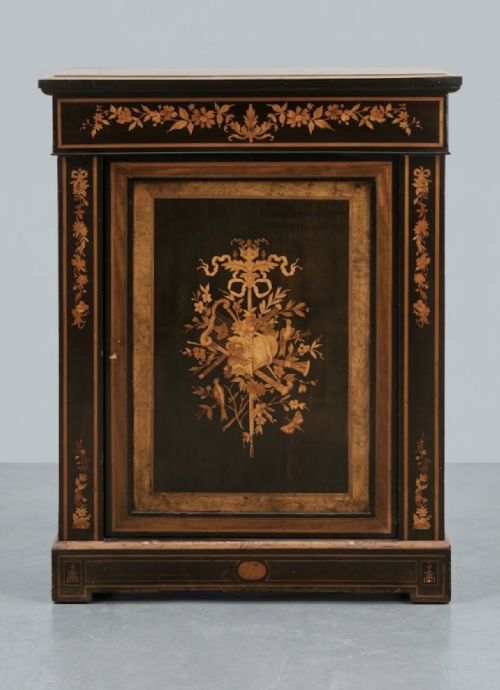
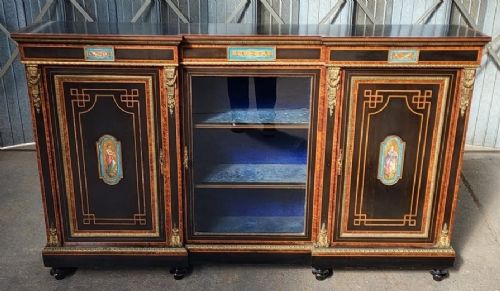

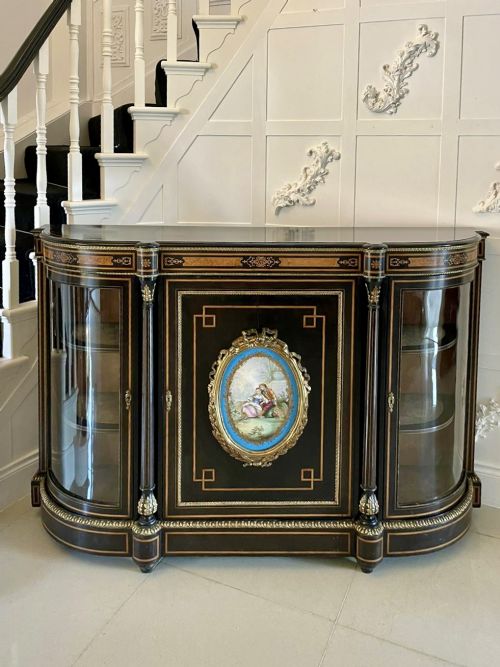
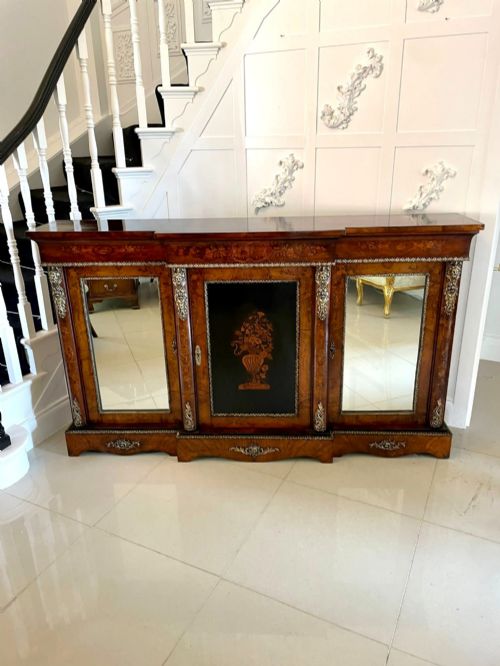


Ebonised Display Credenza
An ebonised display credenza brings dark polish, gilt mounts and glass frontage to a room, offering a focal point for fine interiors.
How they were made
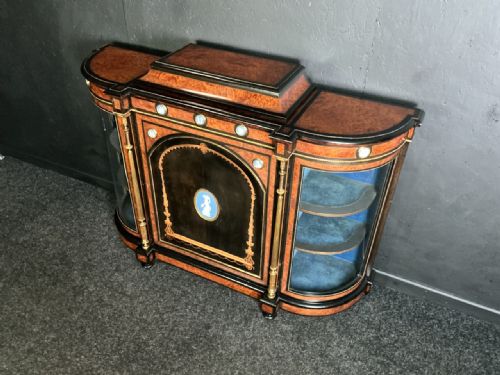
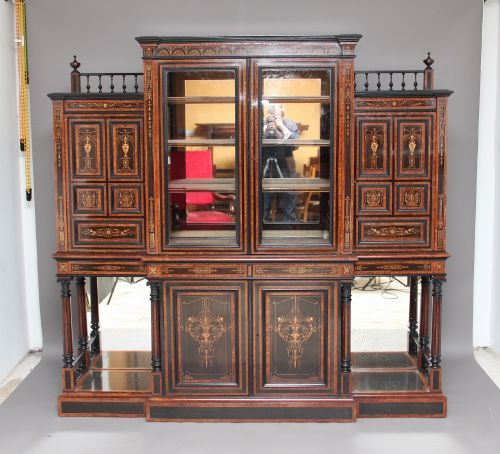
Cabinet makers utilised dense hardwoods, often treating fruitwood or walnut with a dark stain and polish to imitate ebony. This blackened surface served as a dark ground for contrasting veneers of amboyna, burr walnut, and satinwood marquetry.
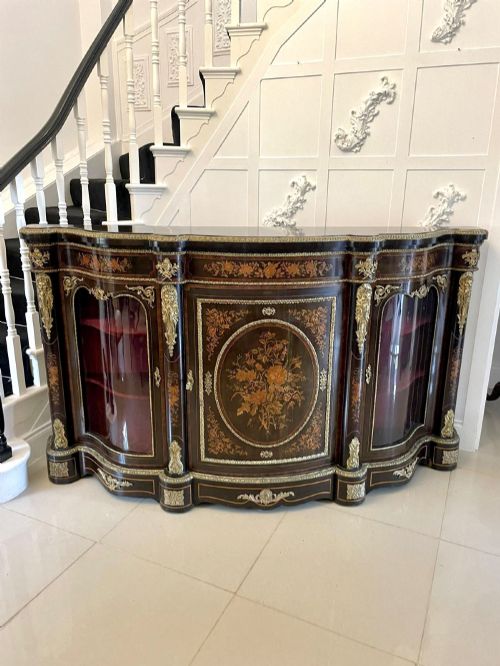
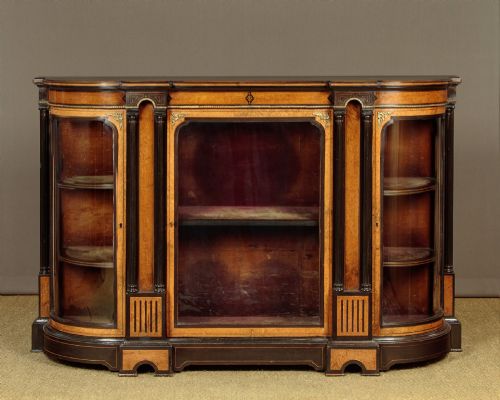
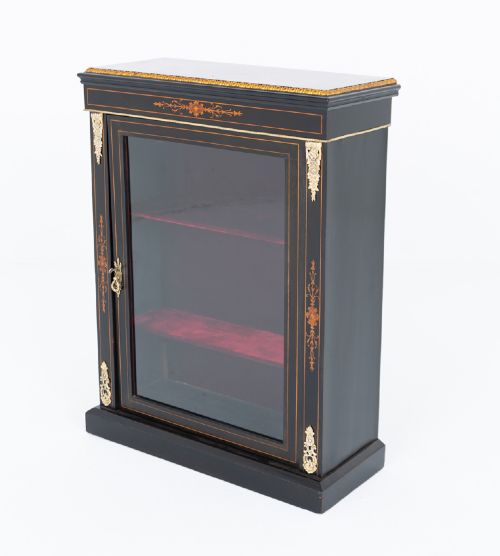
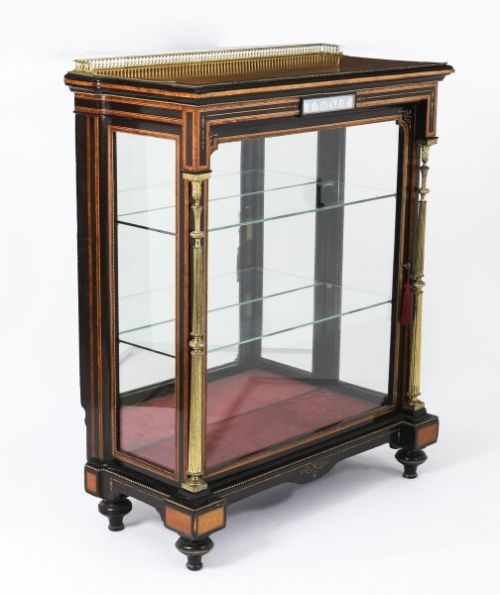
Gilded bronze ormolu mounts, brass stringing, and occasionally Sevres style porcelain plaques were applied to accentuate architectural lines and door panels. Glass panels, sometimes curved for serpentine fronts, were fitted into door frames to protect items displayed within.
What varies in quality
The sophistication of the marquetry and the crispness of the bronze mounts separate standard production from exceptional work. Finer examples display meticulous hand-cut floral inlays and heavily chased ormolu details rather than simple cast repetition.
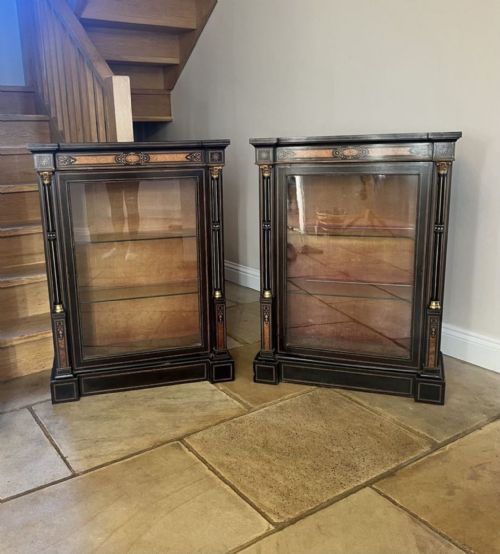
Structural ambition also dictates standard, with serpentine fronts, breakfront carcases, and matched pairs demanding higher levels of joinery skill than flat-fronted single cabinets.
Listings show ebonised display credenzas spanning the Victorian and Napoleon III periods, frequently incorporating burr walnut, amboyna, and ormolu mounts.
Lamb of Manchester·Garnett and Sons·Gillow
The Ebonised Display Credenza Glossary
- Ebonised
- Wood treated with stain, paint or polish to simulate the dark, dense appearance of true ebony. This finish became popular in nineteenth-century furniture to create a dramatic contrast with gilt metal and lighter wood inlays.
- Ormolu
- Gilded bronze mounts applied to furniture edges, corners and panels for decorative effect. The metal is cast and chased by hand to catch the light.
- Marquetry
- Elaborate veneer patterns assembled from thin slices of diverse woods, shells or metals to form pictorial or floral motifs. It is applied carefully to the carcase surface.
- Pier cabinet
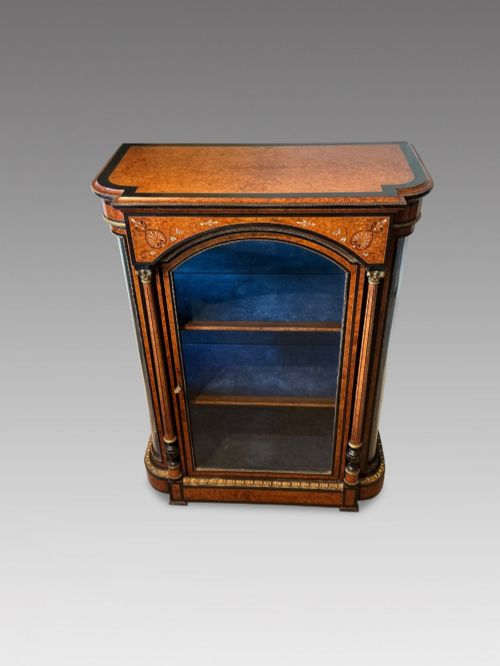
- A narrow display cabinet built specifically to fit the wall space between windows. These upright pieces often feature single glazed doors and ebonised frames.
- Boulle
- A technique of marquetry utilising tortoiseshell and brass inlay, associated with French cabinet work of the nineteenth century. The contrasting materials create intricate patterns across the surface.
Ebonised Display Credenza: Frequently Asked Questions
What is an ebonised display credenza?
An ebonised display credenza is a nineteenth-century low cabinet featuring a dark, polished finish, glass doors, and often gilt mounts or inlaid wood panels. These pieces served both decorative and storage functions in Victorian and French drawing rooms.
Today, they function as statement sideboards or display units in sitting rooms and dining spaces, offering surface space on top and enclosed shelving behind glass.
How do I date an ebonised credenza?
Dating relies on stylistic clues, materials, and construction methods characteristic of the Victorian era and the Napoleon III period. Pieces often align with the Aesthetic Movement or French Revival styles prevalent between eighteen-fifty and eighteen-ninety.
Examining the interior timbers, backboards, and screw types helps confirm nineteenth-century manufacture, while maker stamps or labels occasionally provide a specific workshop and decade.
How do I care for ebonised wood?
Care involves dusting regularly with a soft, dry cloth and avoiding direct sunlight, which can fade both the dark finish and the internal veneers. Wax should be used sparingly to maintain the polish without building up residue.
Ormolu mounts and glass panels require gentle cleaning with appropriate non-abrasive materials to preserve the original surface without disturbing the surrounding wood.
What is the difference between a credenza and a pier cabinet?
A credenza is typically a wide, low sideboard with three or more doors, often featuring glazed central compartments flanked by curved end cupboards. They were designed to stand against main walls in formal rooms.
A pier cabinet is much narrower and taller, built specifically to occupy the narrow wall section between two windows. Both share the ebonised finish and decorative mounts common to the period.