


Ebonised Walnut Sideboard
An ebonised walnut sideboard brings deep, dark contrast and rich timber grain to a room.
Ebonised Walnut Sideboard
An ebonised walnut sideboard unites dark, polished surfaces with the warm, distinctive figuring of walnut timber.
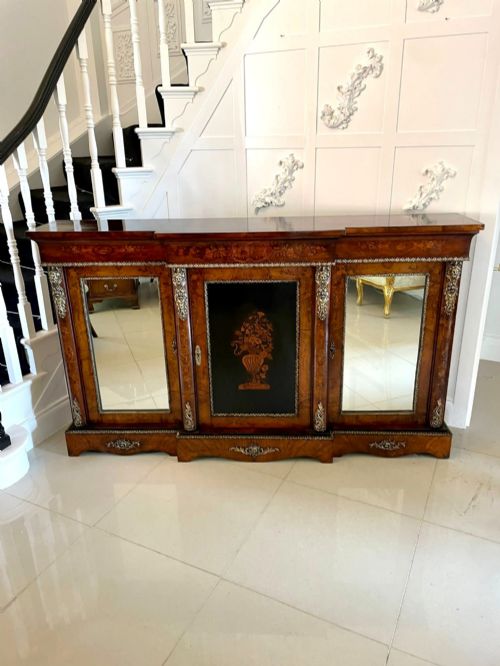
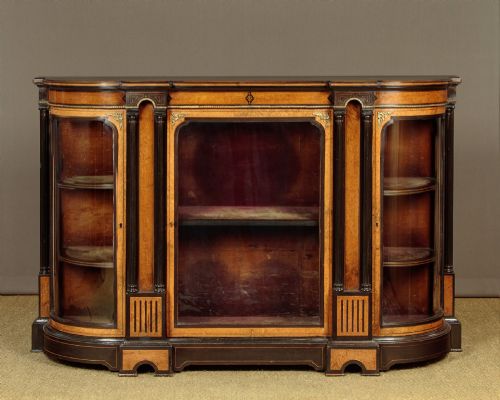
Most examples found on this page date from the Victorian period and the nineteenth century, taking the form of credenzas, side cabinets, and display cabinets.
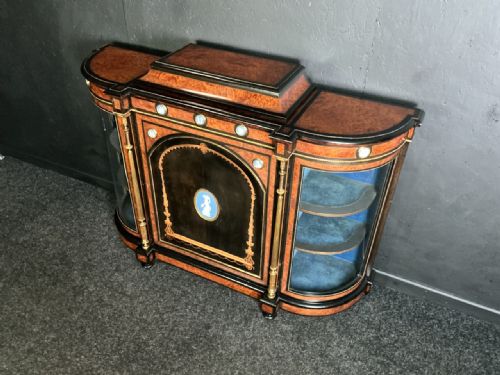
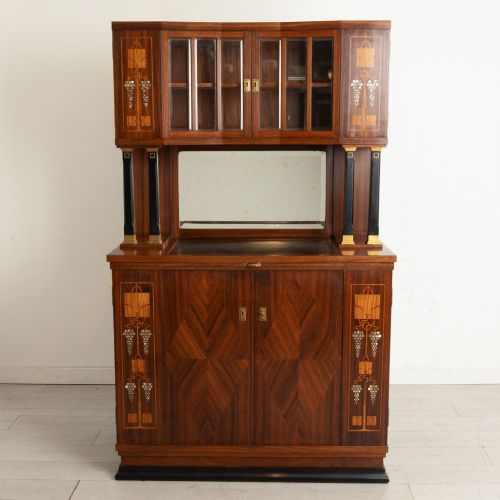
Makers utilised contrasting veneers, marquetry inlay, and glazed doors to create statement storage pieces for grand nineteenth-century interiors.
Materials and Construction
Craftsmen built these cabinets using a foundation of walnut, often applying burr walnut veneer to large surfaces for dramatic grain patterns.
Wood was ebonised to imitate expensive ebony, creating a sharp two-tone effect when paired with natural walnut borders and brass or ormolu mounts.
Interiors and structural framing frequently incorporated secondary timbers, whilst high-end pieces utilised marble tops, porcelain plaques, and mirrored backs.
Sevres porcelain plaques occasionally found their way onto Victorian cabinet doors, turning practical storage into an art gallery.
Assessing Quality
Quality rests in the precision of the marquetry inlay and the depth of the ebonised finish relative to the visible walnut grain.
Superior pieces incorporate better mounts, such as cast ormolu or finely chased brass, alongside heavy marble slabs and original bevelled glass.
Structural integrity, the smoothness of drawer runners, and the quality of the timber selection separate standard production from exceptional examples.
Gillow·August Ungethüm
The Ebonised Walnut Sideboard Glossary
- Ebonised
- Wood treated with stain, dye, or paint to resemble solid ebony. This dark finish was particularly popular during the Victorian era for dramatic contrast.
- Credenza
- A low dining room or parlour cabinet, often featuring glazed central doors and curved side cupboards. They frequently display marquetry and brass mounts.
- Marquetry
- Decorative patterns formed by inserting thin veneers of different woods and materials into a timber backing. It requires immense skill to achieve seamless alignment.
- Ormolu
- Gilt bronze mounted as hardware or decorative trim on furniture. High-quality pieces feature finely chased details rather than plain cast metal.
Ebonised Walnut Sideboard: Frequently Asked Questions
What is an ebonised walnut sideboard?
An ebonised walnut sideboard is a nineteenth-century storage cabinet combining dark, ebonised wood with figured walnut veneers. These pieces often feature glass doors, marquetry, and brass mounts.
They served as grand display and storage furniture in Victorian parlours and dining rooms. Today, they function as striking focal points in traditional and contemporary interiors.
How do I date a Victorian credenza?
Dating relies on stylistic clues, construction methods, and materials recorded in the piece. Victorian examples often show distinct influences from the Aesthetic Movement or French Napoleon III styles.
Look at the interior woodwork, screw types, and backboards for clues to the exact manufacturing decade. Archive records and maker stamps also help narrow down the production period.
Where should I place a side cabinet?
These cabinets work well in dining rooms, living spaces, or wide hallways where their decorative fronts can be fully appreciated. Their shallow depth relative to traditional sideboards makes them versatile for narrower rooms.
Ensure the piece is kept away from direct sunlight and strong heat sources to protect the delicate walnut veneer and ebonised finish from drying out.