



Victorian 15ct Gold Pin
These pieces of victorian 15ct gold pin unite high-karat gold with gemstones for practical daily wear.
Victorian 15ct Gold Pin
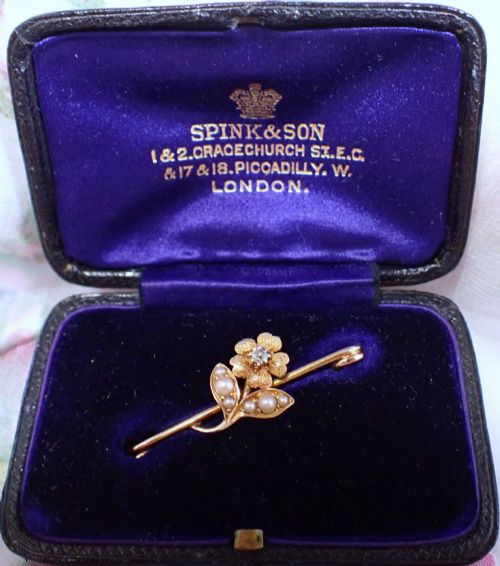
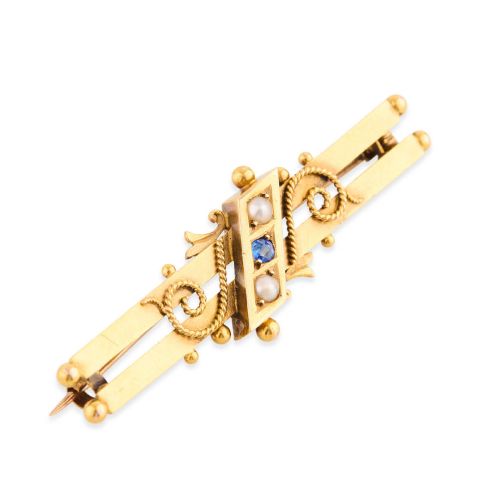
A victorian 15ct gold pin typically takes the form of a brooch, bar brooch, or pendant brooch rather than a simple lapel pin, though smaller stick pins also appear in the record. These items function primarily as decorative fasteners for garments, executed in a distinctive higher-karat yellow gold that sits between standard modern alloys.
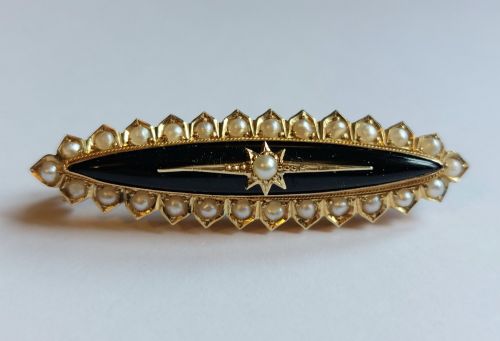
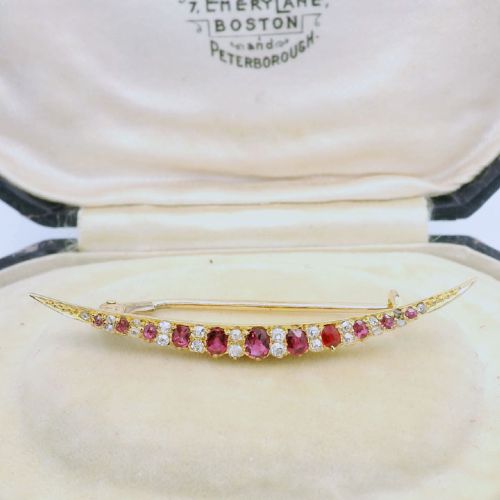
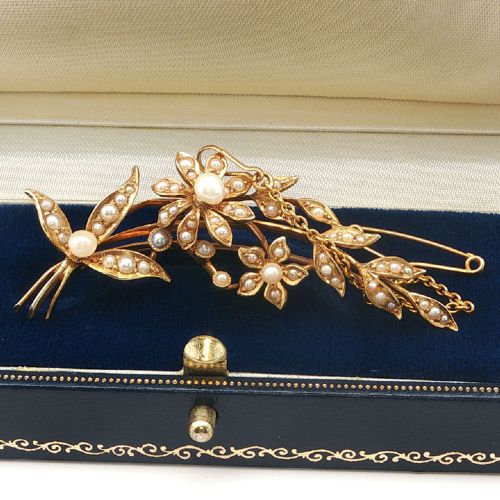
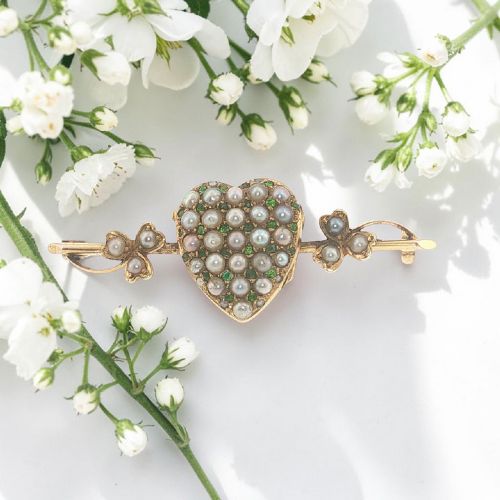
The pieces on this page span the Victorian and Edwardian eras, alongside pieces dated around nineteen-hundred and into the early decades of the twentieth century. Common configurations include floral spray designs, crescent moons, horseshoe motifs, and hearts set with precious and semi-precious stones.
Originating predominantly from the nineteenth century and the early twentieth century, these items reflect the prevailing decorative tastes of their respective periods. Buyers encounter mourning pieces, gem-cluster sprays, and pictorial subjects such as swallows and cockerels.
How they were made
Makers constructed these items using fifteen-carat yellow gold as the primary structural metal, combined with techniques for mounting both rose-cut and old-cut diamonds. Gemstones such as seed pearls, turquoise, garnets, and rubies are secured into the gold work using traditional setting methods appropriate to the period.
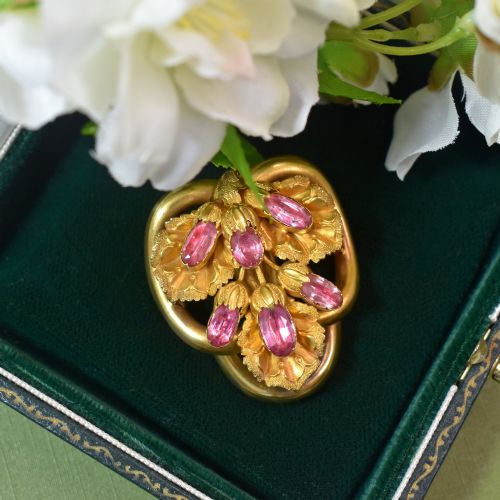
Many examples incorporate specialised components like foil-backed topaz, carved onyx, chalcedony, and banded agate alongside natural pearls and enamel work. The assembly relies on hand-soldered bar mechanisms, pin stems, and occasionally convertible pendant loops.
Gemstones recorded in the inventory include diamonds, seed pearls, turquoise, garnets, rubies, aquamarine, opal, and coral.
What varies in quality
Quality in a victorian 15ct gold pin rests upon the selection and matching of the stones, whether diamonds, seed pearls, almandine garnets, or turquoise cabochons. Finer examples display meticulous stone-setting and balanced composition within motifs like floral sprays or crescent crescents.
The complexity of the metalwork also distinguishes pieces, ranging from simple bar pins to intricate multi-tiered clusters, coral domes, and detailed bird or insect forms. Preservation of original enamelling, foil backs, and stone integrity further separates standard items from exceptional survivals.
The Victorian 15ct Gold Pin Glossary
- Bar brooch
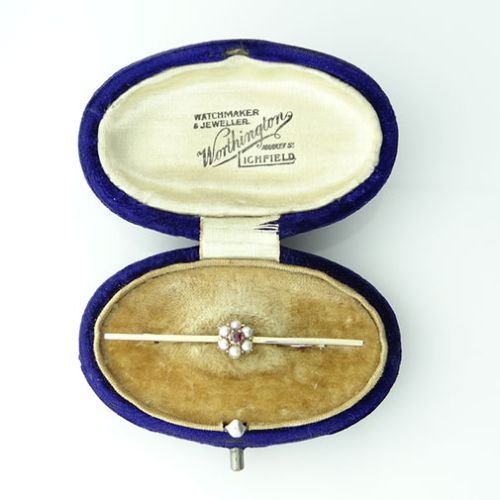
- A slender horizontal metal rod forming the main body of the pin, frequently mounted with gemstones or central motifs. This format represents one of the most common configurations in the inventory.
- Seed pearl
- A very small, natural or saltwater pearl often used in clusters or borders around larger central stones. These delicate elements are typically thread-strung or pegged.
- Almandine garnet
- A deep red variety of garnet frequently utilised in Victorian cluster and bar brooches. It provides a dark, rich colour contrasted against yellow gold.
- Foil-backed
- A technique where a thin sheet of reflective metallic foil is placed behind a gemstone to enhance its brilliance and colour. This method appears primarily in earlier nineteenth-century items.
- Cabochon
- A gemstone shaped and polished with a smooth, convex domed surface rather than faceted. This cut is common for opaque or translucent materials like turquoise, opal, and chalcedony.
- Rose-cut
- An antique diamond cut featuring a flat base and a domed crown composed of triangular facets. It offers a softer luminescence compared to modern brilliant cuts.
Victorian 15ct Gold Pin: Frequently Asked Questions
How do I wear a antique brooch safely?
Secure the pin through a sturdy weave of fabric, ensuring the safety catch or C-clasp holds the stem firmly in place.
For heavier pieces, anchor the pin to an inner structural layer or use a supportive backing disc to prevent the garment from sagging under the weight of the gold and gemstones.
Are these pins made of solid gold?
The listings consist of items fabricated in fifteen-carat yellow gold, which represents a distinct historical gold standard containing sixty-two point five percent pure gold.
This alloy offers a deeper yellow hue than standard nine-carat gold while retaining sufficient durability for daily decorative wear.
How can I tell a Victorian pin from an Edwardian one?
Victorian examples often feature heavier, warmer gold work with garnet, turquoise, or mourning motifs, reflecting the styles popular during the nineteenth century.
Edwardian pieces generally lean towards lighter, airier constructions like diamond swallows and seed pearl garlands influenced by the turn-of-the-century aesthetic.
Can these brooches be worn as pendants?
Certain items in the collection are catalogued as pendant brooches, featuring integrated loops or hinged Bails designed to accommodate a chain.
For standard brooches without a built-in loop, conversion requires professional assessment to ensure the pin mechanism is not damaged during adaptation.