

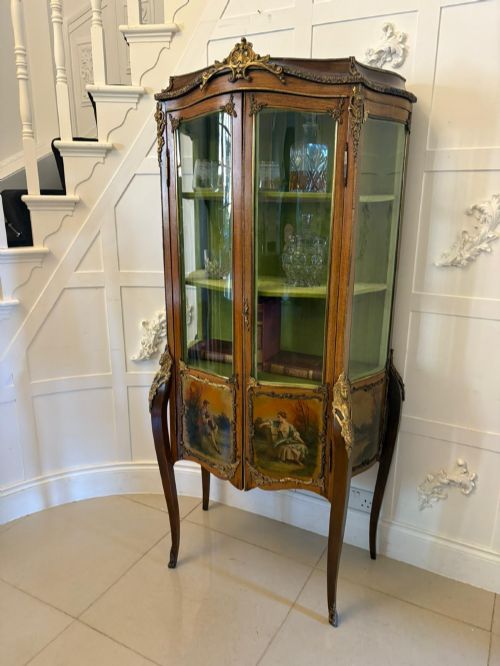
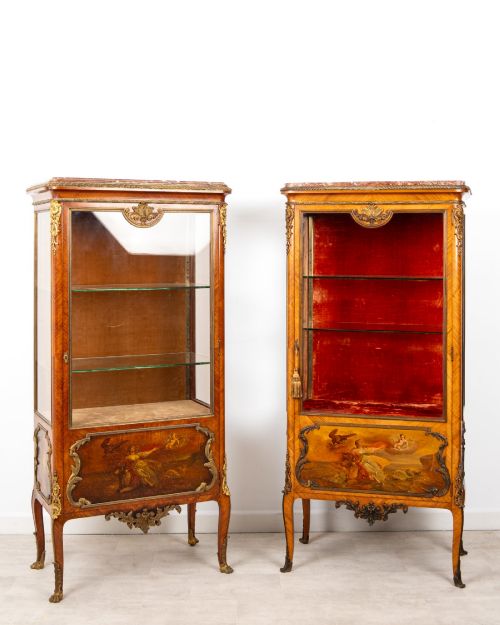
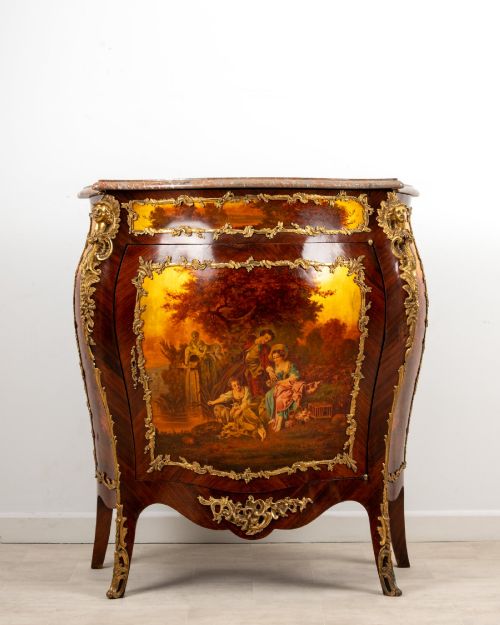
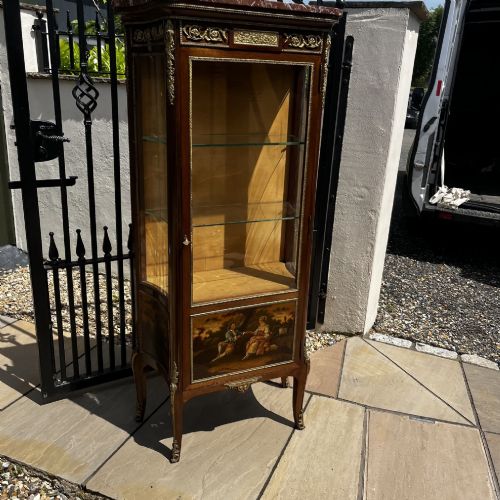



Vernis Martin Display Cabinet
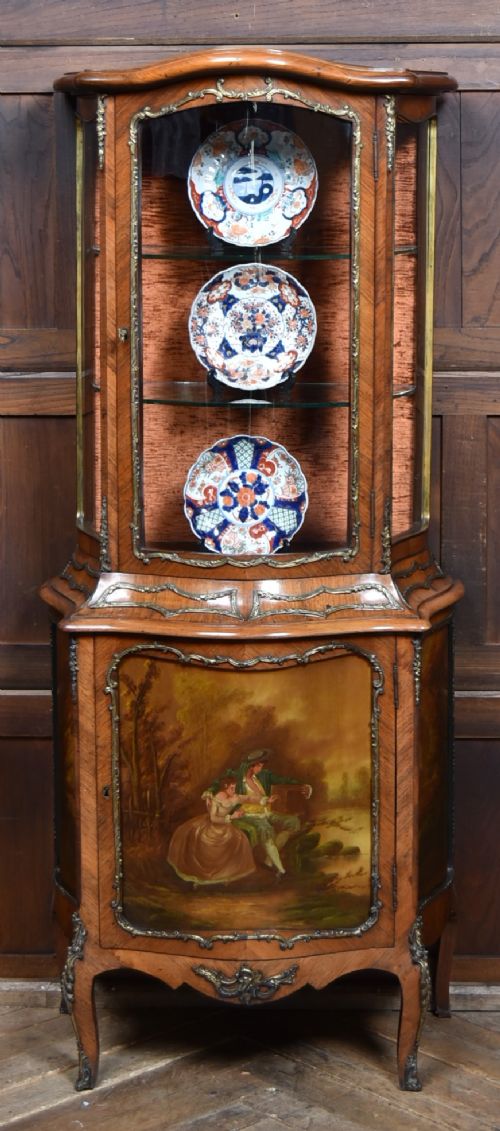
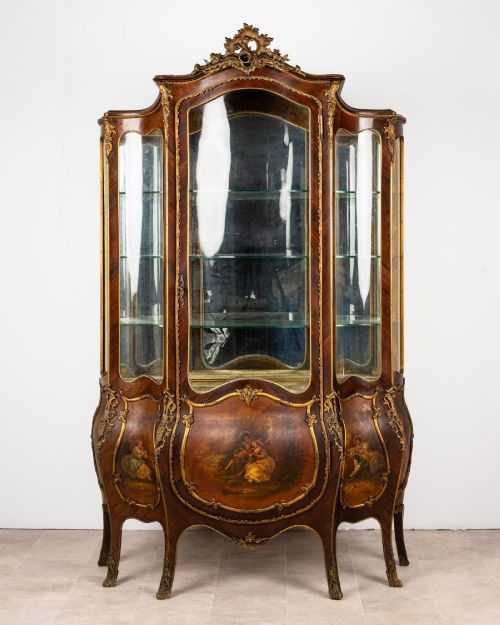
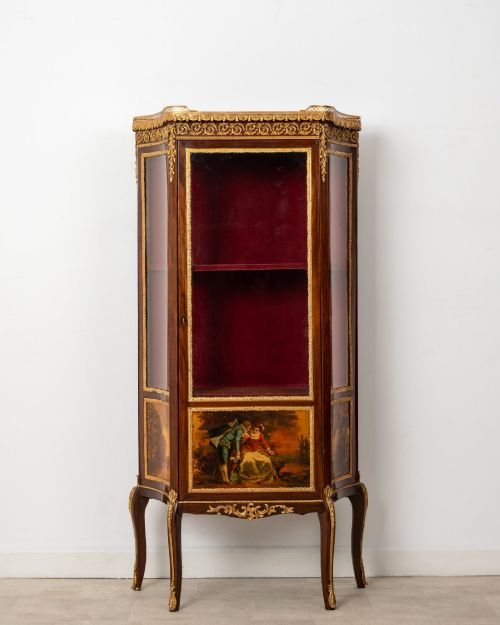
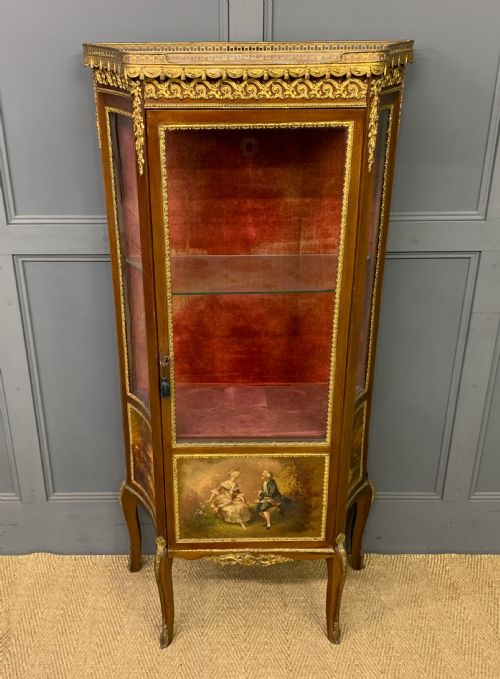
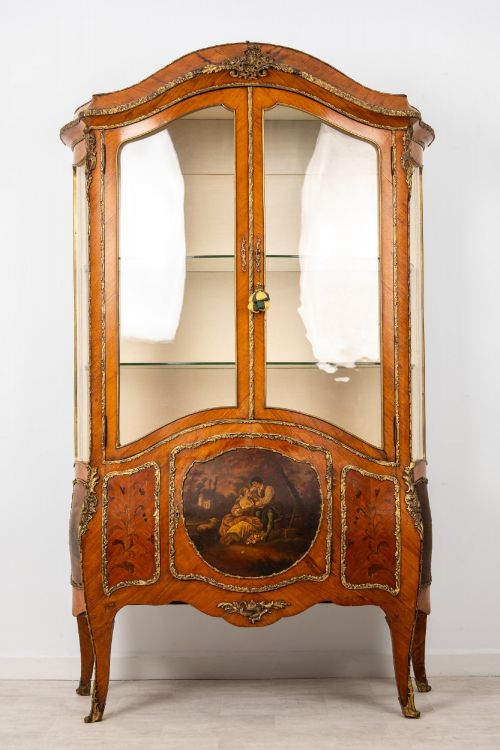
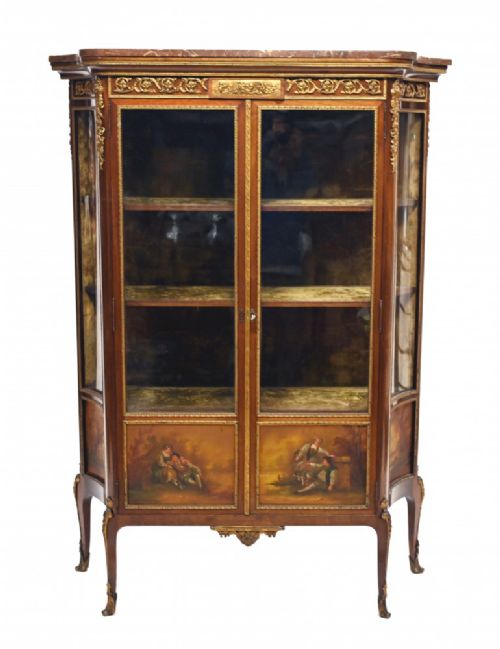
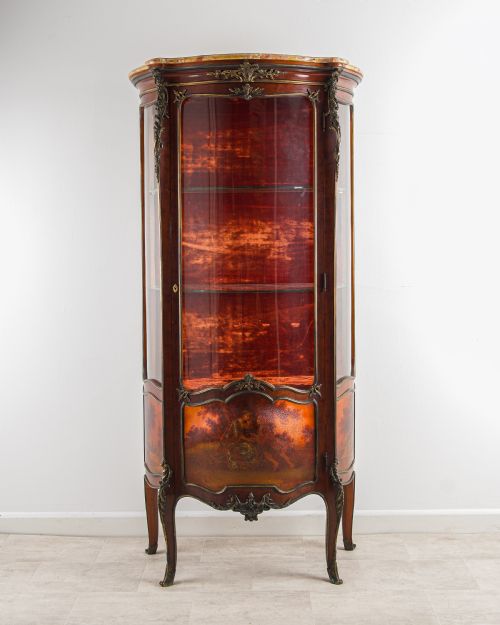
A vernis martin display cabinet brings together French painted decoration, curved glass and gilt bronze mounts to showcase cherished objects.
Vernis Martin Display Cabinet
A vernis martin display cabinet combines glazed panels with distinctive hand-painted scenes, originating from French revivalist cabinet-making traditions of the nineteenth century.
The most common formats on this page are freestanding vitrines and bombé cabinets, spanning periods from the 1870s through the Edwardian era.
These pieces generally follow Louis XV and Louis XVI styles, incorporating serpentine fronts and glass sides designed to display interior collections.
Materials and construction
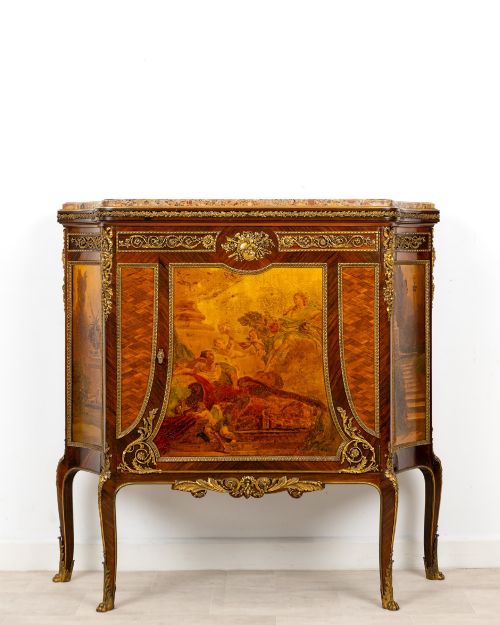
Maker workshops built carcass frames primarily using mahogany or kingwood veneers over solid secondary timbers, frequently topped with shaped marble slabs.
The decorative surfaces rely on specialised lacquer techniques to imitate Japanese finishes, complemented by cast ormolu and gilt bronze mounts secured around the glass and edges.
Vernis Martin Display Cabinet Retail Price Guide 2026
Typical asking prices for vernis martin display cabinet among the pieces listed under this phrase on Sellingantiques today, from the lower quarter to the upper quarter. They describe what is for sale here now, not the wider market.
Listings feature mahogany, kingwood, and marble alongside gilt bronze mounts across nineteenth-century revival periods.
Distinctions in quality
The tier of workmanship depends heavily on the precision of the hand-painted figural panels and the crispness of the gilt bronze chasing.
Superior examples demonstrate tighter joinery on curved timber frames, heavier ormolu mounts, and balanced proportions across serpentine and bombé forms.
Francois Linke·Angela Kaufman
The Vernis Martin Display Cabinet Glossary
- Vernis Martin
- A simulated lacquer finish developed in eighteenth-century France and revived later, named after the Martin brothers.
- Ormolu
- Gilt bronze mounts cast and chased to embellish furniture corners, feet and glass borders.
- Bombé
- A swelling, outwardly curved shape characteristic of French revival case furniture.
- Vitrine
- A glass-fronted cabinet designed specifically for the display of porcelain and small objects.
- Serpentine
- A line that curves outward then inward, creating a wavy edge along the front of a cabinet.
Vernis Martin Display Cabinet: Frequently Asked Questions
What is a vernis martin display cabinet used for?
These cabinets were designed to display porcelain, glassware and small decorative items behind glass while protecting them from dust.
The glazed sides and front allowed light to enter from multiple angles, illuminating the objects placed inside.
How do I identify the period of a cabinet?
Most cabinets date from the nineteenth century revival periods, identifiable through timber selection, construction methods and mount styles.
Nineteenth-century examples often combine kingwood veneers with cast ormolu and traditional hand-painted lacquer panels.
Where should I place one in my home?
Position the cabinet away from direct sunlight to protect the painted lacquer panels and interior velvet linings from fading.
Ensure the floor is level, particularly with heavier marble-topped and bombé variants, to maintain proper door alignment.
How do these cabinets differ from standard vitrines?
Standard vitrines rely entirely on wood and glass, whereas vernis martin pieces feature distinct painted figural or landscape panels.
These painted sections are typically set into the lower portion of the cabinet doors or beneath the main display area.