





Velvet Revolving Stool
These velvet revolving stool examples bring together fine timber frames and adjustable seats, built to serve at the keyboard or harp.
Velvet Revolving Stool
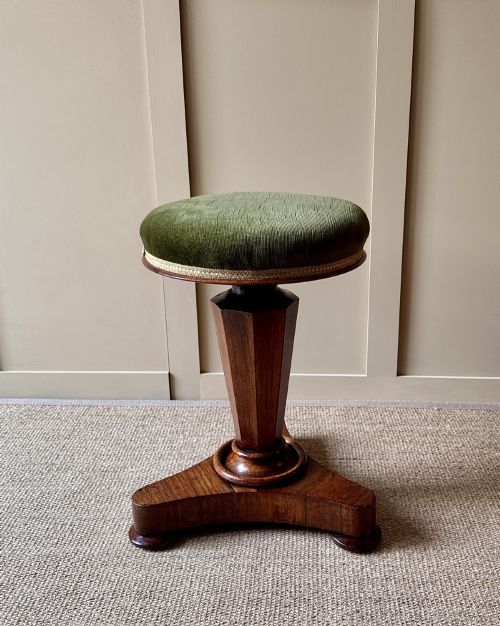
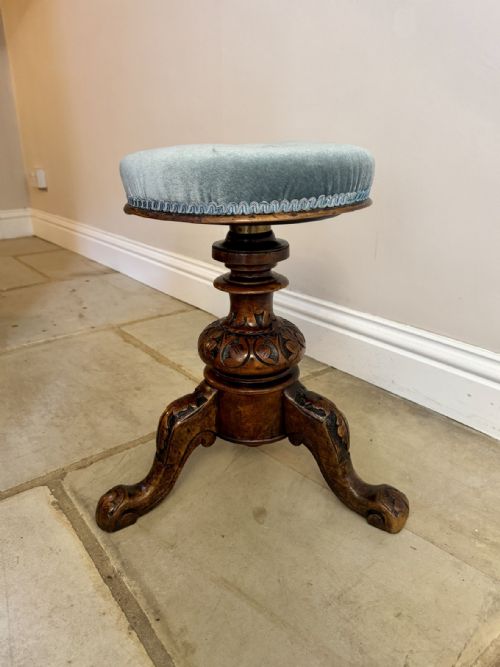
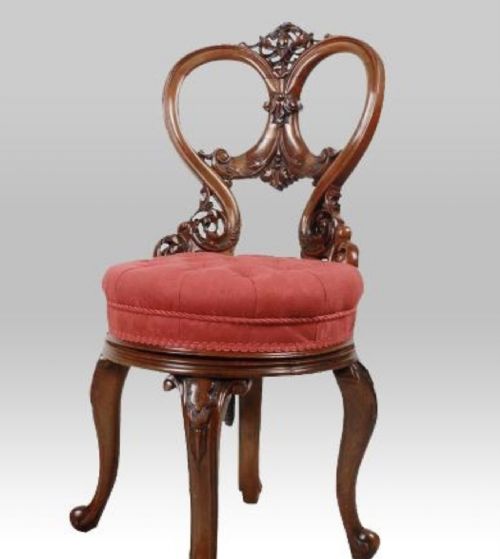
When you search for velvet revolving stool, you are looking at nineteenth-century seating designed primarily for musicians at the piano or harp. The forms range from square-top adjustable piano stools to pedestal music chairs and circular revolving seats.
You are most likely to meet Victorian and William IV examples on this page, executed in woods such as walnut, mahogany, and rosewood. These pieces combine practical height adjustment with padded velvet or tapestry upholstery tailored for long hours of practice.
The origins span various stylistic movements including Regency, Aesthetic Movement, and Anglo-Burmese Colonial. Each piece reflects the domestic musical pursuits of the nineteenth century through solid timber construction and revolving mechanisms.
How they were made
Cabinetmakers constructed the frames using dense hardwoods like mahogany, walnut, and rosewood, often enriching them with carved details and pedestal supports. Ormolu mounts and brass fixtures appear on specific Empire-style and Aesthetic Movement pieces.
The revolving and rising mechanisms rely on threaded wooden or metal screws hidden beneath the upholstery. Seats were padded and covered in velvet or tapestry, secured to the rotating top to withstand regular turning.
Velvet Revolving Stool Retail Price Guide 2026
Typical asking prices for velvet revolving stool among the pieces listed under this phrase on Sellingantiques today, from the lower quarter to the upper quarter. They describe what is for sale here now, not the wider market.
Some nineteenth-century musicians clearly spun themselves dizzy, as surviving adjustment screws show decades of enthusiastic rotation.
What varies in quality
The distinction between standard domestic seating and superior pieces lies in the crispness of the timber carving and the stability of the revolving screw mechanism. Heavier pedestal bases and finely figured walnut or rosewood indicate elevated workshop production.
Attribution to documented makers such as James Shoolbred or Holland & Son elevates a piece beyond anonymous manufacture. The choice of materials, from padouk wood to finely chased ormolu mounts, separates ordinary examples from exceptional ones.
James Shoolbred·Holland & Son
The Velvet Revolving Stool Glossary
- Adjustable piano stool
- A seat with a mechanism allowing the height to be raised or lowered by turning the top. This design accommodated different pianists and players of stringed instruments.
- Padouk wood
- A dense tropical timber valued for its rich reddish-brown colour and durability. It appears on colonial furniture including nineteenth-century harpist chairs.
- Ormolu
- Gilded bronze used for decorative mounts and accents on furniture frames. It adds metallic contrast to mahogany and rosewood surfaces.
- Aesthetic Movement
- A late nineteenth-century design style emphasising artistic visual qualities over heavy historical revival. Pieces from this movement often display refined lines and careful material selection.
Velvet Revolving Stool: Frequently Asked Questions
What is a velvet revolving stool?
A velvet revolving stool is a nineteenth-century seat designed for musicians, featuring a rotating upholstered top that often adjusts in height.
These pieces were typically placed beside pianos or harps in period drawing rooms.
How do you adjust the height?
The seat top turns on a central wooden or metal screw mechanism, raising or lowering as it rotates.
Most examples maintain stability at various heights through a threaded post concealed beneath the upholstery.
Where were these stools used?
They were used in nineteenth-century parlours and music rooms alongside upright and grand pianos, or harp stands.
The swivelling top allowed musicians to turn easily toward sheet music cabinets or other instruments.
What woods were used?
Cabinetmakers built these stools using dense hardwoods such as mahogany, walnut, and rosewood.
Some examples also feature exotic timbers like padouk wood, reflecting colonial trade connections.