
Uzbek Tribal Textile
When you examine an uzbek tribal textile, you hold a piece of Central Asian nomadic heritage worked in silk, cotton, and wool.
Uzbek Tribal Textile
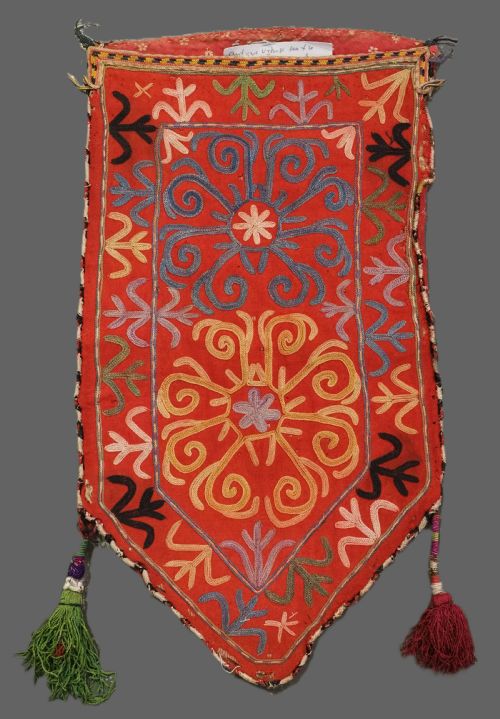
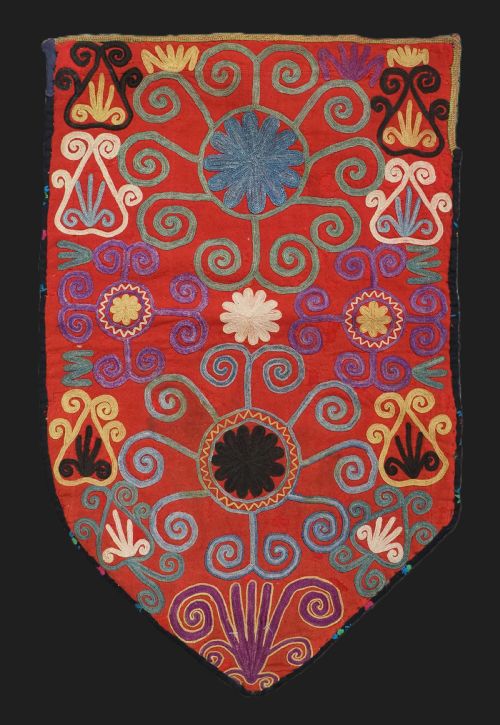
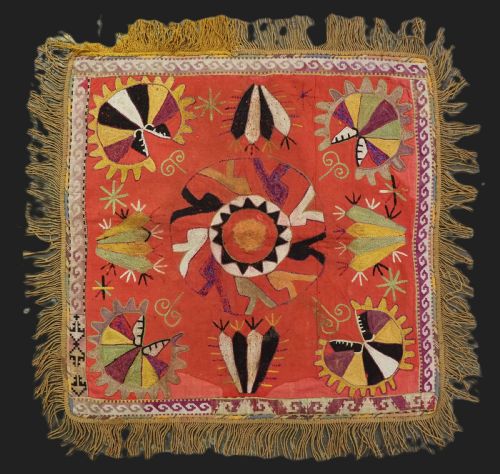
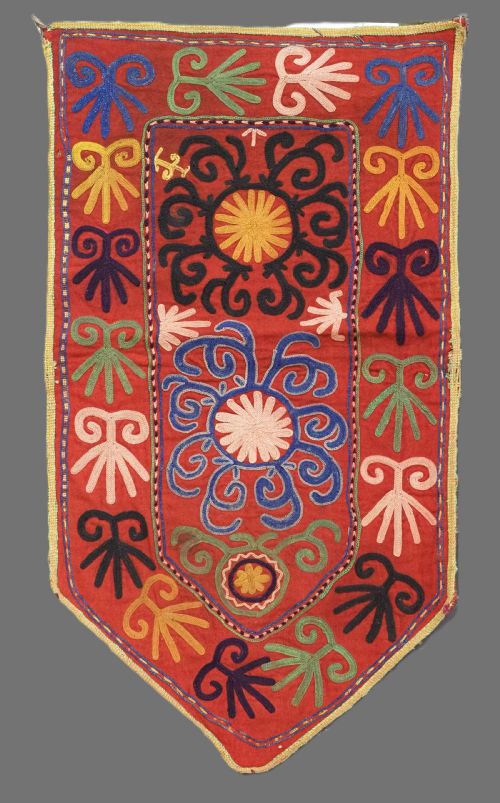
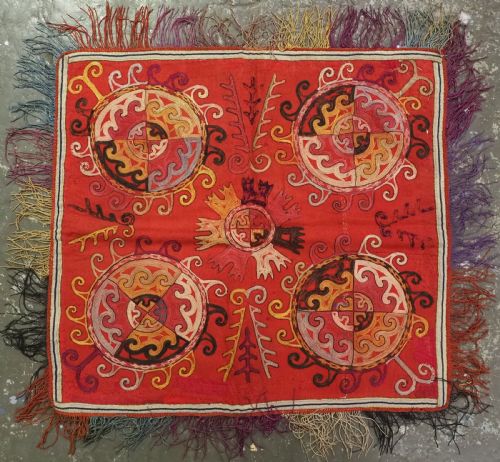
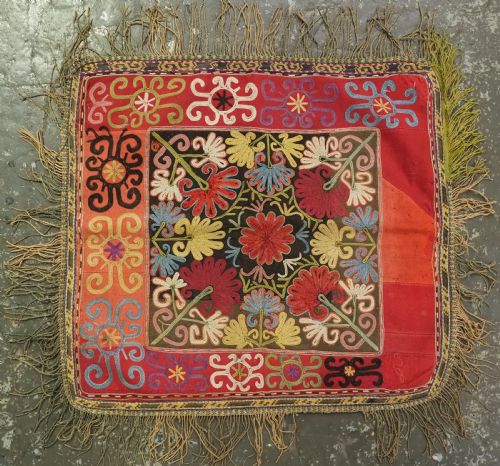
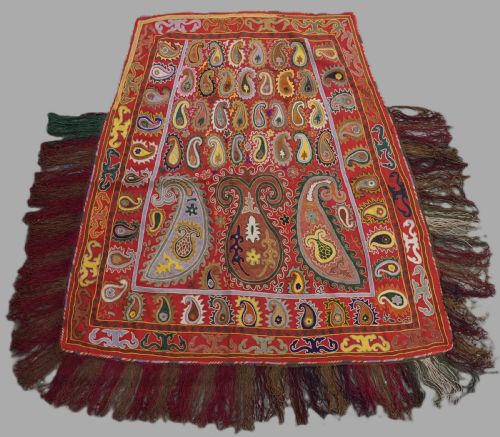
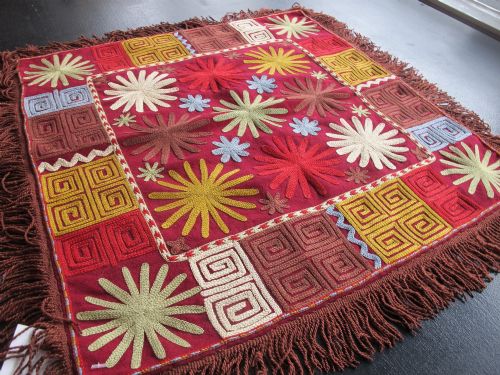
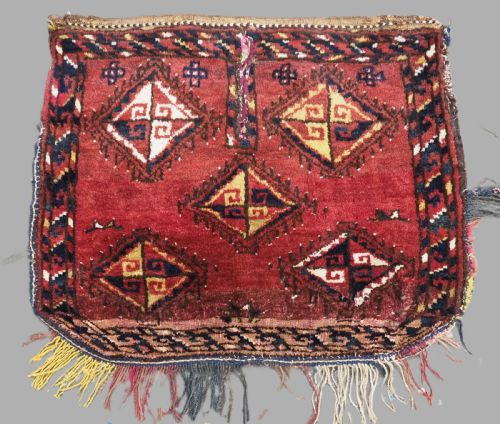
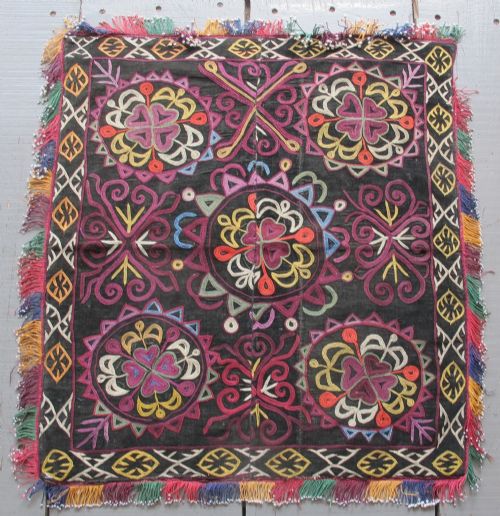
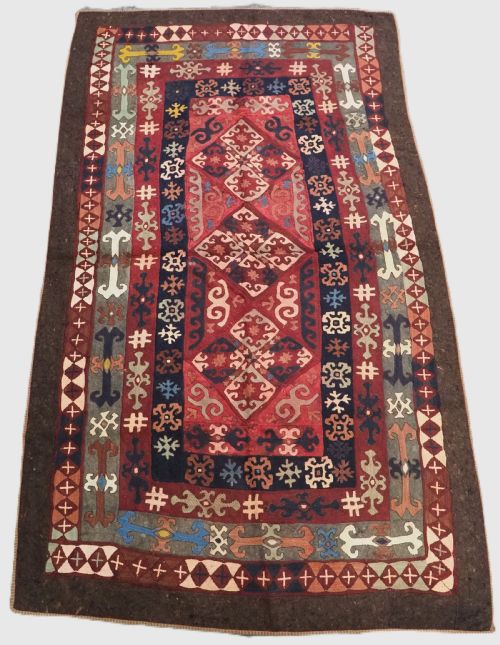
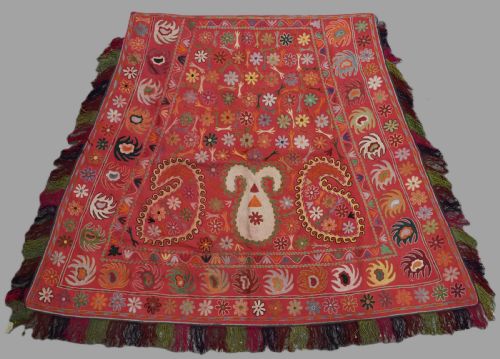
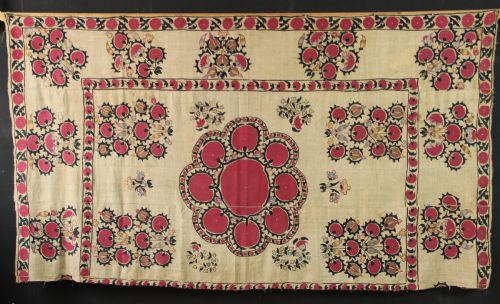
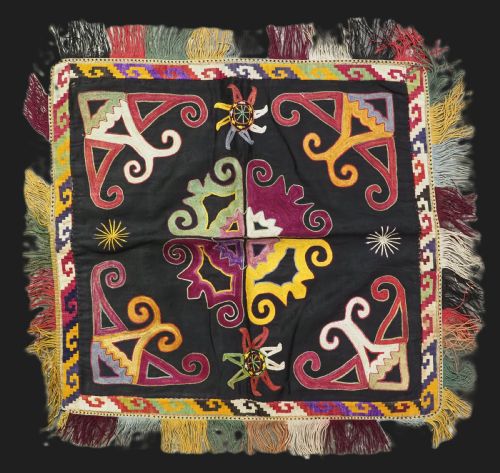
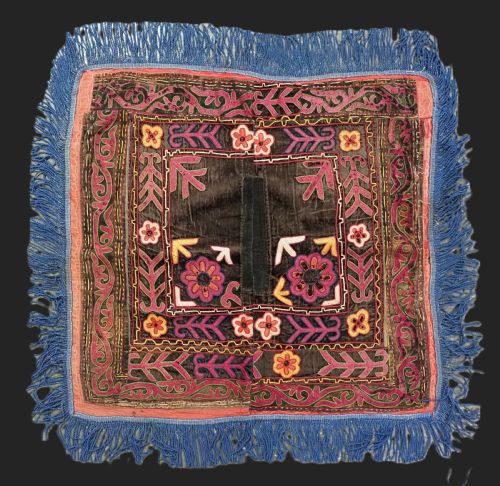
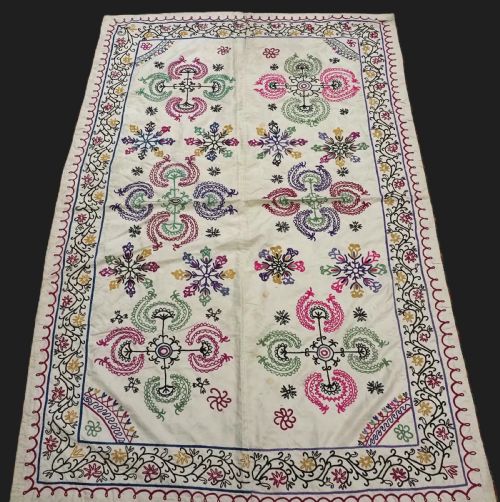
An uzbek tribal textile encompasses a variety of traditional forms including wall hangings, dowry embroideries, horse covers, and panels originating from Central Asia. These items date primarily from the nineteenth and early twentieth centuries, reflecting the distinct artistic traditions of nomadic and settled groups such as the Lakai tribe.
The buyer on this page will most frequently encounter pieces like the ilgich, uut kap, and suzani, which served ceremonial or domestic functions within tribal life. Common formats range from compact mirror covers and saddle rugs to larger decorative wall panels executed in rich regional styles.
Materials and construction methods
Makers utilised natural fibres including cotton, silk, and wool as the foundational grounds for their embroidery and weaving, frequently employing wool or cotton cloths dyed in striking shades. Silk thread formed the primary medium for intricate surface stitching, complemented occasionally by glass beads and felt.
Techniques relied heavily on dense needlework, such as chain stitch and couching, applied directly to woven fabrics. Artisans from regions like Shakrisabz and Bukhara constructed these pieces through hand assembly, resulting in textured surfaces with deep cultural resonance.
Current listings feature textiles spanning the nineteenth and early twentieth centuries, incorporating materials such as silk, cotton, wool, and felt.
Factors distinguishing piece quality
Quality in an uzbek tribal textile reveals itself through the precision of the needlework and the vitality of the composition. Superior examples display dense, fluid stitching that follows complex geometric or floral motifs with exceptional clarity.
The choice and preservation of natural dyes also set finer pieces apart, where harmonious colour relationships and depth on wool or cotton grounds indicate master craftsmanship. The overall integrity of the textile surface and the complexity of the tribal design further separate standard items from truly accomplished works.
Lakai Tribe·Uzbek Makers·Shakrisabz Artisans·Bukhara Workshops
The Uzbek Tribal Textile Glossary
- Suzani
- An embroidered tribal wall hanging from Central Asia, traditionally worked in silk on a cotton or linen ground. These large panels formed an essential part of a bride's dowry.
- Uut kap
- A storage bag or hanging panel associated with nomadic yurt interiors. These pieces display intricate embroidery and served both decorative and utilitarian purposes within the tent.
- Nim suzani
- A half-sized version of the standard suzani wall hanging. These smaller formats share the same intricate silk embroidery techniques found on larger wedding textiles.
- Adras
- A traditional Central Asian fabric woven from a mixture of silk and cotton yarns. It frequently exhibits characteristic ikat patterning with softened, blurred outlines.
Uzbek Tribal Textile: Frequently Asked Questions
What is an ilgich?
An ilgich is a traditional embroidery piece created by the Lakai tribe in Central Asia. These items functioned primarily as dowry decorations intended for wall hanging.
They are distinguished by dynamic geometric patterns and dense silk needlework applied to a woven ground.
How were suzanis used?
Suzanis served primarily as decorative wall hangings and ceremonial textiles within Central Asian households. They formed an important part of a bride's dowry, prepared by family members over several years.
Beyond domestic display, larger examples were occasionally used as coverlets or tent furnishings during significant family events.
Where were these textiles made?
These pieces originated across various regions of Uzbekistan and greater Central Asia, including urban centres like Bukhara and Shakrisabz. Nomadic groups such as the Lakai tribe produced distinct styles influenced by their local environment and traditions.
Production centres often specialised in specific formats, from embroidered horse covers to large domestic wall panels.
How do I care for antique textiles?
Protect antique textiles from direct sunlight to prevent natural dyes from fading over time. Display them away from high-humidity areas and sources of artificial heat.
Mount wall hangings using professional conservation methods that distribute weight evenly across the fabric rather than pinning them directly.