
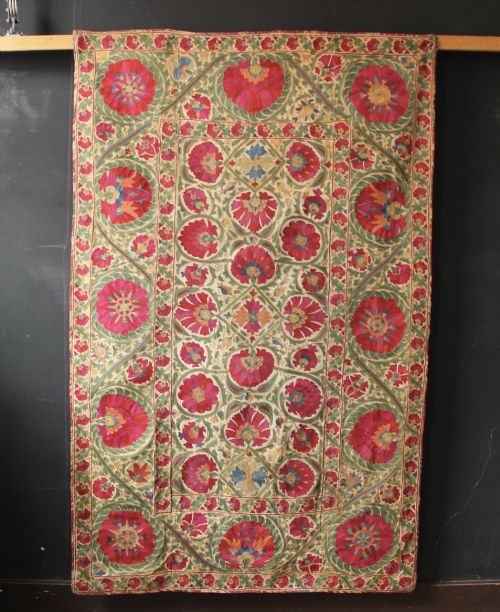
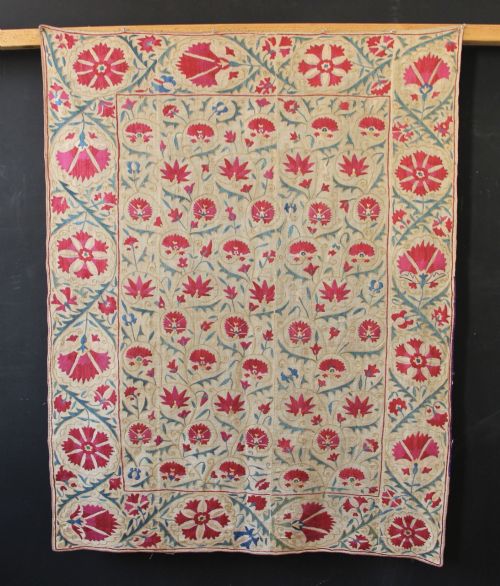
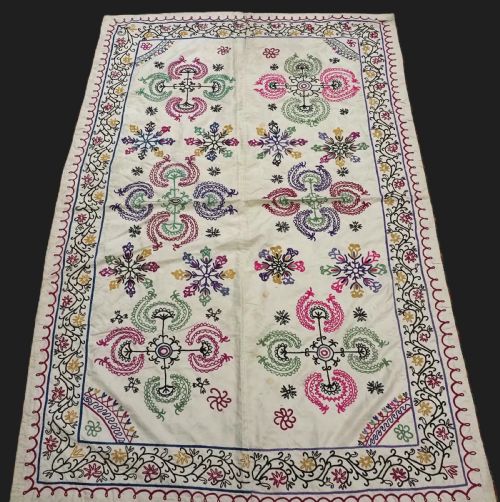
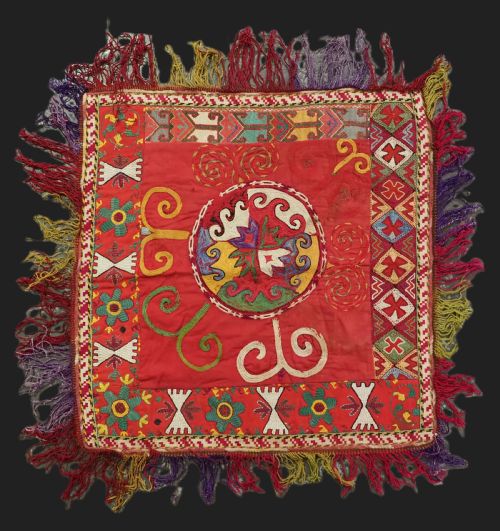
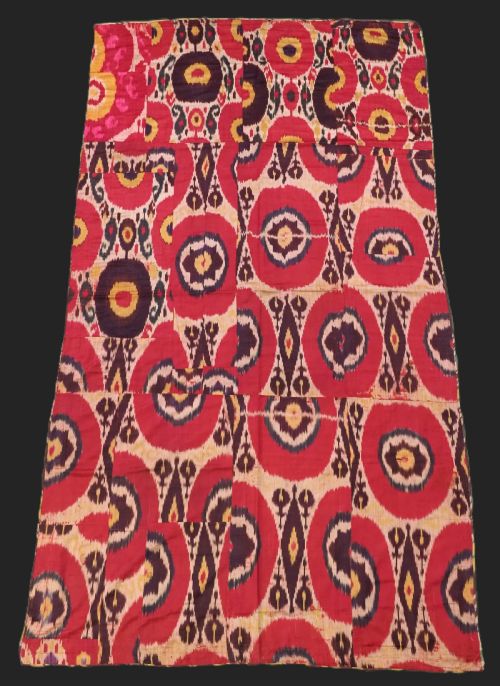


Uzbek Silk Tapestry
These textile wall hangings, known as uzbek silk tapestry pieces, bring vibrant central asian colour and traditional tribal embroidery into modern interiors.
Uzbek Silk Tapestry
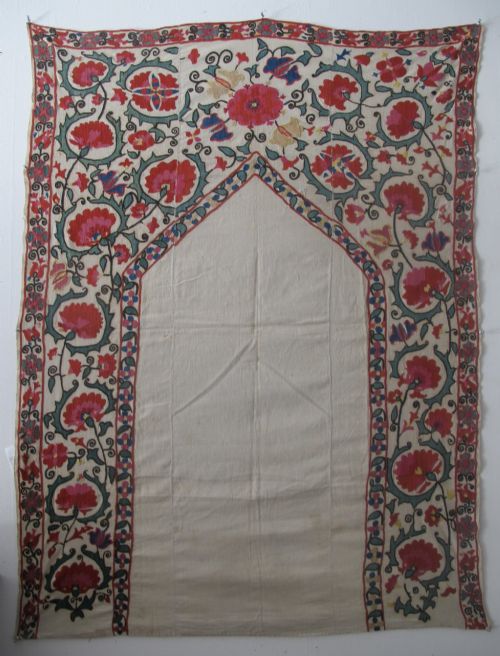
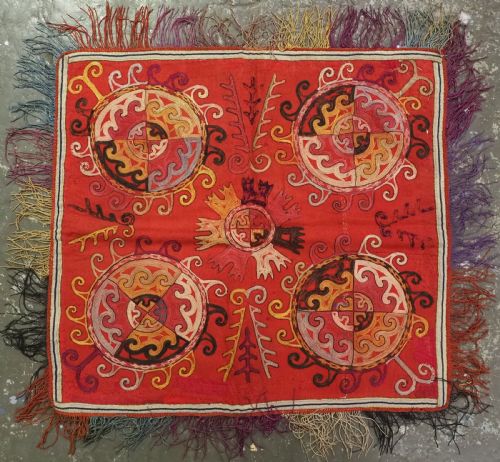
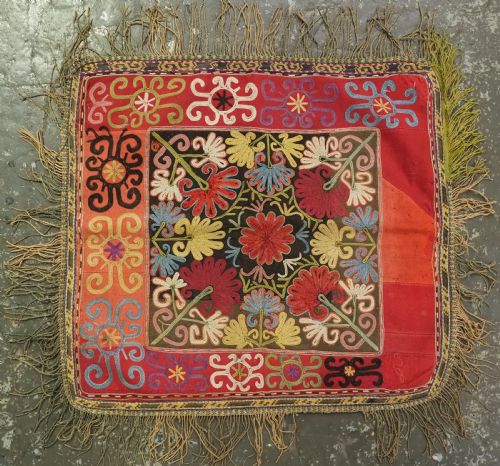
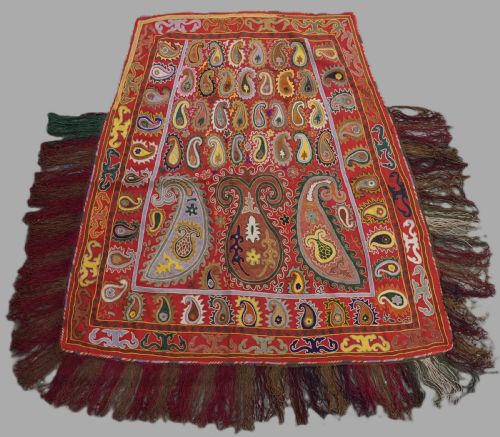
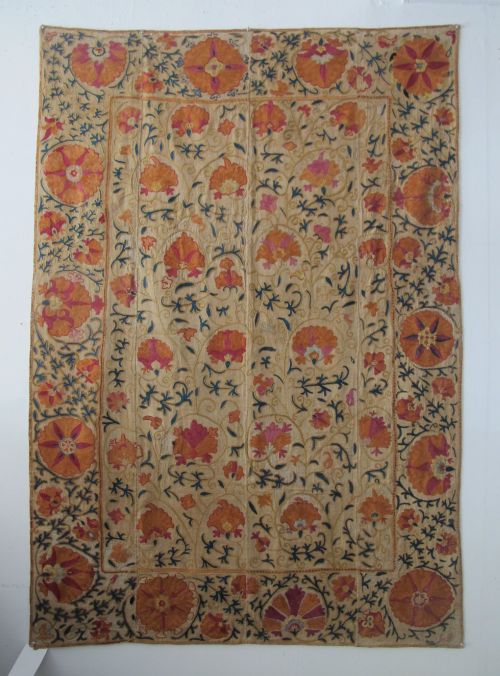
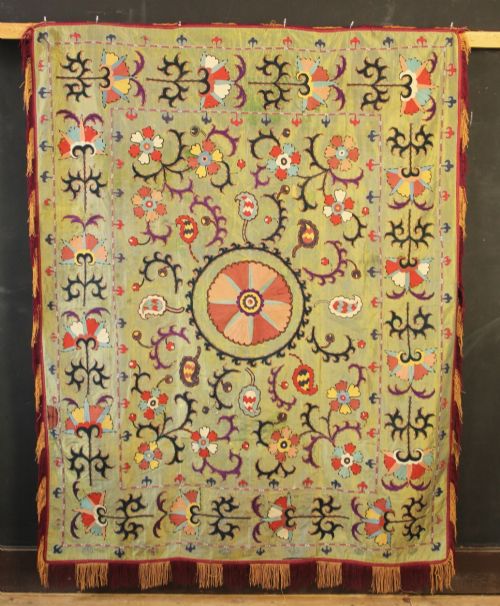
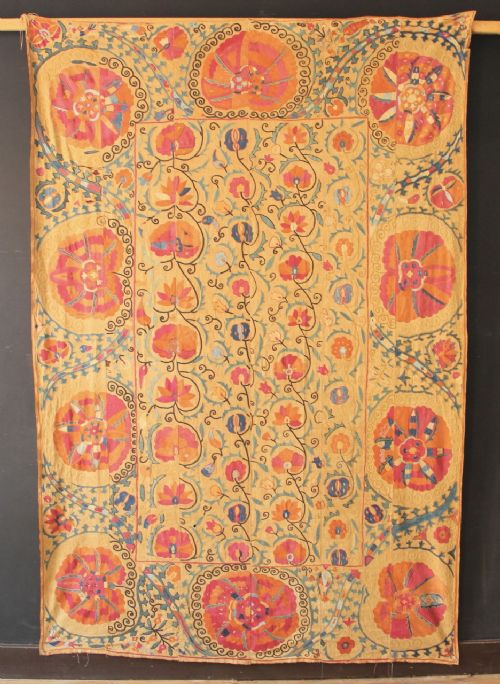
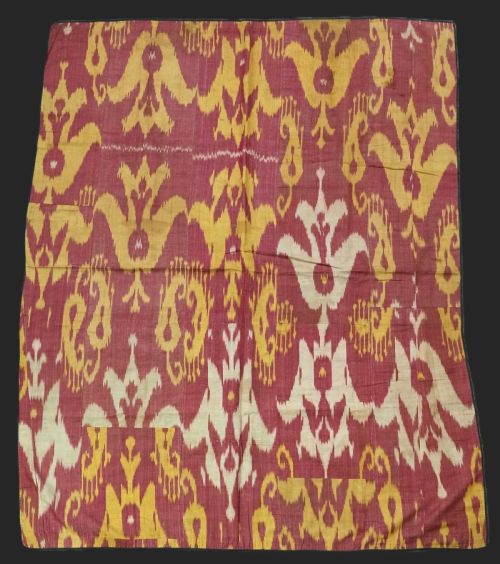
When searching for an uzbek silk tapestry, collectors encounter richly embroidered suzanis, smaller ilgich panels, and woven ikat fabric panels originating from Central Asia. These textiles primarily function as wall hangings, bed covers, and ceremonial dowry items created across the nineteenth and early twentieth centuries.
The pieces on this page heavily feature traditional regional subtypes such as Bokhara, Tashkent Palak, Samarkand Bolim Posh, and Shahrisabz designs. Smaller nim suzanis and tribal Lakai dowry embroideries also appear frequently alongside larger medallion variants and prayer formats.
Makers utilised various traditional formats, including square and rectangular wall art alongside specialised horse and saddle covers. Ground fabrics alternate between cotton and silk, often dyed in striking yellow, red, black, or green grounds.
Factors determining quality
Quality rests upon the density of the embroidery work and the intricacy of the design, with fully embroidered pieces showing superior execution compared to simpler layouts. The precision of the needlework and the complexity of regional motifs distinguish finer examples.
Condition and colour retention significantly influence the standard of each textile panel, alongside the crispness of the ground fabric and the balance of the central medallion or floral composition.
The listings span periods from 1800 through the early 1930s, featuring cotton and silk foundations decorated with wool and silk thread.
The Uzbek Silk Tapestry Glossary
- Suzani
- An embroidered tribal wall hanging or textile panel originating from Central Asia, traditionally worked in silk thread.
- Lakai
- A Central Asian nomadic tribe known for distinctive, energetic dowry embroideries and small geometric ilgich panels.
- Nim Suzani
- A smaller half-sized version of the traditional suzani wall hanging, suitable for compact wall spaces.
- Palak
- A large fully embroidered suzani variant featuring a prominent central star or medallion motif against a dark ground.
- Ikat
- A dyeing and weaving technique where threads undergo resist-dyeing prior to being woven into patterned fabric panels.
- Adras
- A traditional semi-silk fabric woven with a silk warp and a cotton weft, common in Bukharan textile panels.
Uzbek Silk Tapestry: Frequently Asked Questions
How were suzanis used originally?
Families utilised these textiles primarily as ceremonial dowry items, wall hangings, and bed covers within traditional households.
They also served specialised domestic functions, including decorative horse and saddle covers for ceremonies.
What is a nim suzani?
A nim suzani represents a smaller format version of the standard full-sized embroidery panels found across Uzbekistan.
These compact pieces measure roughly half the area of large wall hangings while retaining identical regional motifs.
How do I hang a textile safely?
Mounting requires professional framing behind protective glazing or gentle attachment to a padded support sleeve using conservation methods.
Direct sunlight and heavy hanging tension should be avoided to protect the delicate silk threads and cotton ground.
How do I distinguish regional styles?
Regional types separate by their specific layout and embroidery density, such as the full-work Tashkent Palak or Samarkand Bolim Posh.
Lakai tribal pieces often display distinct geometric shapes, while Shahrisabz designs focus on specific floral compositions.