




Uzbek Silk Needlework Panel
An uzbek silk needlework panel brings vibrant Central Asian colour and intricate embroidery into a modern interior as a striking wall hanging.
Uzbek Silk Needlework Panel
When you search for an uzbek silk needlework panel, you encounter traditional Central Asian textiles including suzanis, nim suzanis, and tribal wall hangings. These pieces originate from regions such as Bokhara, Tashkent, Samarkand, and Shakhrisabz, reflecting rich regional traditions.
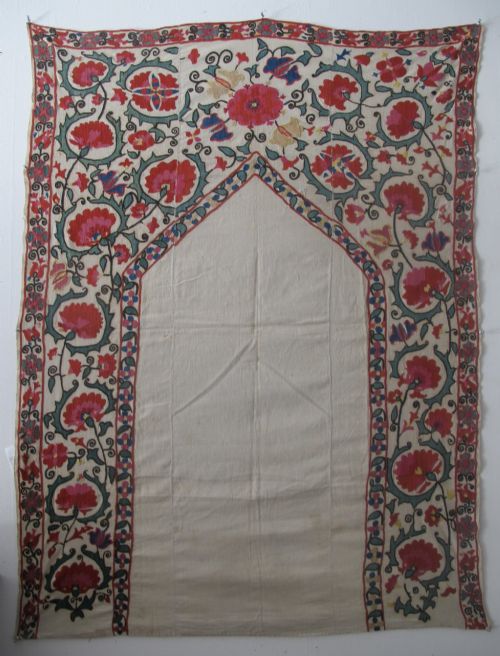
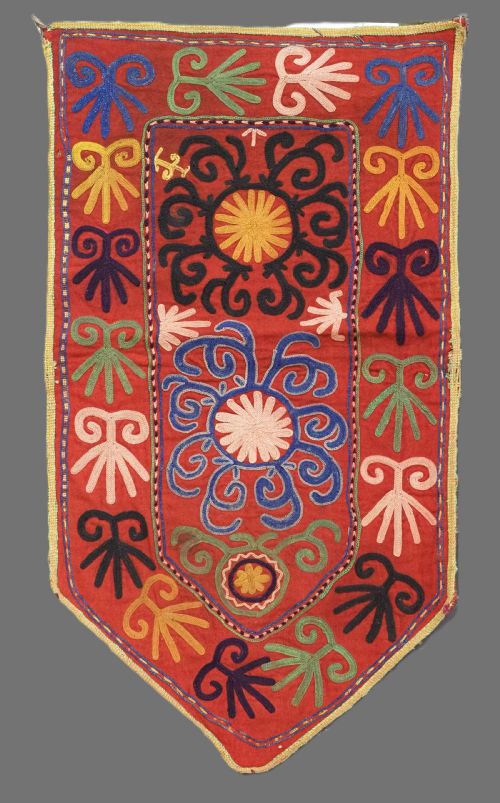
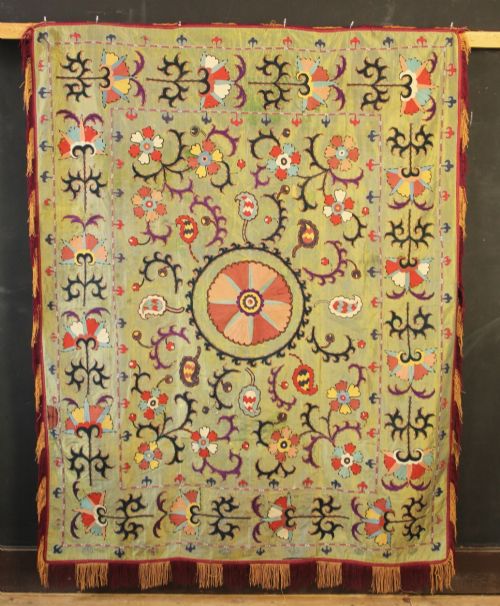
The selections available range from large fully embroidered palak designs to smaller mounted embroideries and ceremonial horse or saddle covers created by the Lakai tribe. You will find formats spanning architectural motifs, floral compositions on red or green grounds, and prayer formats.
Dating primarily from the nineteenth and early twentieth centuries, these textiles serve as textile wall art and tapestries. They represent centuries of nomadic and sedentary craft traditions brought down through generations.
How they were made
Artisans worked silk thread onto foundation fabrics primarily composed of cotton, linen, or wool, depending on the specific regional workshop and tribal origin. The embroidery stitches demand immense patience and precise handwork to achieve dense pictorial and geometric surfaces.
Dyeing methods relied on natural colour sources to produce the deep reds, greens, and contrasting grounds characteristic of Bokhara and Tashkent workshops. The union of silk thread and sturdy cotton or linen grounds ensures the structural longevity of these embroidered textiles.
Listings feature pieces spanning from the mid-nineteenth century through to the early twentieth century, originating from centres like Bokhara and Tashkent.
What varies in quality
The distinction between standard examples and the finest pieces lies in the density of the embroidery and the complexity of the design, such as fully embroidered palak panels versus simpler compositions. The precision of the needlework and the harmony of the colour palette dictate the visual impact of each hanging.
Regional execution also plays a part, with certain towns like Bokhara and Tashkent renowned for particularly refined architectural and central star layouts. The condition of the silk thread and the integrity of the original ground fabric further determine the standing of an individual piece.
The Uzbek Silk Needlework Panel Glossary
- Nim suzani
- A smaller version or half-size variant of the traditional suzani. They share the same intricate silk embroidery techniques but occupy a more compact wall space.
- Palak
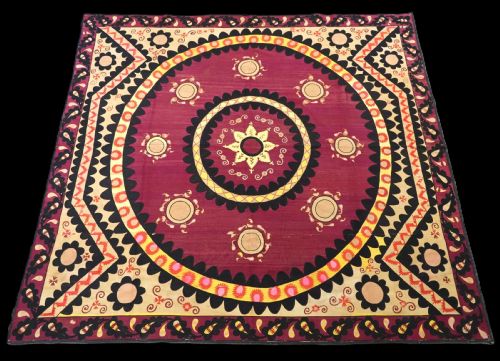
- A fully embroidered suzani type dominated by a large central star or medallion motif. The ground is densely covered in needlework rather than leaving areas of plain fabric visible.
- Uut kap ilgich
- A specific type of hanging or bag ornament associated with the Lakai tribe. These pieces display distinct tribal motifs and nomadic colour combinations.
- Prayer format
- A textile layout featuring a mihrab or arch design intended to direct contemplation. Such pieces often incorporate specific regional floral or geometric borders.
Uzbek Silk Needlework Panel: Frequently Asked Questions
How were these panels used originally?
These textiles served multiple domestic and ceremonial purposes within Central Asian households, functioning as wall decorations, dowry items, and bedding wraps. Nomadic groups like the Lakai also utilised specialised embroideries as horse and saddle covers for ceremonies.
Over time, these textiles became central elements of interior decoration, marking important life events and family milestones within the community. Their enduring craftsmanship allowed them to transition from functional domestic objects to valued wall art.
How do I hang a suzani safely?
Hanging a textile requires distributing the weight evenly across the entire upper edge to prevent distortion of the cotton or linen ground. Professional conservators often recommend stitching a fabric sleeve or Velcro strip to the reverse so a padded rod can support the weight.
Avoid displaying these pieces in direct sunlight, as silk threads are sensitive to ultraviolet fading. Rotating the hanging position periodically helps maintain even exposure to ambient light within a room.
What is the difference between a suzani and a nim suzani?
A standard suzani is typically a large wall hanging designed to cover a significant portion of a room's wall. These larger works often feature elaborate floral or architectural compositions that require extensive time to embroider.
A nim suzani is simply a smaller version of the same tradition, offering similar silk needlework on a reduced scale. This smaller format makes them easier to accommodate in modern domestic spaces while retaining the exact same regional motifs.
How do I identify regional styles?
Regional attribution relies on observing specific design motifs, colour palettes, and structural layouts unique to cities like Bokhara, Tashkent, Samarkand, or Shakhrisabz. For instance, Tashkent palaks are recognised by their fully embroidered central star designs, whereas Bokhara pieces frequently showcase architectural or structured floral elements.
Tribal groups such as the Lakai display a distinct aesthetic characterised by geometric forms and specific wool or silk combinations. Comparing the ground fabric and stitch density against known examples helps clarify the likely origin.