


Red Silk Uzbek Suzani
When you search for a red silk uzbek suzani, you are tracking down a heavy embroidered textile made in Central Asia for domestic and ceremonial life.
Red Silk Uzbek Suzani
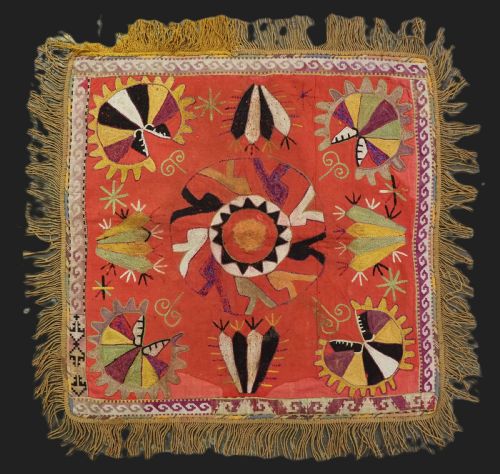
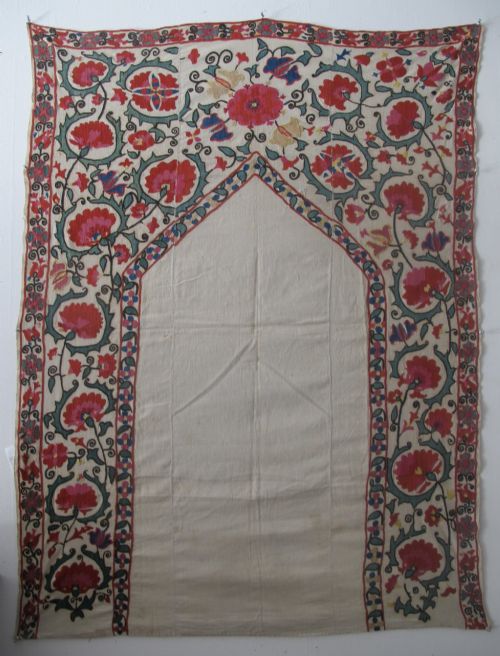
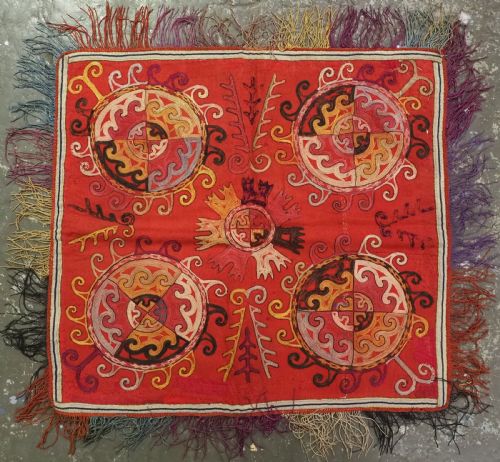
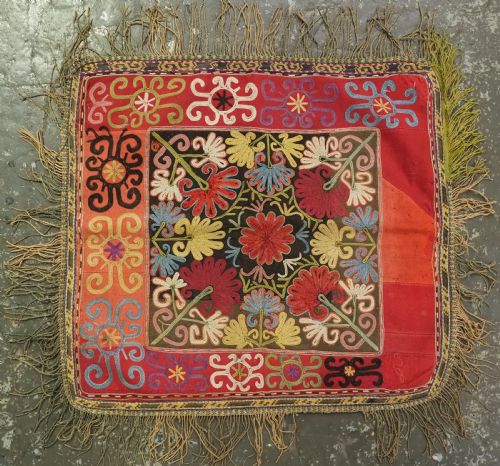
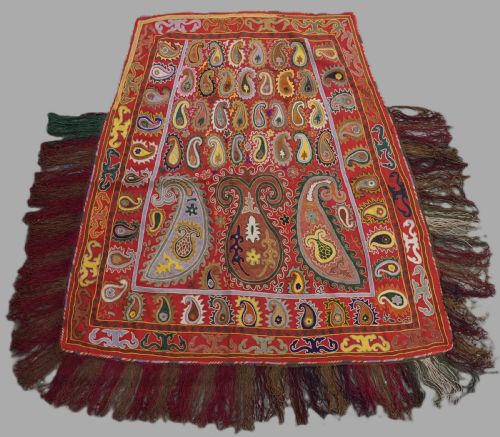
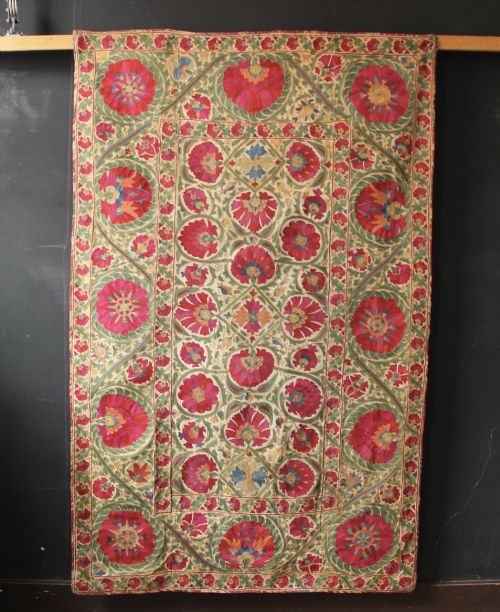
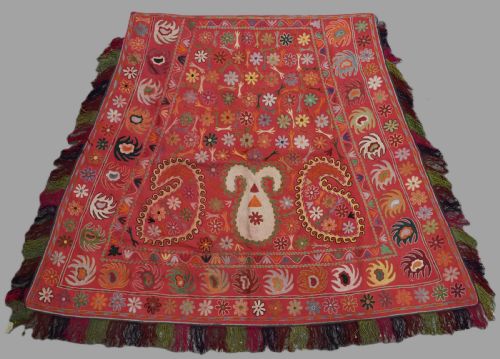
A red silk uzbek suzani is a hand-embroidered wall hanging or cover originating from Uzbekistan and the broader Central Asian region, dating from the mid-nineteenth century through to the early twentieth century. These pieces encompass specific regional formats such as Bokhara suzanis, Tashkent palaks, Nurata panels, and smaller Lakai tribe ilgiches and saddle covers.
The objects served traditional functions within nomadic and settled households, often created as dowry items, ceremonial horse covers, or domestic wall hangings. Collectors encounter various formats, from full-scale wall panels with architectural or central star designs down to compact amulet holders and half-size nim suzanis.
The regional diversity is evident in works attributed to specific groups and cities, including Shakrisabz, Samarkand, and Ura Tube. Each origin contributes distinct decorative vocabulary, ranging from bold tribal motifs to elaborate floral arrangements on red grounds.
Materials and construction
Makers embroidered with fine silk thread onto woven foundations of cotton, wool, linen, or adras, which is a traditional silk and cotton warp-faced fabric. The ground fabric often provides a vivid red backdrop, frequently mentioned in descriptions as red cotton, red wool, or red adras silk.
Needlework techniques rely on dense surface stitching to build up intricate patterns, covering the ground fabric partially or entirely in what is termed full work. The thread selection and fabric combinations dictate the physical weight and drape of each textile wall hanging.
Distinctions in quality
Quality rests upon the density of the needlework and the completeness of the embroidery across the ground fabric, distinguishing fully covered palaks from more open floral compositions. The precision of the stitch work and the clarity of regional design motifs determine the standing of an individual textile.
The integrity of the original foundation materials, whether cotton, wool, or adras silk, together with the vibrancy of the remaining silk threads, shapes the visual impact of the piece. Surviving examples demonstrate varying degrees of wear that reflect their age and historical use as dowry objects or household covers.
The Red Silk Uzbek Suzani Glossary
- Suzani
- A type of embroidered textile from Central Asia, traditionally made as part of a bride's dowry. The word derives from the Persian term for needle.
- Nim Suzani
- A smaller or half-sized version of a standard suzani panel. These pieces were often produced for specific domestic spaces or furniture covers.
- Palak
- A large, fully embroidered suzani featuring a prominent central star or medallion design. The term implies heavy, dense needlework covering almost the entire ground fabric.
- Ilgich
- A small embroidered hanging or utility bag produced by the Lakai tribe. They were created for wall display or as functional domestic items within the yurt.
- Adras
- A traditional Central Asian fabric woven with a silk warp and a cotton welt. It provides a textured foundation for silk embroidery threads.
- Torba
- A traditional bag or hanging used in nomadic households for storage. These pieces share stylistic motifs with wider tribal embroideries.
Red Silk Uzbek Suzani: Frequently Asked Questions
What is an uzbek suzani used for?
These textiles served primarily as domestic wall hangings, decorative covers, and essential components of a bride's dowry in Central Asian households.
Nomadic and settled communities also utilised specific pieces, such as horse covers and small hanging bags, for ceremonial and daily use.
How do I tell different regional suzanis apart?
Regional styles are identified by their distinct floral arrangements, palette choices, and compositional layouts associated with towns like Tashkent, Bokhara, and Samarkand.
Tribal groups like the Lakai produce smaller pieces with unique geometric or zoomorphic motifs that differ markedly from urban workshop outputs.
What does a nim suzani mean?
The prefix nim denotes a half or smaller version of a standard full-scale suzani panel. These items offer a compact format while retaining the same embroidery techniques and silk threads.
Collectors often choose nim suzanis when wall space is limited compared to larger full-sized hangings.
How should I hang a textile on the wall?
Textiles require careful mounting methods that distribute the weight evenly across the entire top edge without puncturing the fabric or threadwork. Professional framing or sleeve mounting on a padded backing helps preserve the historical ground material.