
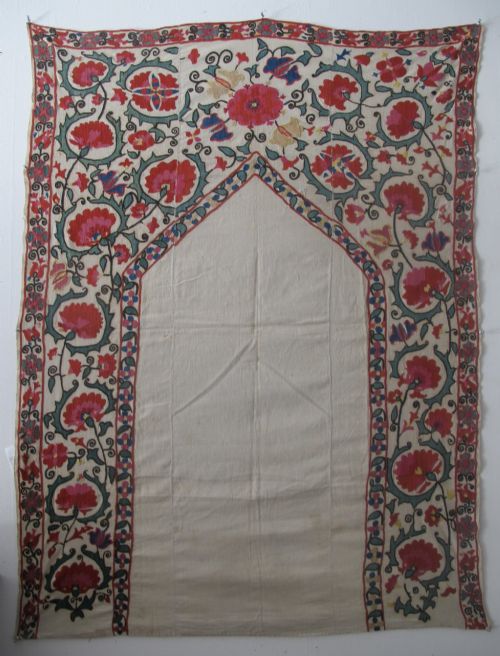
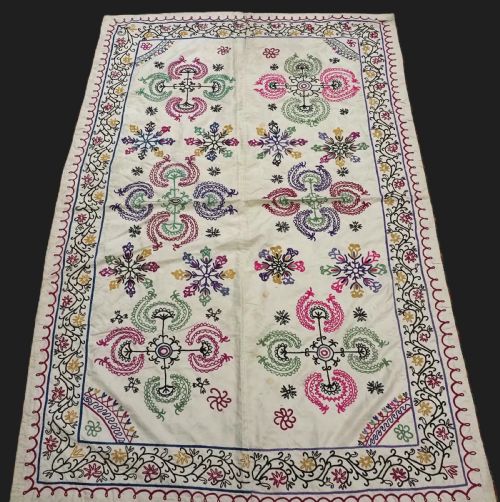


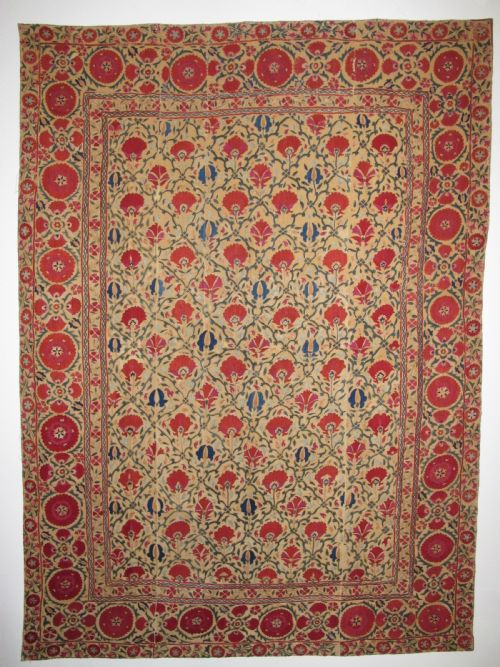
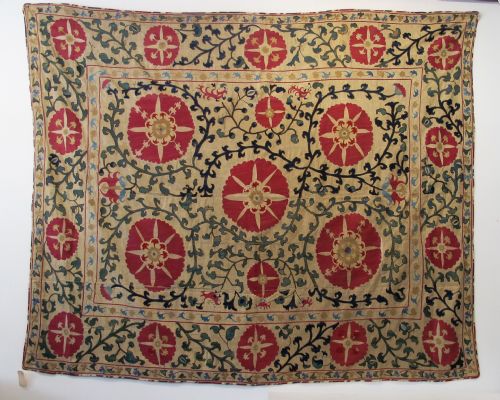
Cream Silk Embroidered Suzani
These cream silk embroidered suzani textiles bring Central Asian tribal artistry into a room, offering rich historical pattern and texture.
Cream Silk Embroidered Suzani
A cream silk embroidered suzani is a traditional textile wall hanging originating from Central Asia, often associated with regions such as Uzbekistan, Bokhara, Samarkand, and Nurata. These decorative pieces display distinct local styles including traditional Uzbek motifs, architectural layouts, and prayer formats.
The pieces you encounter span from the mid-nineteenth century up to the early twentieth century, encompassing both full-scale wall hangings and smaller formats like the nim-suzani. Most examples utilise a foundational ground of cotton, linen, or silk.
Makers employed dense needlework to cover these grounds in colourful silk thread. Each panel reflects the specific heritage of Central Asian folk art traditions passed down through generations.
Materials and Construction Techniques
Artisans constructed these textiles by working fine silk thread across woven foundations of cotton, linen, or silk. This combination created a durable yet lustrous surface capable of holding complex botanical and geometric patterns.
Needlework forms the defining characteristic of every piece, executed entirely by hand to produce the dense embroidery seen across regional types like the Ura Tube suzani. The interplay between the cream background and the coloured silk threads establishes the visual depth.
Current listings feature nineteenth and early twentieth-century examples originating from Uzbekistan, including Bokhara, Samarkand, and Nurata.
Assessing Quality and Execution
Quality rests primarily in the density and precision of the silk thread embroidery across the ground fabric. Superior examples demonstrate exceptional dexterity in the needlework, maintaining consistent tension and intricate detail throughout the design.
The complexity of the regional design, whether an architectural composition or a prayer format, dictates the artistic merit of the piece. Well-preserved nineteenth-century specimens exhibit harmonious colour palettes and balanced proportions that elevate them above standard decorative textiles.
The Cream Silk Embroidered Suzani Glossary
- Nim-Suzani
- A smaller half-size format of the traditional suzani textile. These compact pieces were often created for specific domestic spaces or alcoves.
- Bokhara
- A historic Central Asian region renowned for distinctive embroidered textile traditions. Pieces originating here frequently display sophisticated floral and architectural compositions.
- Ura Tube
- A specific regional style of Central Asian embroidery. These textiles showcase characteristic local motifs and needlework patterns unique to their provenance.
Cream Silk Embroidered Suzani: Frequently Asked Questions
How were suzani textiles used historically?
Central Asian families used these large embroidered textiles primarily as wall hangings and decorative furnishings within the home. They formed an essential part of dowry displays and ceremonial settings.
Over time, these pieces served both decorative and symbolic functions, reflecting the social standing and artistic heritage of the household.
How do I hang a suzani safely?
Mounting a textile requires distributing the weight evenly across the entire upper edge to prevent strain on the historical fabric. Conservation framing or a sleeved backing support work effectively.
Avoid direct sunlight and high humidity to protect the delicate silk threads and the cream cotton or linen ground from degradation.
How do I distinguish regional suzani styles?
Regional attribution relies on identifying specific motifs, colour combinations, and embroidery layouts associated with centres like Bokhara, Samarkand, or Nurata. Architectural elements and prayer formats offer further clues.
Each area developed distinct visual vocabularies that experienced makers use to determine the geographical origin of the textile.
What is the difference between a suzani and a nim-suzani?
A standard suzani is a large-scale wall hanging designed to cover significant wall space, whereas a nim-suzani is a smaller half-scale version. Both utilise the same silk embroidery techniques.
This smaller format provides a practical alternative for collectors working with limited display space while retaining all the traditional characteristics.