



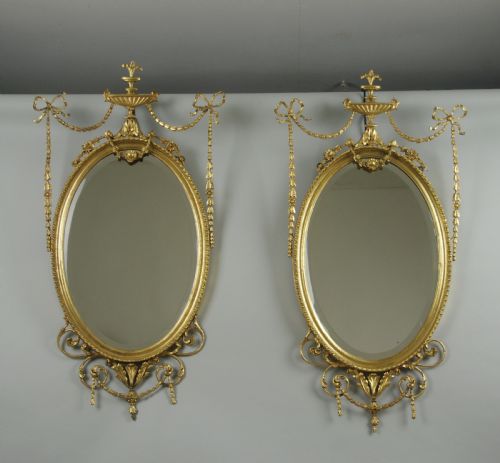


Urn Crest Wall Mirror
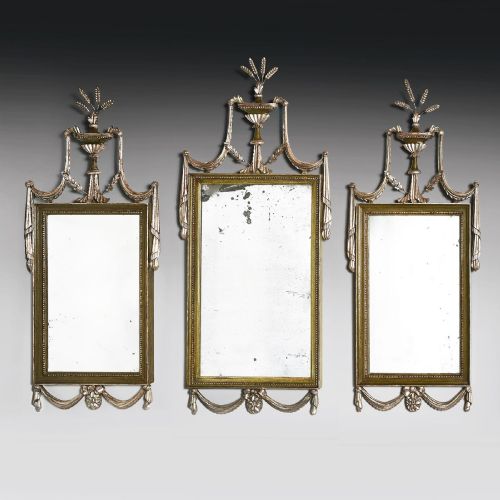
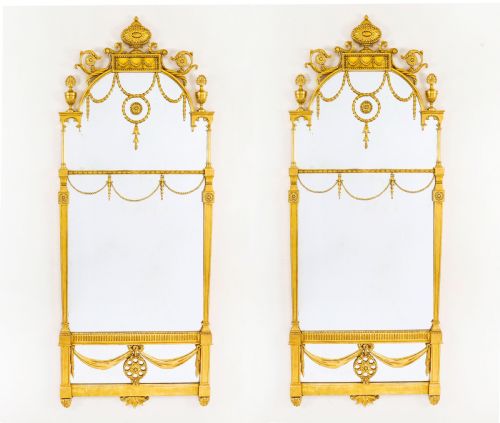
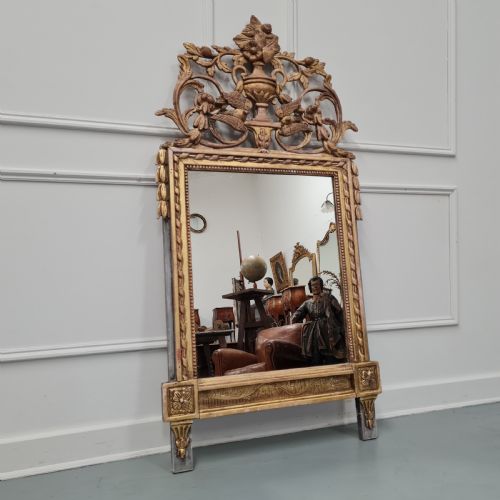
An urn crest wall mirror brings neoclassical symmetry and height to a room, crowned by a carved urn and delicate swags.
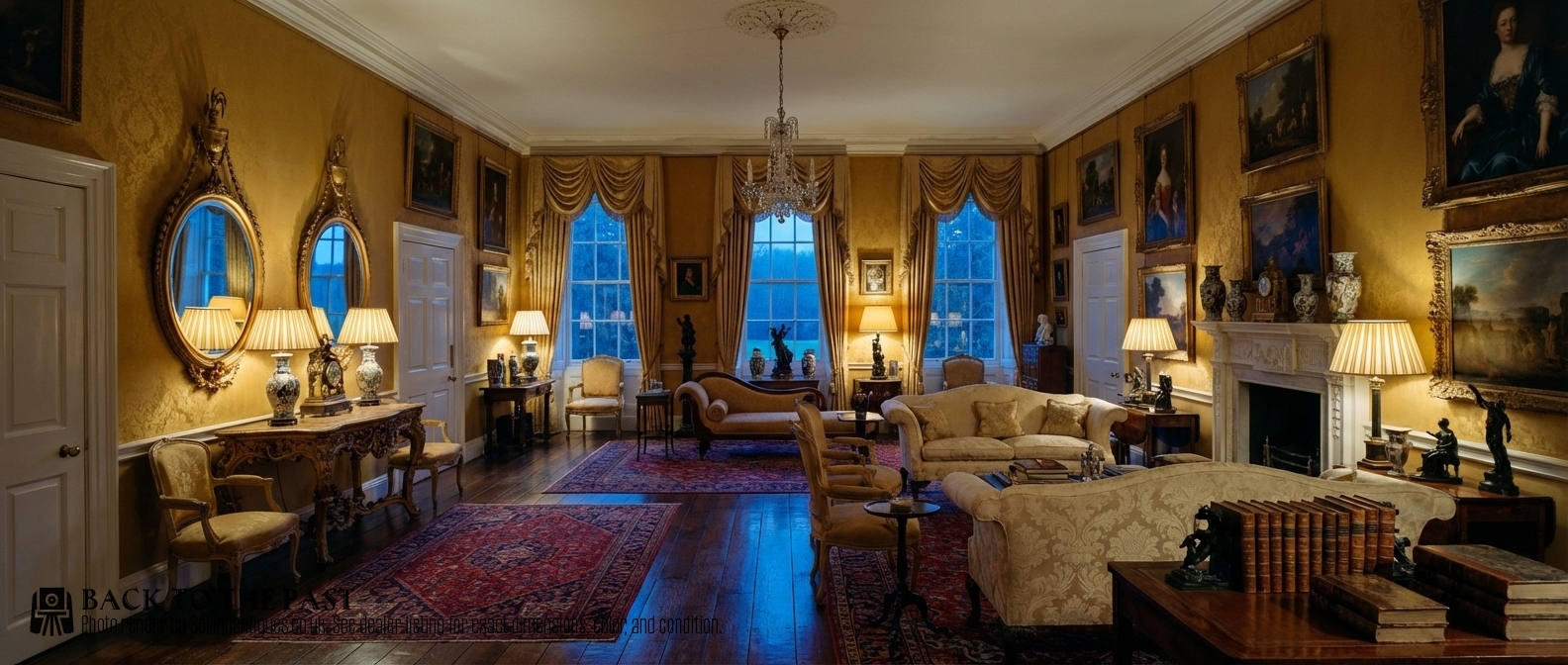
Urn Crest Wall Mirror
The pieces appearing on this page span the late eighteenth, nineteenth, and early twentieth centuries, drawing heavily on neoclassical, Adam, and French revival vocabularies. Makers built upon historical design precedents from the Georgian and Regency eras, reinterpreting them through Victorian and Edwardian tastes.
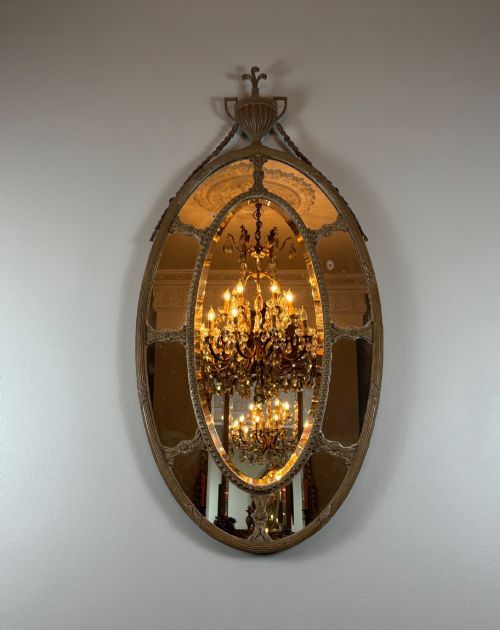
Oval formats dominate the selection, framed in gilded wood, gesso, or ebonised surfaces that reflect candlelight and daylight alike. One frequently encounters giltwood and composition mouldings executed in styles ranging from restrained Adam revival to ornate French chateau aesthetics.
Materials and construction methods
Carvers shaped wooden foundations from timber such as oak, mahogany, and pine, building up intricate relief details with gesso and composition paste. Artisans then applied gold leaf or paint finishes directly to these prepared surfaces.
Mirrors utilise silvered plate glass, frequently held within segmented frames or border glass configurations. Giltwood and parcel-gilt treatments combine burnished and matte metallic surfaces to catch the light from different angles.
Urn Crest Wall Mirror Retail Price Guide 2026
Typical asking prices for urn crest wall mirror among the pieces listed under this phrase on Sellingantiques today, from the lower quarter to the upper quarter. They describe what is for sale here now, not the wider market.
Distinctions in craftsmanship
The crispness of the carved or moulded crest dictates much of the visual success, separating sharply defined classical foliage from softer, more generic repetition. Depth in the layering of swags and the articulation of the central urn demonstrate the hand of a more skilled workshop.
The integrity of the original gilding and the preservation of the antique mirror glass contribute significantly to the character of the piece. Hand-applied gold leaf ages with a warmer, mottled patina compared to later, flatter metallic paints.
Gillows Of Lancaster
The Urn Crest Wall Mirror Glossary
- Giltwood
- Wood that has been coated with a thin layer of gold leaf. This finish defines the majority of classical and revival frames.
- Gesso
- A plaster-like mixture applied to wooden frames as a base for carving and gilding. It allows for crisp, intricate surface ornamentation.
- Adam Revival
- An architectural and decorative style inspired by Robert Adam's neoclassical designs. It is characterised by symmetrical urns, swags, and husks.
- Overmantel Mirror
- A large horizontal or vertical mirror designed to hang above a fireplace mantel. Many examples incorporate classical architectural pediments.
- Parcel-Gilt
- Partially gilt decoration where only specific raised details are highlighted in gold against a contrasting painted or ebonised ground.
Urn Crest Wall Mirror: Frequently Asked Questions
Where should I hang an urn crest wall mirror?
These mirrors suit locations where their vertical height can be appreciated, such as above a fireplace mantel, a console table, or a principal hallway landing. The crowned urn draws the gaze upward, making them effective on walls with high ceilings.
Ensure the wall construction and fixings can support the weight of a wooden and glass frame, particularly larger overmantel examples.
How do I tell an original eighteenth-century mirror from a later revival piece?
Examination of the timber behind the frame, the composition of the gesso, and the silvering on the glass plate provide clues to age. Eighteenth-century and early nineteenth-century pieces often display hand-cut joinery and subtle irregularities in the gilding.
Revival pieces produced during the Victorian and Edwardian eras employ similar neoclassical motifs but typically show nineteenth-century framing techniques and standardised machine-rolled glass.
What is the difference between giltwood and painted mirrors?
Giltwood frames feature actual gold leaf applied over a prepared gesso and bole ground, creating a warm metallic sheen that ages gracefully. Painted or ebonised mirrors utilise pigments to achieve a solid colour or a contrasting parcel-gilt effect.
Both finishes were used historically, with ebonised and painted versions offering a more subdued tone compared to bright gilded surfaces.
How should I clean the antique glass and frame?
Dust the carved gesso and giltwood gently with a dry, soft brush to protect the delicate composition ornament and gold leaf. Avoid moisture and commercial chemical sprays on the frame entirely.
Clean the mirror glass sparingly using a cloth slightly dampened with distilled water, taking care not to let liquid seep behind the edges of the plate.