

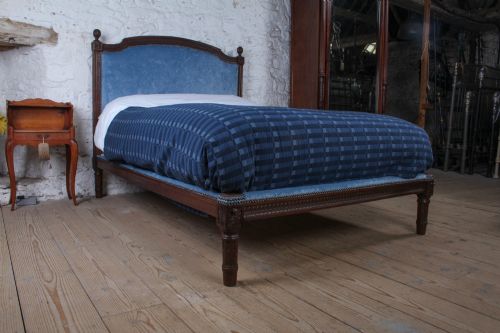


Upholstered Wood Bed Frame
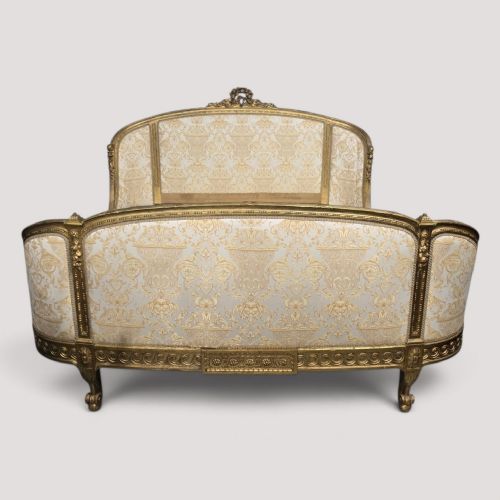
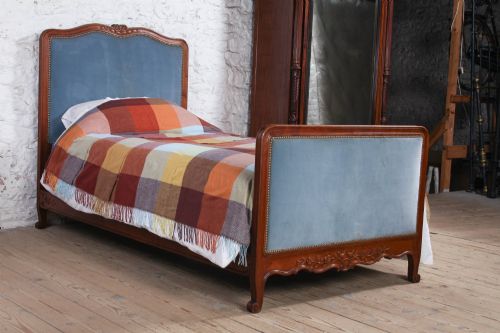
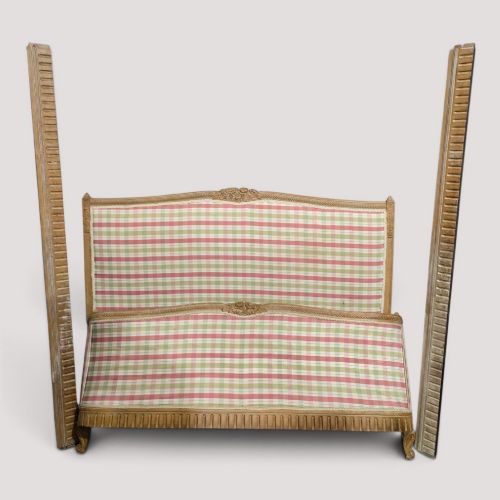
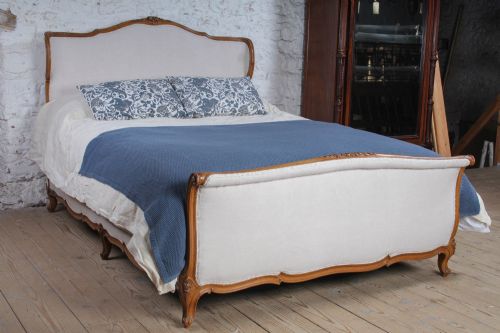
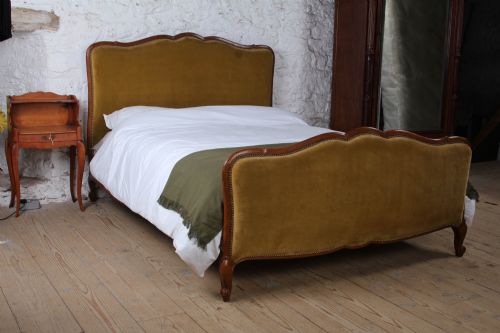
An upholstered wood bed frame brings French Provincial and Louis styles into a bedroom with carved timber and soft textile panels.
Upholstered Wood Bed Frame
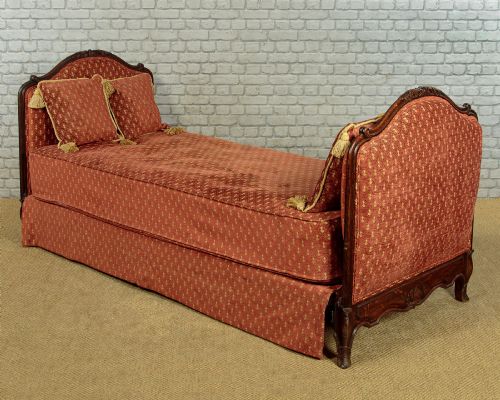
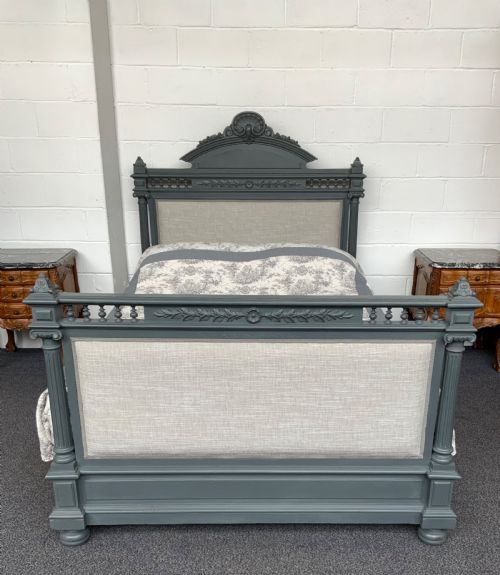
An upholstered wood bed frame combines timber construction with fabric panels across headboards, footboards, or daybed backs. The selections on this page span single, double, and king sizes alongside daybeds and chaise longues.
Most pieces derive from French stylistic traditions, running from Louis XV and Louis XVI styles through to Empire, Rococo, and Provincial revivals. The construction dates predominantly cover the Victorian, Edwardian, and early twentieth-century periods.
Materials and construction
The frames utilise solid timbers such as oak, rosewood, ash, and painted or gilt wood. Carved details often feature floral motifs, scrolls, or structural posts.
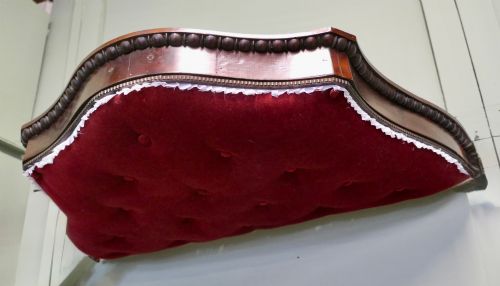
Upholstery fabrics, textiles, linen, and newly applied covers are secured to the wooden frames to form padded headboards and footboards.
Upholstered Wood Bed Frame Retail Price Guide 2026
Typical asking prices for upholstered wood bed frame among the pieces listed under this phrase on Sellingantiques today, from the lower quarter to the upper quarter. They describe what is for sale here now, not the wider market.
Listings feature French Chateau, Rococo, and Empire styles alongside Edwardian and Victorian periods, constructed in timber, painted wood, and linen.
Quality differences
The distinction lies in the depth and precision of the carved wood details on the frame, ranging from simple shaped timber to elaborate motifs with cherubs and parcel gilding. The choice of primary wood, such as Hungarian ash or rosewood against standard painted timber, alters the character of the piece.
The integration of the upholstery with the wooden structure, including newly recovered fabric versus aged textiles, marks a divergence in condition and presentation across the range.
The Upholstered Wood Bed Frame Glossary
- Louis XVI Style
- A neoclassical design vocabulary characterised by straight lines, fluted columns, and symmetrical carved ornamentation. It emerged in eighteenth-century France and inspired numerous nineteenth and twentieth-century revivals.
- Daybed
- A piece of furniture serving as both a sofa and a bed, featuring an upholstered backrest and often one or two raised ends. These frames appear frequently in early twentieth-century listings.
- Parcel Gilt
- A surface treatment where parts of a wood or painted frame are decorated with thin gold leaf or gilt paint. This technique highlights specific carved elements such as moulding or floral details.
- Daybed
- A piece of furniture serving as both a sofa and a bed, featuring an upholstered backrest and often one or two raised ends. These frames appear frequently in early twentieth-century listings.
- Chaise Longue
- An elongated upholstered chair designed for reclining, sharing stylistic traits and frame construction with contemporary bed frames.
Upholstered Wood Bed Frame: Frequently Asked Questions
How do I choose the right size?
Sizes range from single and double up to king and super king dimensions. Check your room proportions carefully against the listed dimensions before deciding.
Take note of whether the frame includes side rails and a base, as some historic beds require custom mattress support solutions.
Are these beds suitable for daily use?
Many frames are sturdy enough for regular sleep, particularly those constructed from solid oak or ash with reinforced side rails.
Consider whether a historic frame accommodates standard modern mattress sizes or if custom ordering is necessary for a comfortable fit.
How do I care for the upholstery?
Vacuum textile and fabric surfaces gently with a soft brush attachment to remove dust and prevent fibre degradation over time.
Protect newly upholstered panels from direct sunlight to maintain the colour and integrity of the fabric.
What distinguishes Louis XV from Louis XVI styles?
Louis XV style pieces favour asymmetrical curved lines, cabriole legs, and flowing organic Rococo ornamentation. They offer a softer visual weight within a bedroom.
Louis XVI style turns towards straight lines, geometric symmetry, and neoclassical motifs like fluting and columns, presenting a more formal architectural silhouette.