

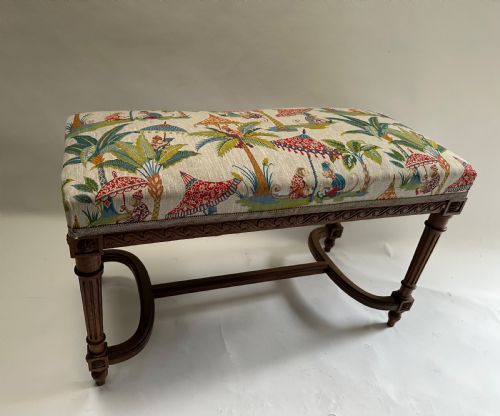
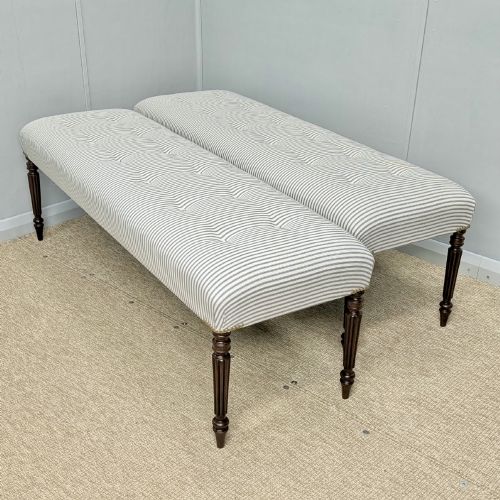
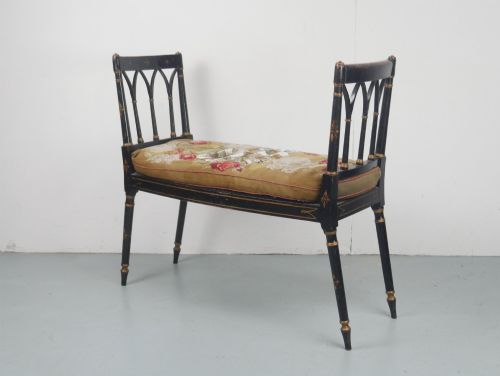
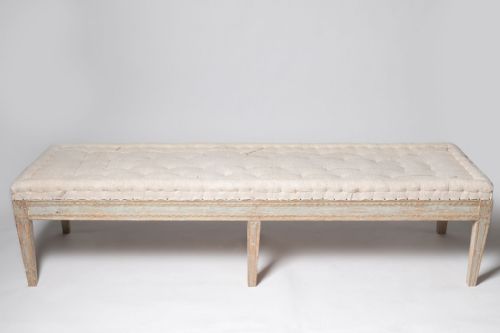
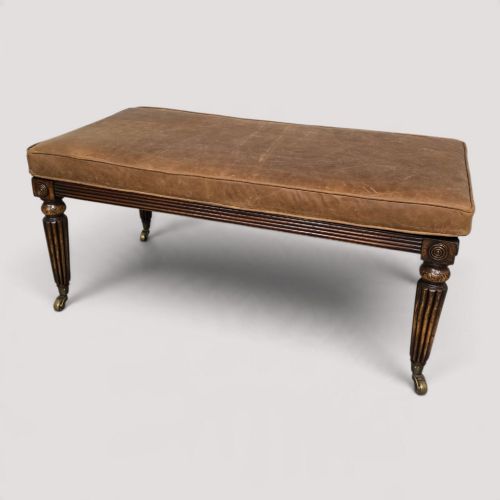
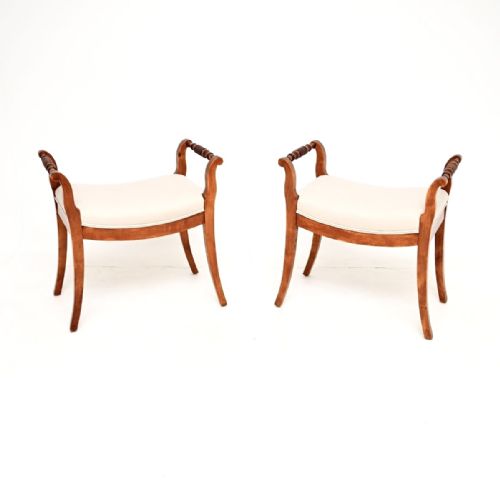
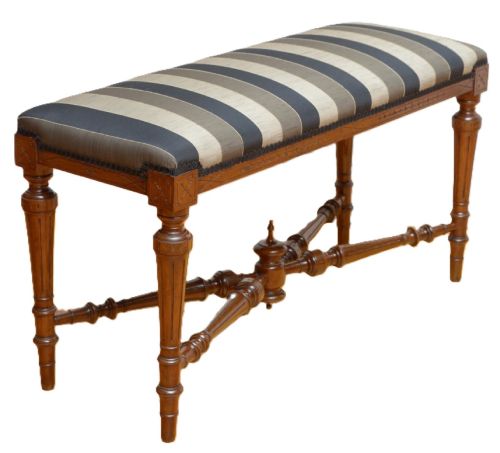
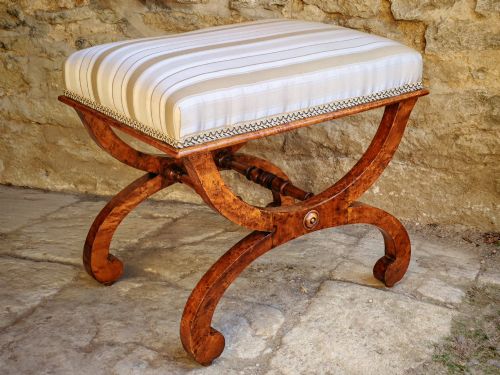
Upholstered Window Stool
An upholstered window stool brings low seating and soft textiles into light-filled alcoves, combining functional furniture with period craft.
Upholstered Window Stool
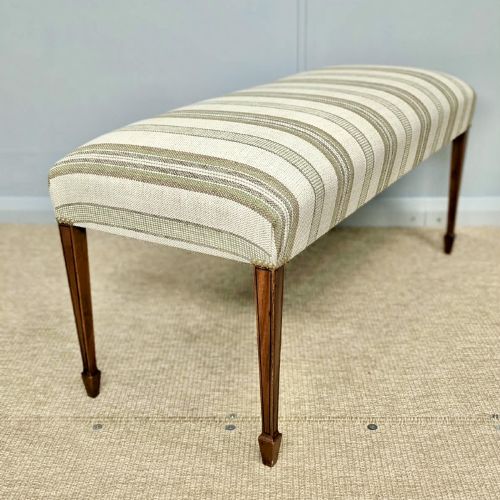
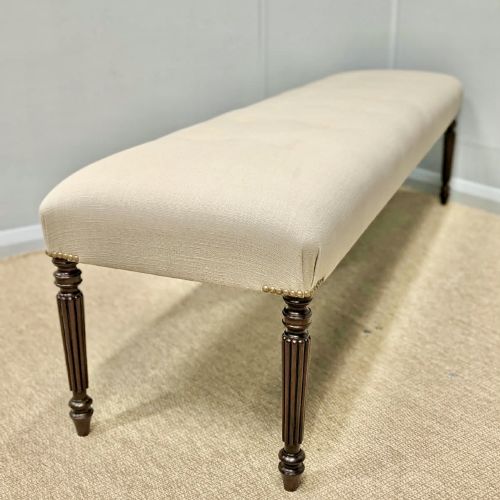
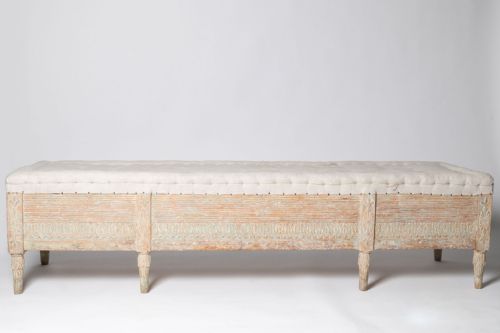
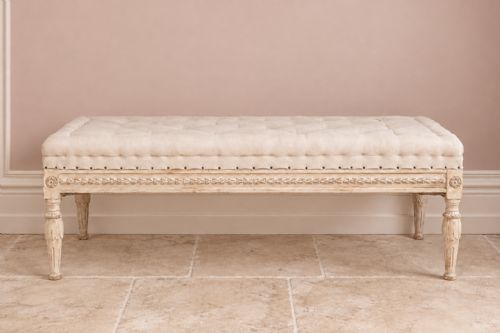
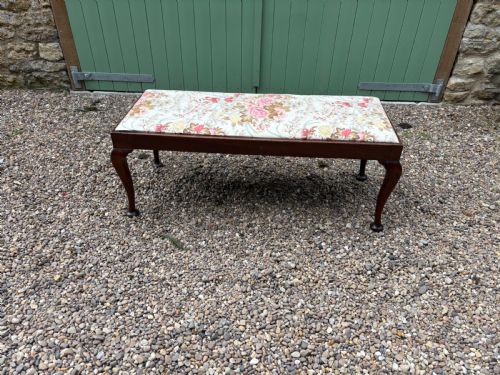
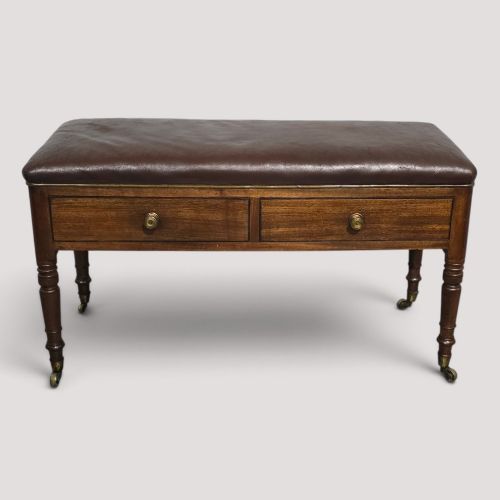
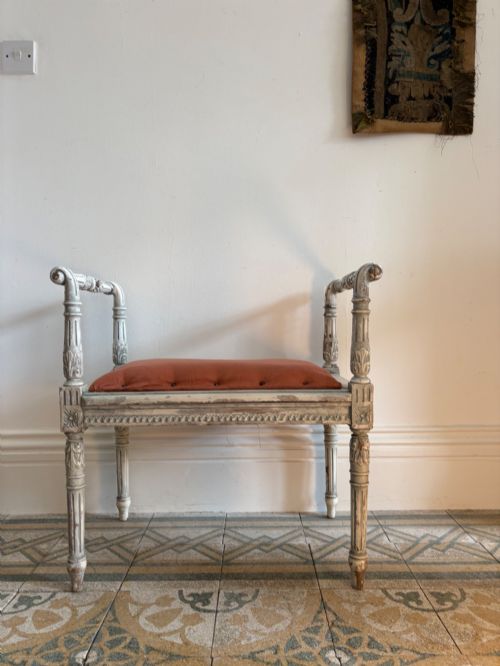
When searching for an upholstered window stool, buyers encounter a diverse selection of low seating designed for placement beneath windows, alongside beds, or beside fireplaces. The evidence shows forms ranging from compact footstools and dressing stools to long duet benches and window seats originating from the eighteenth, nineteenth, and early twentieth centuries.
The pieces listed on this page span numerous aesthetic movements, including Victorian, Regency, Edwardian, George III, and Gothic Revival styles. Common woods such as mahogany, walnut, oak, and rosewood appear alongside painted pine, giltwood, and ebonised finishes, often paired with contemporary textile revivals or period upholstery.
Geographic origins vary widely across the inventory, encompassing English, French, Swedish, Italian, and Irish workshops. Buyers find everything from heavy cabriole-legged walnut frames to slender satin birch Biedermeier examples and pearl-inlaid Syrian forms.
How they were made
Cabinetmakers constructed the supportive frames of an upholstered window stool from dense timbers like mahogany, walnut, and oak, often employing hand-carving or turning techniques to shape legs and rails. Giltwood and painted finishes required layered preparation on gesso or softwood bases, while specialised pieces integrated burr maple veneers or delicate inlay.
Upholstery methods utilised traditional stuffing materials secured over webbing or cane bases, finished with top layers of fabric, silk, leather, velvet, or linen. Brass studding frequently secured the textile edges on earlier pieces, whereas later examples relied on concealed tacks and gimps.
Upholstered Window Stool Retail Price Guide 2026
Typical asking prices for upholstered window stool among the pieces listed under this phrase on Sellingantiques today, from the lower quarter to the upper quarter. They describe what is for sale here now, not the wider market.
Victorian musicians gathered on long duet stools to practice four-handed piano arrangements.
What varies in quality
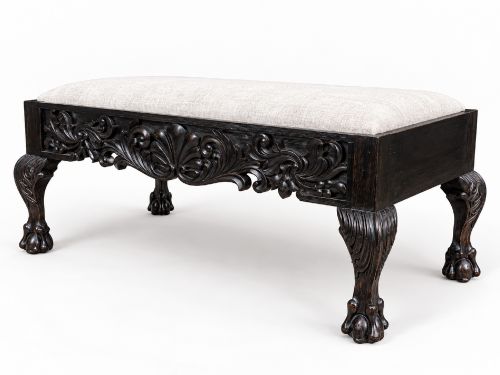
The standard of timber selection and joinery distinguishes workshop production, separating simple utilitarian seating from ambitious cabinetmaker commissions. Crispness of hand-carved ornamentation, such as acanthus leaves or fluting on cabriole and square tapering legs, reveals the artisan's skill.
Proportion and structural integrity define the architectural merit of the frame, alongside the fidelity of period style revivals. The quality and appropriateness of the textile covering, whether historic needlework or high-end contemporary fabric, further influence the piece's character.
Charles Nosotti·Hallett & Sons
The Upholstered Window Stool Glossary
- Duet stool
- A long seat designed to accommodate two people, often associated with piano or music playing. These extended forms frequently double as window seats.
- Giltwood
- Timber coated with a thin layer of gold leaf over a prepared gesso ground. This finish appears frequently on decorative French and neoclassical frames.
- X-frame
- A structural base formed by intersecting diagonal members resembling the letter X. This ancient architectural form provides robust support for ceremonial and domestic seating alike.
- Cabriole leg
- A furniture leg that curves outward in a convex arc before tapering inward in a concave sweep. The profile imitates the natural bend of an animal's leg.
- Biedermeier
- A central European style spanning the nineteenth century characterised by utilitarian comfort, clean lines, and minimal ornamentation. Satin birch and other pale native woods frequently feature in these pieces.
Upholstered Window Stool: Frequently Asked Questions
Where should I place an upholstered window stool?
These low seats suit narrow floor spaces beneath architectural windows, at the foot of a bed, or flanking a fireplace. Their compact proportions allow them to provide additional seating without blocking natural light.
Because many examples feature finished backs or symmetrical detailing, they also function effectively as freestanding benches in hallways or dressing rooms.
How do I identify the period of a window stool?
Dating relies on combining the timber species, joinery methods, and stylistic vocabulary present in the frame. For instance, satin birch and clean geometric lines point toward nineteenth-century Biedermeier, while heavy carved rosewood or walnut often indicates Victorian production.
Matching the leg profile, such as cabriole, tapered, or turned supports, with known revival movements helps narrow the decade of manufacture.
Are these stools sturdy enough for daily seating?
Most antique frames utilise solid hardwoods like oak, mahogany, and walnut, ensuring robust structural integrity for regular domestic use. Solid joinery and substantial timber scantlings allow these pieces to endure centuries of sitting.
Checking the internal webbing and traditional upholstery support ensures the seat remains comfortable and supportive during everyday occupation.
What is the difference between a window seat and a footstool?
Window seats generally feature raised ends, backs, or elongated proportions specifically engineered for comfortable sitting beside architectural glazing. Footstools are lower and more compact, primarily designed to support the feet while resting in an armchair.
Many listings blur this distinction by offering long stools that function interchangeably for seating, resting, or music performance.