
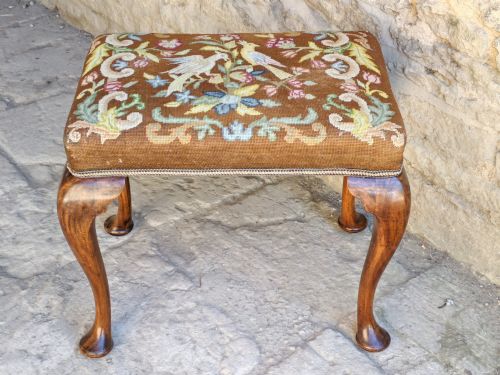
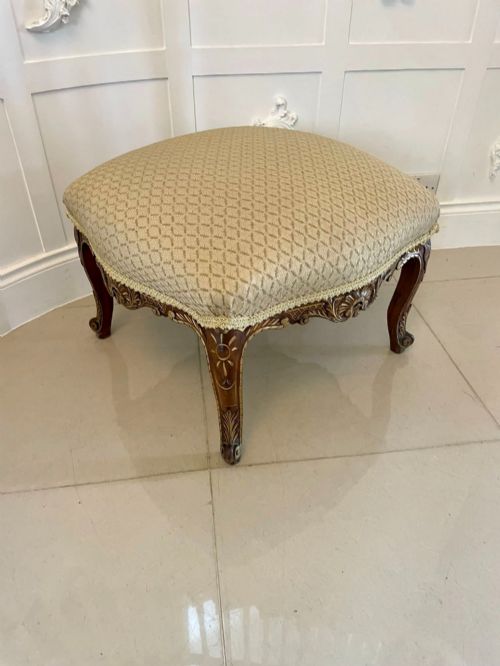
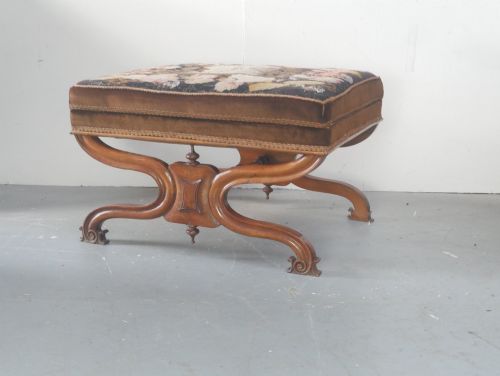
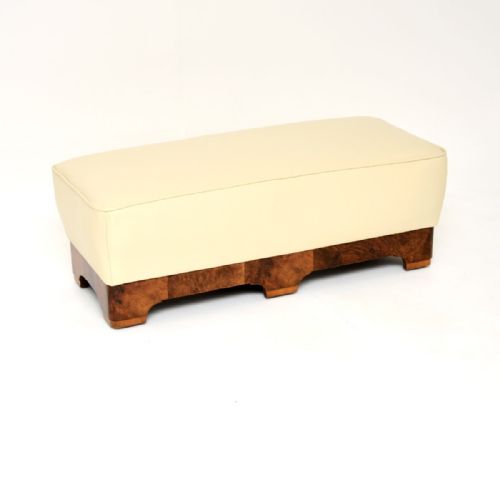
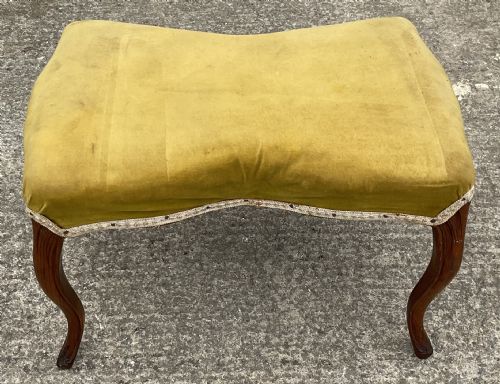
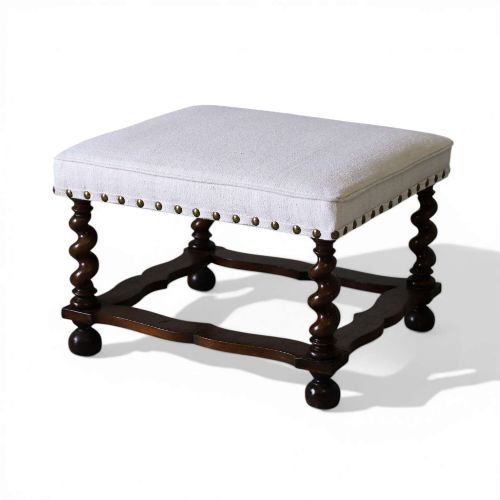
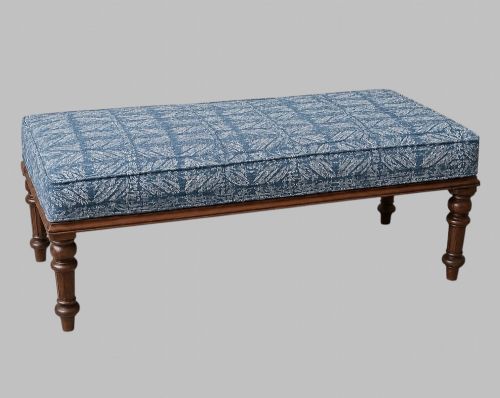

Upholstered Walnut Ottoman
An upholstered walnut ottoman brings solid timber and textured textile together in a seat built for daily repose.
Upholstered Walnut Ottoman
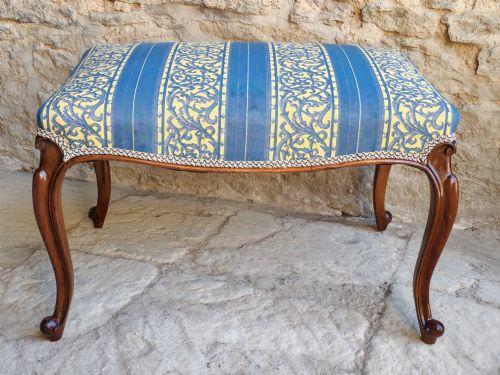
When searching for an upholstered walnut ottoman, a buyer examines sturdy timber frames paired with soft tops designed for resting feet or sitting. The pieces on this page span the Victorian era, the nineteenth century, and the Art Deco period, taking forms such as footstools, window seats, and salon benches.
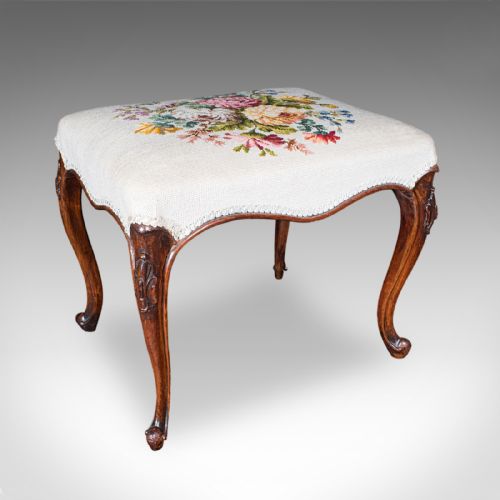
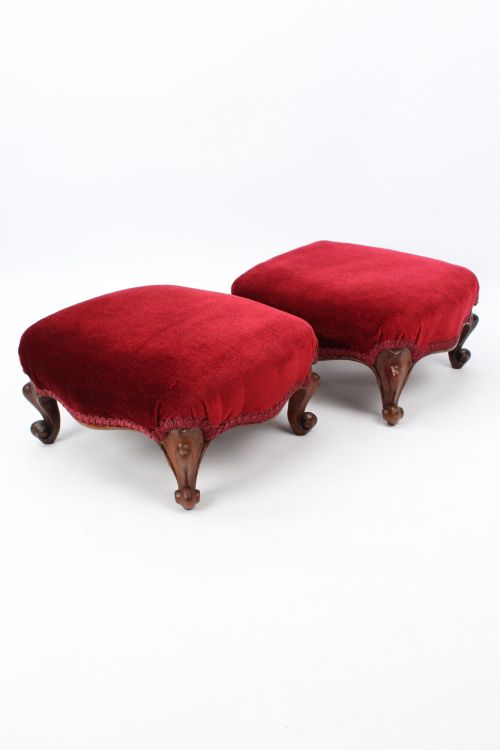
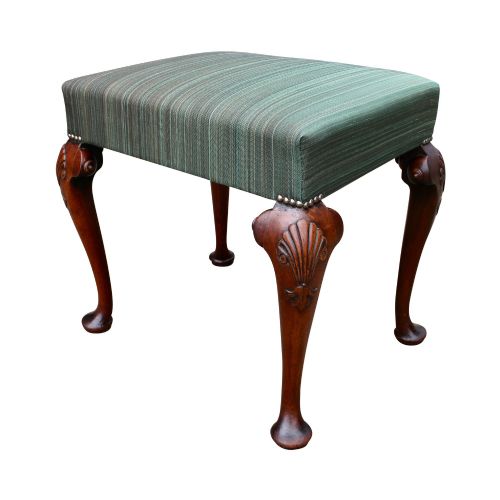
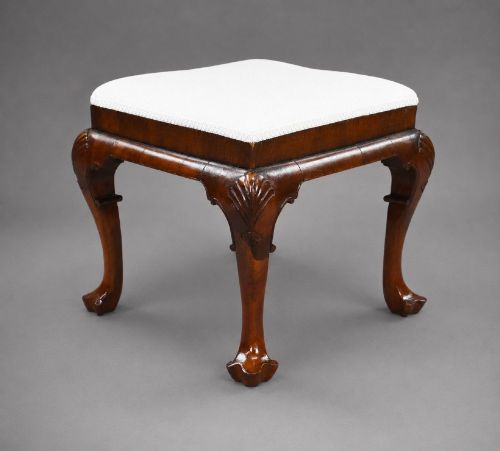
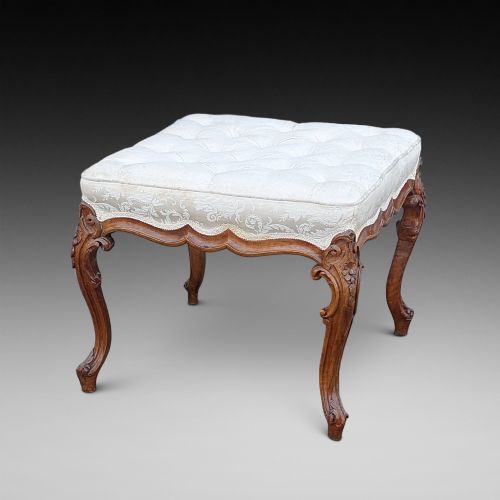
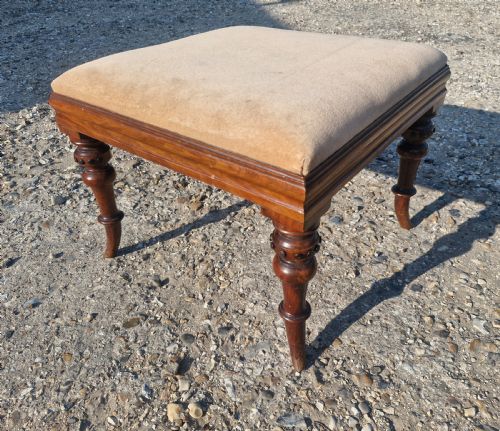
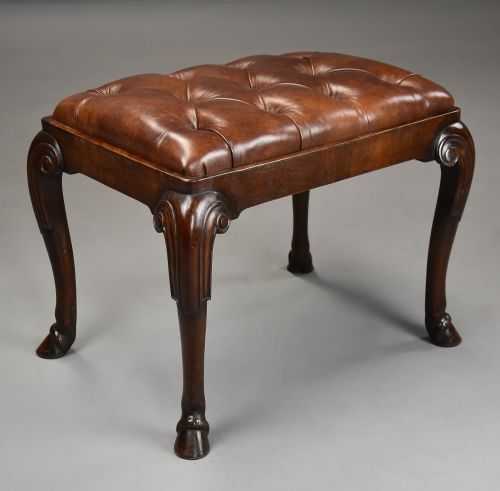
Most examples rely on walnut or burr walnut for the frame, supporting textile coverings that range from needlepoint and tapestry to leather and velvet. French and English revivals appear frequently alongside straightforward Victorian designs, offering carved cabriole legs or barley-sugar supports.
Makers produced these forms for parlours, libraries, and dressing rooms, employing sturdy joinery to withstand daily use. Buyers encounter everything from compact footstools to large duet seats with internal storage.
How they were made
Carpenters and cabinet makers shaped solid walnut and burr walnut into frames, often utilising elaborate carving on cabriole legs and rails. Secondary woods provided structural stability beneath decorative veneers and moulded trim.
Upholsterers built the seats using traditional webbing, springs, and stuffing, secured beneath top layers of fabric, leather, or needlework. Brass tacks, piping, and buttoning finished the edges and held the textiles firmly to the wooden chassis.
Some nineteenth-century examples hide interior compartments originally designed for storing sheet music near the piano.
What varies in quality
Quality rests in the crispness of the timber carving and the depth of the walnut grain, particularly where burr veneers display natural figures. Heavier scantlings of timber and tighter joinery distinguish superior frames from simpler workshop production.
The standard of upholstery work and the choice of covering material determine the finished presentation. Pieces retaining period needlework or high-grade leather demonstrate greater fidelity to original craftsmanship than generic modern replacements.
Harry & Lou Epstein
The Upholstered Walnut Ottoman Glossary
- Burr walnut
- A figured veneer taken from the wart-like growth on a walnut tree, prized for its swirling grain patterns.
- Cabriole leg
- A furniture leg that curves outward at the knee and tapers inward at the ankle, common in revival styles.
- Needlepoint
- A form of canvas work embroidery often used for durable historic seat covers and footstool tops.
- Barley-sugar twist
- A spiral turning resembling a twisted column, found on seventeenth-century revival legs and stretchers.
Upholstered Walnut Ottoman: Frequently Asked Questions
How do I date a walnut ottoman?
Dating relies on stylistic clues such as cabriole legs, turned stretchers, and the presence of burr veneers. Victorian pieces often display heavy carved ornament, while Art Deco examples favour streamlined geometry.
Construction methods also guide attribution. Hand-cut joints and traditional upholstery webbing point to nineteenth-century workshop origins.
Where were these pieces used?
These seats served primarily in reception rooms, libraries, and bedrooms as footrests or auxiliary seating. Duet stools and long benches stood near windows or at the foot of beds.
Box ottomans provided hidden storage for textiles and accessories in domestic spaces. Their modest scale allowed them to move easily around the room.
How do I care for walnut timber?
Walnut requires protection from direct sunlight and extreme humidity changes to prevent the wood from drying or cracking. Regular dusting with a dry cloth maintains the surface.
A light application of appropriate furniture wax preserves the sheen of the grain without building up a heavy residue.
What is the difference between a stool and an ottoman?
Stools generally feature an open frame with four legs supporting an upholstered top, intended for sitting or resting feet. Ottomans often include internal storage beneath a hinged or lift-off lid.
Both categories overlap in historical listings, where larger box forms share descriptions with traditional footstools.