

Upholstered Bedroom Side Chairs
Upholstered bedroom side chairs are compact, decorative seats designed for personal quarters, combining timber frames with soft fabric coverings.
Upholstered Bedroom Side Chairs
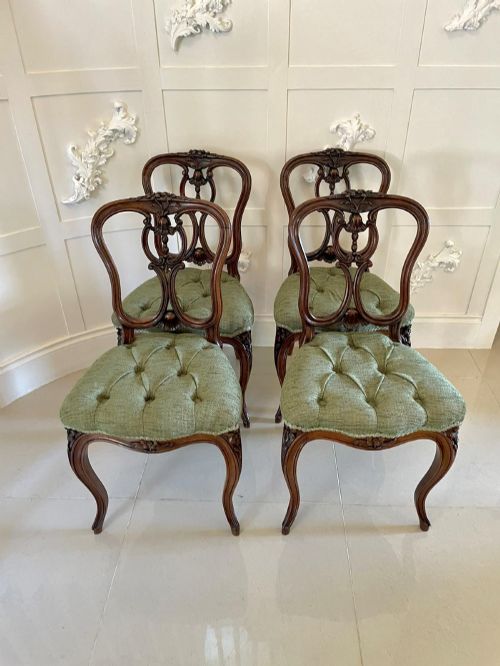
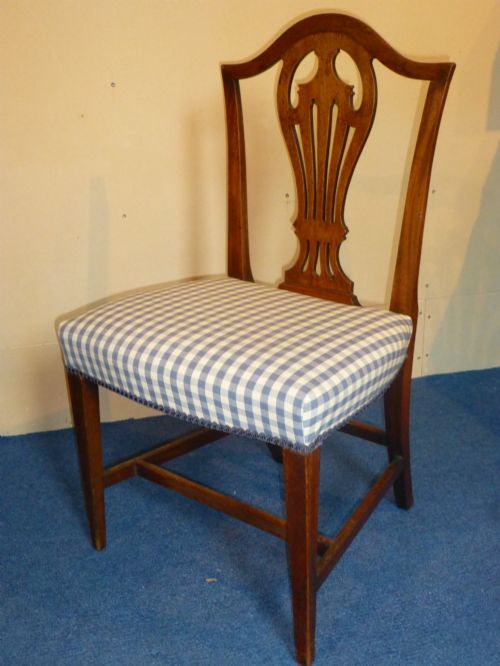
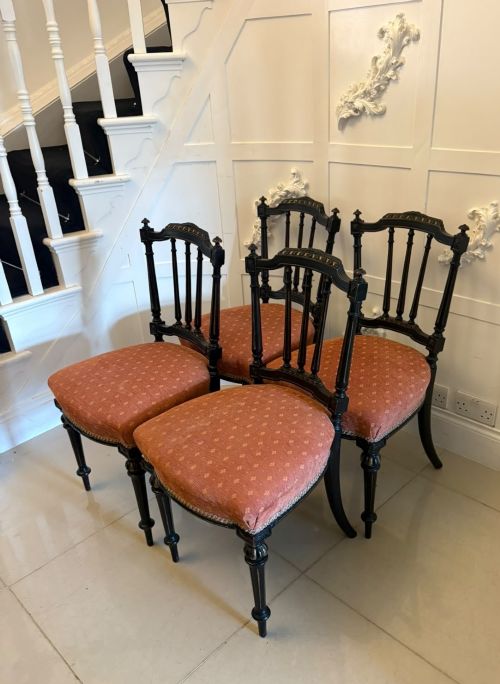
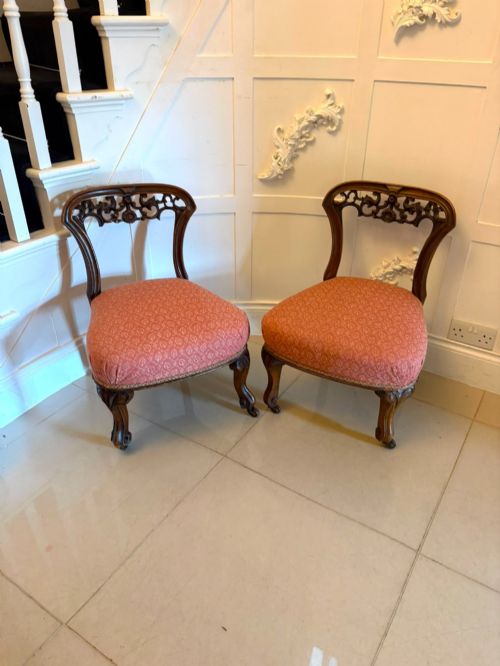
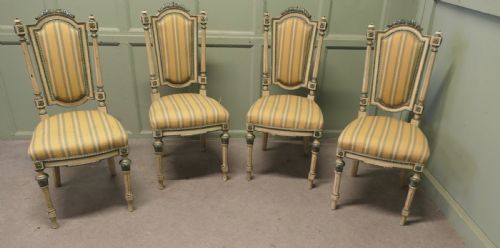
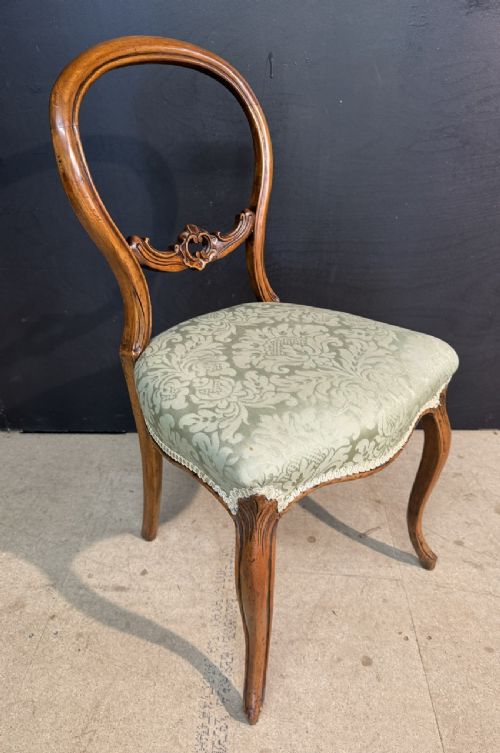
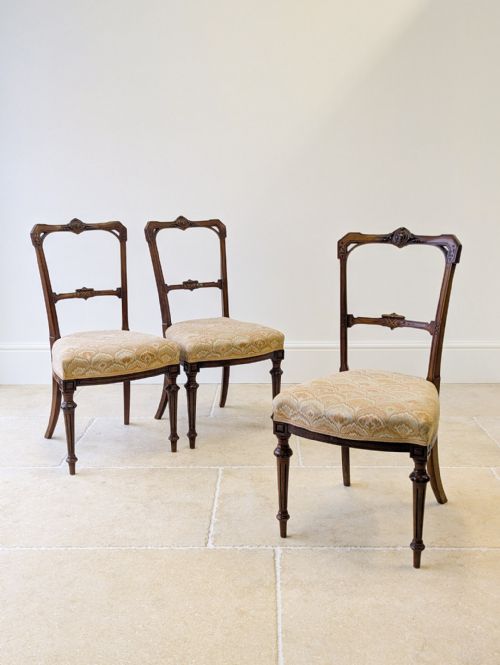
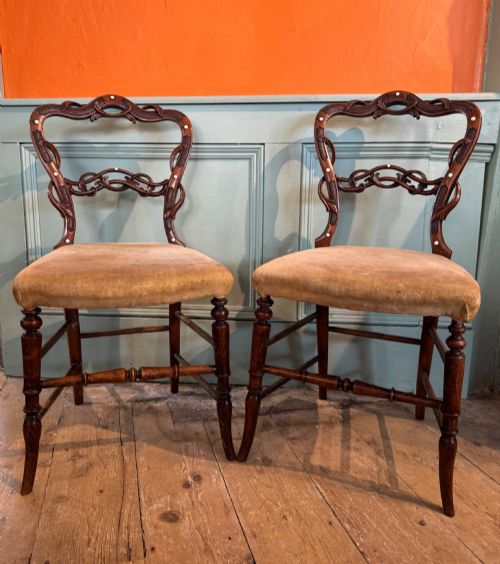
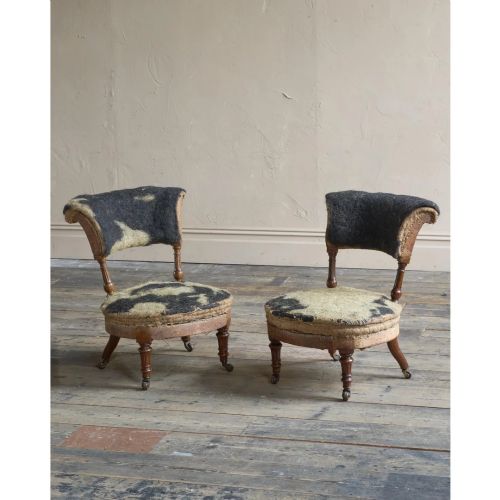
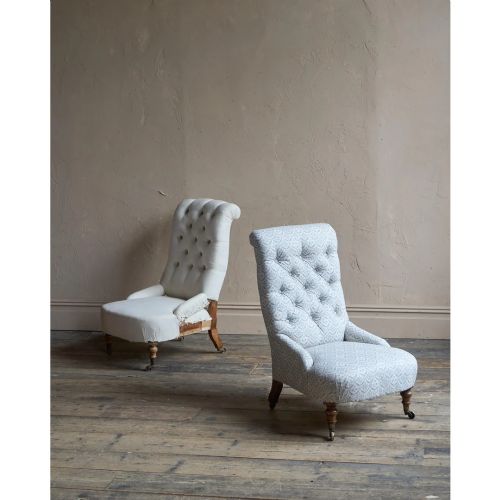
When you search for upholstered bedroom side chairs, you encounter a variety of compact seating pieces originating predominantly from the nineteenth and early twentieth centuries. These encompass forms like nursing chairs, low-seated boudoir models, and delicate salon pieces that fit easily into private rooms without dominating the floor space.
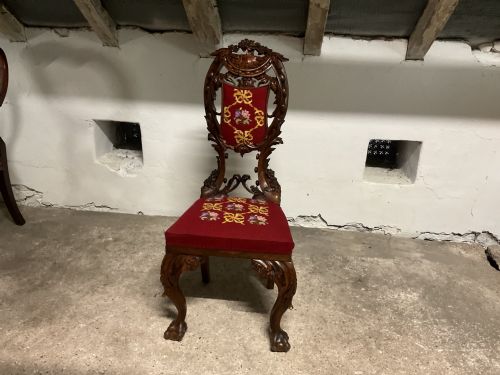
Makers often adapted formal styles for domestic chambers, resulting in smaller proportions, lower seats, and decorative touches like scroll-carved backs or tapestry covers. These chairs served practical daily needs in dressing rooms and bedrooms while matching the prevailing taste of their era.
How they were made
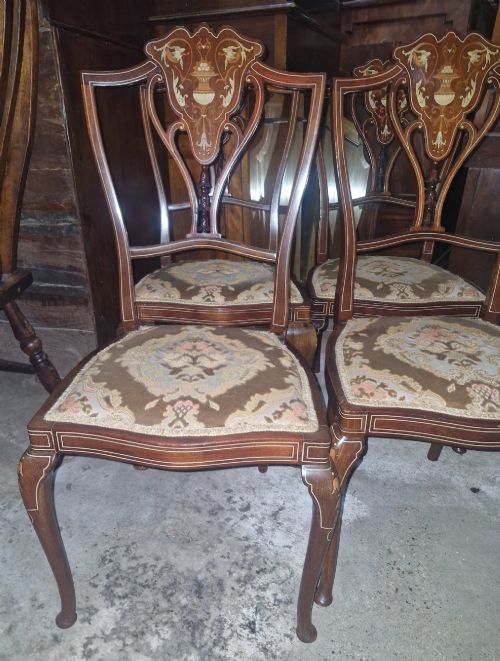
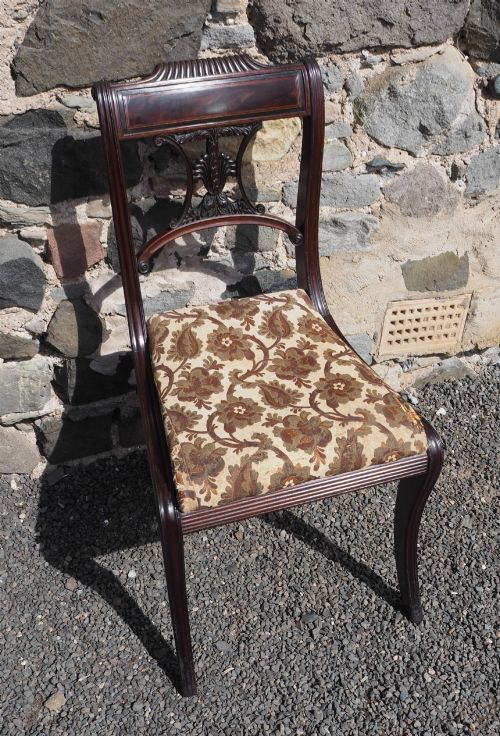
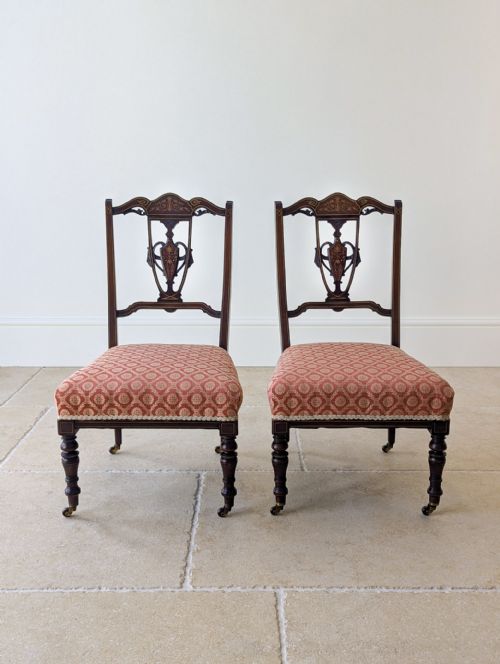
Cabinet makers utilised dense hardwoods such as mahogany, walnut, rosewood, and fruitwood to construct sturdy yet elegant frames. These timbers were frequently carved, turned, or inlaid with contrasting veneers to create visual interest along the legs and backrests.
Upholstery techniques involved traditional stuffing materials secured over webbing or springs, finished with durable textiles including velvet, tapestry fabric, and patterned cotton. Brass fittings, ormolu mounts, and gilt accents occasionally provided decorative contrast to the polished wood surfaces.
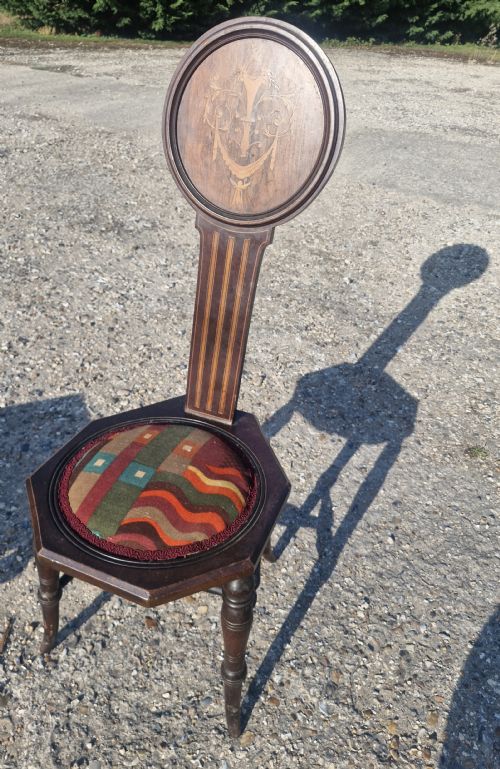
Spinning chairs feature low seats designed to let Victorian ladies operate household spinning wheels with ease.
What varies in quality
The distinction between standard and superior pieces rests in the crispness of the timber carving and the subtlety of the wood grain selected by the maker. Finer examples display meticulous joinery, balanced proportions, and intricate details such as hand-carved scrollwork or precise marquetry inlay.
Upholstery execution also dictates value, with skilled stuffing maintaining a firm yet responsive seat profile over time. Original or period-appropriate fabric choices and well-preserved structural integrity separate workshop masterpieces from ordinary utility seating.
Howard and Sons·Bath Cabinet Makers
The Upholstered Bedroom Side Chairs Glossary
- Marquetry
- Decorative veneer work forming geometric or floral patterns using various tinted woods. Craftsmen applied this technique to enhance flat surfaces on cabinet furniture.
- Cabriole leg
- A furniture leg that curves outward in a convex arc and then bends inward in a concave arc, ending in a pad or claw foot. This form derives from ancient Chinese designs popularised during the eighteenth century.
- Ormolu
- Gilded bronze mounts applied to furniture for decorative effect. Makers used these metallic ornaments to highlight corners and aprons on high-status pieces.
- Ebonised
- Wood treated with a dark stain or finish to imitate ebony. This process became widespread during the Victorian era to create striking contrasts with gilt highlights.
Upholstered Bedroom Side Chairs: Frequently Asked Questions
What distinguishes a bedroom chair from a dining chair?
Bedroom chairs typically feature lower seat heights and more decorative, intimate frames designed for dressing rooms rather than dining tables.
They often incorporate plush upholstery and softer padding suited for relaxed private use over extended periods.
How do I identify an Edwardian bedroom chair?
Edwardian pieces generally exhibit lighter mahogany frames with delicate satinwood inlay, reflecting a revival of Sheraton and neoclassical tastes around nineteen hundred.
They tend to look less heavy than mid-nineteenth-century Victorian equivalents while maintaining refined craftsmanship.
Were these chairs meant to match bedroom suites?
Many of these pieces functioned as occasional or standalone items rather than strict components of matching bedroom furniture collections.
Owners selected them to add an individual touch of comfort and colour to private chambers.
How should I care for antique upholstery?
Protect antique fabric surfaces from direct sunlight to prevent fading and textile degradation over the years.
Gentle vacuuming with a soft brush attachment helps remove dust without stressing delicate nineteenth-century fibres.