


Carved Painted Dining Chairs
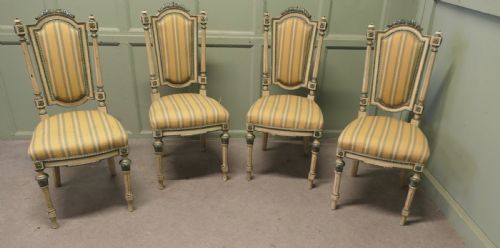
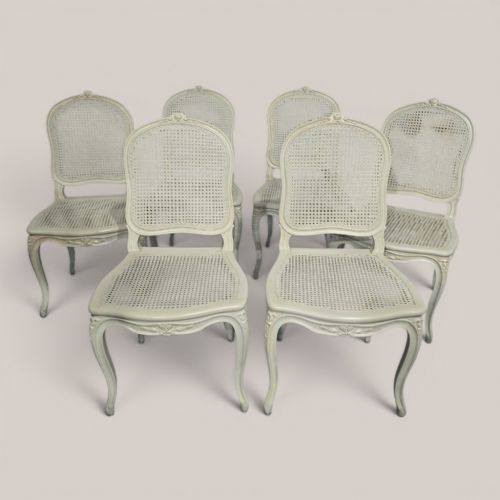
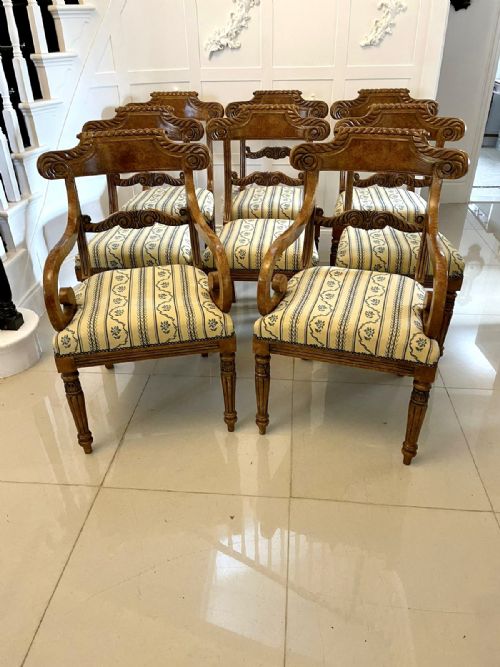
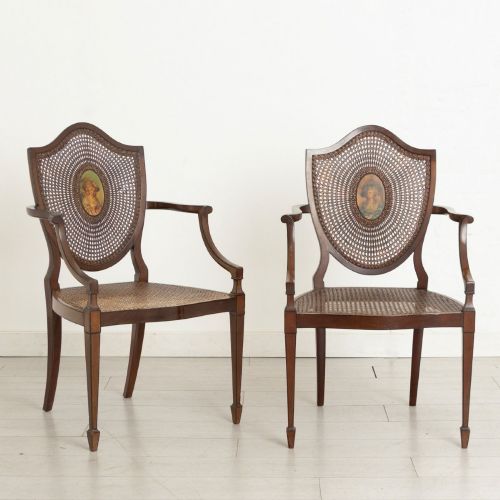
These carved painted dining chairs span centuries of European craftsmanship, offering painted wood and carved detail to elevate any table setting.
Carved Painted Dining Chairs
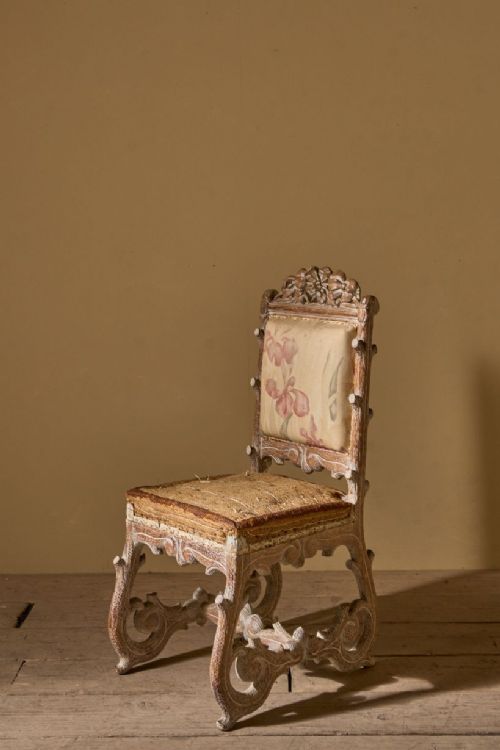
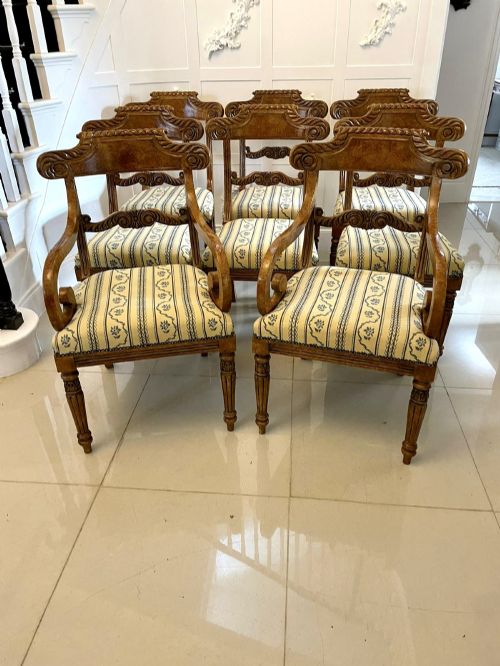
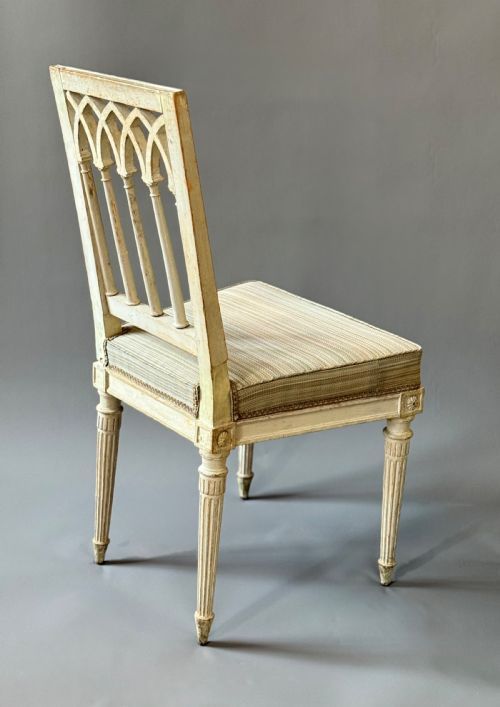
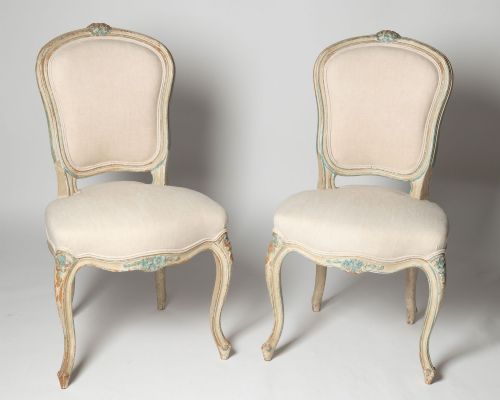
When you search for carved painted dining chairs, you encounter seating fashioned from wood finished with paint, polychrome, scumble, or faux wood grain. The examples gathered here include sets and pairs originating across the eighteenth, nineteenth, and early twentieth centuries.
The styles present draw heavily on French Neoclassical, Louis XV, Louis XVI, Gustavian, and Gothic Revival traditions. Forms range from standard dining chairs and side chairs to armchairs, hall chairs, salon chairs, and bergere seating.
You are most likely to meet sets or pairs produced in the nineteenth and early twentieth centuries, often interpreting earlier French or Swedish designs. Many pieces utilise cane, textile, or fabric upholstery alongside their carved wooden frames.
How they were made
Cabinetmakers shaped the frames from hardwoods such as beech, oak, walnut, and mahogany, applying hand-carved ornamentation directly to the wood. Artisans then coated the surfaces with paint, ebonising, or specialised finishes like faux birds-eye maple and faux bois.
Upholstered variants incorporate traditional textile or cane seating fitted into the carved wooden structures. Structural joinery relies on time-tested woodworking methods to ensure stability across frequent use.
Listings feature periods spanning from the seventeenth century through to 1920, with the nineteenth century heavily represented.
What varies in quality
The distinction between ordinary and exceptional seating lies in the depth and crispness of the hand carving on the wood. Finer items exhibit deliberate proportions and harmonious decorative motifs that reflect the stylistic period they emulate.
The integrity of the painted surface and the retention of original decorative schemes heavily influence the character of each piece. Superior examples maintain cohesive finishes that complement the underlying woodwork without obscuring the craftsmanship.
Gillows
The Carved Painted Dining Chairs Glossary
- Bergere
- An enclosed upholstered armchair with wooden sides and an exposed carved frame. It offers a formal silhouette common in French seating.
- Gustavian
- A Swedish neoclassical design style characterised by restrained carving and pale painted finishes. It draws inspiration from French Louis XVI aesthetics.
- Scumble
- A decorative paint technique involving translucent layers dragged or wiped across a base coat. It often mimics the appearance of natural grain or texture.
- Polychrome
- The practice of decorating architectural elements or furniture in multiple colours. It appears frequently on earlier walnut and oak frameworks.
- Faux bois
- A finish simulating the appearance of wood grain applied to a different material or base. It demonstrates artisan skill in decorative painting.
Carved Painted Dining Chairs: Frequently Asked Questions
How do I care for painted dining chairs?
Dust the carved wooden surfaces regularly with a soft, dry cloth to prevent accumulation. Avoid harsh chemical cleaners that might degrade the painted or scumbled finishes.
Keep upholstered or caned portions protected from direct sunlight to prevent textile fading or cane brittleness. Periodic gentle maintenance ensures the painted finish remains stable through daily dining use.
Can I mix these chairs with a modern table?
Pairing antique painted seating with a contemporary table creates a striking visual contrast in a dining room. The carved details and painted tones soften stark modern lines.
Consider the seat height and arm clearance to ensure comfortable dining ergonomics. Matching the wood finish or paint tone to other room elements unifies the overall interior scheme.
How do I identify French style chairs?
Look for characteristic decorative motifs such as ribbons, fluted legs, and neoclassical medallions associated with Louis XV and Louis XVI designs. Proportions tend to be elegant and balanced.
Swedish Gustavian pieces share similar neoclassical roots but typically feature paler paint and more restrained ornamentation. French chateau and salon styles often display bolder carving and gilding.
What is a caquetoire armchair?
A caquetoire is an early sixteenth or seventeenth-century chair featuring a high, narrow back and a trapezoidal seat. The form was designed to accommodate the voluminous skirts worn during the period.
These armchairs often showcase intricate carved walnut woodwork and polychrome painted decoration. They function well as statement pieces in hallways or reception rooms.