

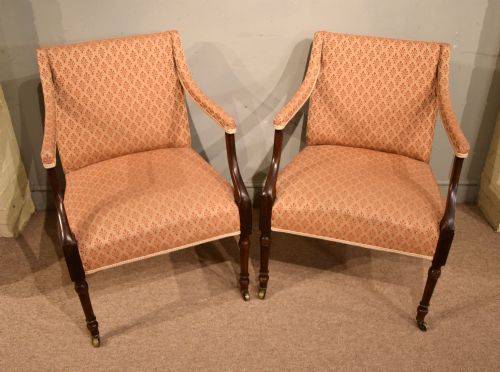
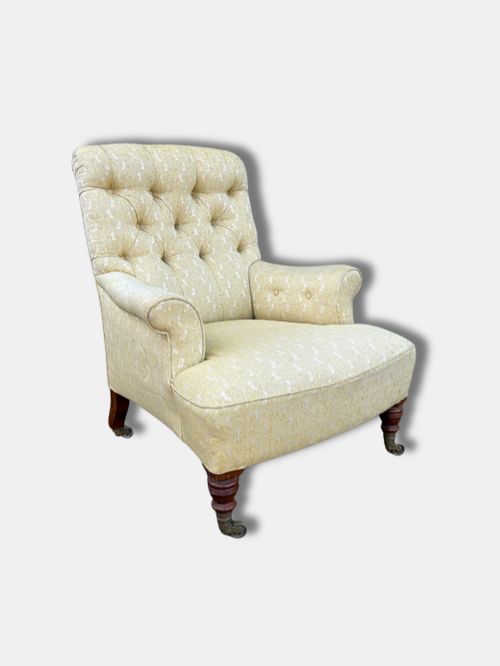
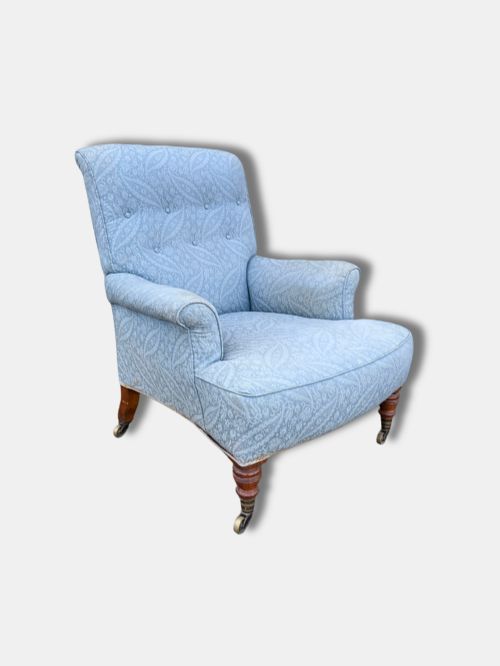
Upholstered Armchair on Castors
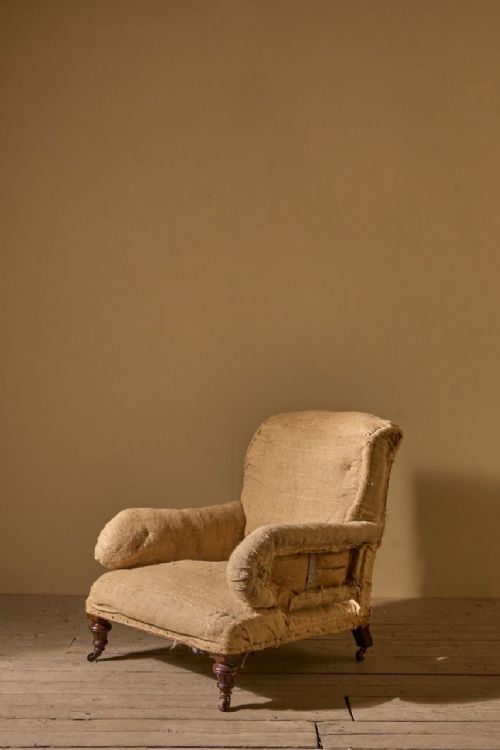
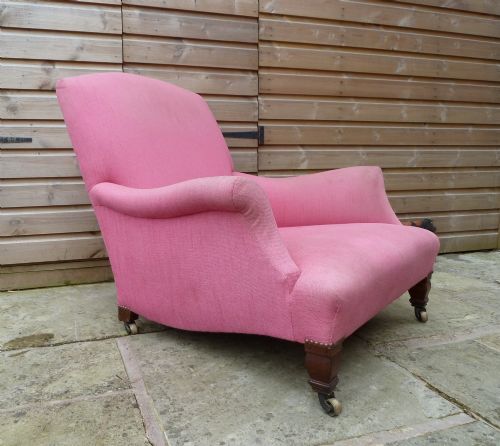
An upholstered armchair on castors provides deep-seated comfort while remaining easy to move across the floor.
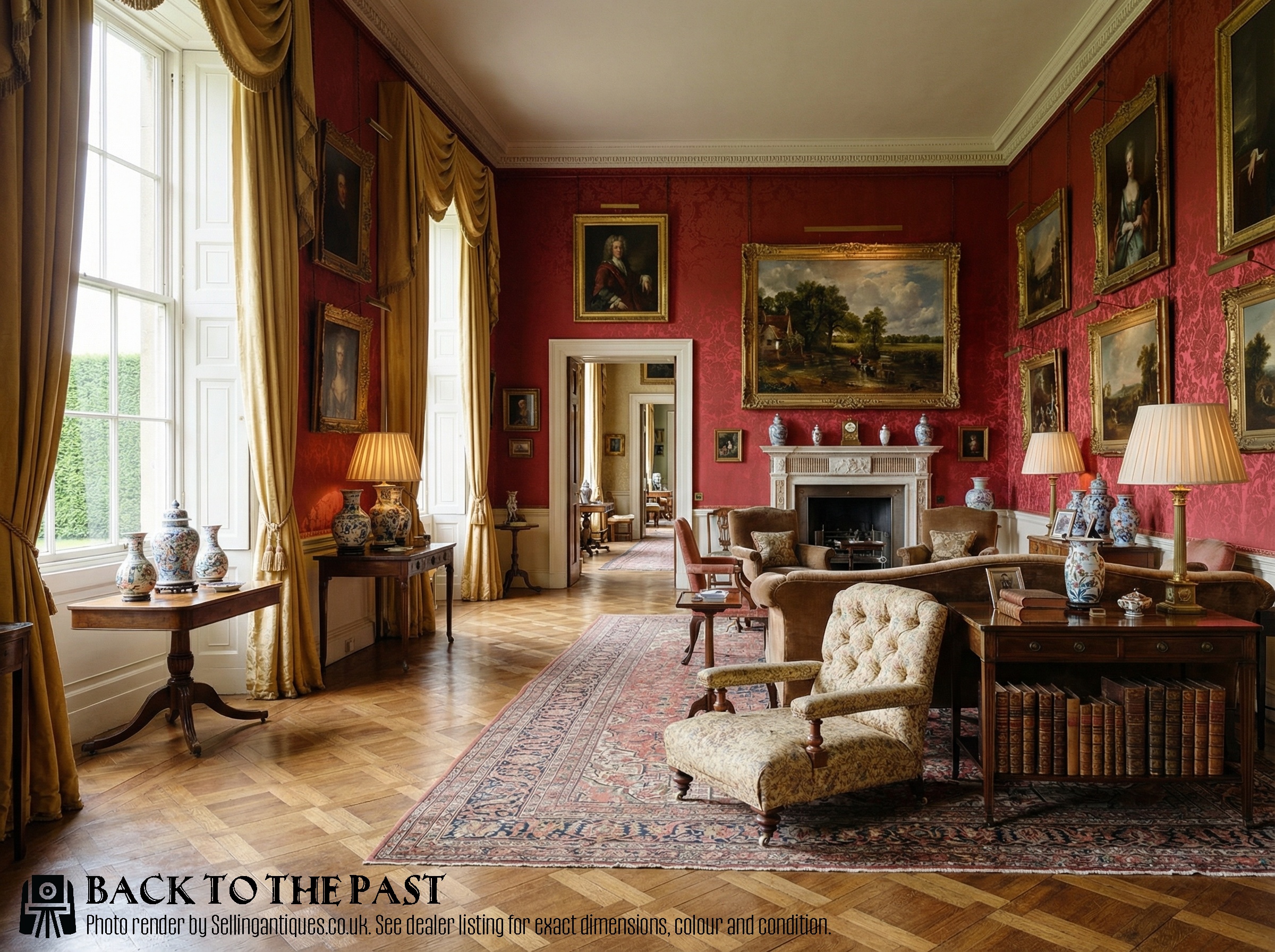
Upholstered Armchair on Castors
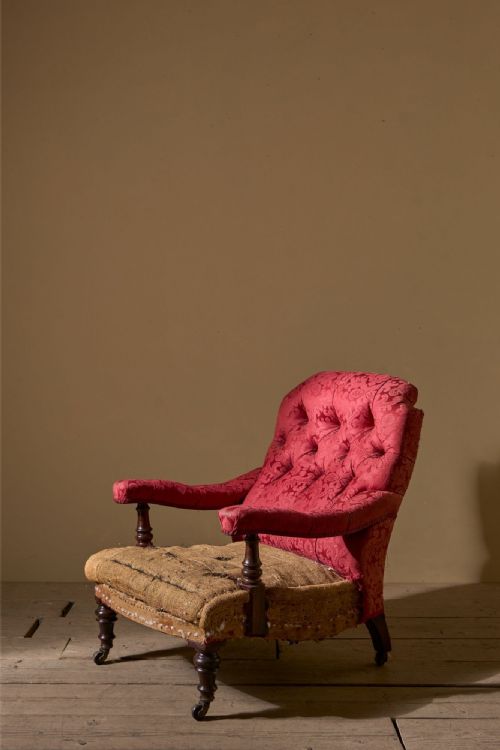
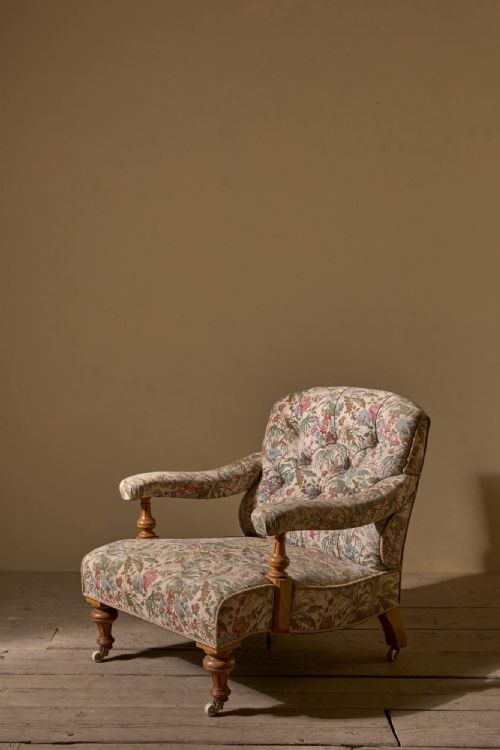
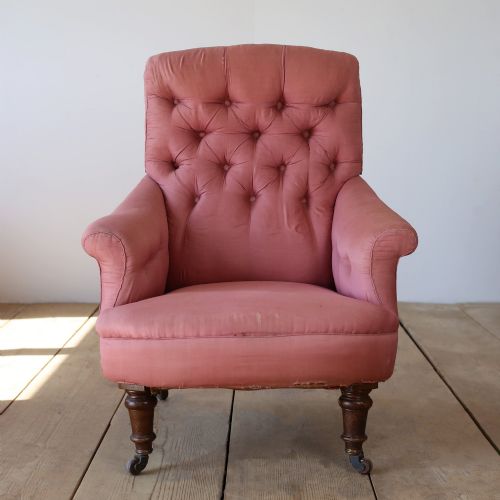
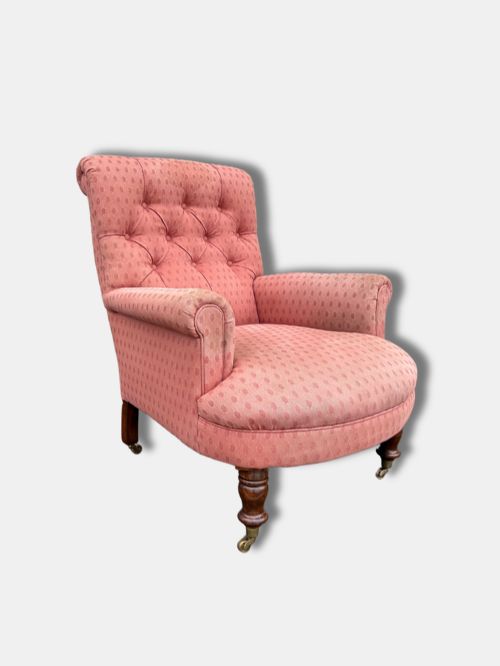
When searching for an upholstered armchair on castors, buyers encounter seating spanning from the Georgian and Regency eras through the Victorian period and into the twentieth century. The selections range from library armchairs and fireside chairs to button-backed designs and English country house styles.
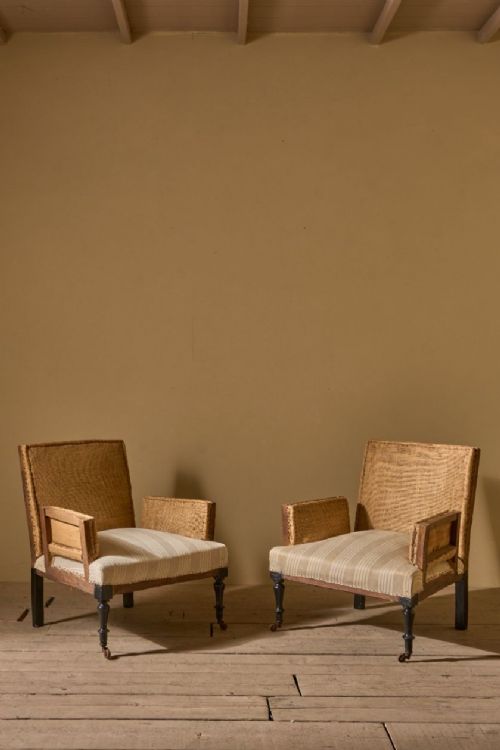
The Victorian period contributes heavily to the available pool, alongside Edwardian examples and pieces influenced by makers such as Howard and Sons. Forms vary from over-scaled library chairs to diminutive nursing chairs and pairs of armchairs resting on wheeled supports.
Materials and construction
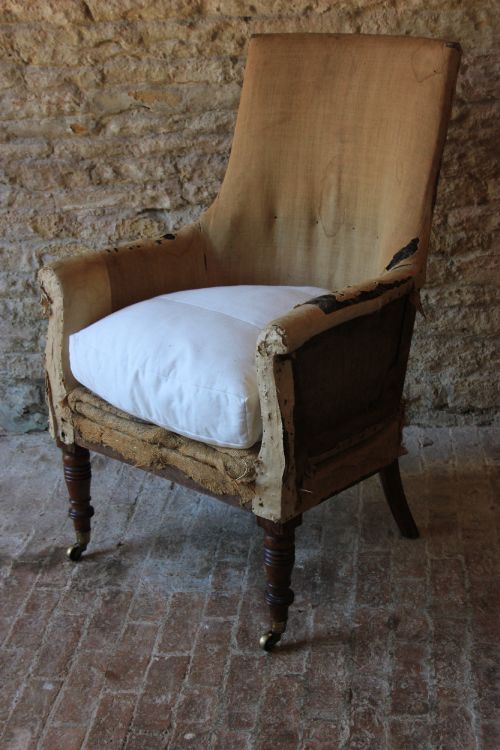
Frames rely on hardwoods such as mahogany, walnut, and satinwood, providing structural integrity beneath the upholstery. The supportive stuffing sits above traditional webbing, hessian, and calico before receiving its final covering of fabric, leather, or plaid.
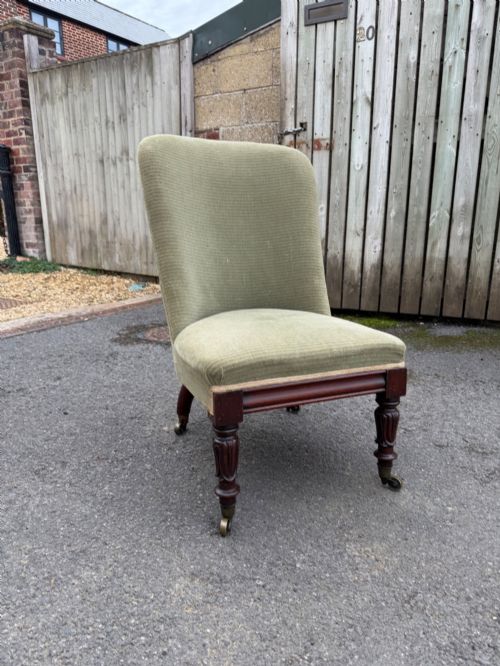
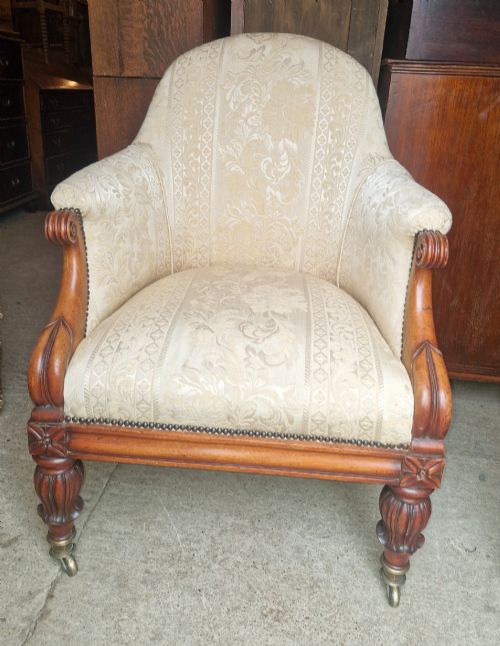
Castors made of brass are fixed to the base of the legs to allow smooth movement across carpets and wooden floorboards. Showwood frames display polished timber alongside upholstered components.
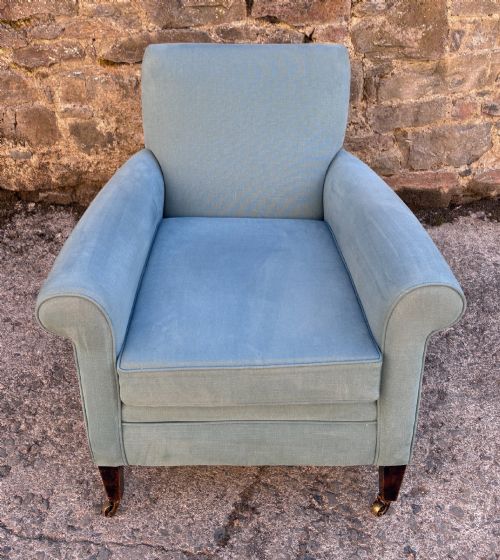
Listings feature mahogany, walnut, and satinwood frames paired with brass castors and upholstered in leather, calico, and fabric.
Distinguishing craftsmanship
The grade of timber and the precision of the frame joinery set finer pieces apart from standard workshop production. Superior examples maintain firm internal webbing and responsive springing that resist sagging under daily use.
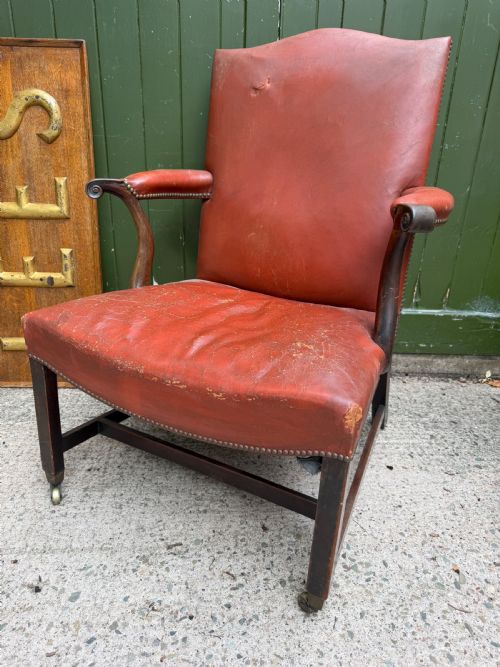
The refinement of carved details on showwood legs and the original quality of the brass castors indicate the standing of the original maker. Fabric choices, whether aged red leather or patterned wool, reflect the original commission level.
Howard and Sons·Morris and Co·Gillows·Morison and Co·Holland and Sons·Cope and Collinson
The Upholstered Armchair on Castors Glossary
- Castor
- A small wheel mounted on a swivel attached to the foot of a piece of furniture. This permits smooth repositioning of heavy armchairs across a room.
- Showwood
- Polished timber framework left visible around the upholstered sections of a chair. It highlights the grain of mahogany or walnut.
- Library armchair
- A generous, sturdy seating form designed for reading rooms during the eighteenth and nineteenth centuries. These pieces often feature leather upholstery and supportive armrests.
- Button back
- An upholstery technique where depressions are formed in the padding using tight stitches or buttons. This secures the internal stuffing while creating a quilted pattern.
- Bergere
- An enclosed upholstered armchair with wooden framing and cane or fabric sides. It originated in France and appeared frequently in Regency rooms.
Upholstered Armchair on Castors: Frequently Asked Questions
How do I identify a Howard and Sons armchair?
Look for specific maker stamps on the brass castors, stamped legs, or ticking underneath the cushions. These chairs are known for their exceptionally comfortable low profiles and quality stuffing.
Compare the proportions and structural build against documented examples from the firm. Distinctive styling details often point directly to their London workshops.
Were these chairs meant for the library or parlour?
Library armchairs were engineered for heavy daily reading use, frequently utilising leather for durability. Parlour and fireside versions utilised softer fabrics like chintz or buttoned wool for decorative drawing rooms.
Both settings utilised castors to allow the seating to be repositioned near warmth or light. The scale of the frame usually indicates its intended room.
How do I care for antique castors?
Inspect the fixings periodically to ensure the brass components remain securely attached to the wooden legs. Keep the small wheels clean of debris to prevent scratching delicate flooring.
Avoid applying heavy lubricants that might attract dust into the swivel mechanisms. Gentle dusting preserves the original metal patina.
What is a country house armchair?
Country house armchairs are comfortable, deep-seated pieces associated with relaxed domestic interiors rather than formal reception rooms. They often show layers of accumulated history through older reupholstery.
These chairs prioritize physical ease and generous proportions above strict stylistic adherence. Their relaxed aesthetic suits contemporary living spaces well.
How do I distinguish Regency from Victorian examples?
Regency chairs often display clean classical lines, reeded mahogany frames, and restrained proportions influenced by antique design. Victorian pieces tend toward heavier proportions, button backs, and more elaborate scrollwork on the arms.
Castor designs also shift from early brass cup models to heavier Victorian stem fixtures. Examining the turning of the timber helps confirm the period.