


Vintage Howard Armchair
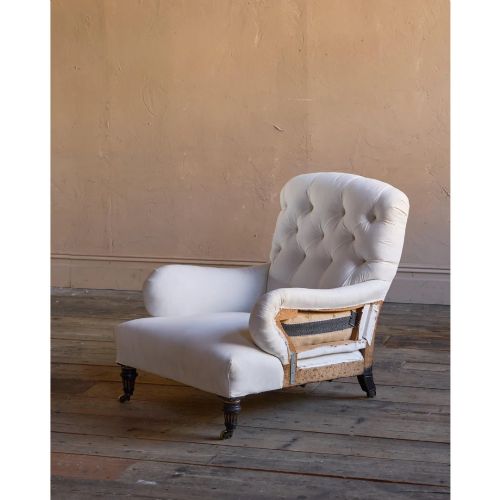
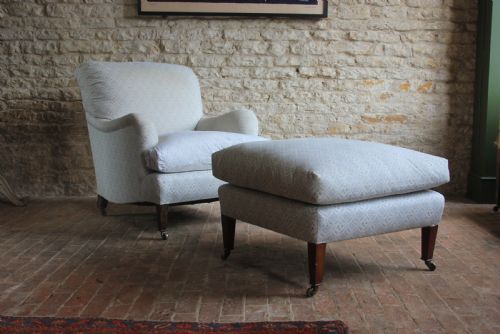
A vintage howard armchair brings deep country house comfort and exceptional joinery into a drawing room.
Vintage Howard Armchair
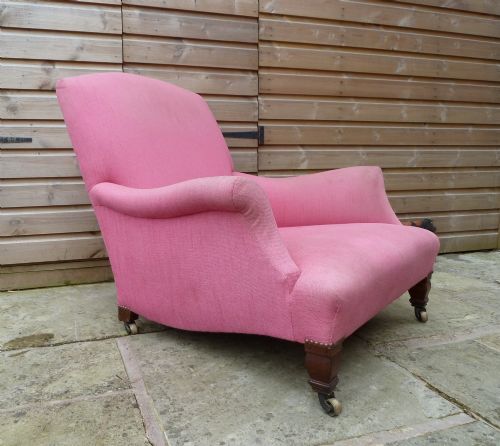
A vintage howard armchair represents the pinnacle of nineteenth and early twentieth century English seating comfort, built with generous proportions designed for long periods of sitting. These pieces emerge primarily from the Victorian and Edwardian eras, spanning workshops that prioritized deep sprung seats and robust frames.
The most common form encountered on this page is the classic club armchair or Bridgewater design, often upholstered in heavy fabrics or original leather. Alongside signed examples, buyers will find period pieces executed in the distinct Howard style by contemporary makers.
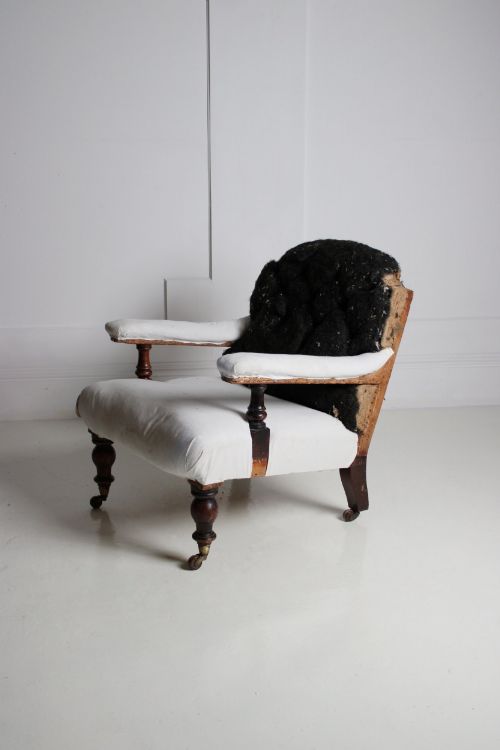
Many of these armchairs retain their original castors, low wooden legs, and traditional horsehair stuffing beneath outer covers of velvet, ticking, or carpet. Their presence anchors a room with a lived-in, architectural elegance characteristic of large English country houses.
How they were made
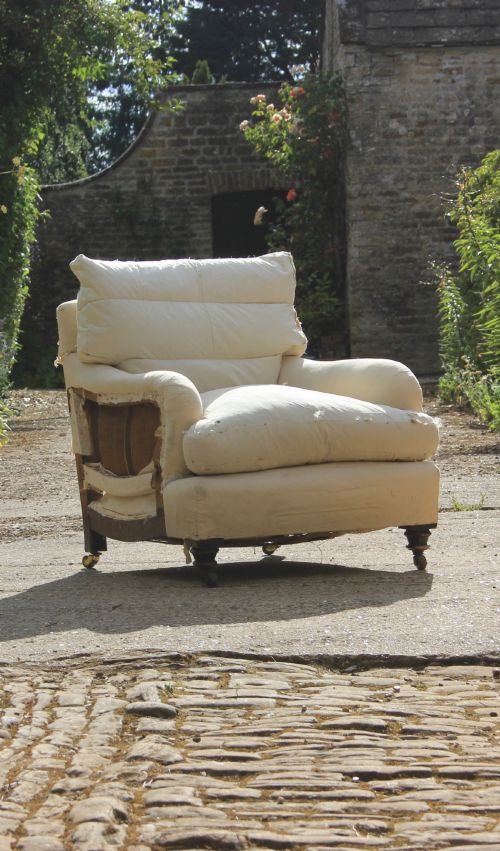
Makers constructed the concealed frames of these armchairs using dense hardwoods such as mahogany and walnut, ensuring structural integrity beneath heavy upholstery. Joinery relied on traditional pinned mortise and tenon joints designed to withstand decades of heavy use.
Internal padding depended on coiled steel springs tied by hand, layered with horsehair, wool, and cotton wadding to create a resilient, supportive seat. Outer layers utilised durable textiles including calico, leather, velvet, and woven kilim or turkey carpet fragments.
Some nineteenth-century chairs arrived upholstered in fragments of authentic Ushak turkey carpets.
What varies in quality
The distinction between average and exceptional pieces rests in the integrity of the internal springing and the preservation of original upholstery materials. Master makers employed denser stuffing and tighter hand-tied coil foundations that retained their supportive arch over generations of use.
Secondary quality markers include the selection of timber for exposed legs and the precision of the brass castors stamped with maker details. Pieces retaining their earliest stamped legs and untouched underlying ticking command greater appreciation among collectors.
Howard and Sons·James Shoolbred
The Vintage Howard Armchair Glossary
- Bridgewater armchair
- A deep-seated upholstered chair style defined by low rolled arms and a sprung back, popularized by prominent Victorian cabinet makers. This form remains the quintessential layout for country house relaxation.
- Calico
- A plain-woven cotton fabric used historically as the foundational inner cover beneath decorative top upholstery on quality chairs. It holds the stuffing tight to the frame before final textiles are applied.
- Kilim
- A flat-woven textile of oriental origin frequently utilised by top Victorian firms to upholster club armchairs. These hard-wearing wool panels introduce rich geometric patterns to the seating.
- Castors
- Small wheel attachments fixed to the base of chair legs, typically cast in brass and mounted on porcelain or wood. They allowed heavy nineteenth-century seating to move easily across thick carpets.
- Ticking
- A tightly woven, multi-stripe heavy cotton cloth traditionally employed to encase feathers, down, or horsehair stuffing. Its dense weave prevents internal fibres from escaping through the fabric face.
Vintage Howard Armchair: Frequently Asked Questions
How do I spot a genuine piece?
Authentic examples often carry stamped maker marks on the wooden frame or brass castors, alongside numbered legs that correspond to factory ledgers.
Look closely at the proportions, deep coil springing, and traditional stuffing materials beneath the outer cover to verify period construction.
Are these chairs comfortable for daily use?
These seats were engineered specifically for sustained relaxation, offering deep proportions and supportive sprung backs that accommodate modern sitting habits.
Their generous dimensions require adequate floor space in a typical living room layout.
What is the difference between Howard and Howard style?
Pieces attributed strictly to the original firm bear specific maker stamps and paper labels, while pieces made in the Howard style replicate the signature silhouette without bearing the brand signature.
Both categories share the same low-slung proportions and deep cushioning typical of the period.
How should I care for leather upholstery?
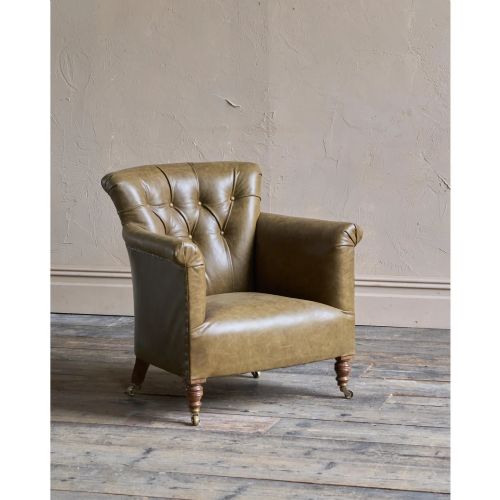
Original leather surfaces benefit from occasional treatment with appropriate nourishing balms to maintain flexibility and prevent the material from drying out over time.
Keep these chairs away from direct heat sources and strong sunlight to preserve the natural tone of the hide.