


Blue Patterned Lounge Chair
A blue patterned lounge chair offers deep comfort and traditional seating, bringing historic form and patterned upholstery together.
Blue Patterned Lounge Chair
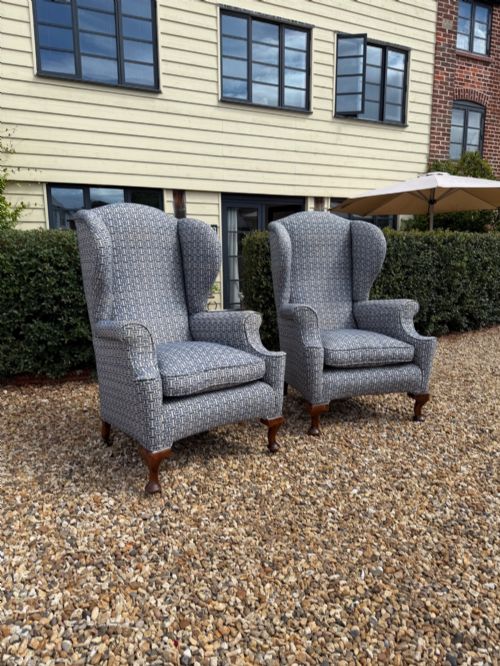
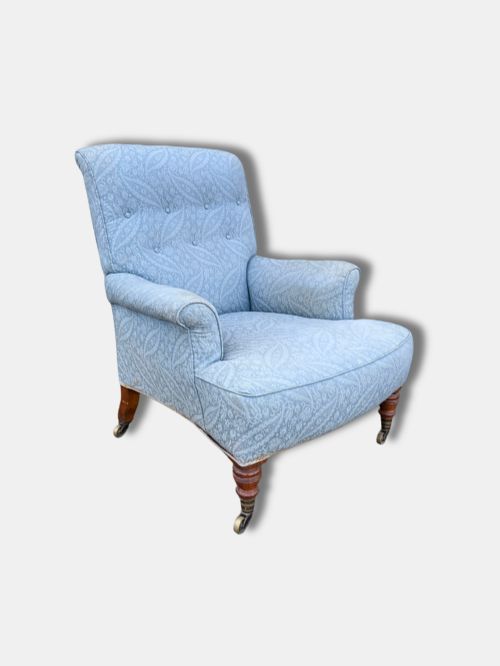
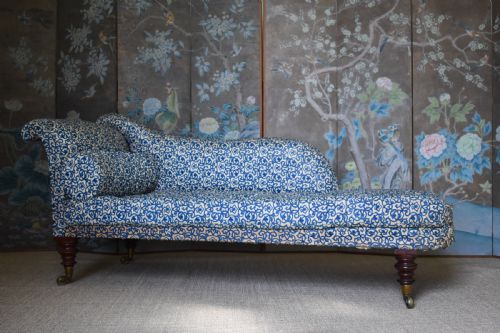
A blue patterned lounge chair encompasses various seating forms designed for relaxation, appearing in styles from the Regency period through the Victorian and Edwardian eras and into 1920. Buyers searching for a blue patterned lounge chair find armchairs, wing armchairs, club armchairs, slipper chairs, and chaise longues.
Most examples rely on upholstered frames, often incorporating cotton ticking or other textiles. Buyers encounter mahogany frames, walnut frames, and brass details on chairs reflecting Queen Anne Revival, Chippendale Style, and Georgian Style influences.
How they were made
Frames are constructed from solid woods including mahogany and walnut, providing sturdy internal structures for heavily upholstered seating. Wood frames are occasionally paired with brass components.
Upholstery techniques involve traditional textile application, utilising fabrics such as cotton and cotton ticking over sprung or padded interiors. Buttoned back treatments and wingback designs require specialised padding and fabric tension.
Listings span the nineteenth and early twentieth centuries, featuring mahogany, walnut, brass, and cotton ticking materials across Victorian and Edwardian periods.
What varies in quality
The distinction between standard production and fine manufacture rests on the origin of the maker, such as documented workshops like Howard and Sons or Whytock and Reid. Attribution to recognised makers elevates the standing of an armchair significantly.
Materials and upholstery integrity separate examples, particularly the presence of original ticking fabric versus later re-upholstery. Frame timbers like solid mahogany or walnut and the retention of period brass elements dictate construction standards.
Howard and Sons·Whytock and Reid
The Blue Patterned Lounge Chair Glossary
- Club armchair
- A deep, low-seated upholstered chair designed for comfort, frequently associated with nineteenth-century makers. These chairs often feature generous armrests and sprung seats.
- Ticking
- A tightly woven cotton or linen textile traditionally used to cover mattress springs and interior upholstery. In antique seating, original ticking serves as a mark of authenticity.
- Slipper chair
- A low-seated upholstered chair traditionally used in bedrooms for dressing. These chairs lack arms and sit close to the floor.
- Wingback armchair
- An upholstered seat featuring protective side panels attached to the backrest. These wings historically blocked draughts in period rooms.
- Buttoned back
- An upholstery technique where buttons are pulled deep into the padding to create a padded diamond pattern. This method appears frequently on Victorian lounge and fireside chairs.
Blue Patterned Lounge Chair: Frequently Asked Questions
What is a club armchair?
A club armchair is a deep, low-slung seat designed for relaxation, often featuring generous proportions and comfortable upholstery.
These chairs became prominent in nineteenth-century English interiors and country houses.
How do I identify a Victorian armchair?
Victorian armchairs often feature dark wood frames, buttoned back upholstery, and styles drawing on earlier revivals like Queen Anne or Chippendale.
Evidence from this period also includes specific makers and durable cotton textiles.
What is cotton ticking fabric?
Cotton ticking is a dense, durable woven textile traditionally utilised to cover the interior stuffing and springs of upholstered furniture.
Finding original ticking on nineteenth-century seating preserves the historical integrity of the piece.
Where were slipper chairs used?
Slipper chairs were traditionally placed in bedrooms to allow individuals to sit comfortably while putting on shoes.
Their low profile distinguishes them from standard lounge armchairs.