
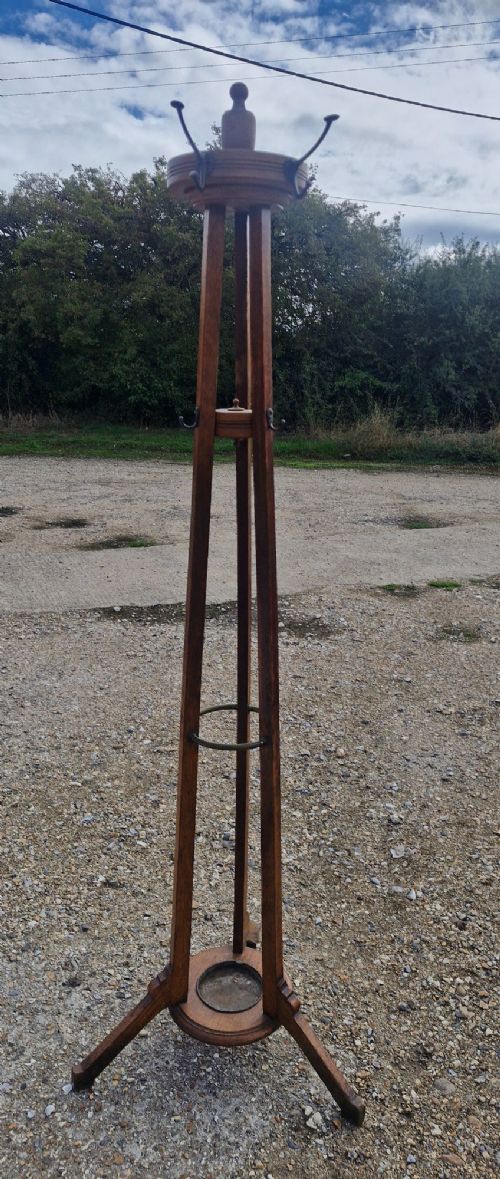

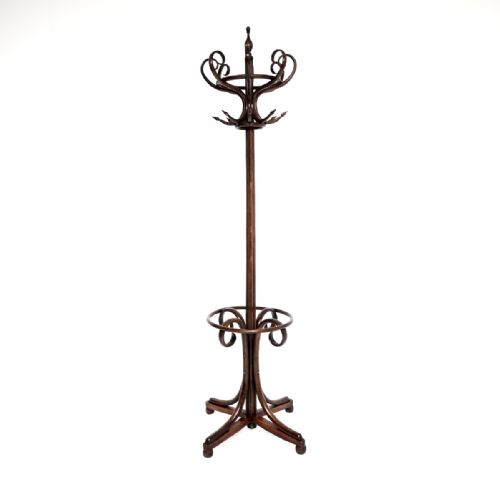
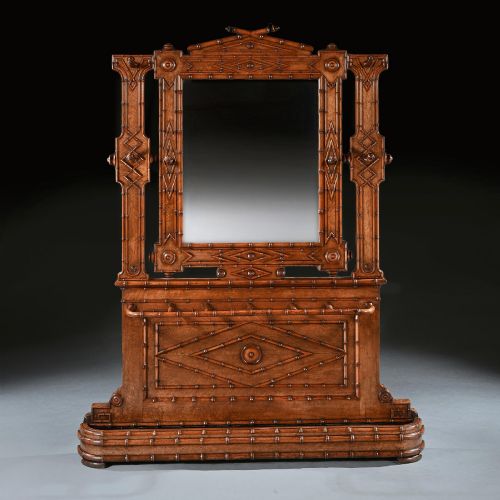
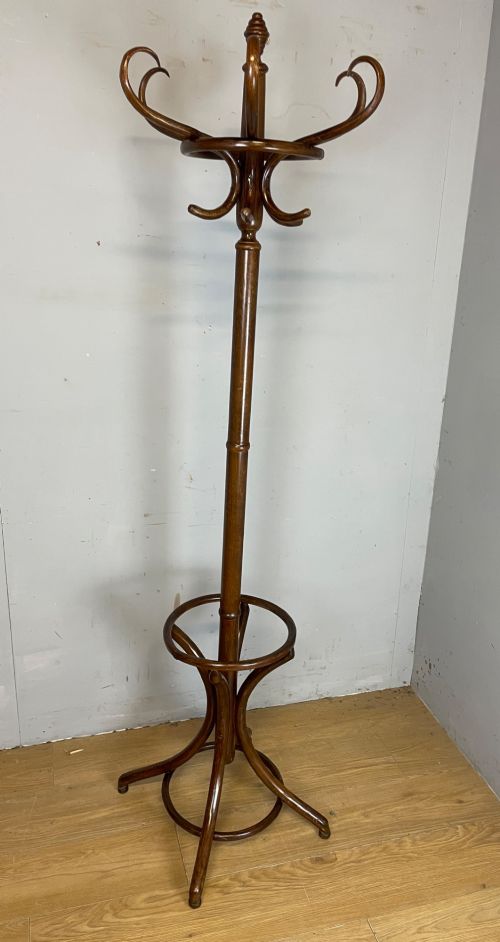
Umbrella Stand Hall Tree
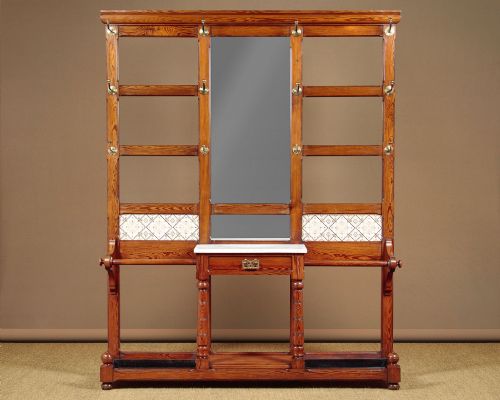
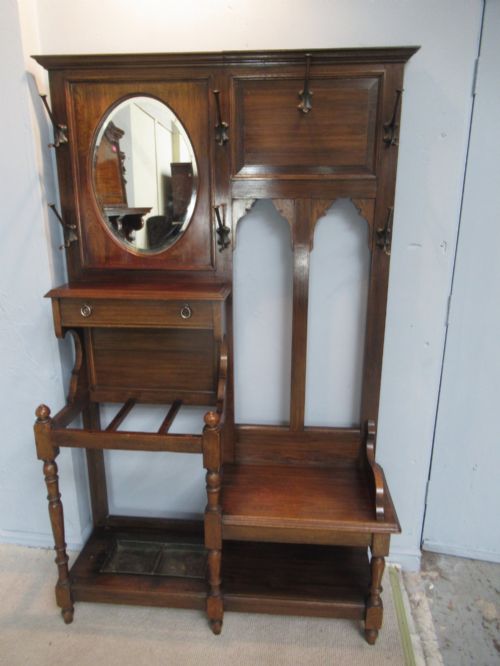
An umbrella stand hall tree organises hats, coats, and wet sticks at the threshold, combining heavy timber or metal with practical storage hooks and drip trays.
Umbrella Stand Hall Tree
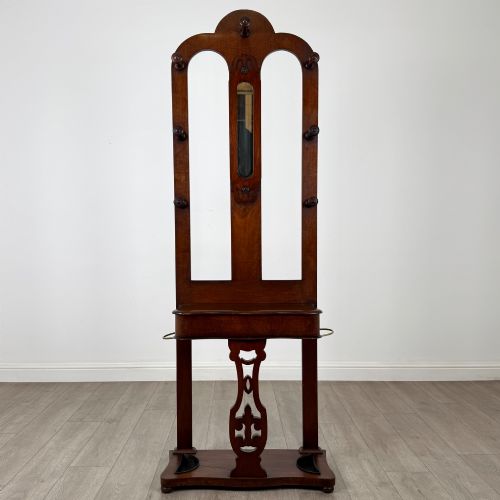
When you search for an umbrella stand hall tree, you encounter multi-functional furniture designed for hallways from the Victorian, Edwardian, and early twentieth-century periods.
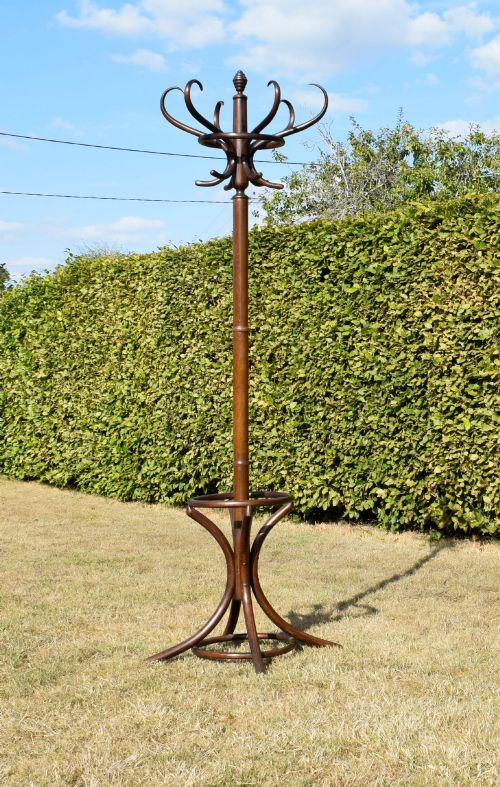
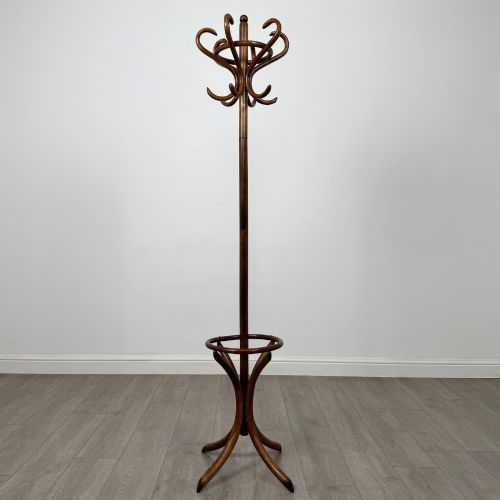
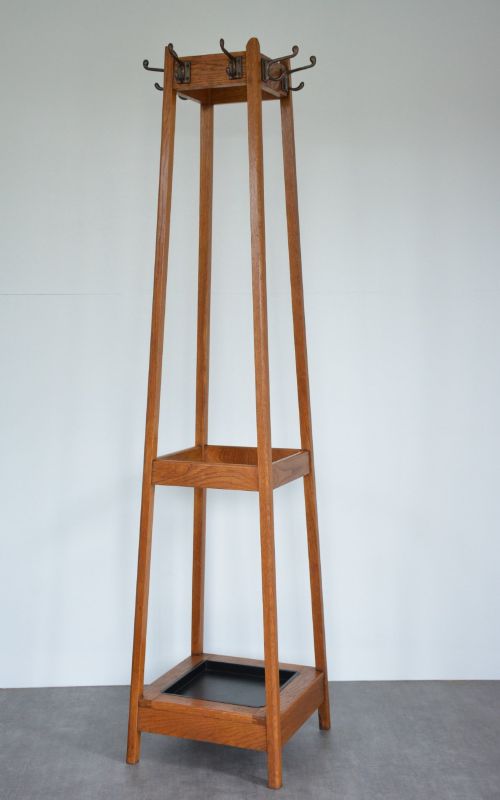
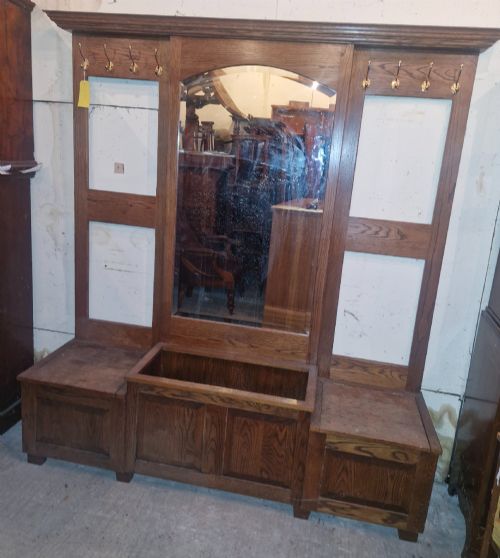
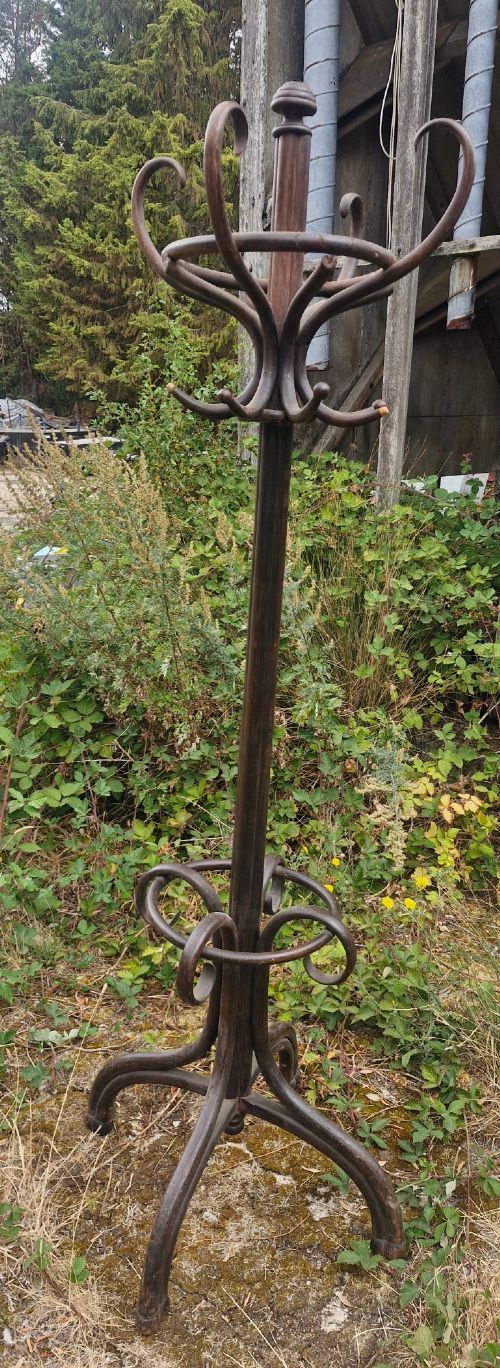
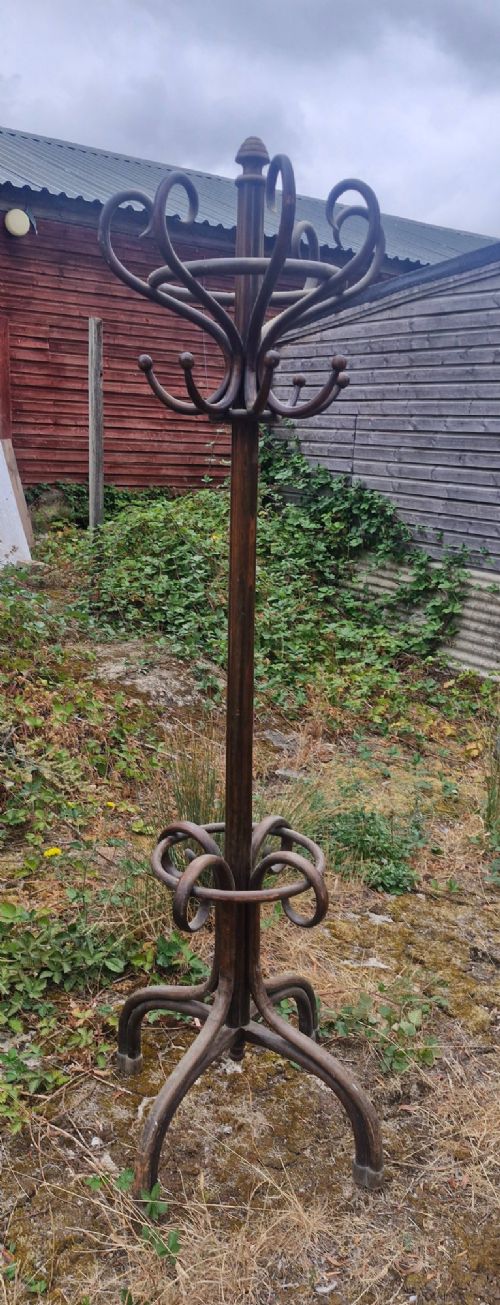
The most common versions on this page are oak and mahogany hallstands alongside beech bentwood hat and coat stands, frequently incorporating dedicated umbrella holders and drip trays.
Pieces range from compact bamboo and rattan aesthetic items to large carved oak tree hall stands and industrial designs featuring integrated metal components.
Materials and Techniques
Cabinet makers utilised solid oak, mahogany, and pine for large timber hall seats and coat stands, often applying detailed carving or turning to the structural uprights.
Bentwood manufacturing relies on steam-heating beech to shape curves for revolving coat racks and umbrella rings, as demonstrated by workshops such as Thonet.
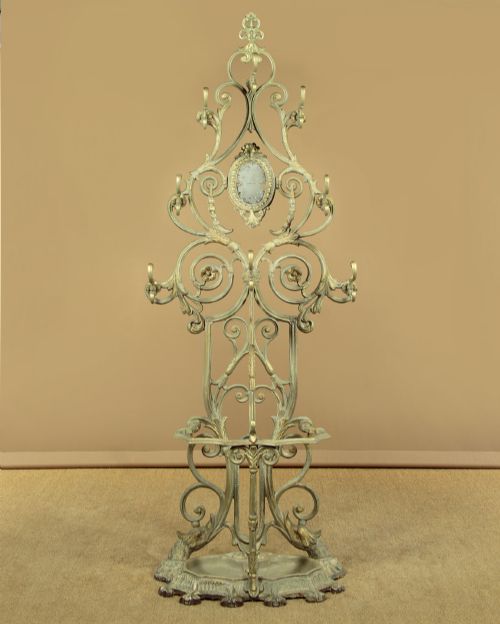
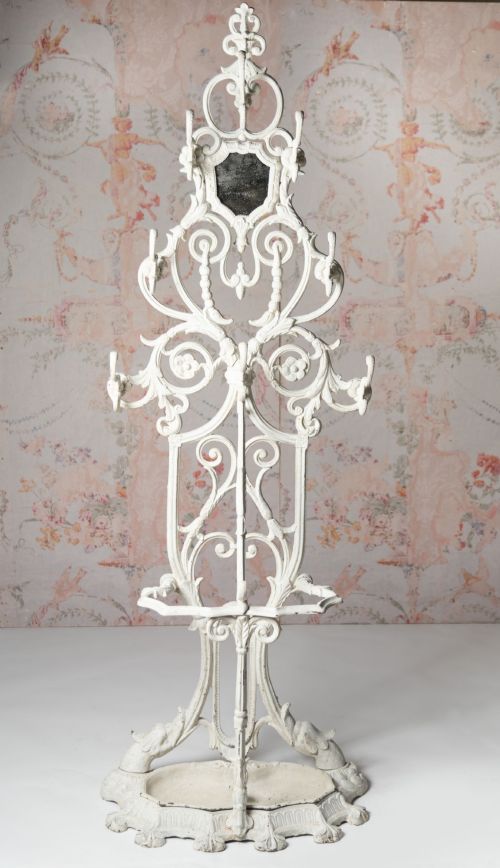
Cast iron and metal components provide sturdy weight at the base of hall stands and faux bamboo umbrella frames, paired with removable metal drip trays to catch water.
Listings span the nineteenth and twentieth centuries, featuring Victorian, Edwardian, Arts and Crafts, and Aesthetic Movement periods.
Judging Quality
Quality rests upon the integrity of the original construction, distinguishing robust solid timber frames and steam-bent beech from later replacement components.
The presence of original hardware, including brass coat hooks, mirrors, and metal drip trays, elevates a piece above those missing their functional fittings.
Finishes display varying degrees of skill, separating master-carved Victorian Gothic woodwork and stamped maker pieces from utilitarian workshop output.
Thonet·J. Parker of Woodstock·William Whiteley
The Umbrella Stand Hall Tree Glossary
- Bentwood
- Wood shaped by steaming and bending under pressure rather than carving. This technique produced lightweight, curving coat stands popular in the Victorian and Edwardian eras.
- Drip tray
- A shallow metal or ceramic pan placed at the base of a stick stand. It collects rainwater from wet umbrellas to protect wooden floors.
- Faux bamboo
- Wood or metal carved and painted to resemble natural bamboo shoots. This decorative finish appeared frequently on Aesthetic Movement hall stands.
- Hall tree
- A tall piece of hall furniture combining hooks for coats and hats with umbrella storage. Many examples also include a central mirror and a bench seat.
Umbrella Stand Hall Tree: Frequently Asked Questions
What is an umbrella stand hall tree?
An umbrella stand hall tree is a combined hallway furnishing designed to hold coats, hats, and walking sticks in one upright structure.
Most examples include vertical uprights, multiple metal or wooden hanging hooks, and integrated rings with drip trays at the base for wet umbrellas.
How do I care for antique hall stands?
Antique hall stands require minimal maintenance beyond regular dusting with a dry cloth and occasional application of appropriate furniture wax for wooden surfaces.
Ensure metal drip trays are emptied and dried properly after use to prevent rust or moisture damage to the surrounding timber framework.
Are bentwood hall stands sturdy?
Bentwood hall stands utilise steam-bent beech construction to achieve remarkable strength despite their slender profiles and curved silhouettes.
The interlocking steam-bent rings and central shafts distribute weight evenly when holding heavy winter coats and umbrellas.
How do I date a hall stand?
Dating a hall stand involves examining the timber species, manufacturing techniques, and stylistic markers such as Victorian Gothic carving or Edwardian golden oak.
Original hardware components like stamped brass hooks and registered design numbers also help narrow down the period of production.