




Gothic Oak Hall Tree
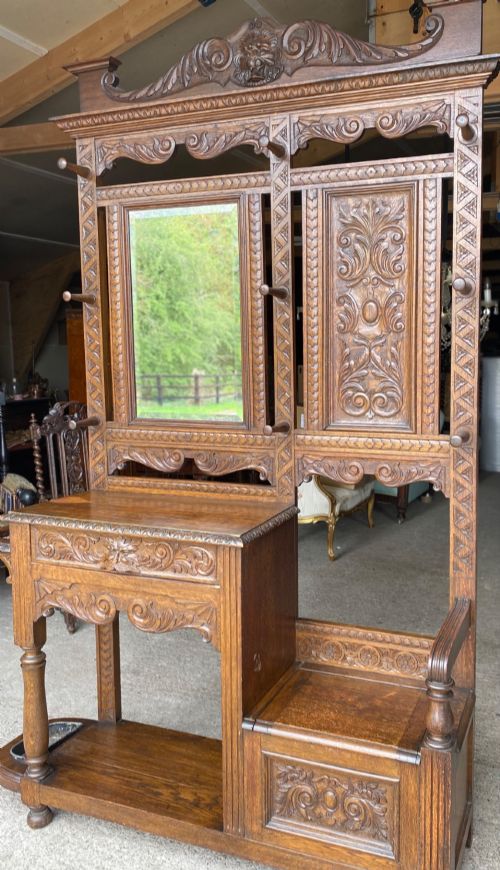
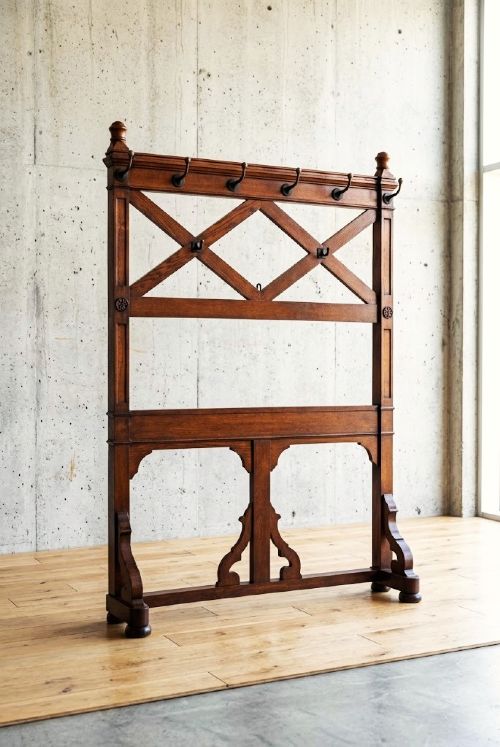
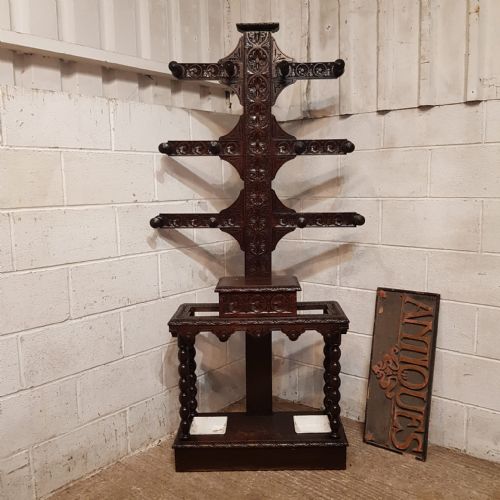
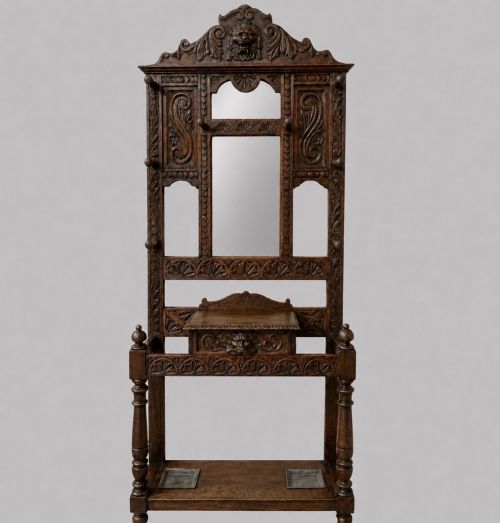
These heavy oak hall stands show how the gothic oak hall tree brought architectural drama into Victorian hallways.
Gothic Oak Hall Tree
A gothic oak hall tree stands as a substantial piece of entrance furniture designed for coats, hats, and umbrellas, emerging most frequently from the Victorian period. These pieces combine upright timber panels with integrated hooks and often incorporate mirrors or glove boxes.
Most examples found here date across the nineteenth century, including specific decades from eighteen-seventy to eighteen-ninety, reflecting Victorian Gothic Revival and Renaissance Revival tastes. The form serves as both a practical household utility and a deliberate decorative statement for a grand hallway.
Makers utilised architectural motifs drawn from medieval church design, translating tracery and pointed arches into domestic entrance furniture. Buyers encounter variations ranging from restrained nineteenth-century styles to heavily carved examples featuring mythological faces.
How they were made
Carpenters constructed these hall stands using solid oak timbers, often selecting boards with strong grain to support deep relief carving. The primary wooden structure provides the necessary rigidity to bear the weight of heavy winter coats and hats hung upon it.
Metal components such as iron and brass form the structural coat hooks and umbrella wells, frequently paired with fitted bevelled glass mirrors and occasionally marble drip trays. These mixed materials were screwed and pegged into the oak framework to withstand daily household use.
Gothic Oak Hall Tree Retail Price Guide 2026
Typical asking prices for gothic oak hall tree among the pieces listed under this phrase on Sellingantiques today, from the lower quarter to the upper quarter. They describe what is for sale here now, not the wider market.
Several stands feature staring Green Man faces carved into the timber, keeping a watchful eye over incoming visitors and stray umbrellas.
What varies in quality
The depth and execution of the carving separate standard workshop production from exceptional pieces, particularly in intricate details such as Green Man faces or foliate scrolls. Sharply undercut timber work demonstrates a higher standard of cabinet-making skill than shallow surface incisions.
The integration of secondary materials like cast brass hooks and marble inserts dictates the overall grade of the stand. Cohesive design where ironwork, glass, and timber complement each other denotes superior nineteenth-century manufacturing standards.
William Whiteley
The Gothic Oak Hall Tree Glossary
- Gothic Revival
- An architectural and decorative style reviving medieval forms, prominent throughout the nineteenth century. This aesthetic brings pointed arches and structural verticality into domestic furniture.
- Green Man
- A sculptural motif depicting a human face disgorged from foliage, popular in Victorian carving. These decorative masks symbolise rebirth and spring.
- Hallstand
- A piece of entrance furniture incorporating coat hooks, umbrella storage, and often a mirror. These items organise outerwear in traditional hallways.
- Renaissance Revival
- A eclectic nineteenth-century design movement drawing inspiration from sixteenth-century European architecture. This style adds classical symmetry and robust proportion to oak furniture.
- Tracery
- Architectural stonework framing glass in windows, translated here into carved wooden panelling. This ornamental stonework pattern defines gothic joinery.
Gothic Oak Hall Tree: Frequently Asked Questions
What is a gothic oak hall tree used for?
These pieces served as the primary storage point for outdoor wear in Victorian entrance halls, holding heavy wool coats, hats, and walking canes.
The integrated compartments and metal wells kept wet umbrellas and muddy boots contained away from the main reception rooms.
How do I date a Victorian hall stand?
Dating relies on observing the combination of decorative styles, construction methods, and materials recorded across the nineteenth century.
Pieces carrying specific period markers like eighteen-eighty or eighteen-ninety often display characteristic Victorian Gothic Revival ornament.
How do I care for antique oak furniture?
Maintaining these timber stands requires keeping them away from direct heat sources and sudden humidity changes to prevent wood splitting.
Regular dusting with a dry cloth preserves the polished surface without building up excessive wax on the carved relief work.
What is a Green Man carving?
A Green Man depicts a human face surrounded by or sprouting leaves and vines, symbolising the cycle of growth in nature.
Victorian cabinet makers carved these striking motifs into the central crests and panels of entrance furniture.