

Oak Coat Rack Stand
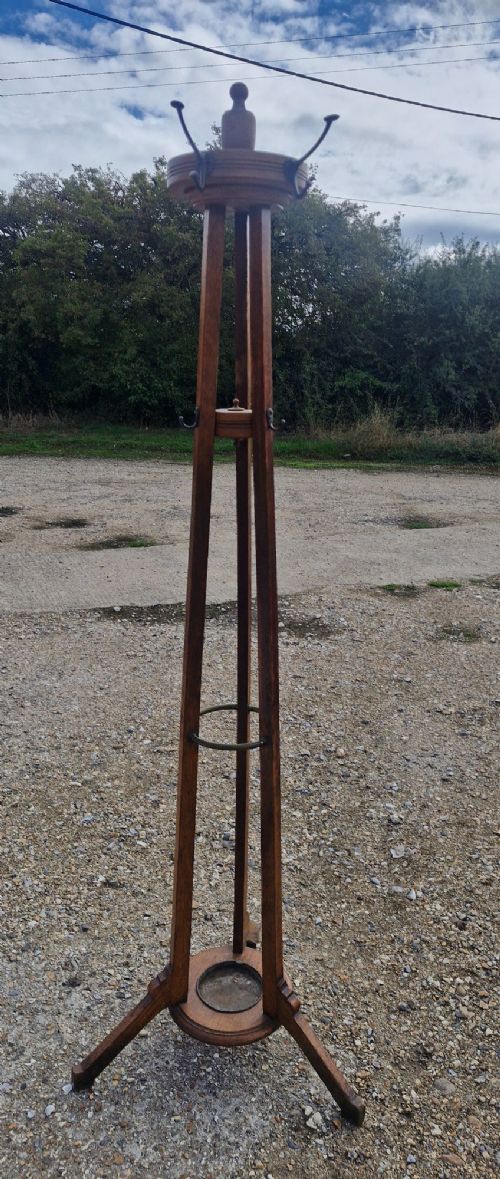
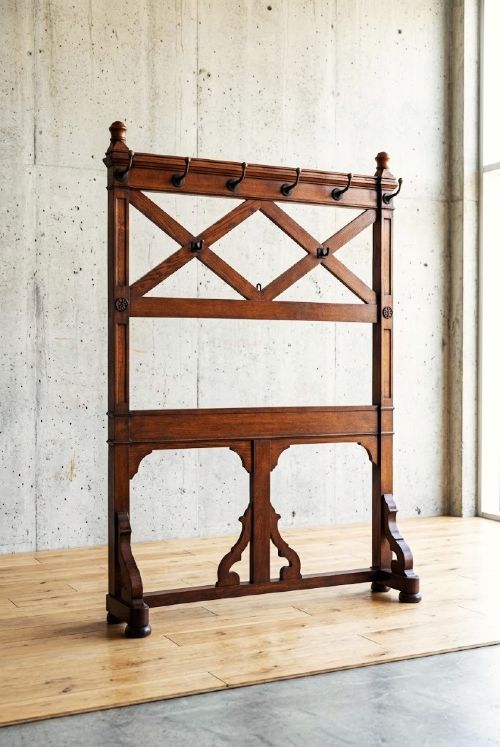
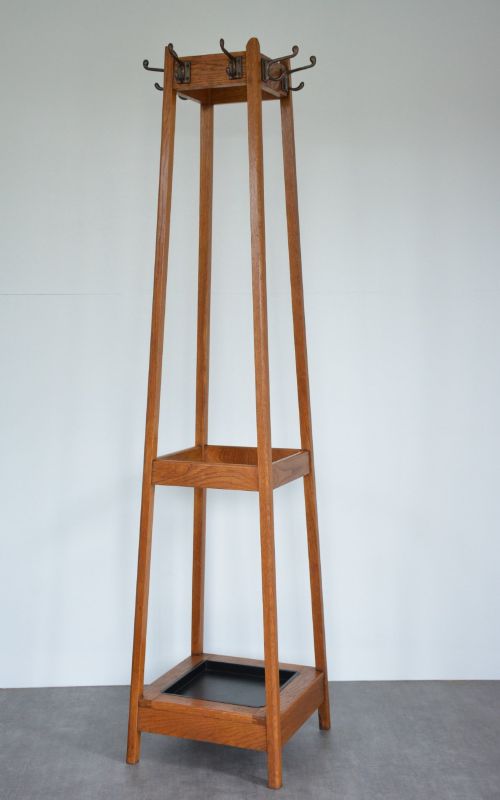
An oak coat rack stand organises the entrance with timber substance and utility, offering structural hooks and hat ledges that anchor a hallway.
Oak Coat Rack Stand
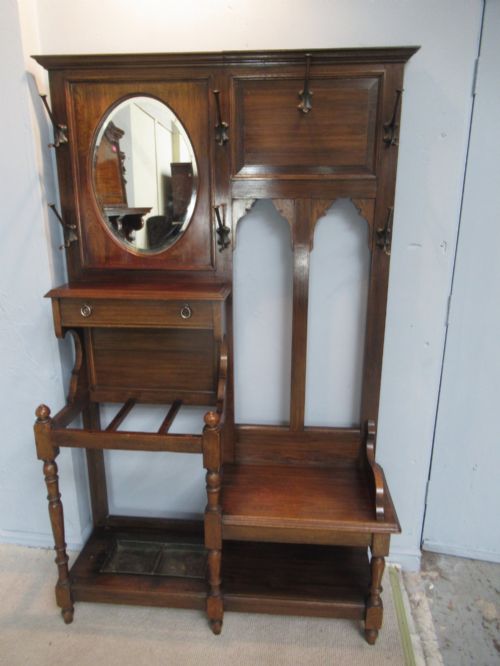
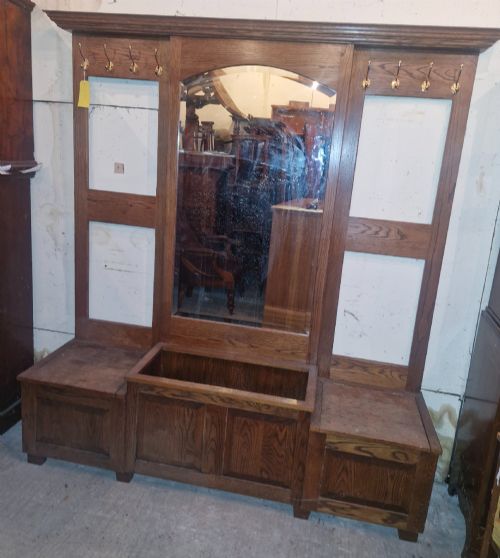
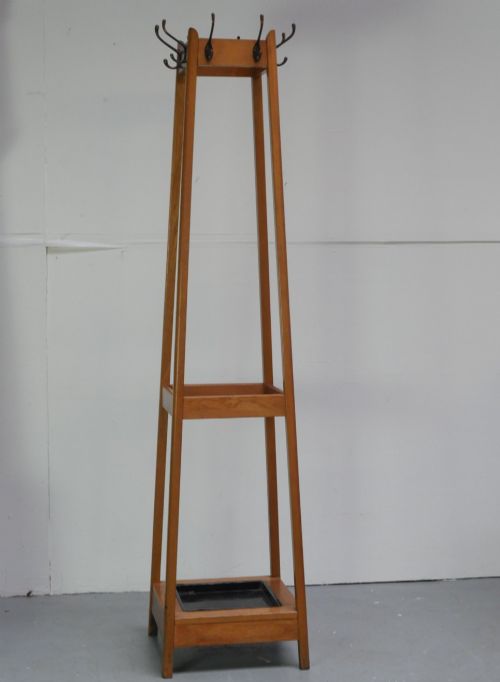
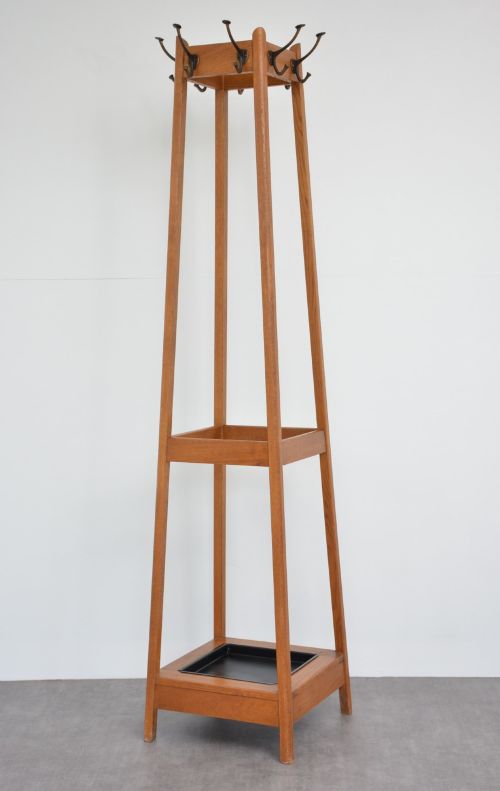
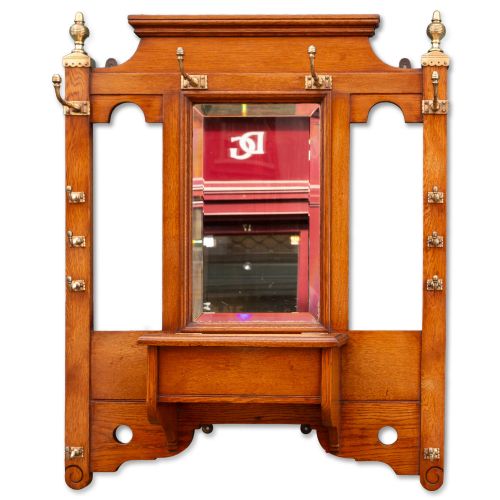
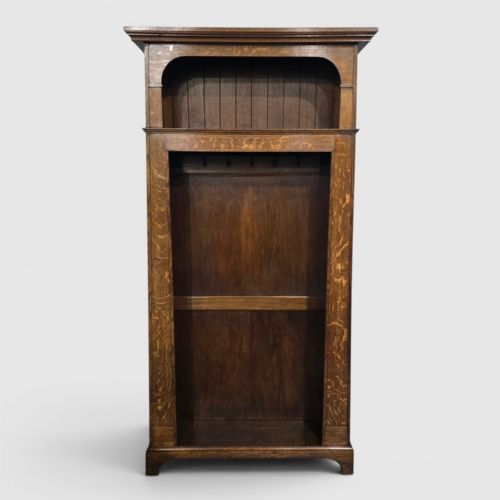
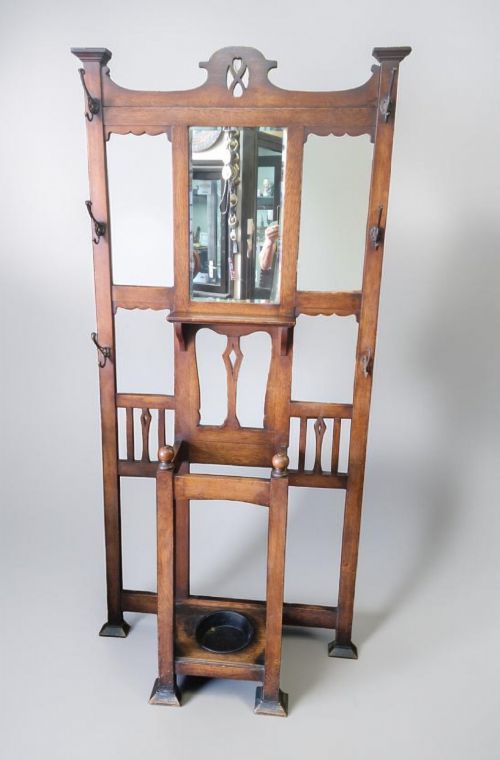
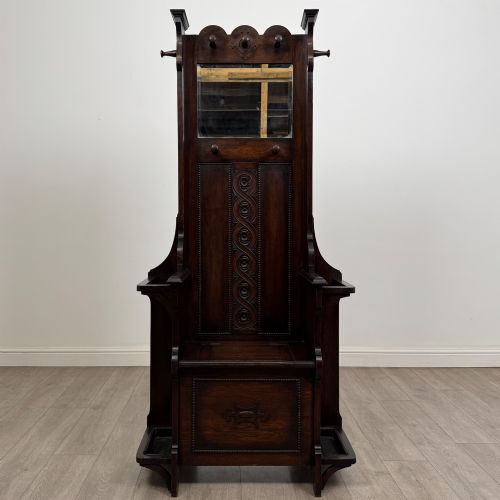
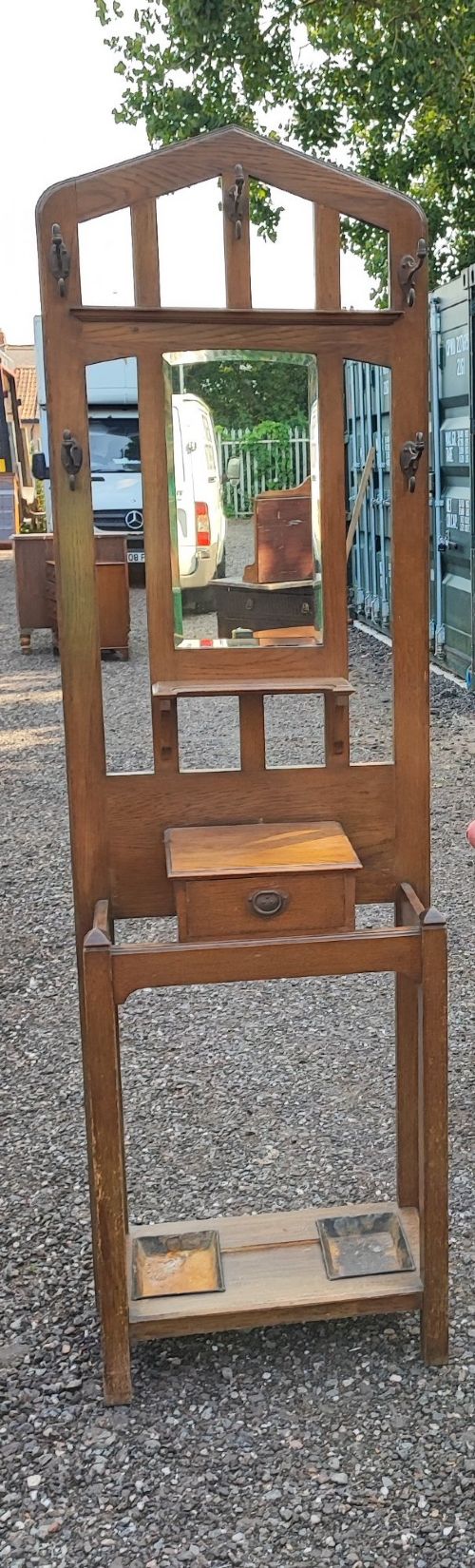
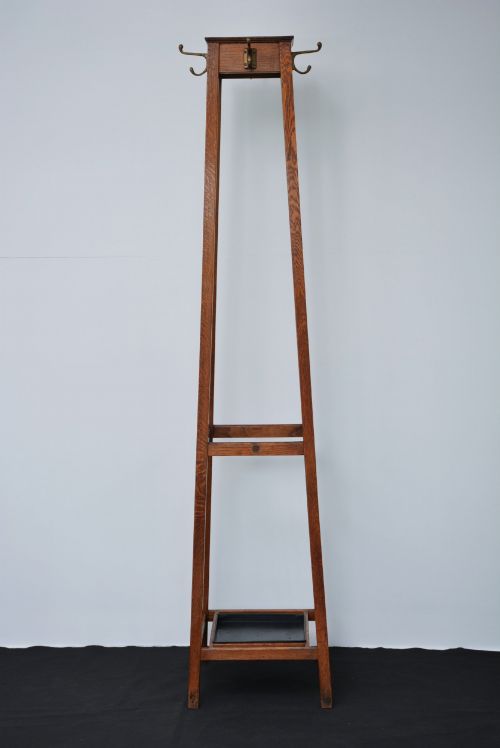
When you search for an oak coat rack stand, you encounter substantial hallway furniture designed to hold outdoor garments, hats, and walking sticks in domestic interiors. The forms range from wall-mounted racks to towering freestanding pieces that incorporate mirrors, storage boxes, and umbrella trays.
The most common examples on this page date from the Victorian and Edwardian eras, reflecting the period need for orderly entranceways. Many pieces combine structural timber with functional brass hooks, iron brackets, and drip trays to handle wet weather equipment.
How they were made
Maker construction relies heavily on solid oak and golden oak framing, shaped through traditional joinery and detailed woodcarving. Artisans integrated functional hardware such as cast brass hooks, pivoting coat arms, and metal drip pans beneath stick compartments.
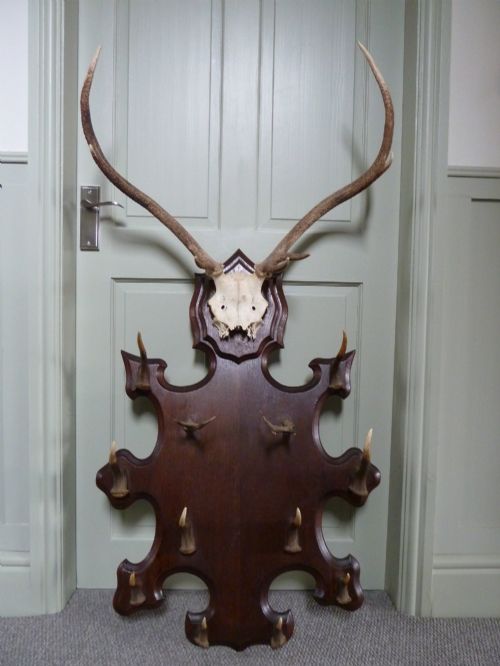
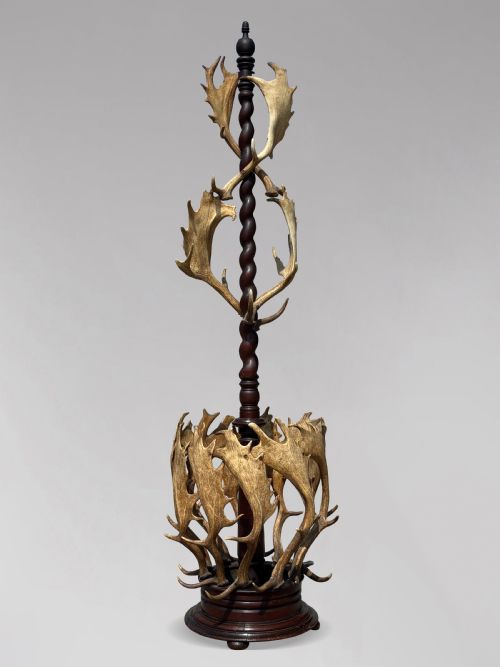
Specialised variations incorporate unusual natural materials like stag horn, cow horn, and taxidermy elements alongside carved botanical motifs, Green Man masks, and mirrored glass panels secured within the wooden frame.
Several pieces incorporate actual stag horns and cow horns into the wooden framework for hanging hats.
What varies in quality
The distinction between standard hallway furniture and exceptional examples lies in the depth of the carving and the integration of multi-functional elements. Pieces featuring elaborate figural work, such as Black Forest animal carvings or distinct Green Man masks, represent a higher tier of craftsmanship than plain utility designs.
Structural complexity also dictates standing, with multi-functional hall seat stands and revolving hat racks demonstrating advanced carpentry compared to simpler wall-mounted variations.
J. Parker of Woodstock·Astrola·Fischel·GW Evans
The Oak Coat Rack Stand Glossary
- Hallstand
- A freestanding entrance piece combining coat hooks, a mirror, and umbrella storage. These items often feature lower compartments for boots or gloves.
- Drip tray
- A metal base insert designed to catch water from wet umbrellas and walking sticks. This feature protects the surrounding wooden flooring from moisture damage.
- Bentwood
- Timber softened by steam and bent into curved structural forms. This technique produced lightweight yet resilient frames for hats and coats.
- Green Man
- A sculptural architectural motif depicting a face carved from leaves and foliage. This symbol of rebirth frequently appears on Victorian carved oak furniture.
- Gothic Revival
- A nineteenth-century design style emulating medieval architecture and pointed arches. Pieces from this movement display severe vertical lines and heavy structural timber.
Oak Coat Rack Stand: Frequently Asked Questions
What is an oak coat rack stand?
An oak coat rack stand is a piece of entrance hall furniture built to hold outerwear, hats, and walking sticks.
These items range from compact wall-mounted timber rails to tall freestanding structures fitted with mirrors and umbrella holders.
How were hall stands used historically?
Victorian and Edwardian households utilised these stands in entrance hallways to receive coats, hats, and wet umbrellas from visitors and family members.
The integrated mirrors allowed a final check of attire before stepping outside, while the compartments kept walking aids neatly organised.
Where should I place a freestanding hall stand?
Freestanding hall stands require adequate wall clearance and floor space in an entrance hall or boot room to function correctly.
Positioning them away from direct heat sources prevents the solid oak timbers from drying out and splitting over time.
How do I identify an Edwardian hall stand?
Edwardian examples usually display lighter golden oak tones and simpler, less congested carving than their heavier Victorian predecessors.
They frequently combine bevelled mirror plates with polished brass or copper hardware characteristic of the early twentieth century.