
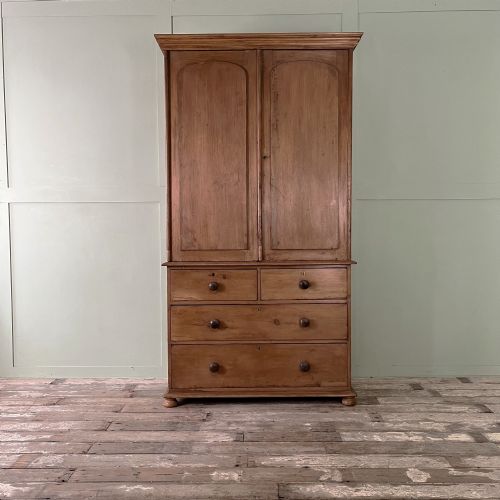
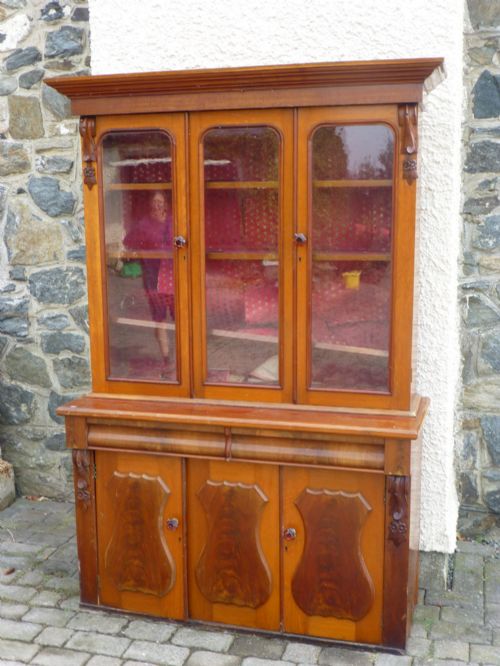
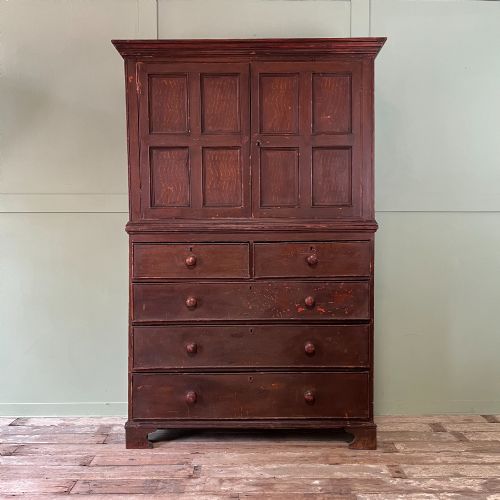
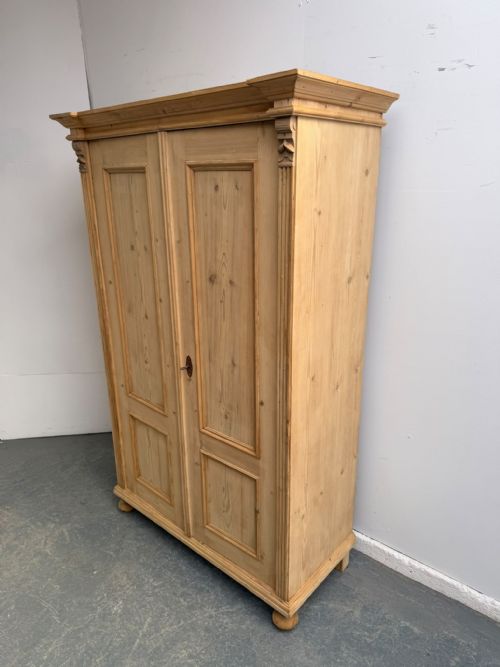
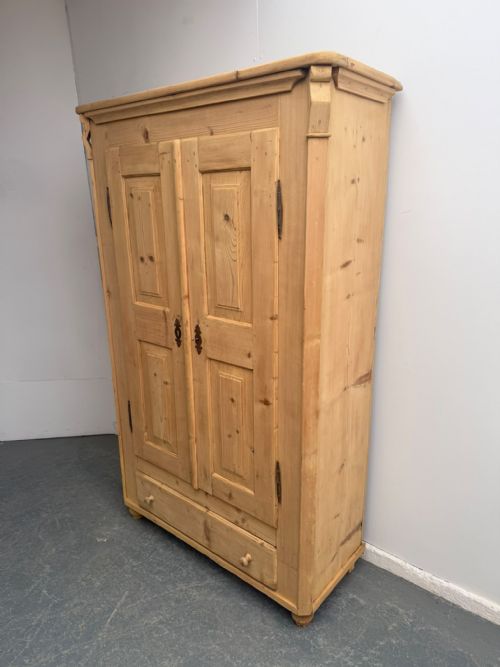

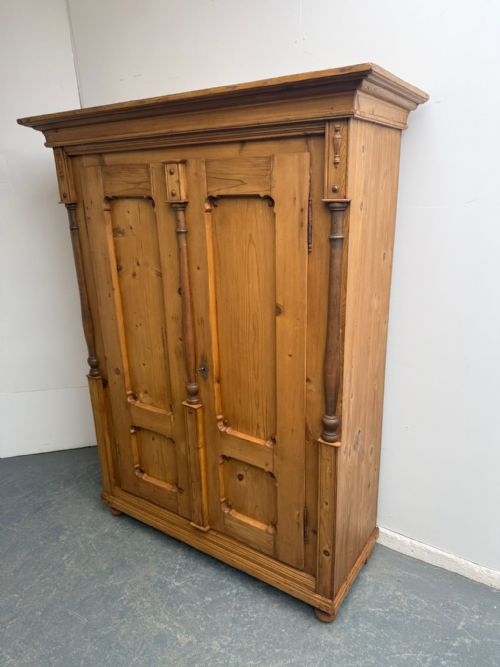


Two Piece Press Cupboard
A two piece press cupboard offers substantial storage through its stacked upper and lower chambers, combining practical household organisation with commanding regional character.
Two Piece Press Cupboard
A two piece press cupboard represents a substantial storage form designed to house linens, clothing, or household goods within a vertical, stacked structure. These pieces divide into a distinct upper section sitting securely upon a lower base, allowing easier transport and placement in domestic interiors.
The versions appearing here span periods from the eighteenth century through the Victorian era, utilising durable timbers such as oak, mahogany, and pine. Regional variations range from Georgian mahogany examples to French oak buffet de corps and vernacular pine pieces.
Makers constructed these storage pieces to serve utilitarian domestic needs while displaying the prevailing cabinet-making styles of their respective regions, incorporating glazed doors, blind doors, or fitted internal shelving.
Materials and construction
Craftsmen built these cabinets primarily from solid timbers including oak, mahogany, and pine, often selecting native woods suited to local workshop traditions. Secondary woods appear in internal construction, reflecting the practical constraints and regional availability of materials during the Georgian and Victorian periods.
Joinery techniques relied on traditional framing methods to support the weight of stacked upper and lower sections, while iron and brass hardware secured doors and internal fittings. Surface treatments varied from waxed finishes and painted pine surfaces to French polishing on finer mahogany models.
Several listings note that the cupboards are ready to wax or paint, offering a domestic project for the enthusiastic buyer.
Judging quality in a two piece press cupboard
Quality rests upon the selection of timber and the integrity of the structural joinery linking the upper and lower sections. Finer examples display thoughtful grain matching and careful proportion, whereas simpler utility pieces prioritize robust, straightforward construction.
The retention of original hardware, glass panes, and surface patination distinguishes superior survivals from pieces that have undergone extensive replacement or alteration over time.
The Two Piece Press Cupboard Glossary
- Press cupboard
- A large storage cabinet traditionally used for linens and clothing, typically featuring internal shelves or hanging space behind dual doors.
- Buffet de corps
- A traditional French two-body cupboard featuring a lower sideboard section surmounted by an upper display or storage cabinet.
- Blind door
- A solid wooden door lacking glass panels, designed to conceal internal contents completely.
- Patina
- The surface sheen and coloration developed by timber through age, handling, and regular waxing over centuries.
- Vernacular
- Furniture made by local craftsmen following regional traditions rather than metropolitan academic designs.
Two Piece Press Cupboard: Frequently Asked Questions
What is a two piece press cupboard?
A two piece press cupboard is a large storage furniture item built in two separable sections, typically with a cabinet or wardrobe top resting on a base.
These pieces were designed for holding household linens and garments, utilising sturdy timber construction to support their considerable vertical weight.
How were these cupboards used historically?
Households utilised these cabinets primarily for storing folded linens, bedding, and garments before fitted domestic wardrobes became standard.
The upper and lower divisions allowed families to separate different types of household goods while keeping them protected from dust and dampness.
How do I fit a two piece press cupboard in a modern home?
Measuring ceiling height is essential before placement, as these stacked cabinets reach substantial vertical dimensions.
Because they divide into two sections, moving them between rooms becomes manageable, though securing them to a wall prevents tipping.
How do I tell Georgian and Victorian pieces apart?
Georgian examples often feature timbers like mahogany or golden oak with restrained classical proportions and refined bracket feet.
Victorian pieces frequently employ pine or varied regional hardwoods, sometimes showing heavier vernacular styling or painted finishes.