

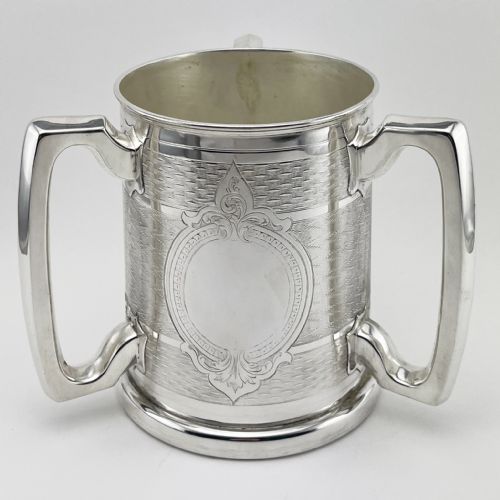

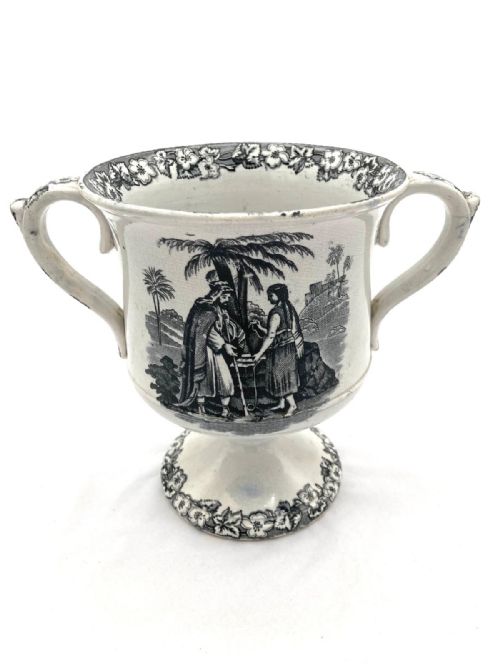


Two Handled Loving Cup
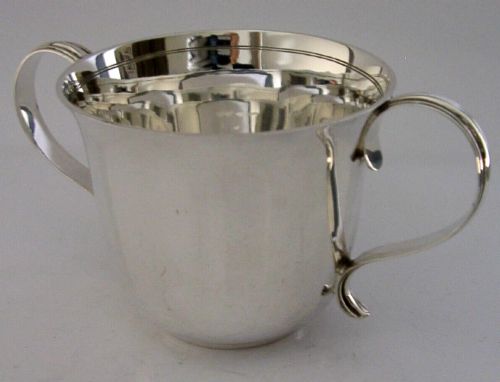
A two handled loving cup is a shared vessel intended for communal drinking, taking various metallic and ceramic forms across past centuries.
Two Handled Loving Cup
A two handled loving cup brings together a variety of vessels designed with multiple handles for passing between drinkers during celebrations or gatherings. These objects span several centuries, with examples originating from Georgian, Victorian, and Edwardian periods.
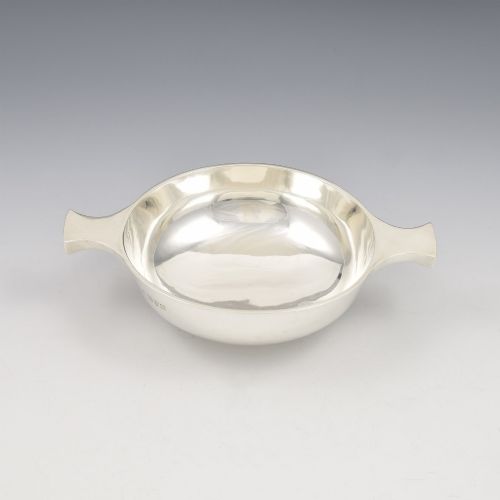
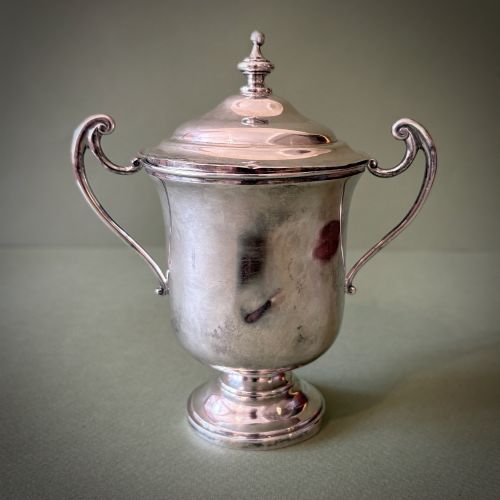
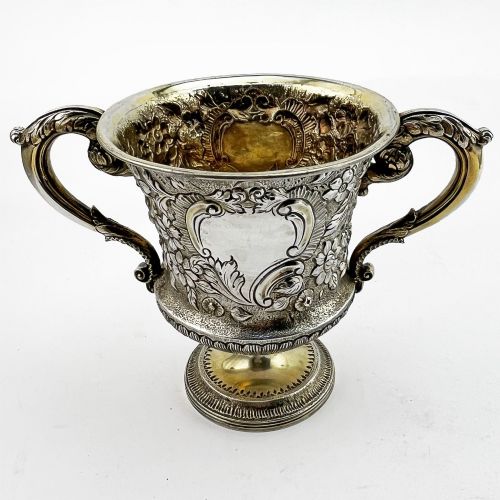
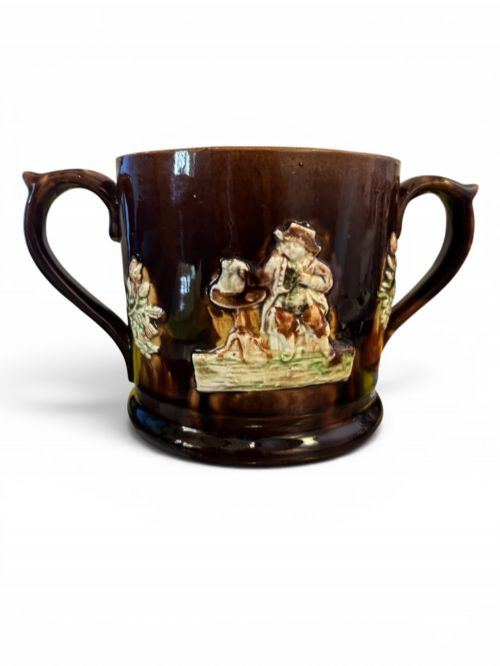
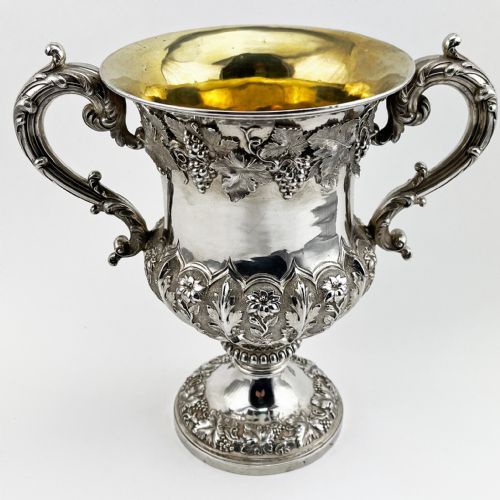
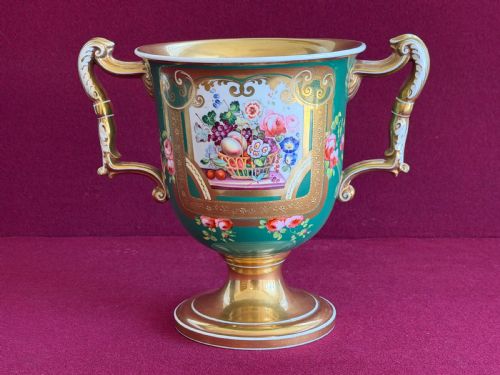
The pieces on this page appear in sterling silver, old Sheffield plate, earthenware, and porcelain formats. Forms range from heavy silver porringers and campana-shaped trophy cups to transfer-printed ceramic mugs populated by hidden ceramic frogs and newts.
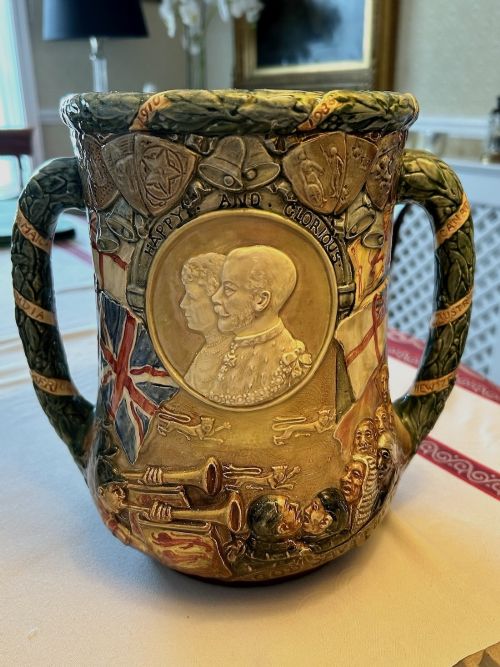
Ceramic editions often display polychrome decoration, transfer-printed hunting scenes, or commemorative royal subjects. Metal variants present plain polished surfaces or intricate repoussé work, sometimes accompanied by gilt interiors and lids.
Materials and Technique
Silver vessels involve raising from flat sheet metal or casting in heavy gauge sterling silver, frequently finished with gilt interiors known as wash. Old Sheffield plate applies a thin layer of silver fused to a copper base, while pewter relies on a malleable tin alloy cast in moulds.
Ceramic examples utilise earthenware, pearlware, or porcelain bodies shaped on the potter's wheel or formed in press moulds. Glazes provide a protective vitreous coating, while transfer printing and hand-painted polychrome pigments decorate the exterior surfaces before firing.
Listings feature loving cups spanning from the eighteenth century through the Edwardian era, rendered in sterling silver, porcelain, and earthenware.
Assessing Quality
Quality rests upon the weight of the metal and the crispness of the chased or engraved detail on silver pieces. Superior examples exhibit balanced proportions, well-secured handles, and clear hallmarks that confirm the maker and date.
In ceramics, the finesse of the hand-painting, the clarity of transfer-printed hunting scenes, and the stability of the glaze dictate value. The inclusion of modelled interior elements like frogs or newts requires precise placement and firing skill.
Nathan and Hayes·H and R Daniel·Joseph Rodgers and Sons·Thomas Sutton·Richard Gurney·Royal Worcester·Royal Doulton·Wemyss
The Two Handled Loving Cup Glossary
- Porringer
- A shallow two-handled bowl used for porage or broth that doubles as a small cup. These vessels feature symmetrically placed handles on opposite sides.
- Campana
- A bell-shaped vessel profile common in classical metalwork and Georgian presentation cups. This silhouette flares outward toward the rim.
- Quaich
- A shallow two-handled drinking vessel of Scottish origin traditionally used for whisky. The design derives from early wooden staved drinking bowls.
- Pearlware
- An earthenware body developed in the late eighteenth century featuring a subtle blue-white glaze tint. It served as a refined alternative to creamware.
- Gilt
- A thin application of gold applied to the interior surface of silver drinking vessels. This treatment protected the metal from acidic contents like wine.
Two Handled Loving Cup: Frequently Asked Questions
What is a loving cup?
A loving cup is a large communal drinking vessel furnished with two or more handles to allow safe passing between guests at banquets and weddings.
Tradition dictated that drinkers held a handle in each hand or relied on a neighbour to guard their flanks while drinking.
Why do some cups have frogs inside?
Ceramic loving mugs frequently concealed a small ceramic frog or newt sitting at the bottom of the vessel. These surprise animals emerged as the liquid was consumed, intended as a drinking prank for guests.
Potters in Staffordshire and Wales produced these novelty vessels during the nineteenth century for alehouses and harvest suppers.
How do I clean antique silver?
Antique silver requires gentle washing in warm soapy water using a soft cloth, followed by thorough drying with a lint-free towel. Avoid abrasive polishes that wear away thin silver layers and crisp hallmark details over time.
Natural tarnishing develops over centuries and forms part of the historical character of silver vessels.
How do I date an old metal cup?
Silver pieces generally carry hallmarks stamped directly into the metal that indicate the assay office, the specific year of production, and the maker's mark. Reference books match these official punch marks to exact calendar years.
Unmarked metal items, such as pewter or plated wares, rely on stylistic clues, weight, construction methods, and base stamps to determine their period.