



Vintage Tavern Mug
These vintage tavern mug pieces are sturdy drinking vessels shaped by decades of public house use, offering tangible links to historical social drinking.
Vintage Tavern Mug
A vintage tavern mug search brings up robust drinking vessels designed for ale, beer, and spirits in historic public houses. These objects encompass robust metal tankards, glazed pottery flagons, and capacious measures spanning the Georgian and Victorian eras.
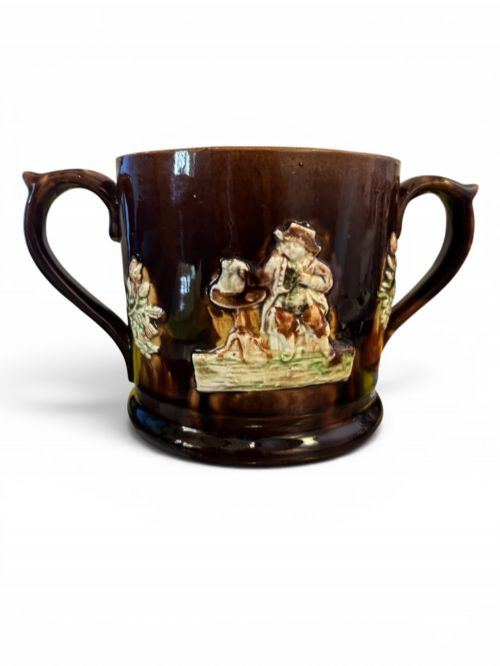
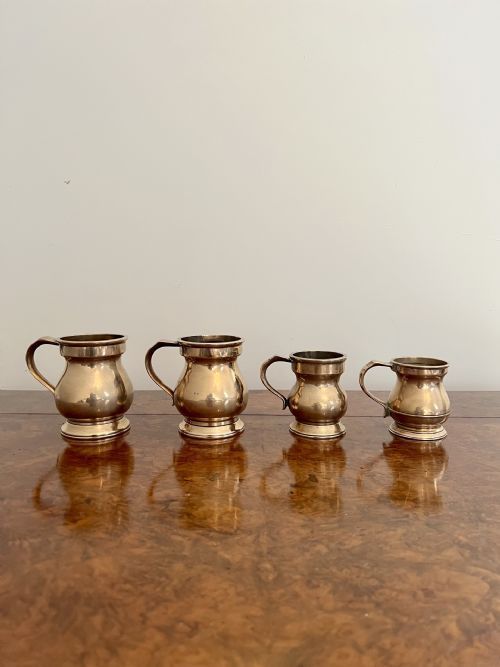
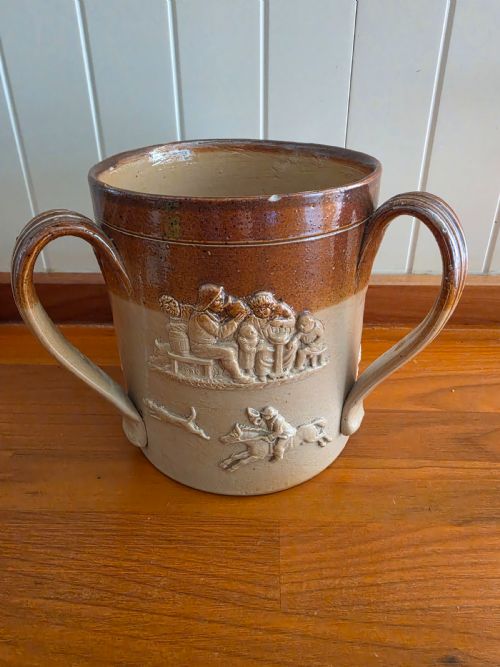
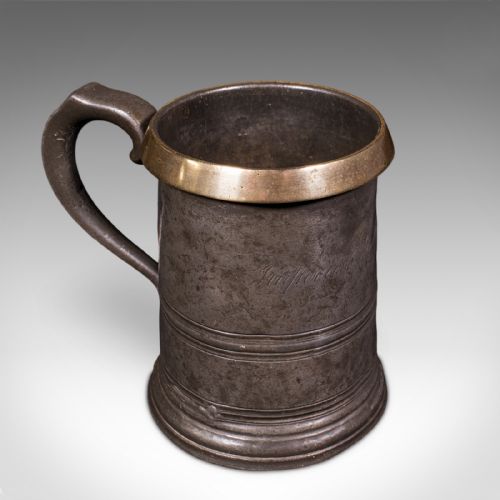
The pieces you encounter on this page range from heavy pewter quart jugs and multi-handled stoneware tygs to polished copper measures and silver-rimmed harvest cups. English country pottery and Victorian barware feature prominently among the current selections.
Originating largely from 18th-century workshops and 19th-century inns, these items reflect the practical drinking culture of British taverns. They bridge the gap between utilitarian bar equipment and collectible antique drinking vessels.
Materials and construction
Metals such as pewter, copper, and brass form the backbone of these barware vessels, shaped by hammering, casting, and soldering. Pewter items often bear touchmarks and makers' details, while copper measures showcase rolled rims and riveted handles.
Listings feature metalwork in pewter, copper, and brass alongside ceramic forms in stoneware and earthenware.
Assessing quality in tavern drinkware
Quality rests upon the integrity of the material and the preservation of original form, whether in the weight of a heavy pewter flagon or the clean glaze of a stoneware tyg. Pieces retaining clear touchmarks, original silver rims, or documented provenance command greater interest.
Wear tells a story on these utilitarian objects, but the best examples maintain their structural soundness without heavy distortion. The crispness of cast details on bell-shaped tankards or the careful joining of multiple handles distinguishes standard tavern gear from finer workshop output.
Frederic Sanders
The Vintage Tavern Mug Glossary
- Flagon
- A large drinking vessel with a handle and usually a lid, designed for holding ale or wine in public houses. Flat-lid examples are typical of earlier 18th-century English pewterware.
- Tyg
- A large drinking cup with three or more handles, traditionally used for passing around a table among multiple drinkers. These heavy ceramic vessels date back to medieval times and continued through the Georgian era.
- Pewterware
- Utilitarian or decorative items cast from an alloy primarily of tin, combined with copper, antimony, or bismuth. Tavern measures and tankards made of this metal show a soft grey patina over time.
- Breweriana
- Collectible items associated with the brewing and serving of beer, including pub tankards, measures, and advertising pieces. This category captures the material culture of historic drinking establishments.
- Measure
- A standardised vessel used in pubs to dispense exact quantities of liquid before the universal adoption of modern glass standards. These metal containers often take cylindrical or bell shapes.
Vintage Tavern Mug: Frequently Asked Questions
What is a tavern mug?
A tavern mug is a historic drinking vessel made of metal, pottery, or glass, used in public houses for serving ale and beer. These pieces date across the Georgian and Victorian periods.
They reflect the communal drinking habits of past centuries, often built with thick walls and sturdy handles to withstand heavy daily use in busy inns.
How were multi-handled tygs used?
Multi-handled tygs were designed for communal drinking, allowing several people to share a single vessel by holding different handles. They were passed around tables during celebrations or social gatherings in taverns.
The extra handles provided a secure grip as the heavy ceramic vessel circulated among patrons.
What is a frog mug?
A frog mug is a novelty drinking vessel featuring a small ceramic frog moulded inside the bottom, which appears as the drinker finishes the beverage. These surprise pieces added humour to tavern gatherings.
They date primarily to the 18th and 19th centuries and served as conversation starters in public houses.
How do I care for antique metal tankards?
Antique metal tankards require gentle cleaning with mild soap and warm water, avoiding harsh chemical polishes that strip historic patina. Store them in stable humidity conditions to prevent oxidation.
Displaying these pieces away from direct sunlight preserves the surface finish of copper, brass, and pewter items.
How can I tell a Georgian tankard from a Victorian one?
Georgian tankards often feature simpler, heavier construction with flat lids and hand-hammered surfaces, reflecting earlier metalworking techniques. Victorian examples frequently display bell shapes or standardised touchmarks.
Material composition and maker stamps help narrow down the production period of British barware.