



Victorian Ale Tankard
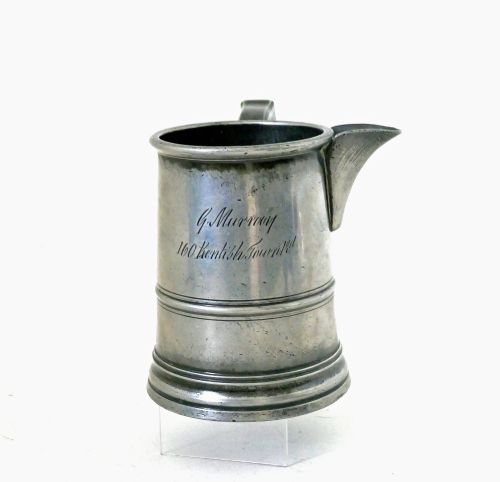
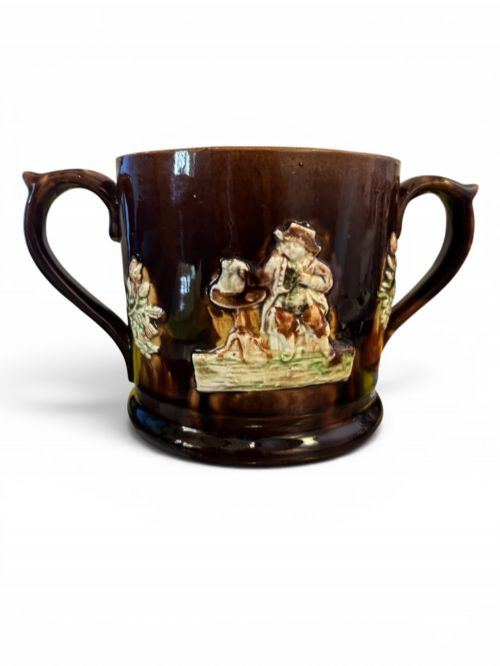
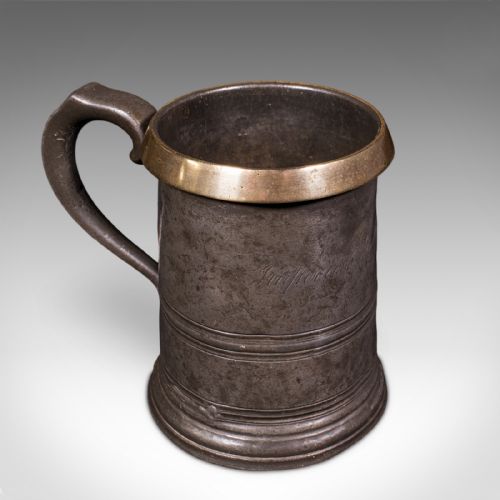
These Victorian ale tankard pieces are solid metal and pottery vessels built for steady tavern and domestic service.
Victorian Ale Tankard
A victorian ale tankard brings robust tavern utility and domestic service into focus through traditional materials. Buyers searching for a victorian ale tankard encounter sturdy public house vessels designed for heavy everyday use in the nineteenth century.
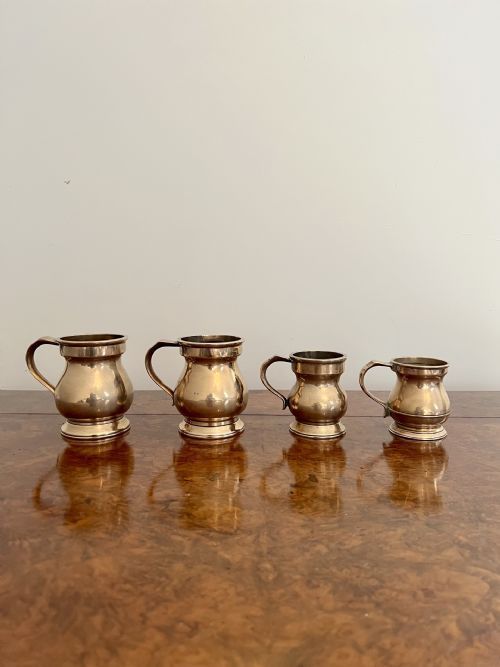
The selection here centres on metal and ceramic drinking vessels spanning the Victorian era, alongside earlier Georgian influences and eighteenth century survivals. Forms range from quart measures and bell shaped tankards to copper jugs and surprise spitting mugs.
Metal vessels dominate the material record, featuring substantial pewter, bright copper, and occasional sterling silver or silver plate. Ceramic examples include salt glazed stoneware and earthenware pots, sometimes finished with applied silver rims.
How they were made
Metal vessels like pewter tankards and copper measures are shaped through skilled hammering, spinning, or casting, often finished with soldered seams and applied handles. Pewter alloys of tin and lead or copper provide the heavy, durable walls necessary for daily tavern use.
Ceramic jugs and mugs rely on traditional throwing and moulding techniques in stoneware and earthenware potteries. Salt glazing creates the distinctive pitted surface texture on harvest jugs, while applied silver rims add structural reinforcement to the upper lip.
Materials range from eighteenth century earthenware to Victorian silver plate and standard pewter public house measures.
What varies in quality
Quality rests in the weight of the metal and the crispness of touchmarks, verification stamps, and engraved decoration. A heavier gauge of pewter or copper ensures longevity and preserves the clean proportions intended by the maker.
For ceramic pieces, the definition of the moulded details and the evenness of the glaze separate standard utility wares from finer examples. Matching sets of graduated measures command attention for their completeness and uniform preservation.
Frederic Sanders·Watts and Harton·Doulton Lambeth
The Victorian Ale Tankard Glossary
- Pewter
- A malleable metal alloy primarily composed of tin, mixed with copper or antimony, used extensively for tankards and measures. It develops a soft, dark grey patina over decades of handling.
- Quart measure
- A standard capacity vessel holding two pints, frequently stamped with royal verification ciphers for public house use. These measures ensure accurate dispensing of ale in busy taverns.
- Bell shaped tankard
- A drinking vessel featuring a distinctive curved profile that flares outward toward the base. This silhouette provides stability on uneven wooden tavern tables.
- Harvest jug
- A stoneware or earthenware vessel often decorated with relief hunting scenes, used during seasonal agricultural celebrations. Examples from potteries like Doulton Lambeth frequently feature silver rims.
- VR mark
- A royal cypher standing for Victoria Regina, stamped onto pewter measures to denote official government inspection and accurate volume. Such verification marks confirm commercial public house use.
Victorian Ale Tankard: Frequently Asked Questions
How do I know the capacity?
Many metal tankards and jugs feature official capacity stamps or verify volume through standard sizes like the quart measure.
These stamps reflect public house regulations and help identify the intended commercial use of the vessel.
Were these used in pubs?
Most pewter and copper examples served as working public house measures for pouring and serving ale.
Sturdy construction and verification marks indicate they spent decades in busy tavern environments.
How do I clean pewter?
Pewter requires gentle washing with warm soapy water and thorough drying to protect the soft metal surface.
Avoid harsh commercial metal polishes that strip away the historic grey patina built up over generations.
What is a frog mug?
A surprise spitting mug contains a small ceramic figurine hidden inside the base, revealed only as the drinker finishes the ale.
These novelty pieces provided amusement in communal drinking settings during the eighteenth and nineteenth centuries.