
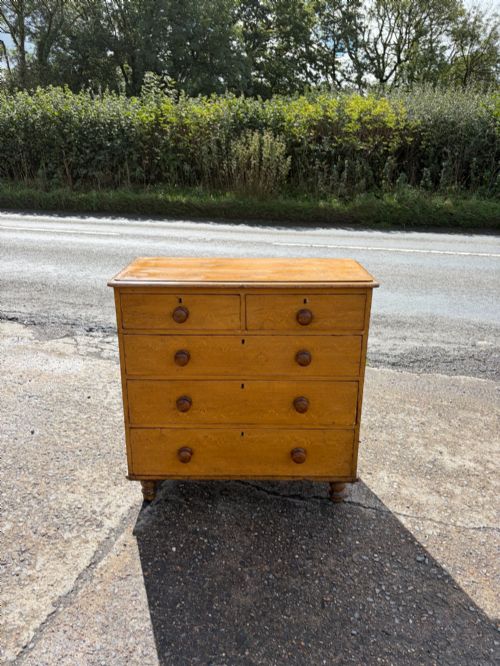
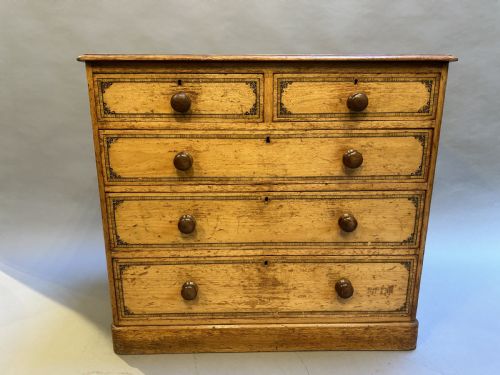
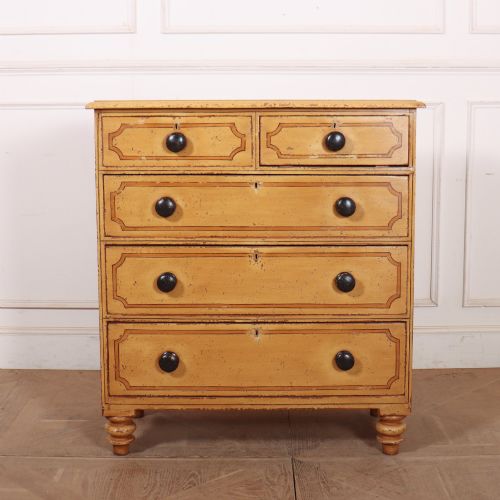
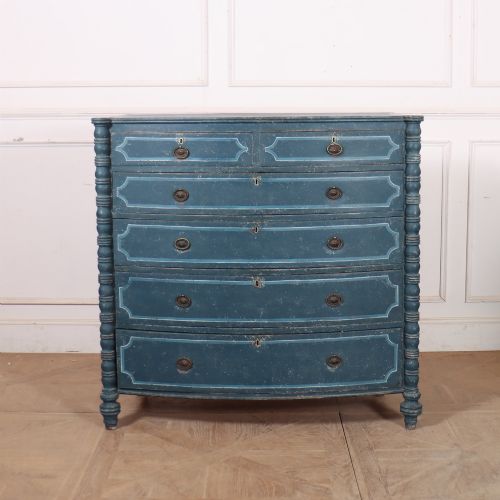
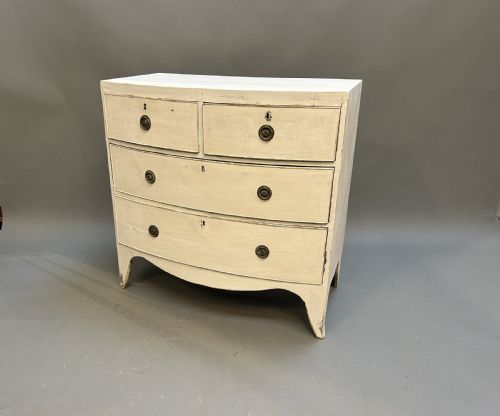
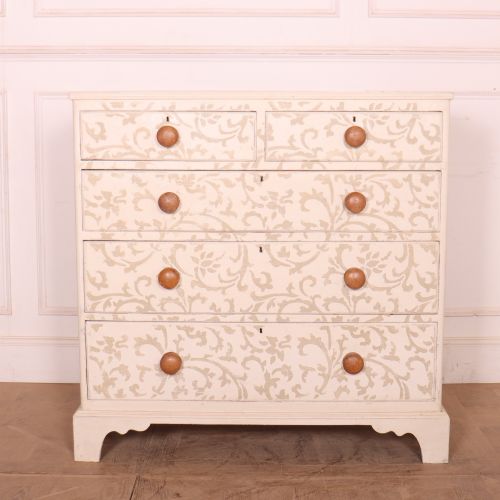
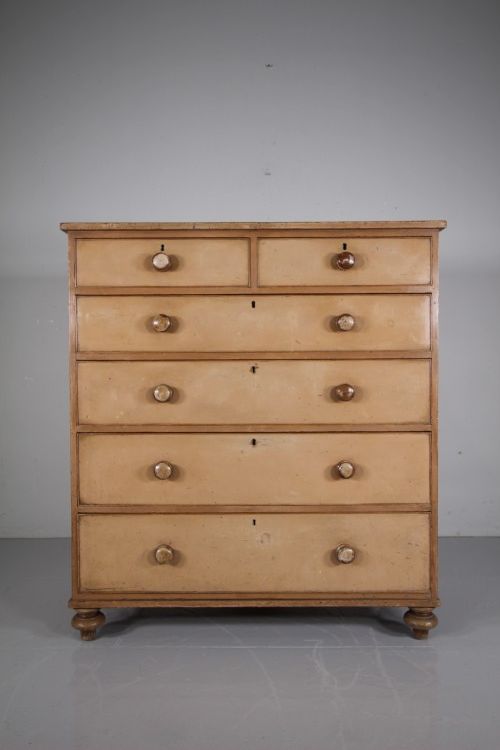


Two Drawer Painted Commode
A two drawer painted commode brings immediate character and practical surface space to a room, offering the charm of hand-finished timber and aged pigment.
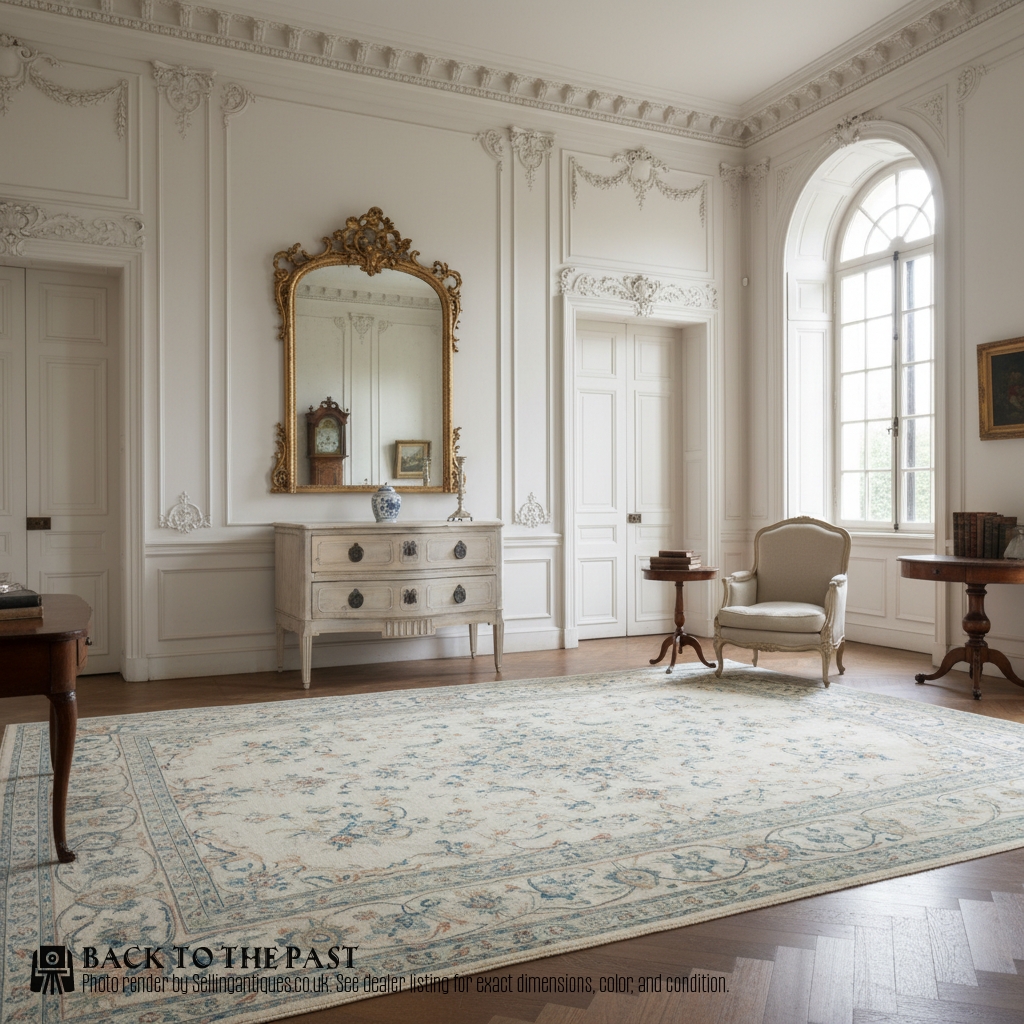
Two Drawer Painted Commode
A two drawer painted commode is a versatile storage piece appearing across multiple periods, most frequently encountered in 18th century, 19th century, and Victorian guises. These chests draw upon English country, French provincial, French chateau, and Italian neoclassical traditions.
Makers and provincial workshops fashioned these small chests from pine, ash, walnut, and other timbers, applying decorative paint finishes from the outset or during subsequent periods.
How they were made
Carpenters constructed the carcases using solid timbers such as pine and ash, often incorporating bowfront or serpentine shapes alongside straightforward rectangular forms. Drawers were fitted with brass handles and metal hardware to complement the timber structure.
Surfaces received decorative treatments ranging from original paint and stencilling to scumble glaze and hand-applied Swedish grey colour. These pigment layers weathered over decades, leaving genuine historic patination on the wood.
The listings show pieces spanning the 18th century through to the early 20th century, utilising pine, ash, walnut, and brass.
What varies in quality
The integrity of the painted surface distinguishes one piece from another, separating untouched original finishes and period scumble glazes from later decorative updates. Depth of pigment and the natural ageing of the timber beneath tell the story of the chest's origin.
Construction details such as drawer operation, timber selection, and the retention of original brass or metal hardware indicate the care taken by the original maker or workshop.
The Two Drawer Painted Commode Glossary
- Scumble
- A technique where a translucent glaze is brushed over a lighter base coat and manipulated with tools to imitate the grain of more expensive woods.
- Bowfront
- A convex, outward-curving front profile popular on chests of drawers and commodes from the Regency period onwards.
- Serpentine
- A gently undulating front line featuring a convex centre flanked by concave curves, commonly seen on Italian and French commodes.
- Provincial
- Describing furniture made in the regions rather than capital cities, often displaying charming local adaptations of grander academic styles.
Two Drawer Painted Commode: Frequently Asked Questions
Where should I place a two drawer painted commode?
These compact chests suit entryways, bedrooms, or living spaces where surface area and low-profile storage are required without overwhelming the room.
Their restrained proportions allow them to sit comfortably beneath mirrors or art pieces while holding everyday items inside the two drawers.
How do I care for historic painted surfaces?
Maintain the finish by dusting with a dry, soft cloth and avoiding harsh modern cleaning chemicals that might strip aged pigment.
Keep the timber away from direct heat sources and strong sunlight to prevent the painted wood from drying out or fading further.
Are these commodes practical for daily use?
The two drawer configuration provides accessible storage for smaller household items, documents, or bedside essentials.
While historic drawers operate differently from modern runners, well-maintained timber pieces function reliably for everyday organisation.
How do I distinguish 18th century pieces from Victorian ones?
Eighteenth-century examples often exhibit continental provincial characteristics, such as serpentine fronts and specific regional French or Italian proportions.
Victorian pieces frequently utilise pine or ash with stencilled or scumbled finishes characteristic of British country workshop production.