
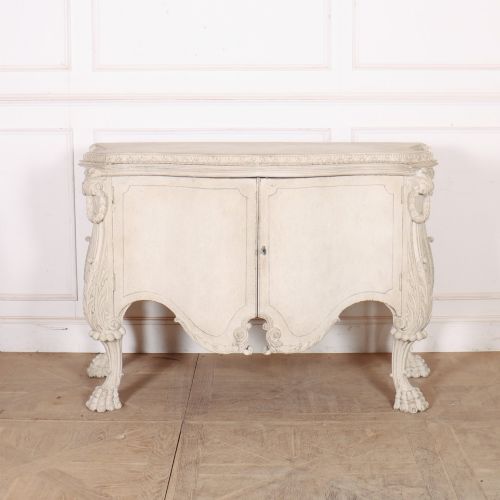
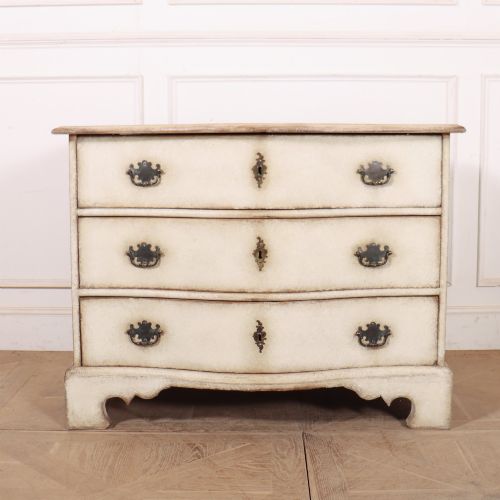


Cream Serpentine Commode
A cream serpentine commode brings fluid continental curves and painted charm to a room, offering both sculptural presence and practical storage.
Cream Serpentine Commode
A cream serpentine commode represents a distinct class of continental storage furniture defined by its undulating, wave-like front profile and pale painted surface. These pieces range from authentic eighteenth-century examples to later revival pieces from the nineteenth and early twentieth centuries.
On this page, buyers are most likely to encounter painted wood chests of drawers and side cabinets originating from Italy, Germany, France, and Denmark. The designs span Rococo, Neoclassical, and provincial styles, each bringing a different decorative emphasis to the serpentine form.
The category encompasses both grand commodes and smaller side cabinets, often decorated with gesso or faux marble details. These items serve as statement storage pieces in hallways, drawing rooms, and bedrooms.
How they were made
The construction of these pieces relies on shaped wood frames built to accommodate the characteristic double-curved serpentine front. Craftsmen applied layers of paint, sometimes over gesso, to create the pale finishes seen today.
Metal hardware, including brass and cast metal handles and escutcheons, complements the painted wooden bodies. Carved wooden details frequently accent the frames, particularly in pieces following Italian and French Rococo traditions.
Current listings feature pieces spanning the eighteenth century through to nineteen-twenty, utilising painted wood, gesso, and cast metal.
What varies in quality
Quality in these commodes rests primarily on the integrity of the serpentine shaping and the execution of the painted surface. Earlier eighteenth-century originals demonstrate hand-carved woodwork and period finishing techniques that differ from later revival interpretations.
The subtlety of the undulating front and the preservation of the original painted decoration determine the visual success of the piece. Finer examples maintain crisp proportions across the chest of drawers while integrating decorative elements like faux marble harmoniously.
The Cream Serpentine Commode Glossary
- Serpentine
- A furniture front profile characterised by a double curve, sweeping inward then outward, creating a wave-like effect. This shape requires skilled woodworking to achieve fluid lines.
- Commode
- A low chest of drawers or cabinet, originating in France during the seventeenth century. The form typically stands on legs and serves decorative storage functions.
- Gesso
- A plaster-like mixture applied to wood surfaces as a base for paint or gilding. It allows craftsmen to build up smooth or relief-carved decorative details.
- Rococo
- An ornate artistic style of the eighteenth century featuring asymmetrical scrolls, C-scrolls, and naturalistic plant motifs. It heavily influences the curves of continental commodes.
- Faux marble
- A painted surface finish designed to imitate the appearance of genuine stone. Artisans use specialised brushing techniques to replicate natural marble veining on wood.
Cream Serpentine Commode: Frequently Asked Questions
What is a serpentine commode?
A serpentine commode is a decorative chest of drawers featuring a distinctive undulating front that curves inward and outward. These pieces originated in continental Europe and combine practical storage with sculptural form.
They are distinguished from straight-fronted chests by their flowing lines, which became popular during the eighteenth century and inspired later revival periods.
How do I date a painted commode?
Dating involves examining the construction methods of the wooden carcass, the type of hardware utilised, and the composition of the painted finish. Eighteenth-century pieces typically show age-related wear and traditional joinery.
Revival pieces from the nineteenth and twentieth centuries often employ machine-sawn timber or different paint layering techniques while mimicking earlier styles.
How do I live with a painted commode?
Living with a painted commode involves placing it in a stable environment away from direct heat sources and excessive moisture. The painted and gesso surfaces benefit from gentle dusting with a soft dry cloth.
These pieces function effectively as focal storage units in reception rooms, hallways, or bedrooms, pairing well with both traditional and contemporary interiors.