
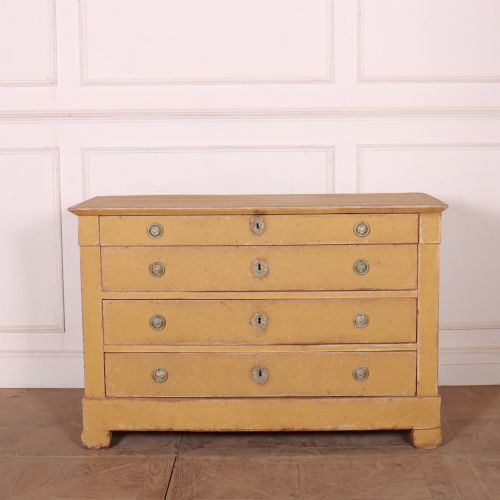
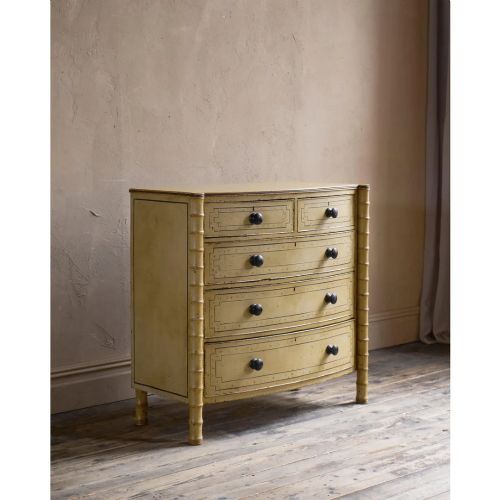
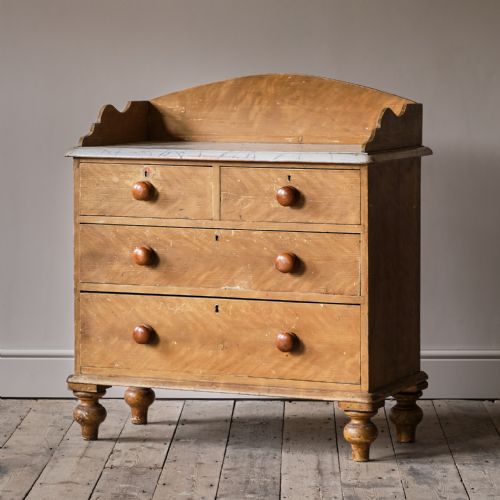
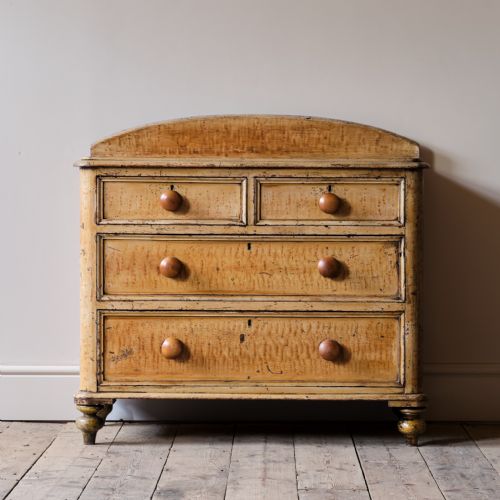


Yellow Painted Commode
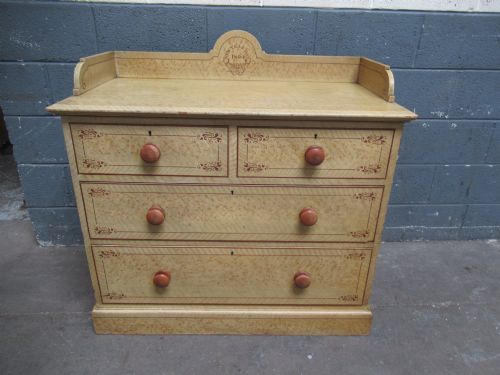
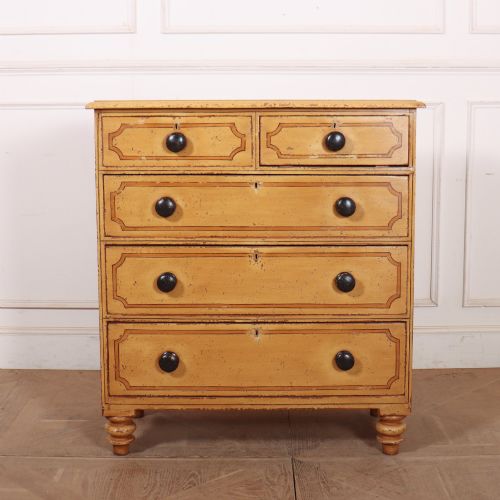
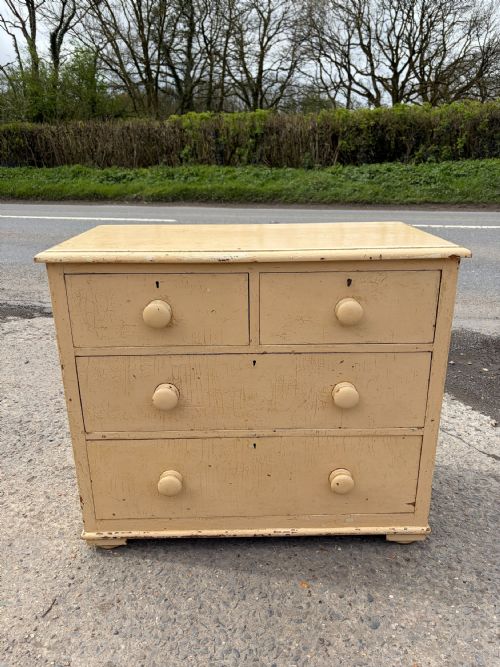
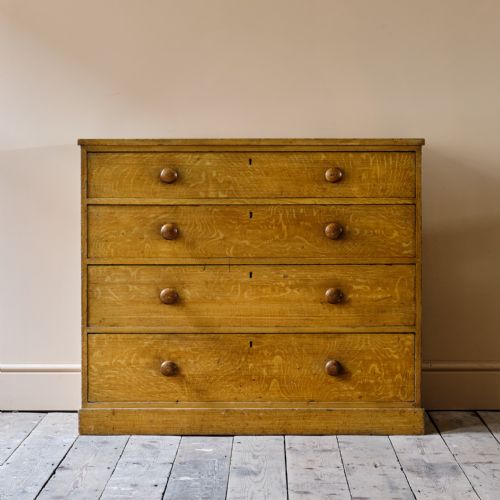
A yellow painted commode brings vibrant colour and practical storage into a room, offering both provincial charm and honest utility.
Yellow Painted Commode
A yellow painted commode is fundamentally a chest of drawers or storage chest finished in decorative pigment, drawing on long traditions of country and provincial furniture-making. When searching for this phrase, buyers encounter pieces spanning several centuries, from the sophisticated curves of eighteenth-century Italian pieces to sturdy nineteenth-century English and continental storage furniture.
The versions most frequently met on this page are constructed from pine or softwood, often bearing their original painted surfaces developed over decades or centuries of use. Forms range from traditional two-over-two drawer arrangements and bowfront profiles to regional variants like Swedish and French provincial designs, along with occasional related domestic seating forms.
Styles lean heavily towards the vernacular, encompassing Victorian country, rustic country, and continental folk art aesthetics alongside occasional regency and Georgian proportions. Buyers choose these pieces to anchor a scheme with a bold splash of colour while retaining the authentic grain and wear of antique timber.
How they were made
The construction relies principally on pine and softwood timbers, fashioned by joiners using traditional dovetailed drawer construction and panelled carcasses. These sturdy woods provided a stable canvas for decorative surface treatments rather than showcasing high-status cabinet woods like mahogany or walnut.
Makers applied layers of paint, lacquer, or japanning directly to the wood, often preserving the original surface coats through generations of domestic life. Hardware such as brass pulls and handles was fitted to complement the painted or polished exterior, completing the practical storage unit.
Even a child-sized high chair sneaks into the painted pine lineup, proving that small-scale folk art charm comes in unexpected forms.
What varies in quality
The primary distinction across the range lies in the integrity and age of the painted surface, with genuine original paint holding greater historical interest than later overpainting. The subtlety of the brushwork, the depth of the colour, and the natural patina accrued through use separate standard vernacular pieces from finer continental examples.
Joinery standards also define the tier of the piece, distinguishing between heavy-duty utilitarian chests and more refined items featuring bowfronts or sophisticated proportions. The survival of original brass fittings and the structural soundness of the pine carcass further influence the overall character of the furniture.
The Yellow Painted Commode Glossary
- Commode
- A low chest of drawers or cabinet designed for domestic storage. In antique terms, the descriptor often applies to continental pieces of fine proportion.
- Original paint
- A surface finish applied when the piece was first made, untouched by modern repainting. Collectors prize this state for its authentic texture and historical honesty.
- Japanning
- A European imitation of East Asian lacquerwork, popular in the decorative arts. It involves layering varnishes and paints to create a glossy, hard finish.
- Bowfront
- A convex, curved front profile typical of certain Georgian and Regency case furniture. This shape softens the corners of the chest and demands precise carpentry.
- Softwood
- Timber derived from conifers, predominantly pine in these listings, used extensively for country and regional furniture. It accepts paint readily and provides a lightweight carcass.
Yellow Painted Commode: Frequently Asked Questions
What is a yellow painted commode?
A yellow painted commode is a set of drawers or storage chest finished in a yellow decorative pigment, typically dating from the eighteenth to the early twentieth century. These pieces draw heavily on country and provincial traditions from Britain, Italy, Sweden, and France.
They serve as functional storage furniture while introducing a vibrant, rustic aesthetic to modern interiors. Most examples are built from pine or softwood and carry substantial history in their worn surfaces.
Where were these painted chests made?
These chests originate from various European regions, reflecting local vernacular furniture traditions rather than a single manufacturing centre. Evidence on this page includes pieces made in England, Italy, Sweden, and wider continental Europe.
Regional differences appear in the hardware, the construction details, and the shade of the paint. Continental pieces often display bolder folk art influences, whereas English examples tend towards straightforward country utility.
How do I care for original paint?
Caring for original painted surfaces requires keeping the furniture away from direct sunlight and damp environments to prevent flaking or warping. Dust gently with a dry, soft cloth and avoid modern chemical cleaners or abrasive polishes that strip historical layers.
Allowing the piece to acclimate to stable room temperatures preserves the fragile bond between the old timber and the historic paint. Gentle handling ensures the natural patina remains intact for the future.
Are these commodes practical for daily use?
These commodes offer robust storage through deep drawers and sturdy pine carcasses, making them highly functional for everyday living. They suit bedrooms, hallways, and living spaces where both surface display area and concealed storage are required.
Buyers should check drawer runners and internal depths to ensure the piece matches their specific storage needs. The enduring construction of nineteenth-century softwood ensures they withstand regular daily interaction.
What does original paint mean?
Original paint refers to the initial decorative coating applied to the furniture when it was first manufactured, rather than a recent decorative layer. This surface carries the knocks, scuffs, and fading accumulated over centuries of domestic service.
Collectors value original paint because it records the true age and history of the piece. It provides an unrepeatable texture and visual depth that modern repainting cannot replicate.