
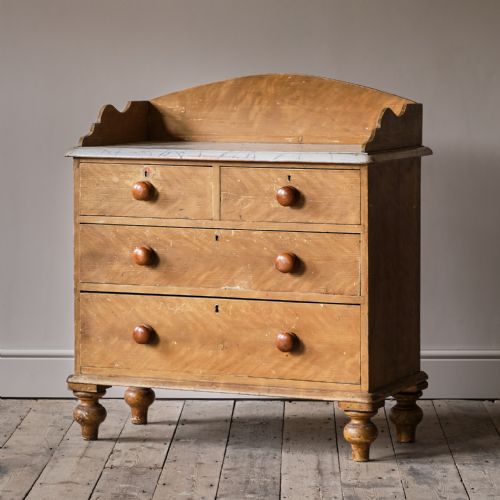
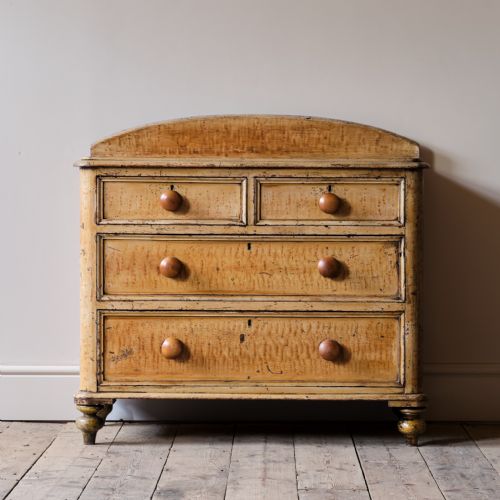
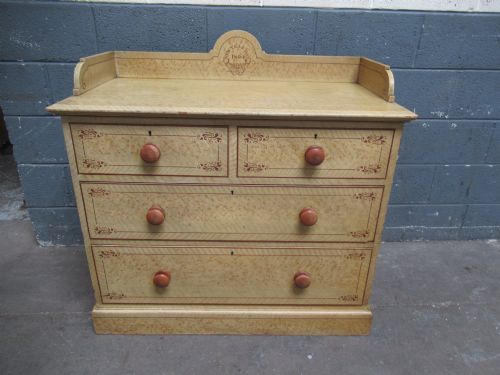
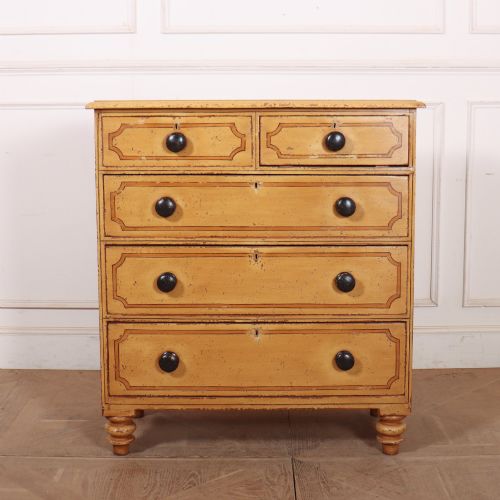
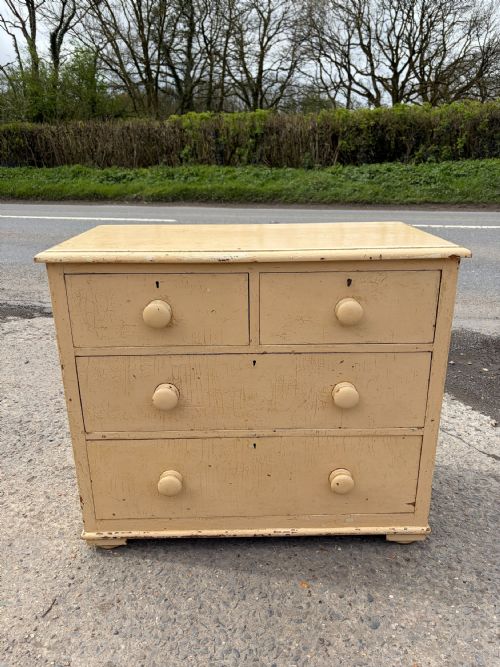
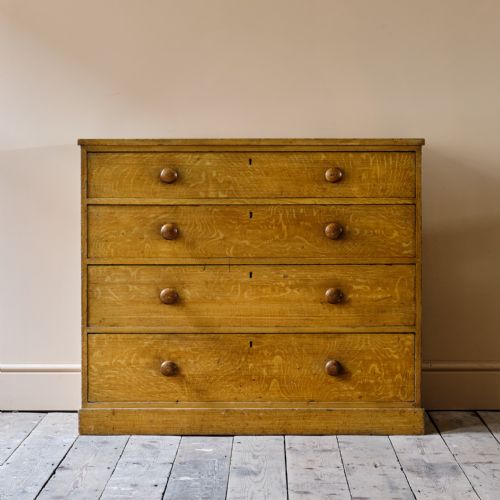


Yellow Chest of Drawers
A yellow chest of drawers brings warmth and character to a room, offering practical storage finished in bright, painted surfaces.
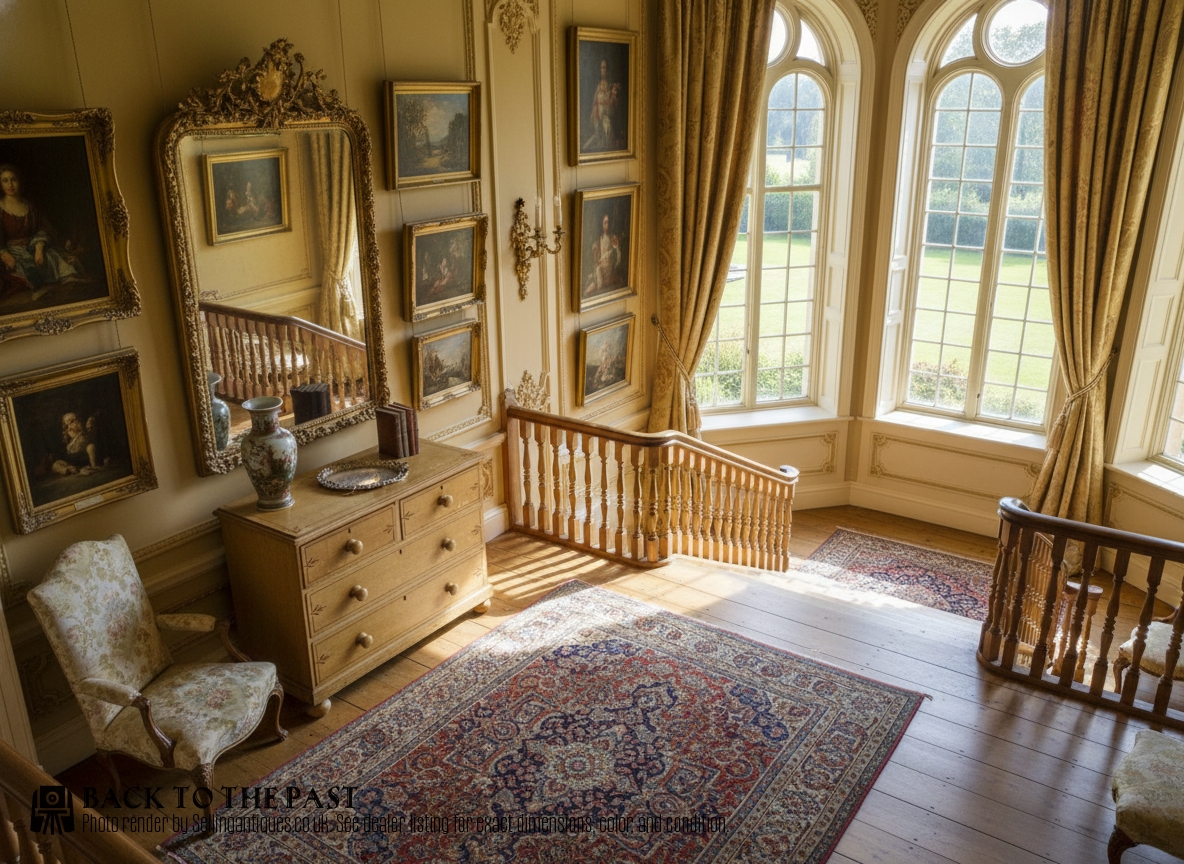
Yellow Chest of Drawers
A yellow chest of drawers brings cheerful colour and practical storage to an interior, spanning various historical periods from the Georgian era through to the early twentieth century. These pieces range from country house pine examples finished in original paint to more formal Regency and French designs.
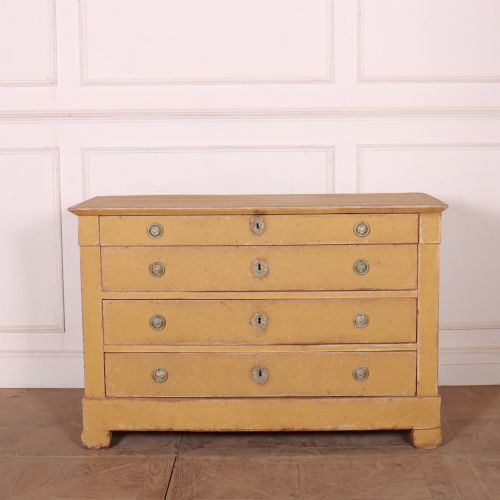
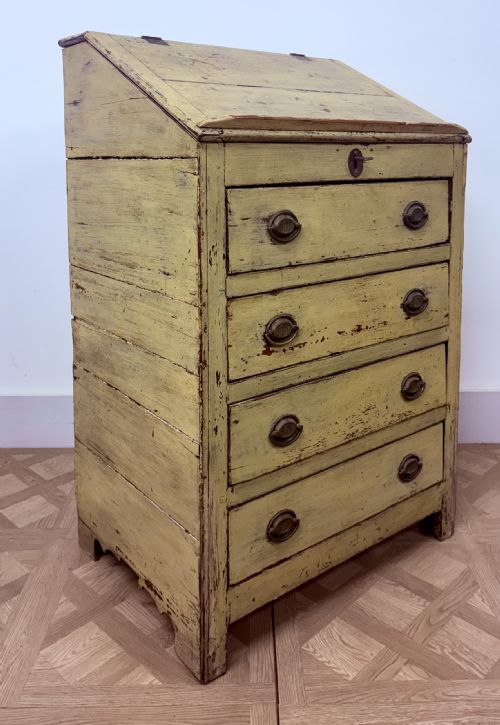
Buyers will most frequently encounter nineteenth-century pine chests coated in original or scumble paint, alongside regional pieces featuring hand-painted decorations. Forms extend beyond standard drawer configurations to include dressing chests, bureaux, and commodes.
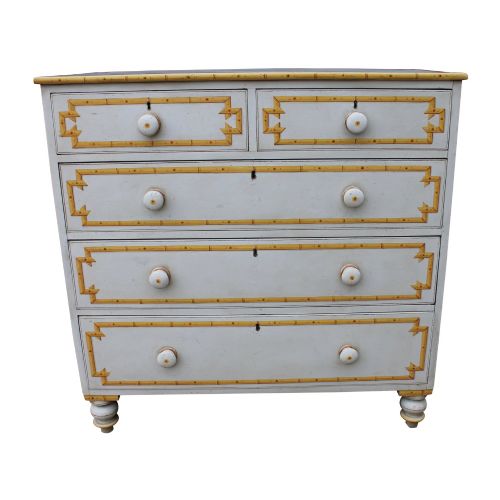
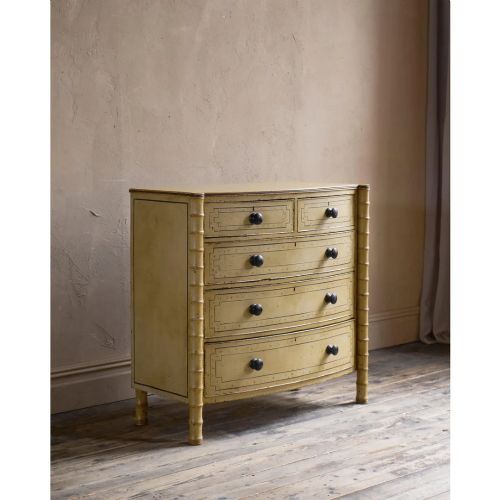
The selection encompasses diverse stylistic influences such as faux bamboo, Chinoiserie, and rustic country aesthetics. Each piece demonstrates how historical makers utilised painted finishes to transform standard softwood and timber substrates.
Materials and construction
Construction relies primarily on pine and softwood timbers, frequently assembled with traditional joinery before receiving layers of surface pigment. Painters applied original paint, scumble glaze, and Japanned finishes directly to the wood to achieve the characteristic yellow and pale cream tones.
Hardware details such as brass pulls and iron fittings complement the painted bodies. Specialised decorative techniques like faux bamboo moulding and hand-painted motifs add distinct visual depth to the finished surfaces.
One cheerful nineteenth-century pine chest even arrived wearing original scumble paint that stubbornly refuses to look its age.
Assessing quality and finish
Quality rests in the integrity of the original painted surface and the preservation of early finishes beneath subsequent layers of wear. Pieces retaining untouched scumble glaze or early hand-painted decoration command greater appreciation among collectors.
Joinery execution and drawer construction distinguish standard utility furniture from finer provincial and regional cabinetwork. The balance of proportion, the subtlety of the yellow hue, and the harmony of original brass or iron hardware determine the standing of each piece.
The Yellow Chest of Drawers Glossary
- Scumble paint
- A decorative glazing technique where a translucent layer of pigment is manipulated over a lighter base colour to simulate wood grain or create mottled texture. It was frequently used in country houses to elevate humble pine furniture.
- Faux bamboo
- A stylistic treatment where wood is carved and turned to imitate natural bamboo stalks. This technique gained popularity during the nineteenth century under Regency and Victorian tastes.
- Japanned
- A European imitation of East Asian lacquerwork achieved through layered varnishing and painting. It appears on decorative pieces from the early twentieth century.
- Bowfront
- A convex, curved cabinet front that swells outward in the centre. This profile adds elegance to Georgian and nineteenth-century case pieces.
- Commode
- A low chest of drawers or cabinet originating from French furniture forms. The term often describes decorative Continental pieces intended for formal rooms.
Yellow Chest of Drawers: Frequently Asked Questions
How do I care for original painted surfaces?
Original paint requires gentle dusting with a dry microfibre cloth and protection from direct sunlight to prevent fading. Avoid modern chemical cleaners and abrasive polishes that can lift historic pigments.
Maintain stable room humidity to protect the underlying pine timbers from shrinking or expanding. Proper care ensures the historic finish remains stable for decades to come.
What is scumble paint?
Scumble paint is a decorative technique involving translucent glazes worked over a pale ground to create mottled or textured patterns. It allowed cabinetmakers to give inexpensive softwood richer visual depth.
This finish is frequently found on nineteenth-century country house furniture. It yields a distinctive aged surface that collectors prize for its authentic character.
Are these chests suitable for daily bedroom use?
Most pieces offer sturdy dovetail construction and deep drawers that function reliably for modern storage needs. Historic drawer runners may require gentle waxing with beeswax to ensure smooth sliding.
Evaluating the internal depth and configuration helps determine which model suits clothing or linens. Careful placement away from direct heat sources preserves the antique wood structure.
How can I tell a Georgian chest from a Victorian one?
Georgian pieces generally exhibit finer proportions, subtle mouldings, and formal design influences such as bowfronts. They often showcase more precise cabinetmaking and understated joinery details.
Victorian examples tend toward robust pine construction, thicker timbers, and practical country house forms. Painted finishes on nineteenth-century pieces often display characteristic craquelure that develops with age.
What does faux bamboo mean?
Faux bamboo refers to woodwork shaped and turned on a lathe to imitate the jointed stalks of natural bamboo. This exotic motif appeared on Regency and nineteenth-century pieces influenced by Eastern trade.
Craftsmen often highlighted these carved joints with contrasting paint colours. The style adds a playful, textural element to painted chests and dressing furniture.