
Pair of Bedside Commodes
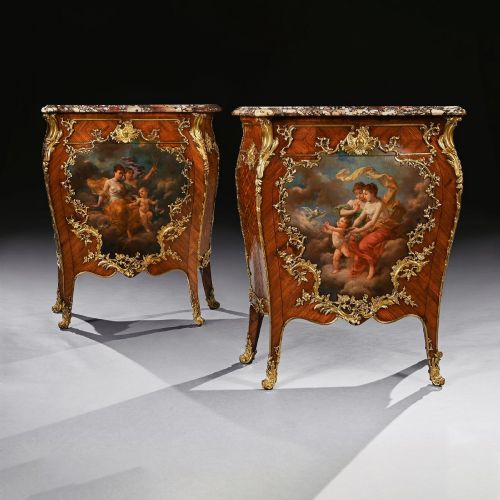
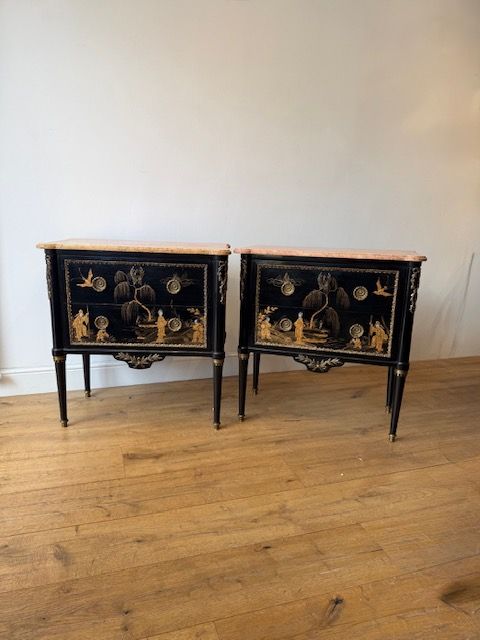
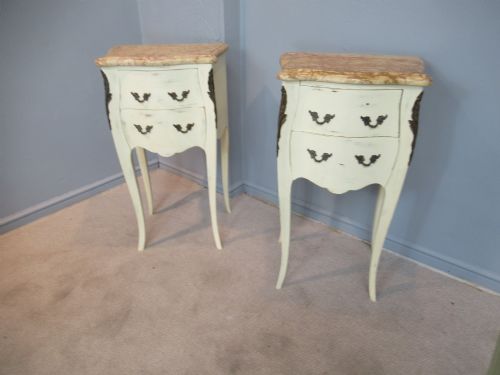
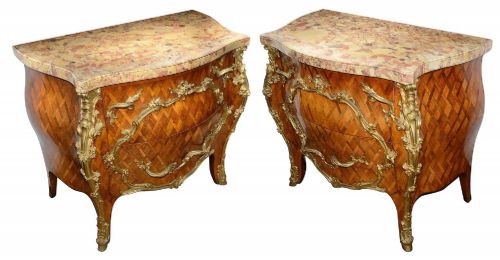
A pair of bedside commodes brings matched proportion and hidden bedside storage to a room, ranging from Georgian mahogany cupboards to French kingwood cabinets.
Pair of Bedside Commodes
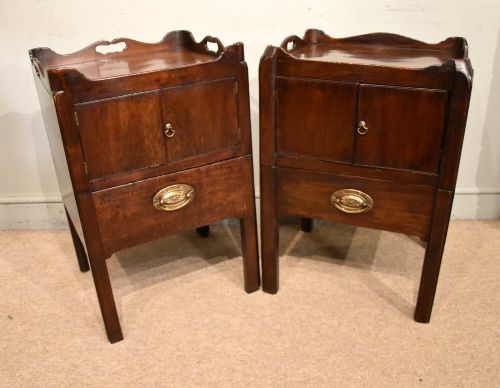
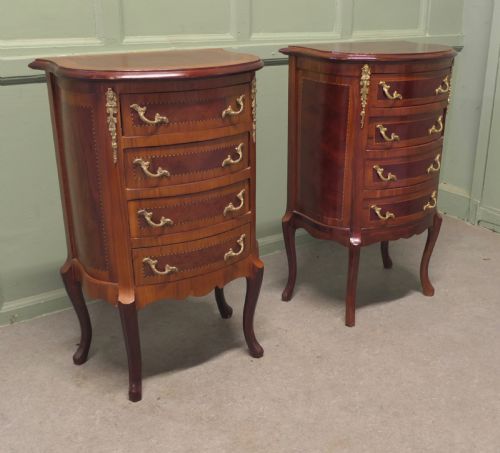
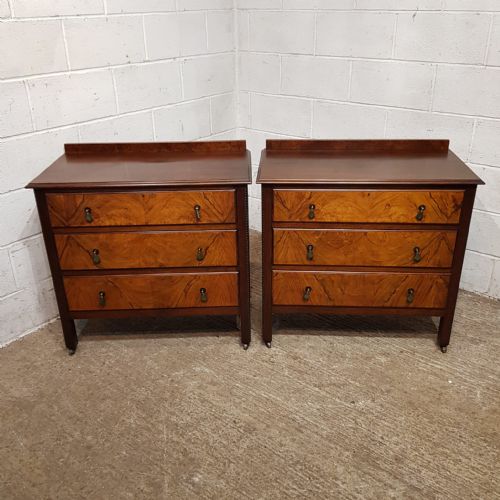
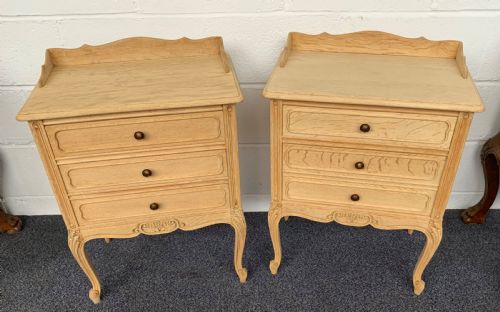
A buyer seeking a pair of bedside commodes encounters forms spanning the eighteenth century through to the art deco period, with eighteenth-century Georgian examples and early twentieth-century French styles appearing frequently.
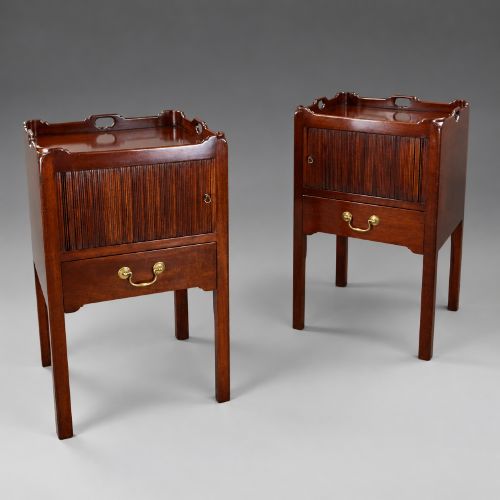
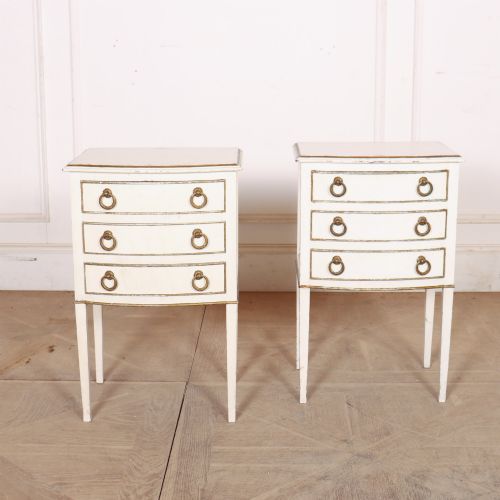
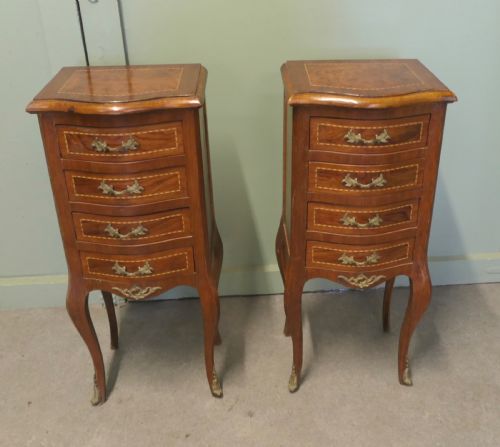
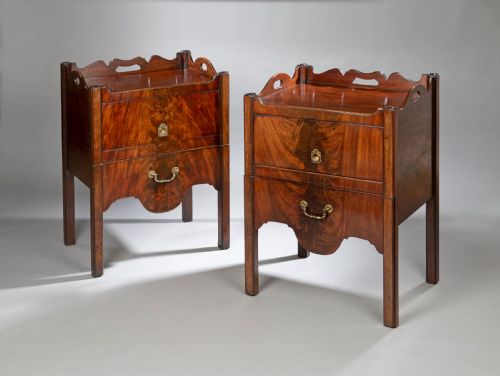
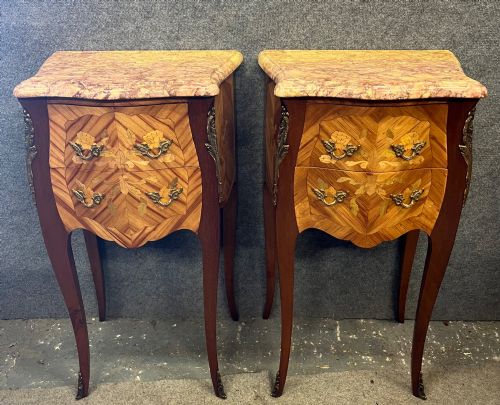
The objects themselves function as dual bedside storage units, taking the form of small chests of drawers, tambour-front cupboards, and marble-topped bedside cabinets.
Origins stretch across England, France, Italy, and Sweden, offering a choice between restrained mahogany proportions and decorative continental marquetry or painted finishes.
Materials and construction methods
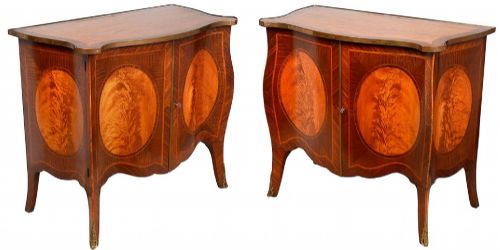
Cabinet makers utilised dense timbers such as mahogany, walnut, and kingwood, often laying down intricate marquetry, parquetry, or burr walnut veneers over secondary woods.
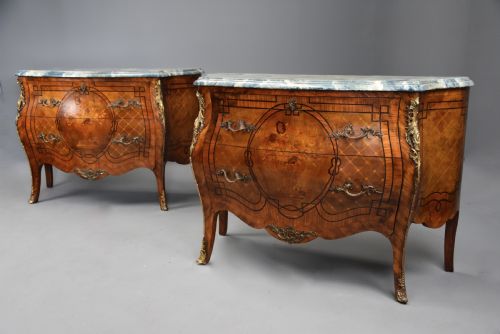
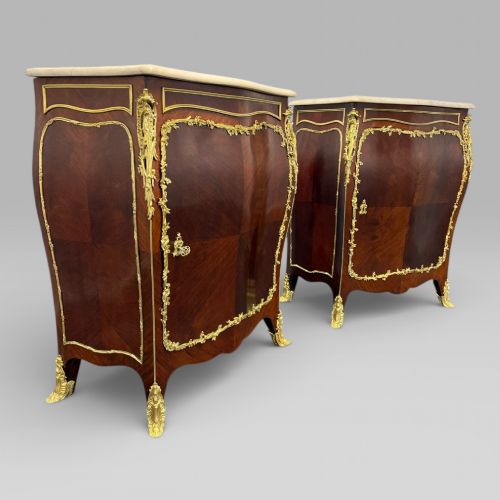
Surface luxury relied on inset marble tops, gilt bronze or ormolu mounts, and brass hardware to frame the wooden structures.
Painted and lacquered finishes appear on Swedish and chinoiserie pieces, utilising hand-painted details and varnish layers.
Listings span from the 18th century through the 1930s, incorporating Georgian, Gustavian, and Art Deco design periods.
Factors determining quality
The precision of the cabinet work dictates the tier of the piece, visible in the alignment of drawer dovetails and the crispness of carved mouldings.
Material selection creates distinction, separating standard walnut or mahogany builds from those featuring figured kingwood veneers, heavy ormolu mounts, and thick slab marble tops.
Symmetry within the pair defines the better examples, ensuring that wood grain patterns and decorative marquetry correspond across both cabinets.
E. Kahn·Sormani
The Pair of Bedside Commodes Glossary
- Commode
- A low cabinet or chest of drawers designed for domestic use. In bedroom contexts, it serves as a bedside table with enclosed storage.
- Ormolu
- Gilt bronze mounts applied to furniture for decoration. This technique was favoured by French cabinet makers to accent corners and feet.
- Marquetry
- Inlaid wood veneers forming decorative patterns or pictures. Craftsmen cut contrasting woods to fit precisely into a primary ground.
- Bombe
- A swelling, outward-curved profile found on continental furniture. This curved form requires advanced veneer shaping.
- Tambour
- A flexible shutter door made of narrow vertical strips of wood glued to canvas. It slides in tracks to conceal interior compartments.
Pair of Bedside Commodes: Frequently Asked Questions
How were bedside commodes used historically?
Originally, many eighteenth-century commodes contained enclosed spaces designed to house chamber pots or serve personal ablutions.
Over time, the form transitioned into general bedside storage for nighttime reading materials and personal items.
Are these cabinets always identical pairs?
Many listings feature matched or near pairs rather than factory-identical outputs. Craftsmen often built them simultaneously, but hand-finished details can show subtle variations.
Matched sets also occur when two similar single tables are brought together by dealers.
How do I distinguish French styles from Georgian ones?
French pieces often display curved bombe fronts, marquetry veneers, marble tops, and ormolu mounts influenced by Louis XV and Louis XVI designs.
Georgian cabinets lean towards straight lines, rectilinear mahogany or walnut carcasses, and functional tray tops.
How do I care for antique marble tops?
Marble surfaces require gentle cleaning with a damp cloth and mild soap to avoid dulling the stone or damaging historic patination.
Acidic liquids such as wine or citrus juice should be wiped away immediately to prevent etching.