




Chinoiserie Style Chests
Chinoiserie style chests bring painted narrative scenes and rich lacquer surfaces into a room, offering both practical storage and striking decorative presence.
Chinoiserie Style Chests
Chinoiserie style chests span several centuries of European interpretation of East Asian design, appearing in forms such as commodes, tallboys, and cabinets on stands. The pieces available here range from authentic eighteenth-century examples to later revivals from the nineteenth and early twentieth centuries.
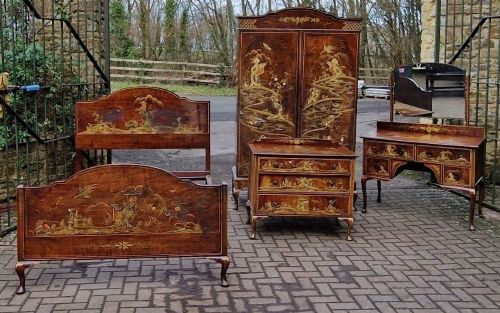
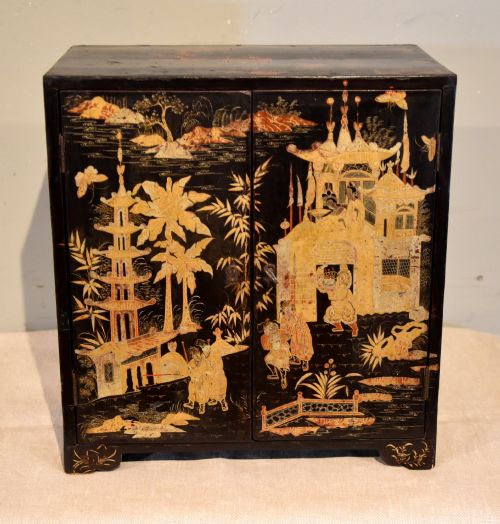
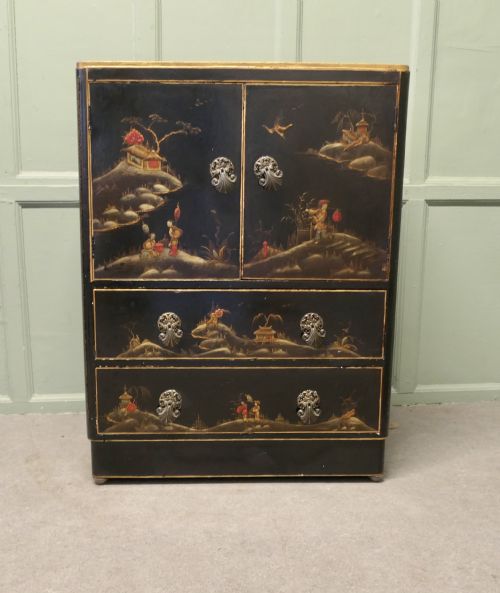
Buyers will most frequently encounter early twentieth-century black and red lacquer cupboards alongside nineteenth-century commodes and bedroom suites. These pieces utilise traditional drawer configurations and cabinet formats while displaying imaginative painted landscapes and figures.
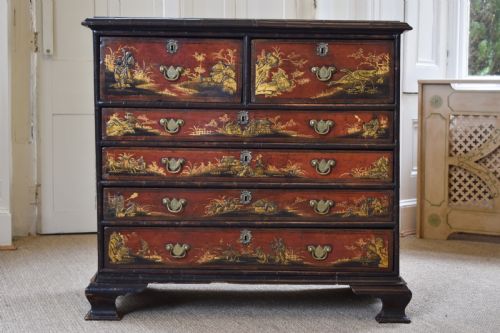
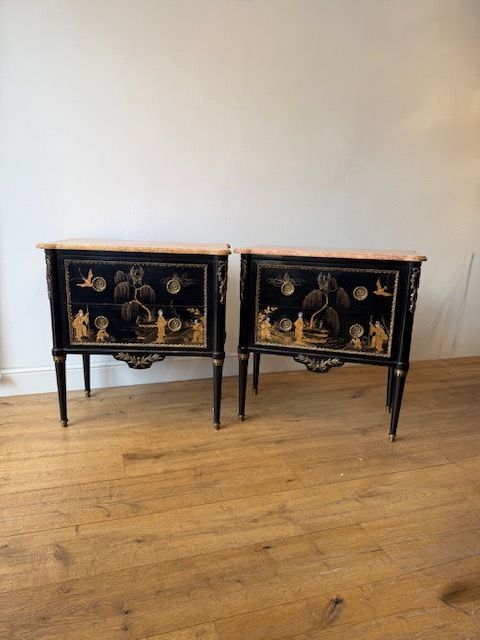
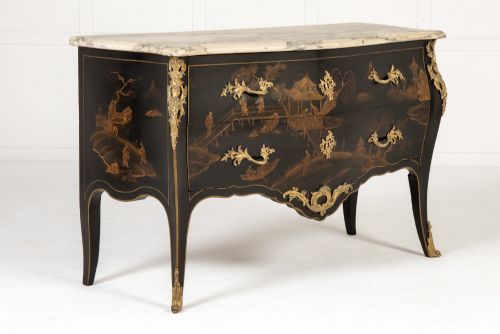
Originating across different European centres, these items include French bombe commodes, Regency penwork cabinets, and English red japanned chests of drawers. Each variation reflects the prevailing taste of its period for exotic decoration applied to standard furniture forms.
How They Were Made
The construction of these chests relies on foundational timbers such as oak, walnut, and general wood substrates shaped into commodes, cabinets, and chests of drawers. Joinery follows the period standards of the eighteenth, nineteenth, and early twentieth centuries.
Surfaces are prepared for decoration using lacquer or japanning techniques, often heightened with gold leaf details to create contrasting motifs. Brass hardware such as handles and escutcheons are fitted to drawers and cabinet doors.
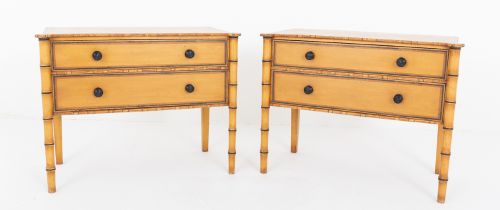
Alternative decorative methods recorded include penwork on specific Regency cabinets and simulated bamboo framing on revival commodes. Paint finishes are applied to wood surfaces to mimic traditional oriental lacquer work.
Chinoiserie Style Chests Retail Price Guide 2026
Typical asking prices for chinoiserie style chests among the pieces listed under this phrase on Sellingantiques today, from the lower quarter to the upper quarter. They describe what is for sale here now, not the wider market.
Simulated bamboo framework occasionally stands in for real timber, proving that even trees love a good fancy dress party.
What Varies in Quality
The depth and execution of the lacquer or japanned surface work separate standard decorative items from superior examples. Finely rendered figures and landscapes built up in relief show greater hand skill than flat painted substitutes.
The quality of the underlying timber carcase and the crispness of applied brass mounts influence the overall standard of a piece. Well-proportioned commodes and signed pieces demonstrate higher workshop capability during their respective periods of manufacture.
Mercier Frères
The Chinoiserie Style Chests Glossary
- Japanning
- A European imitation of East Asian lacquerwork developed in the seventeenth and eighteenth centuries. It involves layering varnishes and paints, often heat-cured, to produce a hard glossy finish.
- Penwork
- A decorative technique utilising fine ink drawing on wood or other surfaces to create intricate illustrative details. It appears on specific Regency cabinets.
- Bombe
- A furniture form characterised by convex curves and bulging outward sides, common in French commodes. This shape requires advanced woodworking skill to construct.
- Tallboy
- A tall chest of drawers consisting of one chest stacked directly on top of another. They provide substantial vertical storage while maintaining a compact footprint.
Chinoiserie Style Chests: Frequently Asked Questions
What is a chinoiserie style chest?
A chinoiserie style chest is a storage piece decorated with European interpretations of Chinese and East Asian art, typically featuring painted lacquer scenes.
These items range from Georgian japanned drawers to twentieth-century lacquer cabinets and commodes.
How do I date a lacquer chest?
Dating relies on examining the underlying timber construction, drawer linings, brass hardware, and the specific style of the painted decoration.
Eighteenth-century pieces differ significantly in carcase construction and mounting from nineteenth-century revivals and early twentieth-century bedroom suites.
Where were these cabinets used?
These pieces served primarily as functional storage furniture in principal rooms, bedrooms, and reception spaces within grand homes.
They provided enclosed space for clothing, papers, or valuables while acting as decorative focal points.
What is the difference between lacquer and japanning?
Traditional Asian lacquer uses natural sap from specific trees, whereas European japanning uses resin-based varnishes and paints applied to wood substrates.
Both techniques achieve a hard, polished surface suitable for intricate painted ornamentation.