

Two Drawer Dresser
A two drawer dresser offers practical storage with period character, combining surface space and deep drawers in solid timber.
Two Drawer Dresser
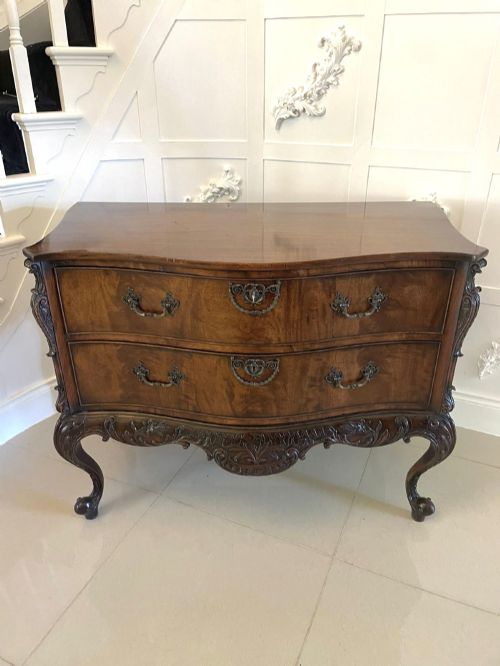
A two drawer dresser sits low to the floor, often operating as a dresser base or low sideboard rather than a tall chest. These pieces frequently appear in oak or pine, spanning periods from the early 18th century through the Georgian era and into the Victorian years.
The layout typically pairs a wide top surface with a side-by-side pair of drawers positioned above lower storage or open space. Buyers encounter these forms in vernacular country styles as well as refined Georgian and Jacobean revival designs.
Materials and construction
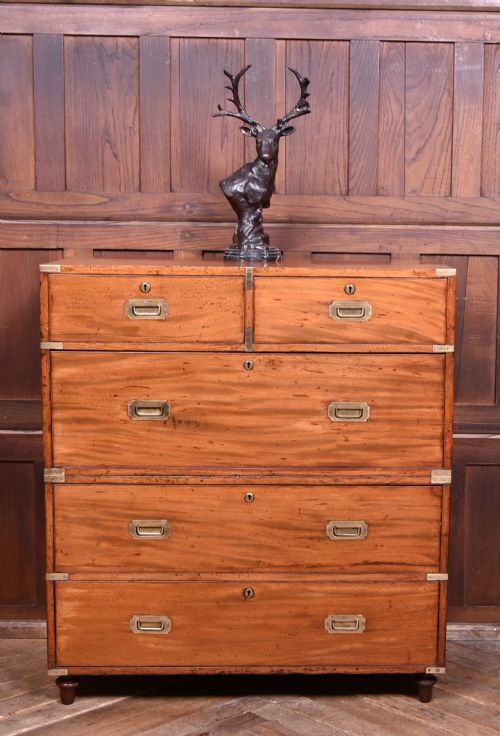
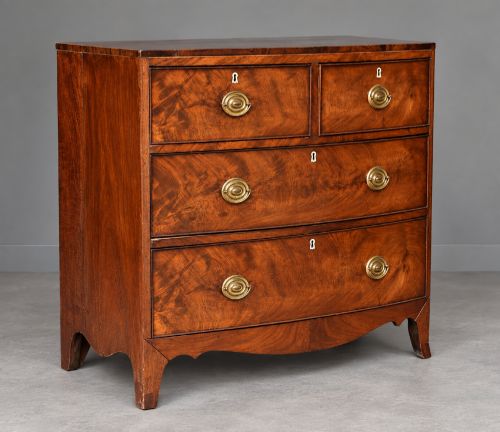
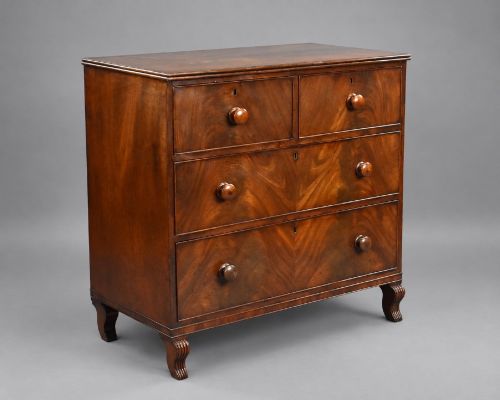
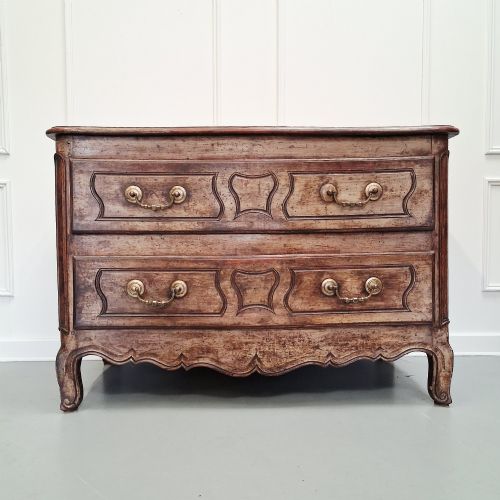
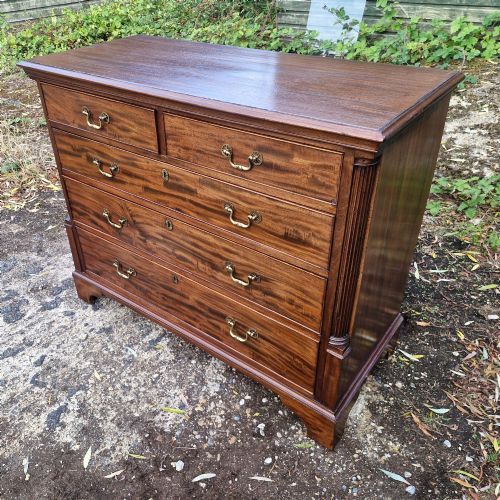
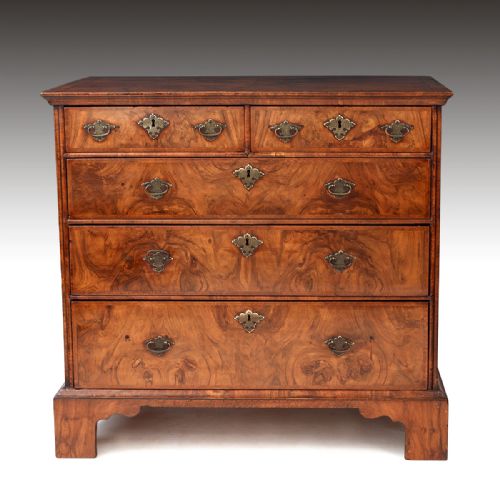
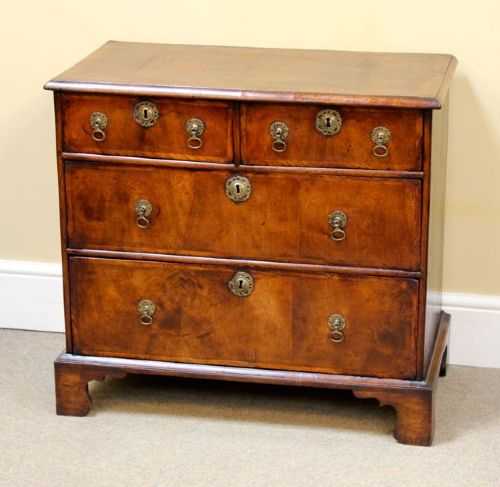
Makers built these pieces primarily using solid timbers like oak, pine, and mahogany, sometimes applying flame mahogany veneer to drawer fronts for visual depth. Brass handles, escutcheons, and iron hardware provide functional contrast to the wood.
Carpentry techniques rely on traditional joinery methods suited to heavy use, with panelled construction visible on bases and dovetail joints securing drawer boxes.
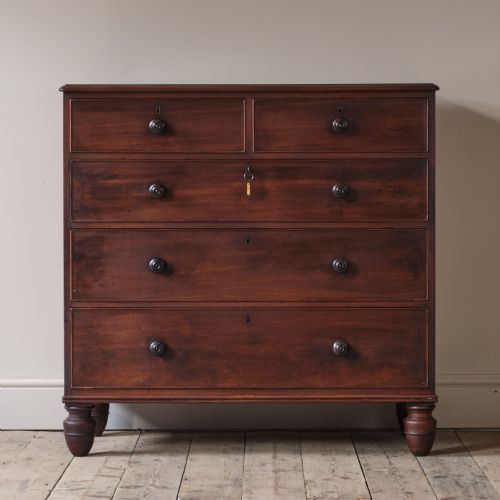
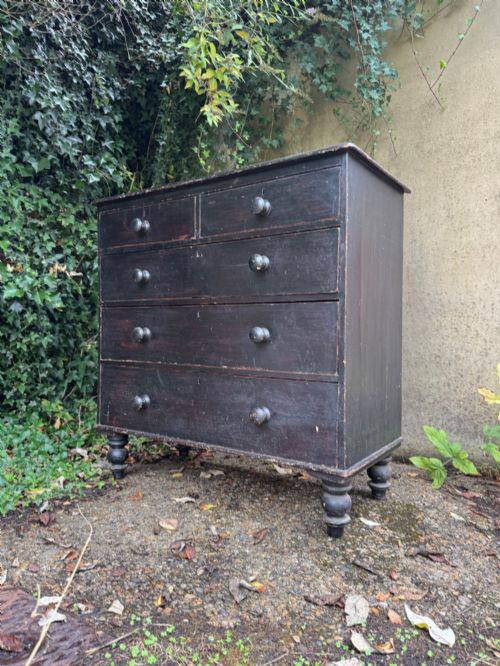
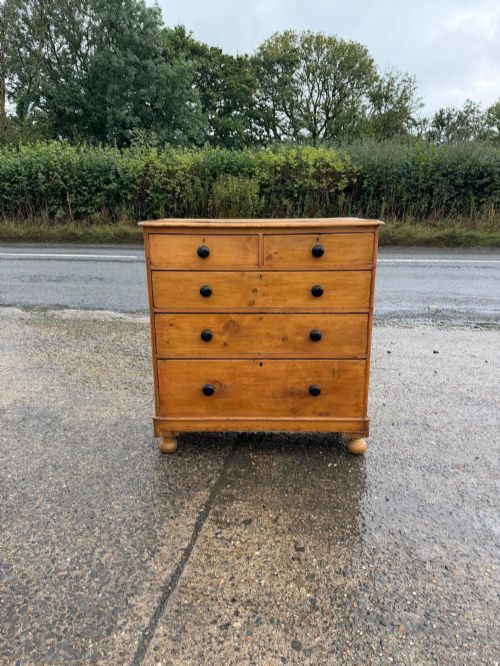
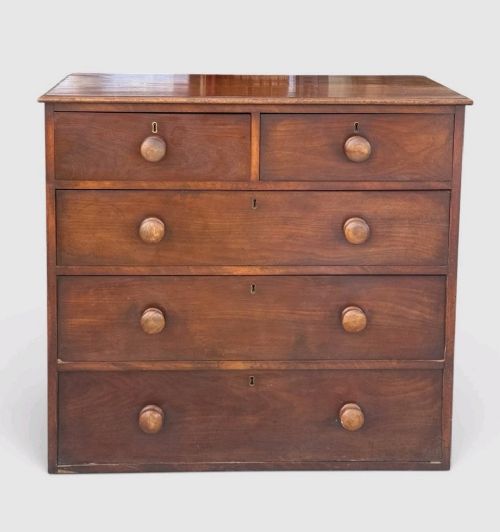
Some pine dressers retain bun handles that resemble oversized wooden buttons pressed firmly onto the drawer fronts.
Distinctions in quality
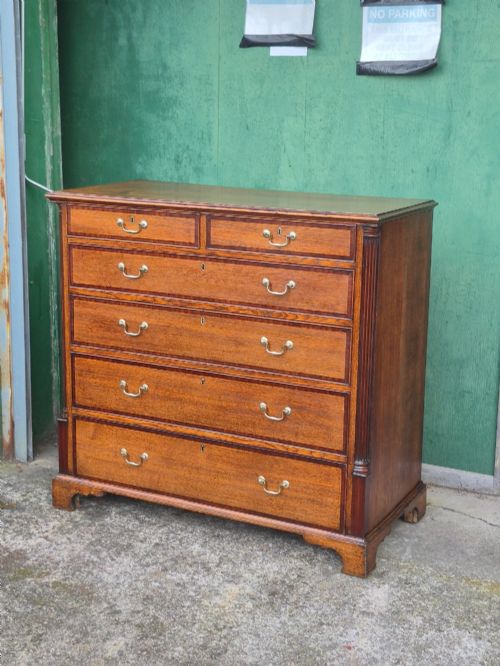
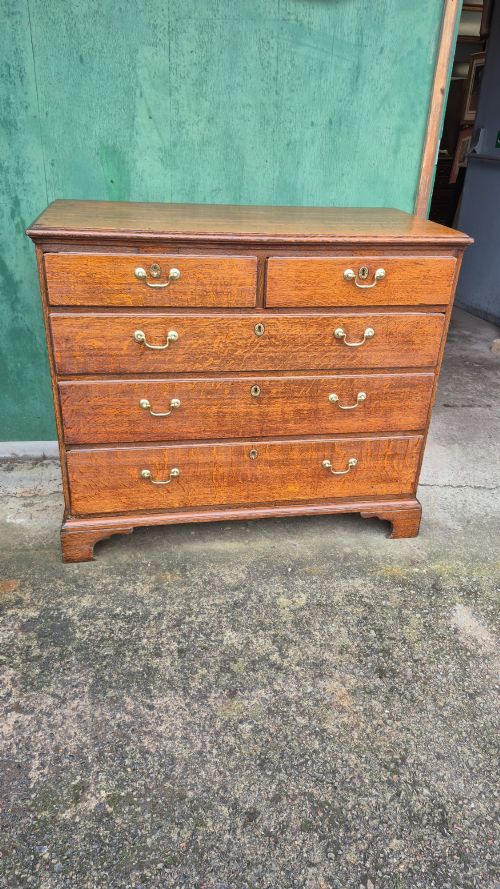
Quality reveals itself in the selection of timber grain, such as figured mahogany or golden oak, and the crispness of crossbanding or brass mounts. Finer examples maintain original hardware and timber patination without extensive replacement.
Structural integrity in the drawer runners and the thickness of the backboards separate everyday utility pieces from superior cabinet work.
T & G Seddon·J Moorcroft
The Two Drawer Dresser Glossary
- Dresser base
- A low cabinet featuring drawers positioned above cupboards or an open pot board, designed for serving and storage.
- Crossbanding
- A decorative border of veneer laid across the grain of the primary wood panel to create a framed effect.
- Bowfront
- A curved front facade that swells outward in the centre, common on Georgian and Victorian drawer chests.
- Escutcheon
- A protective metal plate surrounding a keyhole, typically cast in brass or iron.
- Dovetail
- An interlocking joint formed by interlocking wedge-shaped fingers, used to join the sides of drawers to their fronts and backs.
Two Drawer Dresser: Frequently Asked Questions
How were two drawer dressers used?
These pieces served practical storage and display functions in domestic interiors, holding household linens or dining equipment.
The top surface provided a stable platform for serving food or displaying ceramics and decorative objects in the main living areas of the home.
Where do I put a two drawer dresser?
Their compact height makes them suitable for hallways, dining rooms, or living spaces where taller cabinets would overwhelm the floor plan.
They also function effectively beneath mirrors or artwork, providing useful surface space without blocking light from windows.
How do I identify a Georgian dresser?
Georgian examples often feature dense mahogany or figured oak, sometimes decorated with subtle crossbanding around the drawer edges.
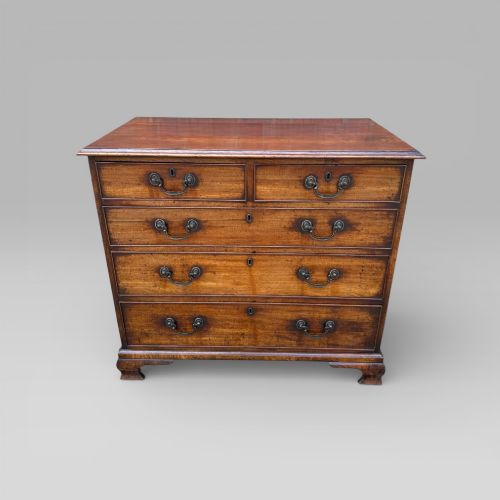
The proportions tend to follow classical symmetry, paired with original brass drop handles and straightforward bracket feet.
Are pine dressers later in date?
Many pine examples date from the Victorian period, reflecting a shift toward scrubbed finishes and functional bedroom storage furniture.
Earlier pieces in pine often show country vernacular traits, whilst later versions utilise straightforward tongue and groove construction.