
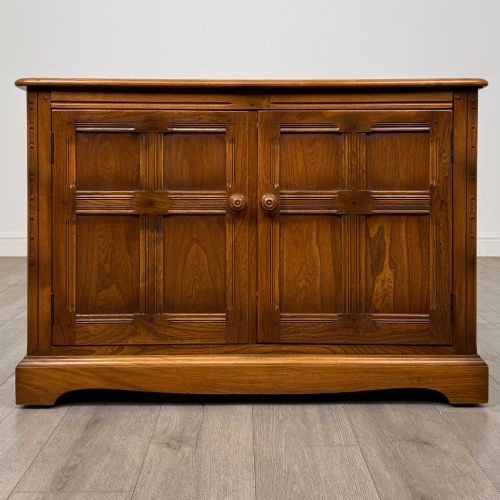
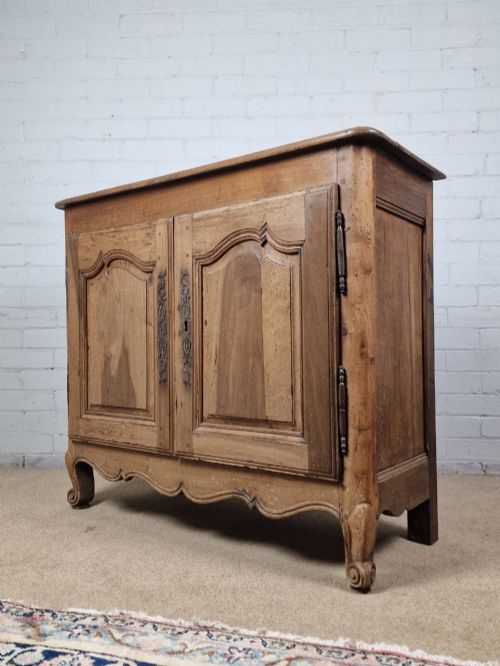
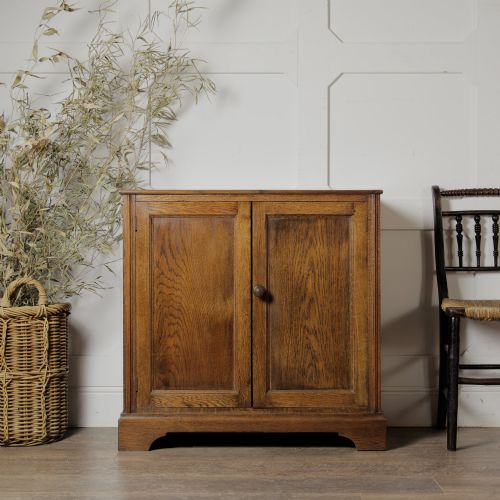
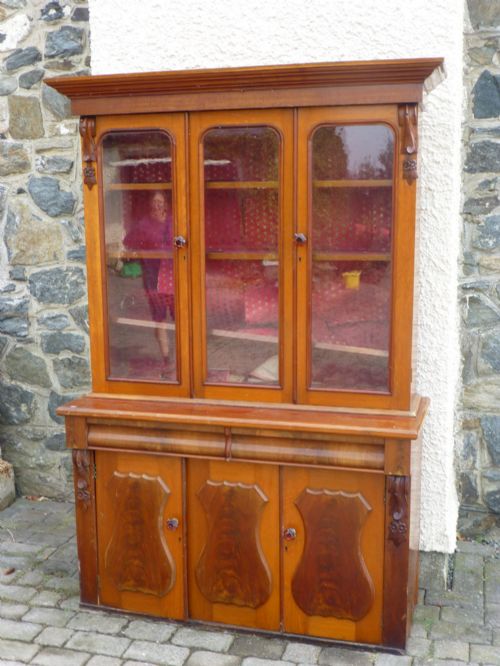
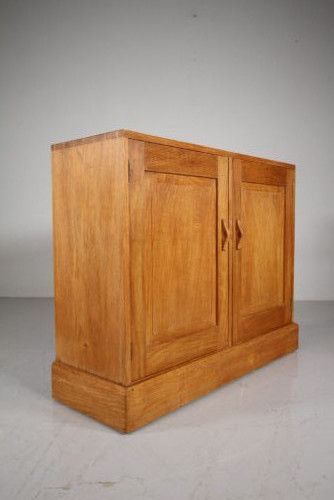
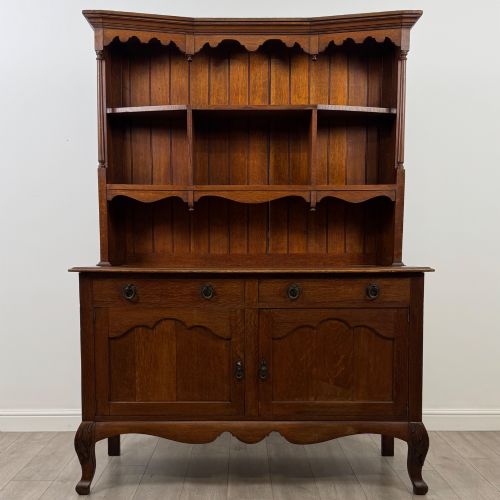
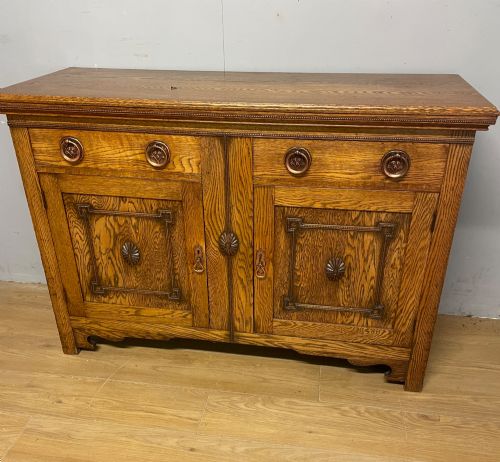
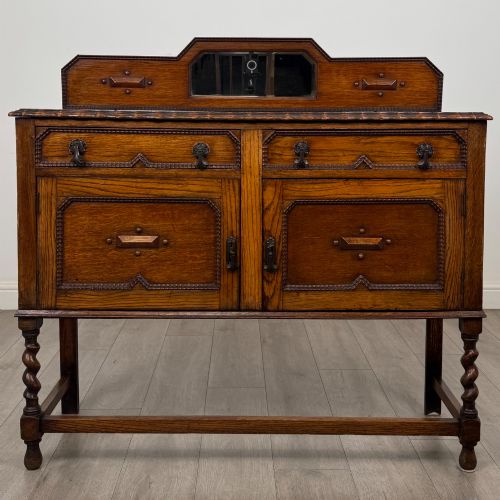
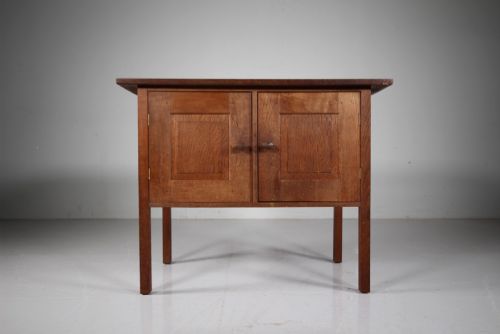
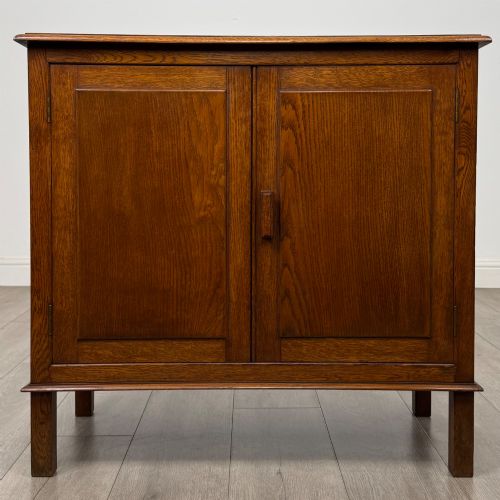
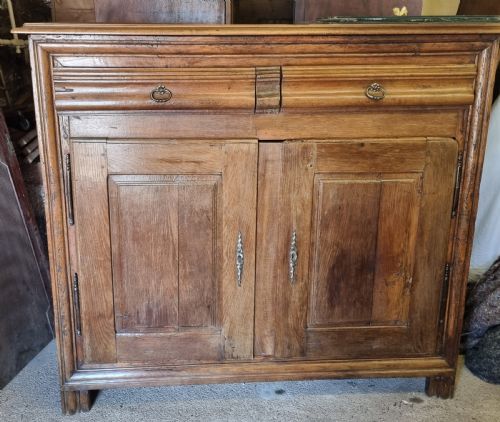


Two Door Oak Sideboard
A two door oak sideboard brings sturdy timber storage into a dining room or hallway, grounding the space with rich grain.
Two Door Oak Sideboard
A two door oak sideboard provides practical storage space while anchoring a room with traditional timber construction. Buyers seeking a two door oak sideboard will find examples spanning from the eighteenth century through to the 1930s.
The selections range from early nineteenth-century French provincial buffets and Georgian Welsh pieces to Edwardian golden oak designs and Cotswold School creations. These items appear alongside related forms such as low cupboards, side cabinets, and dressers.
Most pieces date from the Edwardian era, the 1920s, and the 1930s, often rendered in golden or light oak. Makers such as Peter Waals, Heal's of London, and Maple and Co are represented among the listings.
Materials and construction methods
Makers utilised solid oak, golden oak, and light oak, sometimes pairing the timber with secondary woods such as mahogany, fruitwood, walnut, or chestnut. Structural integrity relied on traditional joinery techniques.
Hardware elements incorporate brass, iron, wrought iron, and lead, particularly for hinges, handles, and glazed door sections. Carved details and limed finishes appear on specific regional and period pieces.
Materials include solid oak, golden oak, light oak, pollard and burr oak, walnut, chestnut, and fruitwood.
What separates the finest examples
Quality rests upon the selection of the timber, where figured grains like pollard and burr oak elevate a piece beyond standard utility. The depth and execution of hand-carving also distinguish workshop pieces from mass production.
Attribution to known makers, such as stamped signatures from Cotswold craftsmen or London firms, separates ordinary storage items from significant collector pieces. The integrity of original brass and iron hardware further indicates higher grade manufacturing.
Peter Waals·Heals of London·Maple and Co
The Two Door Oak Sideboard Glossary
- Golden oak
- A warm, honey-toned hue achieved through specific finishing of the timber. This tone is particularly common in Edwardian items.
- Cotswold School
- An early twentieth-century design movement focusing on honest craftsmanship and simple forms. Pieces from this tradition often display exceptional joinery.
- French Provincial
- A regional style originating from rural France, characterised by sturdy construction and local timbers such as oak and fruitwood.
- Pollard oak
- Timber taken from trees that have been pollarded, producing dense clusters of growth rings that create a heavily patterned grain.
- Glazed dresser
- A storage unit featuring glass-fronted upper doors or shelves for displaying crockery and books above a solid base cupboard.
Two Door Oak Sideboard: Frequently Asked Questions
What periods do these sideboards come from?
The pieces span several centuries, including eighteenth-century Georgian and French provincial items, nineteenth-century examples, and twentieth-century works from the 1920s and 1930s.
Edwardian designs and Arts and Crafts creations also feature prominently among the available inventory.
How were these cabinets used originally?
These cupboards and sideboards served primarily in dining rooms and kitchens for storing tableware, linens, and provisions. Glazed sections allowed for the display of fine ceramics and glassware.
Housemaid cupboards and dressers also provided functional organisation for household goods in domestic spaces.
What is pollard oak?
Pollard oak is a decorative timber harvested from trees that were cut back near the trunk to encourage dense branching. This practice produces a highly figured and swirling grain pattern.
Cabinetmakers utilised this wood on statement pieces to showcase rich surface textures.
How do I identify a Cotswold School piece?
Cotswold School items reflect the principles of the Arts and Crafts movement through visible, honest construction and unpretentious forms. They emphasise the natural qualities of the oak.
Maker stamps or attribution to designers working in that region help confirm the origin.
Are these pieces made of solid oak?
The listings comprise solid oak, golden oak, and light oak, occasionally combined with secondary woods like mahogany, walnut, or fruitwood. Iron, brass, and glass appear in the hardware and doors.
Construction methods reflect the period standards of each individual maker or regional workshop.