
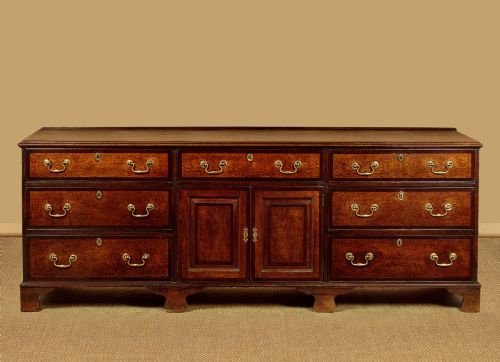
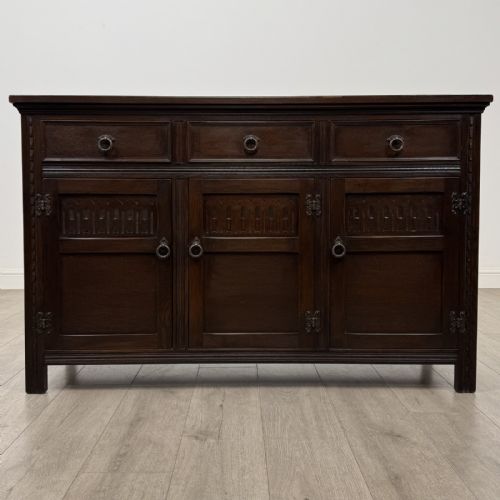
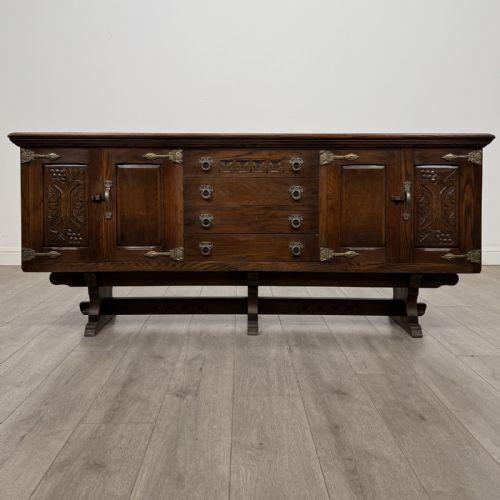
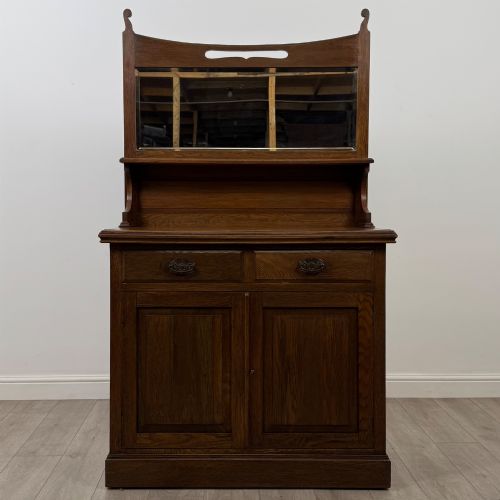


Oak Dining Room Cabinet
An oak dining room cabinet anchors a room with solid timber presence, bringing enduring storage and surface space to everyday meals.
Oak Dining Room Cabinet
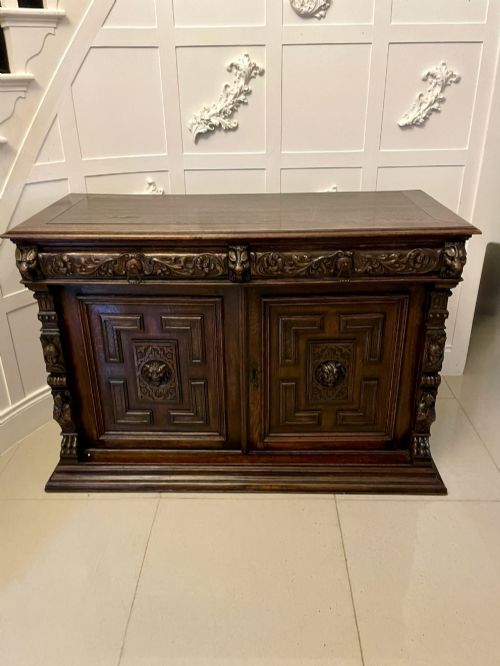
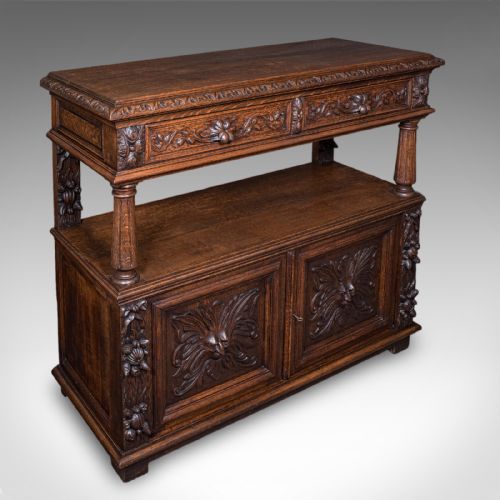
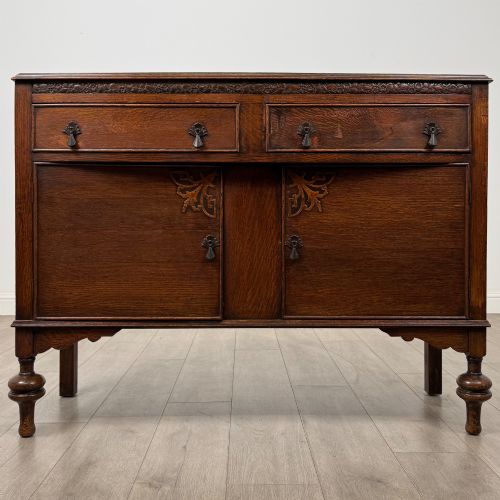
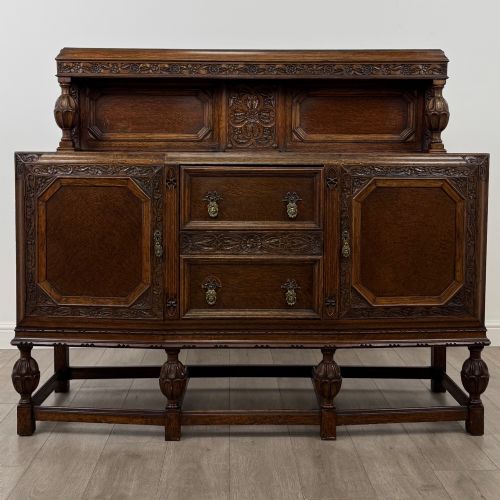
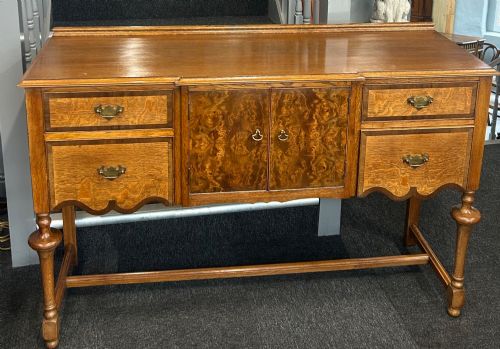
When searching for an oak dining room cabinet, buyers encounter substantial timber storage pieces designed to serve meals and house dining ware. Sideboards, side cabinets, buffets, and court cupboards dominate the forms, providing deep cupboards and surface tops.
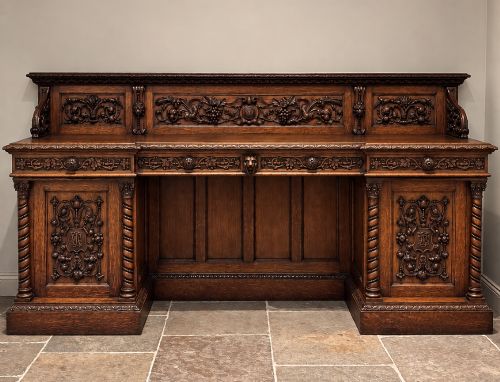
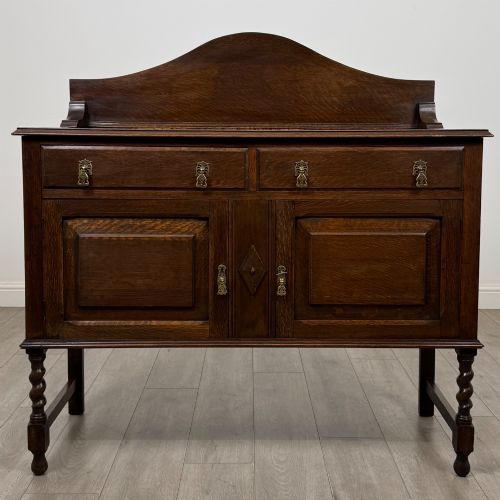
The pieces on this page span several decades and styles, ranging from Victorian Renaissance Revival and Gothic Revival to Edwardian barley twist and Arts and Crafts designs. Most items date from the nineteenth and early twentieth centuries, reflecting robust period craftsmanship in solid oak.
Buyers are most likely to meet substantial sideboards featuring carved panel doors, drawers, and sometimes mirror backs or plate racks. Examples also include French parquetry top tables and Welsh dressers that combine open shelving with enclosed base storage.
Evaluating craftsmanship
The distinction between standard production items and superior examples lies in the crispness of the hand carving and the selection of timber figure. Pieces featuring quarter-sawn oak, pollard oak veneers, or distinctive stylistic movements such as the Arts and Crafts display greater ambition.
Structural integrity and the retention of original hardware, mirrors, and keys separate well-preserved cabinets from those with heavy alterations. The integration of secondary woods and the precision of the joinery further define the tier of the piece.
Listings feature oak cabinets spanning from the 1860s through the 1930s, incorporating brass, iron, glass, and burr walnut details.
Maple and Co·T Simpson and Son
The Oak Dining Room Cabinet Glossary
- Court cupboard
- A heavy enclosed storage piece with an upper recessed section supported by pillars, originating in earlier centuries and revived in later Victorian designs.
- Barley twist
- A decorative turning technique resembling a twisted rope, frequently utilised on the table legs and vertical supports of Edwardian furniture.
- Parquetry
- A geometric mosaic of wood pieces used for decorative effect on table tops and cabinet surfaces, particularly prominent in continental pieces.
- Mirror back
- An upright timber superstructure incorporating a mirror plate, designed to sit atop a sideboard base for displaying silver and glassware.
- Pollard oak
- Timber taken from trees that have been pollarded, producing a highly figured, knotted grain pattern prized for drawer fronts and panels.
Oak Dining Room Cabinet: Frequently Asked Questions
What is an oak dining room cabinet used for?
These cabinets served historically to store table linen, cutlery, and heavy ceramic serving dishes while providing a surface to lay out food during large meals. Today they function as prime storage furniture in dining spaces and hallways.
Their deep cupboards and drawers accommodate modern tableware easily, while the top surface offers a display area for lamps, ceramics, or decorative objects.
How do I identify a Victorian oak sideboard?
Victorian examples typically display heavy proportions, deep mouldings, and robust carving influenced by Gothic or Renaissance Revival tastes. Many feature substantial mirror backs and panelled doors.
They often utilise quarter-sawn oak which reveals distinctive medullary rays in the grain, highlighting the solid construction typical of the period.
What defines Arts and Crafts oak cabinets?
Arts and Crafts pieces emphasise honest construction, visible joinery, and restrained decoration that showcases the natural qualities of the oak timber. They reject excessive machine carving in favour of simple geometric lines and subtle metal strap hinges.
Form follows function closely in these designs, resulting in balanced proportions and practical storage layouts.
Where should I place a large sideboard?
A large sideboard requires a substantial wall in a dining room, large hallway, or open-plan living space to balance its visual weight and depth. Ensure adequate clearance in front of the piece for cabinet doors and drawers to open fully.
Keep such furniture away from direct heat sources and strong sunlight to protect the timber and original finishes from drying out.