


Twin Handled Ceramic Vase
A twin handled ceramic vase brings symmetry and presence to a room, offering both decorative utility and notable craftsmanship from past centuries.

Twin Handled Ceramic Vase
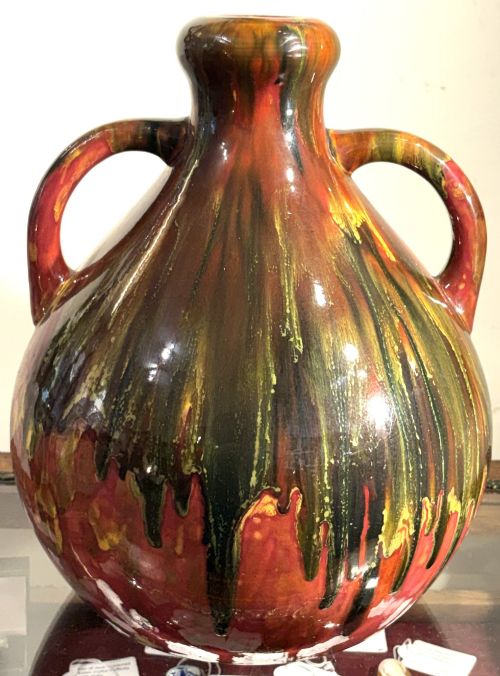
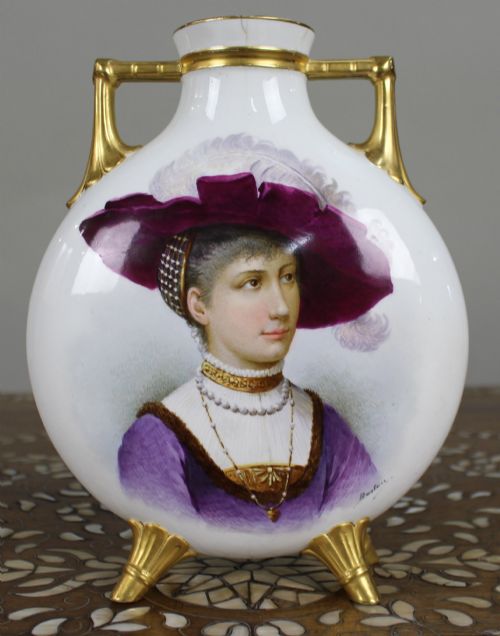
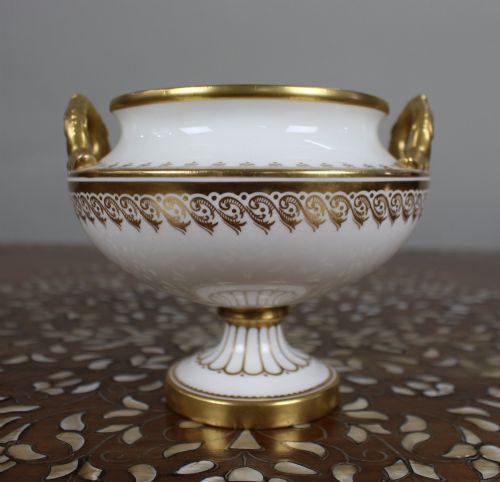
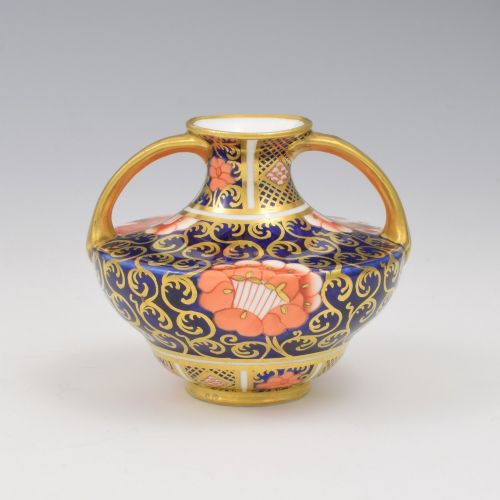
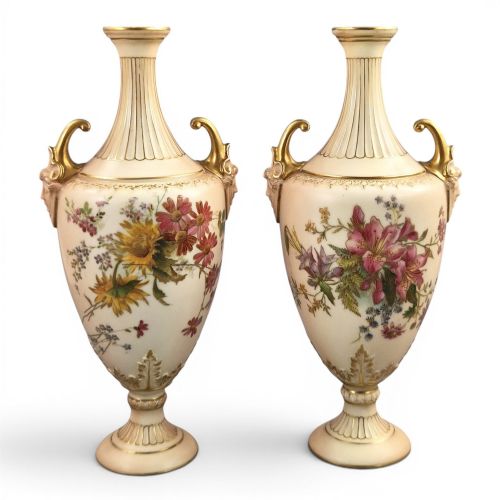
A twin handled ceramic vase is a vessel designed with two symmetrical grips or handles, appearing in various forms such as urns, moon flasks, and amphorae. When searching for a twin handled ceramic vase, buyers encounter pieces originating from English, European, and Asian kilns spanning the Victorian, Edwardian, and earlier nineteenth-century periods.
The selection ranges from delicate cabinet porcelain painted with florals and birds to robust art pottery and earthenware made for daily display. Forms vary from monumental pedestals and potpourri jars to miniature cabinet pieces and table lamps.
Makers and factories represented include prominent names from English porcelain manufacturers to Japanese export potteries. These vessels combine functional utility with distinct stylistic movements including Art Nouveau, Arts and Crafts, and Aesthetic traditions.
Materials and production methods
Makers utilised fine porcelain, bone china, earthenware, and ironstone as the primary bodies for these vessels. Techniques often involved throwing or moulding the clay, followed by the careful application of glaze and enamel.
Decoration frequently combined hand-painted natural motifs with gilding, gold leaf, and raised white enamel work. Kiln firing fixed these pigments and metallic accents, yielding durable surfaces on both soft and hard paste ceramics.
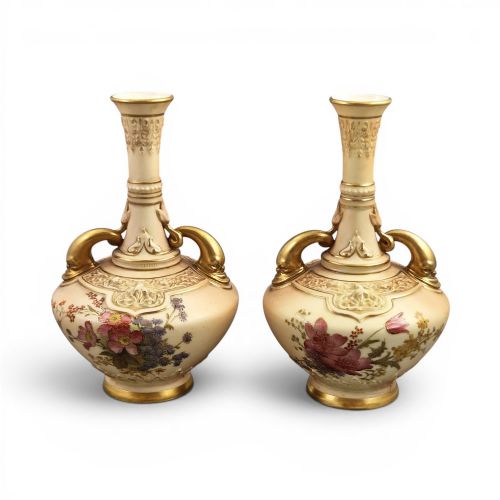
Some vessels feature ceramic dolphins for handles, proving that Victorian artisans possessed a delightfully playful imagination.
Evaluating quality and execution
Quality rests heavily on the precision of the hand-painted decoration and the crispness of the moulded handles and bodies. Superior examples display accomplished brushwork by named artists, alongside flawless glaze application and balanced gilding.
The prestige of the manufactory and the complexity of the pattern also dictate distinction. Pieces featuring intricate pate-sur-pate, delicate pierced work, or signed artist panels command greater attention than standard commercial output.
Royal Worcester·Royal Crown Derby·Spode·Minton·William Moorcroft·Wileman Intarsio·Brannam Art Pottery·Alexandra Porcelain Works Ernst Wahliss·Mason’s Ironstone China·Samson Paris·Macintyre
The Twin Handled Ceramic Vase Glossary
- Blush ivory
- A specialist cream-coloured porcelain body developed by Royal Worcester, typically decorated with soft floral motifs and gilding.
- Imari
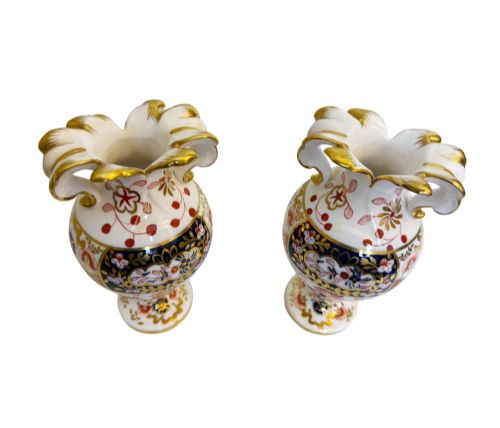
- A traditional Japanese export style featuring a distinct palette of underglaze blue, iron red, and gilt highlights.
- Moon flask
- A flattened circular flask form with a short neck and two loop handles connecting the body to the rim.
- Potpourri
- A vase designed with a pierced cover to allow the scent of dried aromatic plant materials to diffuse into a room.
Twin Handled Ceramic Vase: Frequently Asked Questions
What are twin handled ceramic vases made of?
These vessels are constructed from various ceramic bodies including porcelain, bone china, earthenware, and ironstone. Makers applied glazes, enamels, and gold leaf to finish the surfaces.
Decoration ranges from simple glazed finishes to intricate hand-painted designs executed by skilled artists.
How do I identify the date of a vase?
Dating relies on factory backstamps, impressed marks, and pattern numbers located on the underside of the base. Stylistic clues such as Victorian aesthetics or Edwardian motifs also help narrow the period of manufacture.
Certain pieces carry artist signatures or registration marks that provide a specific year of production.
Were these vases used for flowers?
Many of these vessels served as decorative garniture sets, mantel ornaments, or cabinet pieces rather than functional flower holders. Potpourri jars and covered urns were specifically designed to hold scented dried botanicals.
Larger floor vases and lamps were created to occupy prominent positions within period interiors.
How do I care for an antique ceramic vase?
Keep ceramic vessels away from direct sunlight to preserve the vibrancy of hand-painted enamels and gilding. Dust them gently with a soft, dry cloth without using harsh chemical cleaners.
Avoid filling antique pieces with water if the interior glaze shows hairline cracks or old repairs.