
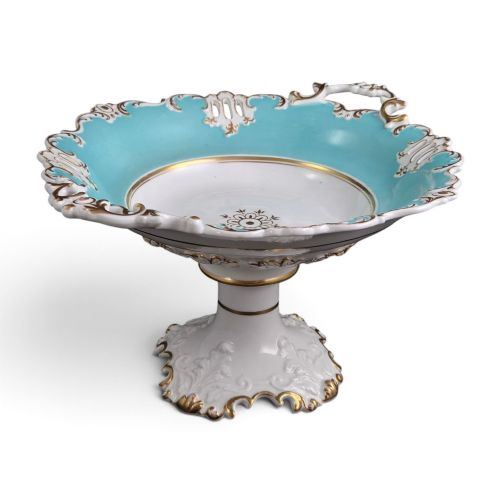
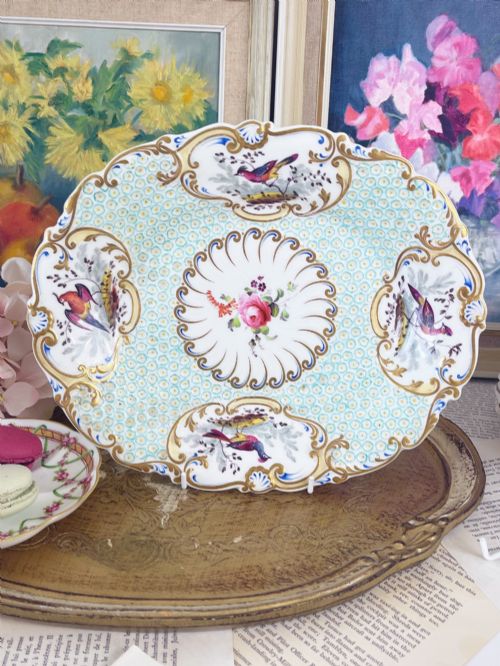


Turquoise Porcelain Dish
A turquoise porcelain dish brings vivid colour and intricate hand-painted detail to a table, offering a striking display piece for any room.
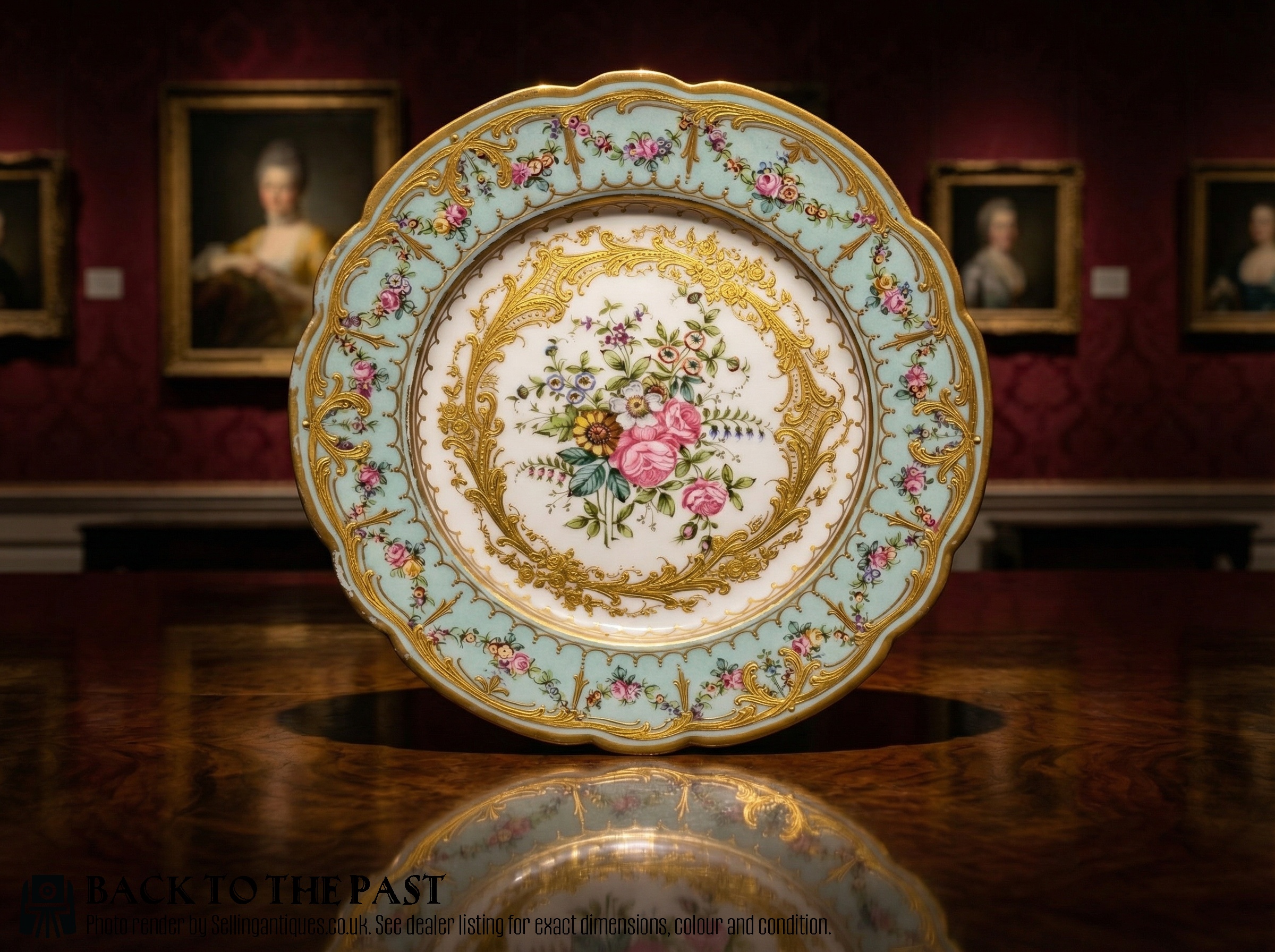
Turquoise Porcelain Dish
A turquoise porcelain dish stands out through its brilliant glaze, taking forms such as cabinet plates, oval serving dishes, tazzas, and lobbed rectangular bowls. When searching for a turquoise porcelain dish, buyers encounter items ranging from Georgian serving plates to Victorian cabinet pieces and French examples.
The selections span English makers like Coalport, Worcester, and Minton alongside French pieces created in the Sevres manner or by Louis Pierre Malpass. Qing Dynasty Chinese pieces also appear, alongside Edwardian dressing table sets and decorative platters.
These items serve primarily as decorative accents or cabinet displays rather than everyday tableware. Their distinct glaze and hand-painted motifs define their visual character across various nineteenth-century styles.
How they were made
Potters shaped porcelain and bone china bodies before applying specialist turquoise glazes and enamel colours. Artisans executed meticulous hand-painted details, depicting fancy birds and intricate patterns across the surfaces.
Many examples incorporate gold leaf and gilt bronze mounts, enhancing the decorative impact of the ceramic body. Kiln-fired techniques ensured the permanent bonding of enamel colours and metallic highlights to the porcelain.
Listings feature porcelain, bone china, and ceramic materials enhanced with enamel, gold leaf, and gilt bronze.
What varies in quality
The refinement of the painted decoration separates standard production from exceptional work, particularly in the rendering of hand-painted birds and floral motifs. Precision in the application of the turquoise glaze and the crispness of the porcelain moulding determine the overall standard.
Makers such as Barr, Flight & Barr or Minton display high standards in ceramic body preparation and gilding execution. The integration of gilt bronze mounts or the complexity of shapes, such as lobbed rectangular bowls or rococo tazzas, influences the character of each piece.
Coalport·H and R Daniel·Barr Flight and Barr·Minton·Louis Pierre Malpass
The Turquoise Porcelain Dish Glossary
- Tazza
- A shallow ornamental bowl or plate set upon a base or foot. This form elevates the display of fruit or sweetmeats on a dining table.
- Bone China
- A type of soft-paste porcelain containing bone ash, developed to improve strength and translucency. It permits thinner walls and finer forming in nineteenth-century tableware.
- Gilt
- Covered with a thin layer of gold or gold leaf applied to the surface. It adds metallic contrast to the turquoise glaze.
- Cabinet Plate
- A decorative plate intended for display in a cabinet rather than for dining use. These pieces usually feature elaborate hand-painted scenes and rich gilding.
- Japonisme
- A nineteenth-century artistic style influenced by Japanese art and design. It introduced asymmetrical compositions and distinct decorative motifs to European ceramics.
Turquoise Porcelain Dish: Frequently Asked Questions
How were these dishes used?
These pieces functioned variously as serving plates for formal dining, dressing table sets for personal grooming, and decorative cabinet plates for display.
Larger platters and bowls accommodated food service, while tazzas and cabinet plates served primarily aesthetic roles in nineteenth-century interiors.
How do I date a piece?
Dating relies on identifying maker marks, stylistic indicators such as Rococo Revival or Japonisme, and the specific characteristics of the porcelain body.
Georgian and Victorian pieces often exhibit distinct manufacturing traits, hand-painting styles, and glaze compositions associated with particular decades.
Are these dishes safe for food?
Historic porcelain and enamel surfaces with gilt highlights require careful handling and are generally unsuited for modern culinary use.
Display and gentle cleaning preserve the delicate hand-painted birds and gold leaf decoration characteristic of nineteenth-century ceramics.
What is the Sevres manner?
The Sevres manner refers to decorative styles inspired by the famous French porcelain manufactory, known for rich turquoise grounds and fine painting.
English and continental makers adopted these distinctive aesthetic conventions during the nineteenth century to appeal to fashionable tastes.