



Georgian Porcelain Display Dish
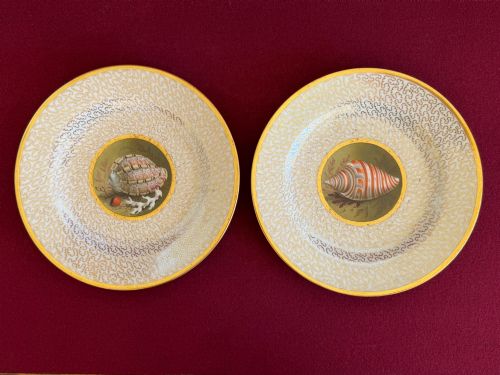
These georgian porcelain display dish examples are tablewares and cabinet pieces that bring hand-painted botanical studies and exotic motifs directly to the room.
Georgian Porcelain Display Dish
When you search for a georgian porcelain display dish, you enter a world of cabinet plates, chargers, and serving dishes created during the Georgian and Regency eras.
The pieces on this page span the eighteenth and nineteenth centuries, featuring domestic production from major English factories in forms designed for display rather than heavy dining.
You are most likely to meet circular cabinet plates and botanical serving dishes from this span, painted by hand with flora, fauna, and narrative scenes.
How they were made
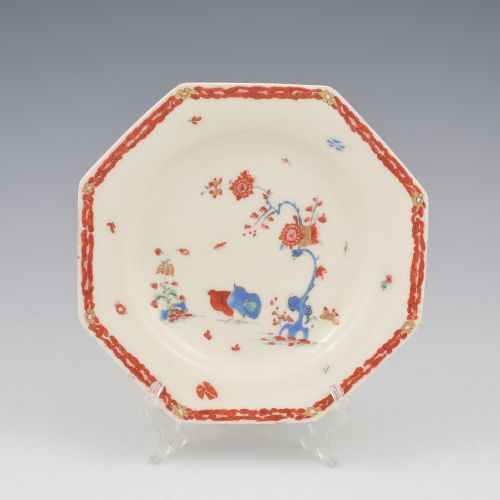
Potters formed these items using soft-paste porcelain, bone china, and tin-glazed earthenware, shaping them into octagonal plates and round chargers.
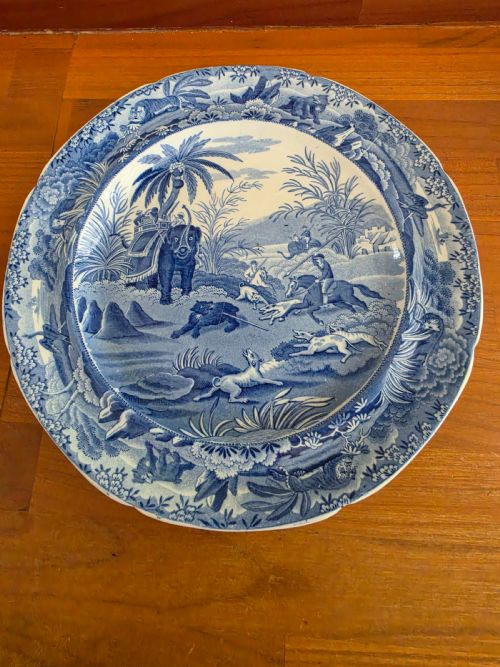
Decorators applied cobalt oxide underglaze and hand-painted enamels, often finishing the rims and borders with applied gold leaf and gilt.
Listings include items from the 18th century, Georgian period, Regency era, and 19th century.
What varies in quality
The distinction between standard factory output and the finest tier lies in the precision of the hand-painting, particularly on botanical and pictorial plates attributed to named artists.
Quality also shows in the crispness of the porcelain body and the richness of the gilding, where heavier gold leaf and intricate enamel work separate simpler wares from cabinet pieces.
Wedgwood·Bow Porcelain·Spode·Barr, Flight and Barr Worcester·Derby Porcelain·Flight, Barr and Barr·Coalport·Ridgway·New Hall·Bloor Derby
The Georgian Porcelain Display Dish Glossary
- Soft-paste porcelain
- An early ceramic composition fired at lower temperatures than hard-paste, producing a warm body often used by eighteenth-century factories. It absorbs glaze differently, giving an appealingly soft surface.
- Tin-glazed earthenware
- Pottery covered with a tin-opacified glaze that provides a white, opaque surface for painted decoration. It represents an earlier tradition seen in chargers.
- Cobalt oxide
- A mineral pigment used to create deep blue underglaze decoration on ceramics. It withstands high firing temperatures without burning away.
- Gold leaf
- Beaten gold applied to the rims and borders of porcelain for decoration. Its presence indicates a higher-status item intended for display.
- Kakiemon
- A Japanese enamel style featuring asymmetrical botanical and bird motifs, widely copied by eighteenth-century English porcelain works. The palette relies on iron red, soft blue, and green.
Georgian Porcelain Display Dish: Frequently Asked Questions
How do I display a porcelain dish?
Cabinet plates and display dishes look best mounted securely on wire wall hangers or supported on sturdy plate stands within a glazed cabinet.
Keep them away from direct sunlight and areas of heavy vibration to protect the enamel and gilding.
Can I use these dishes for food?
While these items were originally made for dining or dessert service, historic porcelain requires careful handling due to age.
Modern dishwashers and microwaves will damage the soft glaze and gold leaf, so use them strictly for display.
How do I tell factories apart?
Makers mark their wares using painted or impressed factory ciphers, initials, and pattern numbers on the underside.
Comparing the specific shade of cobalt blue and the style of gilding helps identify unmarked pieces.
What is a cabinet plate?
A cabinet plate is a decorative ceramic piece intended to be shown in a display cabinet rather than used at the dining table.
These items usually feature more elaborate hand-painted scenes or botanical studies than everyday tablewares.