
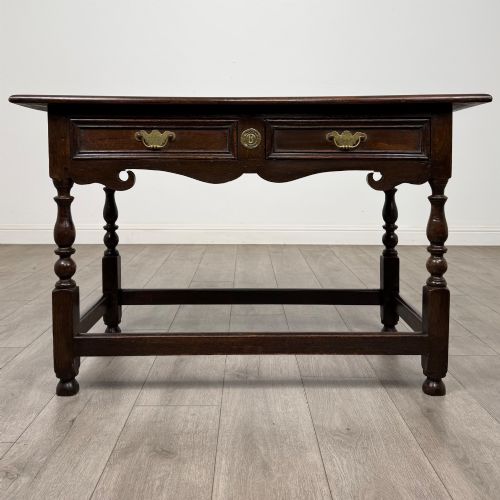
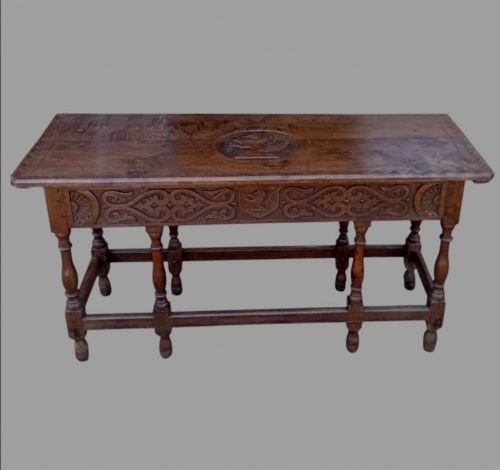
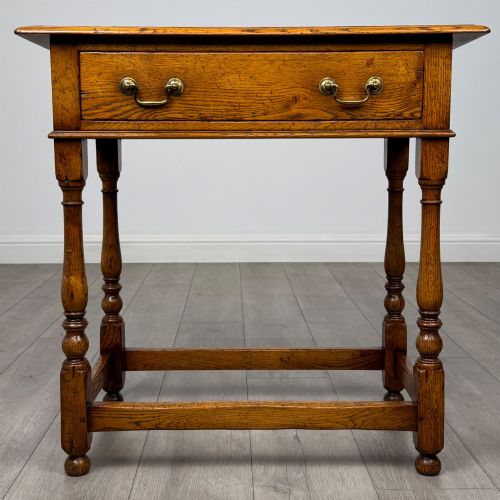
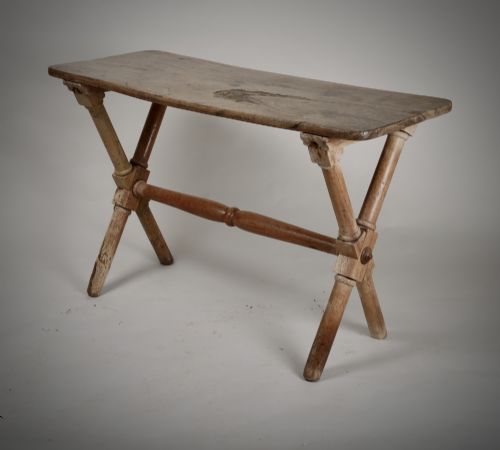


Turned Stretcher Console Table
A turned stretcher console table brings seventeenth and eighteenth-century timberwork into modern rooms, offering sturdy lower bracing and rich oak or walnut surfaces.
Turned Stretcher Console Table
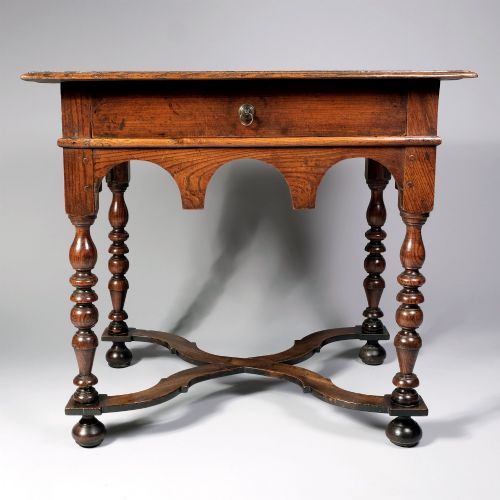
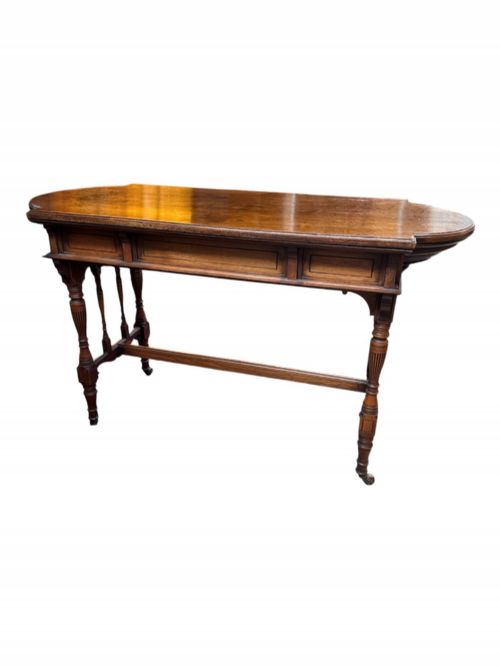
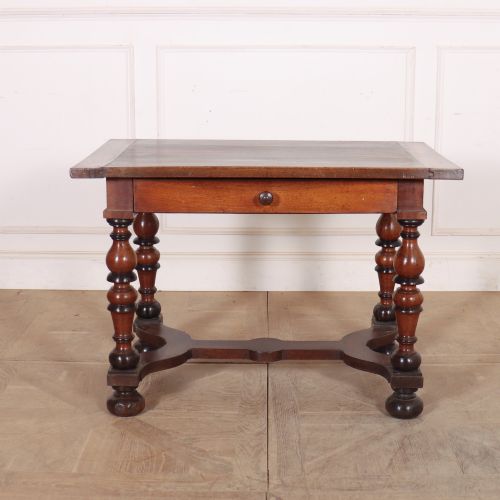
When you search for a turned stretcher console table, you are looking at sturdy side pieces, tavern tables, and occasional furniture designed with robust horizontal bracing between the legs. The turned stretcher console table unites functional floor-level support with historic timber construction spanning the seventeenth, eighteenth, and nineteenth centuries. Walnut, oak, and elm appear frequently across these listings, alongside styles that reach back to William and Mary and Jacobean revivals.
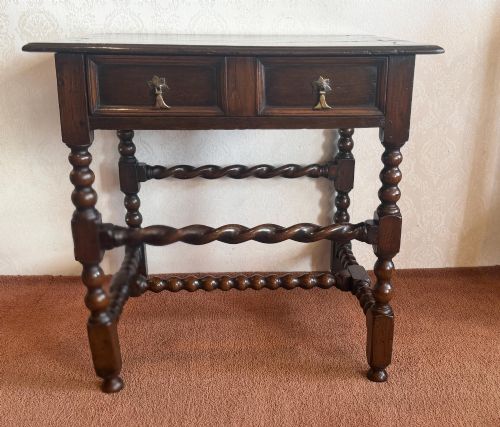
The version you are most likely to meet on this page is an oak or walnut piece from the eighteenth or nineteenth century, often categorised broadly as a side table or tavern table. These forms rely on lathe-turned components such as bobbin and barley twist detailing to connect the lower legs and steady the frame. Regional country variations in fruitwood and pine also emerge, reflecting vernacular British and continental European cabinet-making traditions.
How they were made
Cabinet-makers relied on solid hardwoods like oak, walnut, and mahogany, shaped with hand tools and pegged joinery. Lathes turned sections of timber to create the characteristic bobbin and barley twist stretchers that brace the lower legs.
Secondary timbers such as elm and fruitwood frequently support structural frames and drawer linings, while occasional pieces utilise brass fittings or delicate veneers. Surfaces show the marks of hand planing, finishing with traditional wax or oil to preserve the grain.
Listings span the 17th, 18th, and 19th centuries, featuring woods such as oak, walnut, mahogany, and elm.
What varies in quality
The top of the range is distinguished by the integrity of the original timber and the crispness of the hand-turned stretchers. Superior examples retain their early patination, uncompromised joinery, and honest proportions without excessive later intervention.
Lesser pieces often suffer from replaced stretchers, heavily sanded surfaces that erase tool marks, or mismatched secondary timbers. The harmony between the turned lower bracing and the upper surface determines the overall standard of the construction.
Gillows
The Turned Stretcher Console Table Glossary
- Stretcher
- A horizontal wooden brace connecting the legs of a table to provide structural stability. These are frequently turned on a lathe into bobbin or twist profiles.
- Barley Twist
- A spiral turning technique resembling a twisted rope, commonly found on seventeenth and eighteenth-century table legs and stretchers.
- Bobbin Turning
- A series of rounded wooden spheres or discs carved along the length of a leg or stretcher, popular in Jacobean and William and Mary furniture.
- Tavern Table
- A heavy-duty, utilitarian wooden table designed for public houses or domestic halls, usually featuring a robust frame and stretcher system.
Turned Stretcher Console Table: Frequently Asked Questions
What is a turned stretcher?
A turned stretcher is a horizontal wooden support connecting the lower legs, shaped on a lathe to add rigidity.
In these tables, stretchers prevent the legs from wobbling and add decorative detail through twists or bobbin shapes.
Where were these tables used?
These tables originally served as functional furniture in halls, dining rooms, taverns, and libraries.
Today they function well as hallway consoles, desk surfaces, or lamp tables in living spaces.
How do I date an oak table?
Dating relies on examining the construction methods, tool marks, timber selection, and joinery style.
Early pieces often feature pegged mortise and tenon joints alongside hand-planed surfaces that differ from later machinery output.
Are these tables solid wood?
Most pieces listed here are constructed from solid native hardwoods like oak, walnut, elm, and fruitwood.
Some later revival or decorative items incorporate veneers over secondary timber bases.