
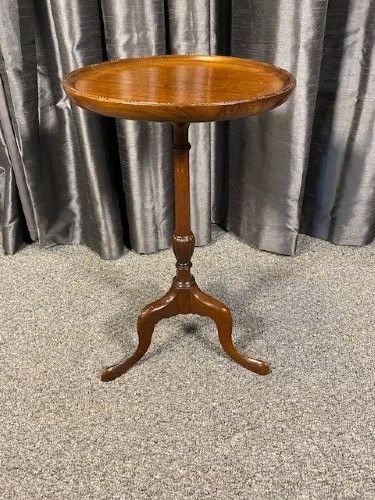
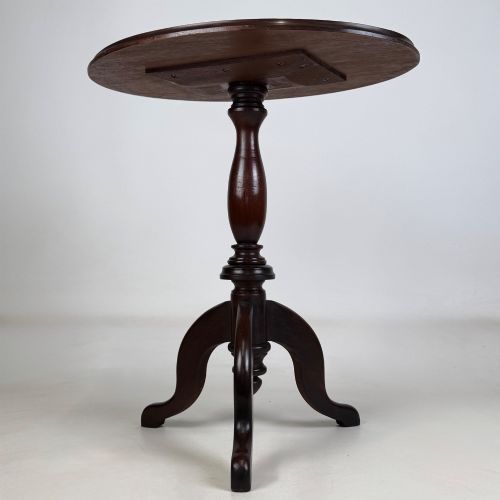
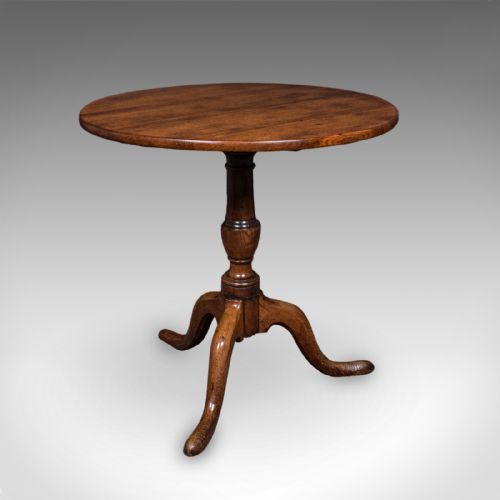
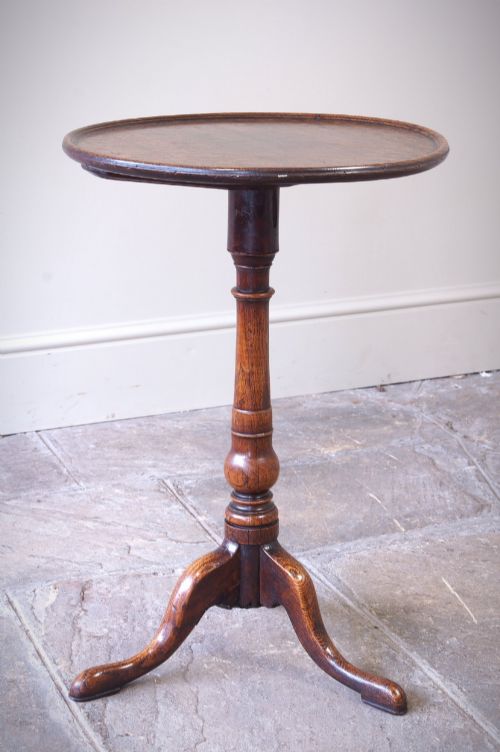
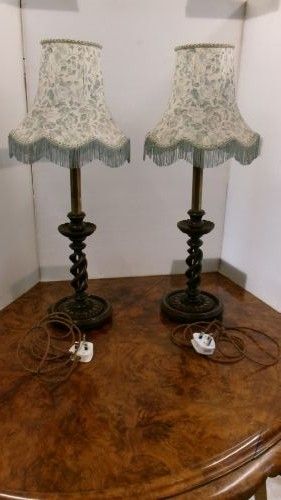


Turned Stem Lamp Table
These turned stem lamp table pieces bring practical small-scale surfaces to a room, combining upright pedestals with compact tops.

Turned Stem Lamp Table
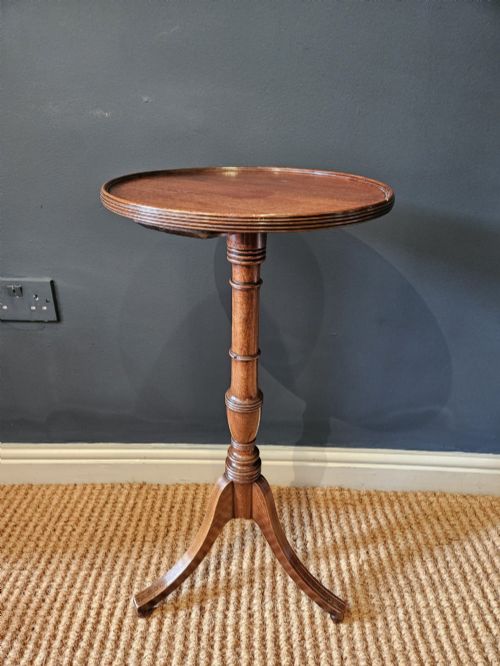
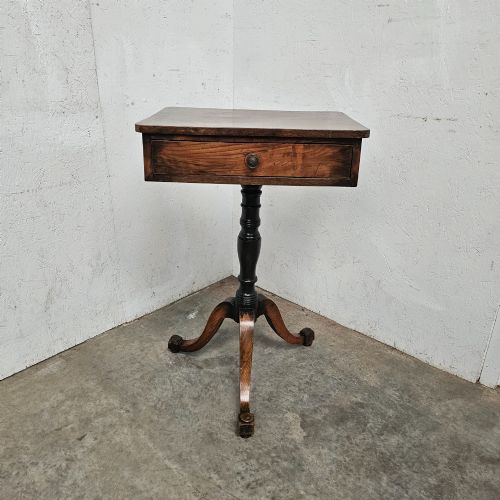
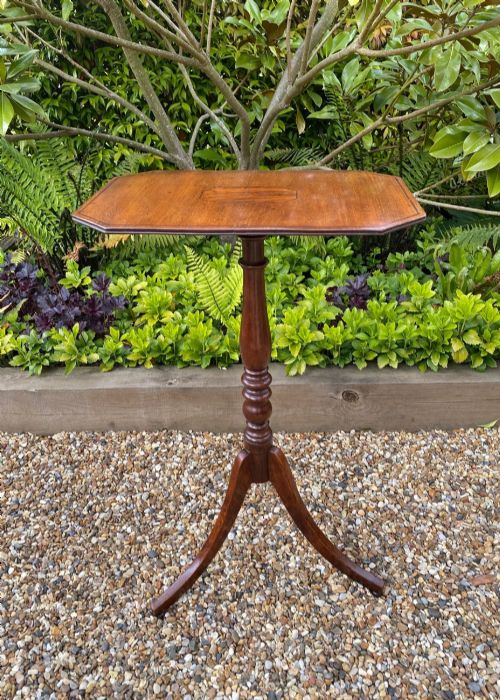
A turned stem lamp table functions as a compact surface designed to hold illumination, small objects or drinks beside seating. When you search for turned stem lamp table variants, you encounter tripod configurations supported by central upright pedestals rather than standard four-legged frames.
The selections span centuries from the Georgian and Regency eras through the Victorian and Edwardian periods. Mahogany and oak dominate the offerings, often accompanied by elm, yew wood, cherry wood and occasional specimen woods.
Forms overlap with wine tables, candle stands and occasional side tables. Circular tops, tilt-top mechanisms and pedestal bases define the primary structural types available on the page.
Materials and construction methods
Cabinetmakers utilised solid timbers such as mahogany, oak, elm and yew wood for stability on three-legged tripod bases. Turning lathes shaped the central stems into cylindrical or baluster profiles before securing them to the table tops.
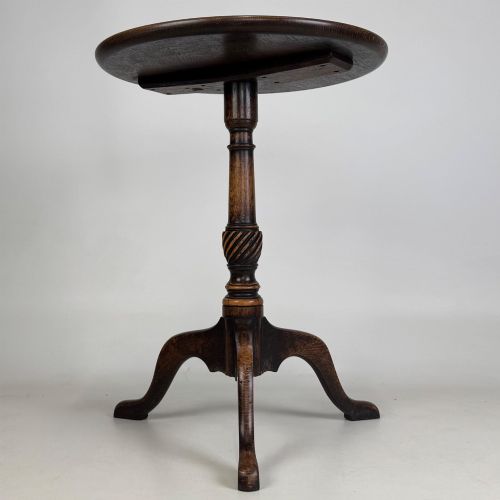
Tilt-top mechanisms utilised wooden catches and brass hinges to allow surfaces to fold flat when not in use. Joinery combined turned tenons, pegging and block supports beneath the circular tops to withstand daily weight.
Some tilt-top tables doubled as emergency shields against drafts when tipped upright beside draughty Georgian fireplaces.
Assessing quality in turned examples
The choice of timber grain dictates visual hierarchy, with figured mahogany, plum pudding mahogany and diverse specimen woods sitting at the upper end of the range. Figured veneers and rich natural patination show careful selection by the original maker.
Structural integrity depends on the precision of the turned stem joint where the pillar meets the tripod legs. Solid footing without wobble and crisp lathe work separate standard utility tables from finer parlour pieces.
The Turned Stem Lamp Table Glossary
- Tripod table
- A small occasional table supported by a central pillar resting on three legs. This design provides steady placement on uneven historical floors.
- Wine table
- A compact single-pedestal table historically intended for holding glassware or decanters. These share identical proportions with many lamp tables.
- Tilt top
- A tabletop hinged to the upper stem so it can be pivoted vertically. This mechanism allowed tables to be stored against walls to save space.
- Pedestal
- The vertical central column supporting the table surface. Turned variations feature carved or shaped profiles created on a lathe.
Turned Stem Lamp Table: Frequently Asked Questions
Where should I place a lamp table?
These small tables fit easily beside armchairs, sofas or in corners where surface space is limited. Their compact footprints allow them to function as reading or illumination stands without crowding a room.
Position them away from direct heat sources to protect the historic timber finishes and joint construction from drying out.
How do I care for antique wood surfaces?
Dust the timber regularly with a soft, dry cloth to prevent grit accumulation on the polished finish. Avoid placing damp items directly onto the surface to prevent water marking.
Apply traditional beeswax occasionally to nourish the grain and maintain the natural lustre of mahogany, oak or yew wood.
Can I use a wine table for a lamp?
Wine tables share similar dimensions and pedestal structures with traditional lamp tables. Their small circular tops accommodate compact modern lighting securely.
Check the diameter of the tabletop against the base of your lamp to ensure stable placement.
How do I identify a tilt-top mechanism?
Look beneath the tabletop for a wooden or brass catch block fixed to the top of the central pillar. Releasing this catch allows the surface to pivot upward on its hinges.
Ensure the mechanism locks securely into the horizontal position before placing any objects on the table.